
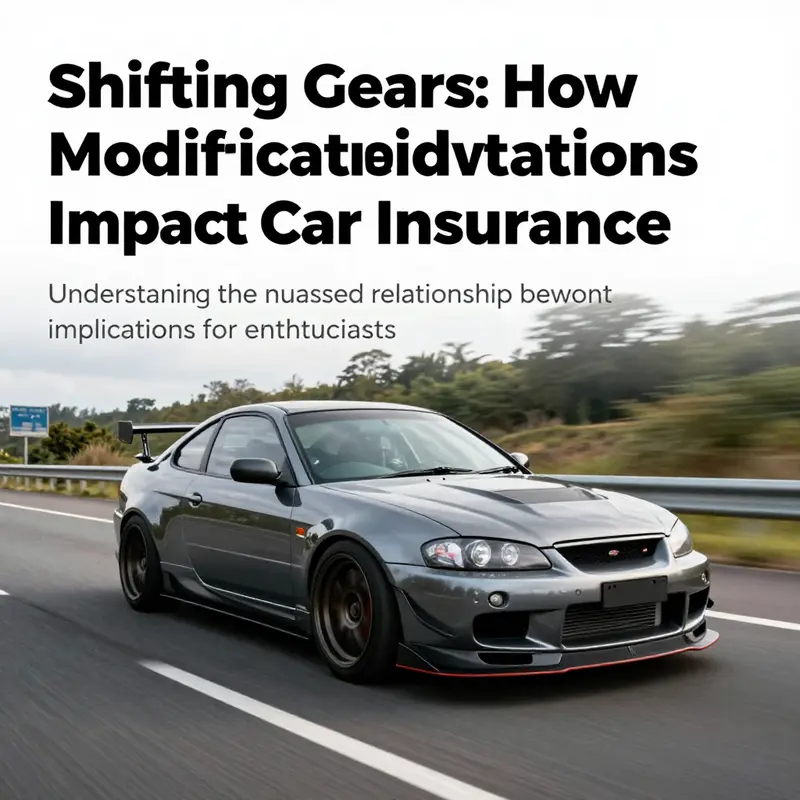
For car enthusiasts, modifying a vehicle isn’t just an act of customization; it’s a labor of love. However, these modifications can come with unexpected challenges, particularly regarding car insurance. From aesthetic changes to serious performance upgrades, the way you modify your vehicle can significantly impact your insurance premiums, claims, and overall coverage. This article delves into the multifaceted interactions between car modifications and insurance nuances. We will explore how premiums can fluctuate, the critical importance of full disclosure when filing claims, legal obligations regarding modifications, practical recommendations for car owners, and real-life案例 that illustrate these dynamics. Enthusiasts, tuners, and restorers alike will find essential insights that can help in navigating the often complex insurance landscape that accompanies modified vehicles.
The Price You Pay for Personalization: How Vehicle Modifications Reshape Car Insurance Premiums
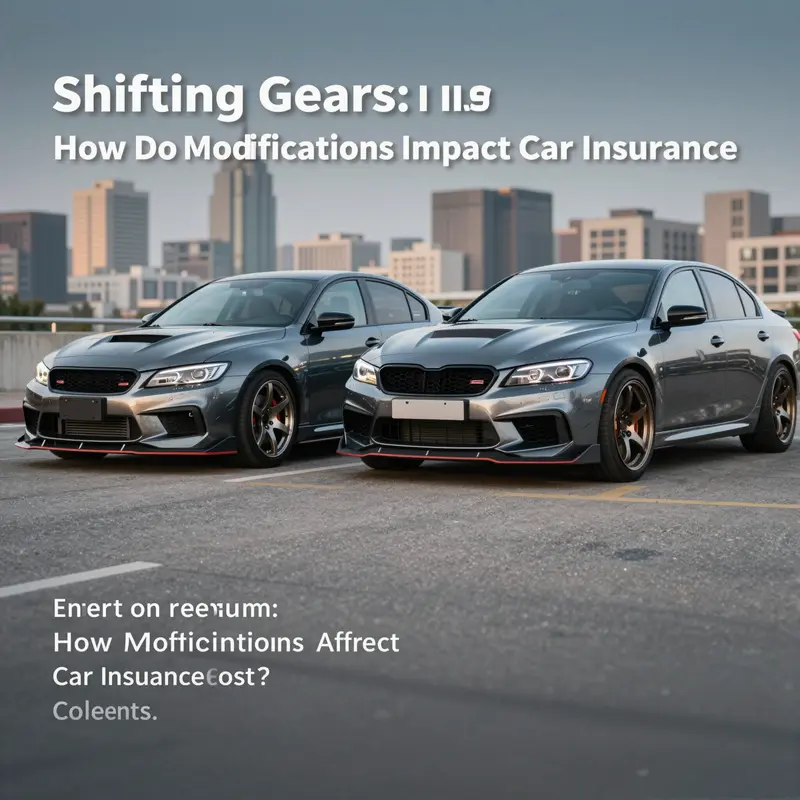
Modifications are not merely a matter of taste or performance; they act as a visible statement to insurers about risk. When a vehicle bears changes—whether subtle cosmetic updates or bold mechanical overhauls—the way an insurer assesses the risk shifts, and with it, the price of protection. The core idea is simple: modifications can change a vehicle’s value, its likelihood of being stolen, and the probability of incurring expensive repairs. These shifts, in turn, influence premiums, coverage terms, and even the availability of certain policies. A thoughtful approach to modification therefore demands a parallel thoughtful approach to insurance, one that begins before the first drill bit is turned or the first panel is painted and continues through every receipt and inspection that follows. In many markets, insurers view a modified car as a different vehicle from the factory model, and they price that difference accordingly. That pricing, however, is not arbitrary. It rests on a precise calculus of how the modification alters value, risk, and repair dynamics, all of which matter when the insurer evaluates the odds of a claim and the cost of paying it. The result is that even small changes can yield measurable premium adjustments, while larger, performance oriented upgrades can produce significant surcharges. The logic is consistent across regions, though local rules and market practices shape the specifics. The thread that ties all of this together is transparency: the insurer must know what has changed so it can assess risk accurately and set a fair price that reflects the vehicle in front of them rather than the vehicle it left the factory with.
Any discussion of premiums must begin with the most straightforward point: the scale and nature of the modification largely determine the premium trajectory. Minor cosmetic changes, such as a new paint color or a discreet body kit that does not alter the vehicle’s fundamental safety or structural characteristics, tend to have a modest impact—often a negligible or zero increase—provided they are reported promptly and do not affect the car’s performance or safety systems. This is because such changes have limited effect on the cost of potential repairs or the vehicle’s risk profile. Yet even cosmetic updates carry a warning label: when a modification is visible, it becomes part of the risk profile, and failure to disclose it can create problems if a claim arises. Conversely, major performance modifications—engine tuning, turbocharging, upgraded exhaust systems, or suspension and braking upgrades that alter the car’s dynamics—typically trigger a much larger recalibration of risk. Insurers often quote premium increases in the range of substantial multiples, with 30% to 50% or more not uncommon for significant upgrades that raise the vehicle’s power, handling, or mechanical complexity. The reason is straightforward: higher power and more aggressive performance increase the potential for loss, the cost of repairs, and the possibility of more severe accidents. In addition, these changes can push a vehicle into a different category for parts sourcing and repair complexity, further elevating expected claim costs.
Beyond the mechanical and cosmetic scope, a thread that runs through the entire discussion is value. Upgrades that raise the vehicle’s market value—whether through engine work, luxury interiors, or rare paint finishes—also tend to lift the maximum payout insurers must be prepared to fund in a total-loss scenario or a major repair. A higher insured value translates into higher comprehensive or collision premiums because the insurer’s exposure grows. It is not only the vehicle’s current value but the cost and availability of replacement parts and labor that matter. When a modification makes sourcing parts more challenging, insurers face higher repair costs and longer downtime, which in turn pressures the pricing. The same logic applies to the risk of theft. Distinctive modifications, especially those that create a unique aesthetic or rely on high-end, aftermarket parts, can raise a car’s attractiveness to thieves. A higher theft risk translates into higher premiums because the expected frequency and cost of theft-related claims rise. The insurer inventories this risk through actuarial models that consider both the incentive for theft and the severity of potential losses.
The third pillar concerns safety and behavior. Some modifications alter the vehicle’s performance envelope in ways that could change how a car is driven in real-world conditions. Stiffer suspensions, grippier tires, or upgraded braking systems can encourage more aggressive driving by owners who want to exploit the upgraded capabilities. Even if the modifications themselves are not inherently unsafe, the behavioral response they provoke can influence accident frequency and severity. Insurers monitor this dynamic by applying a perceived risk premium to vehicles whose owners are more likely to engage in high-speed or high-risk driving patterns. In practice, this means that a modification designed to improve speed or handling can inadvertently raise the odds of a claim, thereby contributing to higher premiums. Another practical consideration is the difficulty of sourcing parts for repairs. Custom or rare modifications may require specialized parts that are not readily available off the shelf. The longer lead times and higher costs associated with these parts raise the expected cost of a claim for the insurer. When an accident occurs, the repair bill can be steep if technicians must source bespoke components or manufacture custom solutions. The net effect is that a vehicle with unusual or high-end modifications can command a premium that reflects the elevated expected cost to restore, repair, or replace the car.
In this landscape, disclosure becomes the fulcrum of a fair and effective policy. The most critical rule is simple: tell your insurer about every modification in writing, within a reasonable time frame that your jurisdiction requires. The overarching principle is that undisclosed changes can derail coverage at the moment of a claim. If a modification is not disclosed and the insurer later discovers it, a claim can be denied or paid at a reduced rate. The consequences are not merely financial; they can also complicate disputes over liability and coverage scope. Where regulations exist, they often require that alterations be legal and compliant, passing any needed inspections or certifications. In many markets, illegal modifications—such as alterations that affect safety or emissions controls—may not be fully covered unless the policy explicitly includes such risks and the modifications have been approved in advance. In the examples common to our research, legal modifications that pass inspection and receive proper documentation with the vehicle registration certificate and the insurer’s written approval typically remain within standard or enhanced coverage frameworks. Illegitimate or non-compliant changes, by contrast, may confine coverage to basic liability protection in the event of an accident, thereby significantly narrowing the scope of protection.
A practical consequence of this framework is the need for additional coverage when modifications introduce new insured items. For example, installing high-end audio systems, aftermarket lighting, custom seats, or other non-factory components may require an Additional Equipment Loss Insurance policy to ensure these items are covered if damaged or stolen in a collision. Without this extra layer, standard car damage insurance typically covers only factory equipment. The need for this coverage underscores a broader truth: as the car’s configuration becomes more unique, the insurance program must adapt, and the cost of that adaptation is reflected in the premium. The prudent path is to approach the modification process as a collaborative effort with the insurer, not as a separate, disconnected project. Communicating early, seeking approval in writing, and obtaining confirmation of coverage terms helps avoid gaps in protection and unexpected out-of-pocket costs after a claim.
From a safety and regulatory standpoint, the modification process also raises questions about compliance, warranty, and long-term ownership. Vehicle regulations in many regions restrict modifications that alter structural integrity, frame, or safety features. Even changes that do not touch the safety shell can trigger regulatory scrutiny if they affect airbag systems, crash performance, or certified configurations. A sunroof that compromises roof integrity, a chassis alteration that changes stiffness, or an engine modification that bypasses emissions controls can move a vehicle outside the bounds of standard insurance. In addition, manufacturers’ warranties may be voided by certain modifications. While this is not a universal rule, it is a common risk that owners must weigh against the perceived benefits of the modification. The effect on resale value is another practical consideration; some buyers may pay a premium for a modified car, while others may view the same changes as liabilities, potentially affecting future insurability or resale potential. This broader context insurance warranty safety and resale tells a full story about what a modification means for an owner beyond initial cost savings or performance gains.
The guidance that emerges from this integrated view is clear and actionable. First, communicate early with your insurer before any modification begins. This heads off surprises and allows the insurer to advise on what will be covered and what additional protections might be appropriate. Second, obtain written approval for the modifications and keep meticulous records receipts invoices inspection reports part numbers installation dates and any certifications. Documentation makes it easier to justify the premium adjustments and coverage decisions when the time comes to renew or file a claim. Third, consider the economic trade offs of major upgrades. If a modification promises performance gains but imposes a steep premium or complicated eligibility, weigh whether the value gained in driving experience or status is worth the ongoing cost. In some cases, it may be wiser to limit modifications to those that improve safety or efficiency and remain within a framework that insurers readily understand and support. Finally, recognize that insurers often offer targeted options for certain modifications, reflecting a recognition that not all changes carry equal risk or cost. For those curious about the landscape of modified car insurance, there are dedicated resources and policies that address these specialized needs. To explore practical guidance on the topic, you can refer to insurance related resources that discuss how modifications influence coverage and pricing, and how owners can optimize protection while pursuing personalization. For instance, there is a comprehensive discussion available at the linked external resource, which provides context and practical considerations for modifying cars without compromising insurance in a way that aligns with best practices and regulatory expectations.
Taken together, the message is nuanced but consistent: modifications affect car insurance because they alter risk, value, and the cost of claims. Minor changes can be accommodated with little impact if disclosed properly; major upgrades require careful planning, clear communication, and usually additional coverage. The chapter of your vehicle’s life where customization meets coverage is not the end of the story but a critical junction where prudence protects both driver and insurer. The result is not just a price tag on a premium, but a more resilient, transparent partnership between owner and insurer. For readers who want to deepen their understanding of how this partnership plays out in real policy language, the concept that insurance for modified cars is not merely a niche niche but a practical facet of responsible ownership is worth embracing. A practical resource exists at https://modifiyeliarabalar.net/blog/insurance-for-modified-cars/ which offers guidance and examples that align with the broader points outlined here. As you consider any change to your ride, remember that the goal is to harmonize modifications with a coverage plan that protects your investment and your future driving experiences. A thoughtful, documented approach now can prevent headaches later, and situate you on firmer footing when premiums and policy terms are renewed or revisited. For additional reading on how modifications intersect with insurance, see the external resource cited above, which provides context and practical considerations that complement the core guidance in this chapter.
Disclosure as the Gatekeeper: How Modifications Reshape Claims and Payouts in Car Insurance
Every time a driver considers modifying a car, a hidden lever shifts within the insurance contract. The change might be cosmetic or mechanical, but the real risk is information. Insurers build a risk picture from the vehicle’s known profile, the driver’s history, and the promises written into the policy. When a modification is added without reporting, it destabilizes that profile and introduces a layer of uncertainty that underwriters must manage. The result is not simply a higher premium; it can be a question of whether a claim will be paid at all. The core issue is disclosure: what you tell your insurer, when you tell them, and how well you can prove what you told them. The narrative around modifications and coverage is not merely about the parts you add, but about the transparency that surrounds those changes. In this sense, disclosure functions as a gatekeeper that can determine whether a claim is honored and, more subtly, how the insurer perceives risk on every future trip after an incident. The more forthcoming you are, the more your insurer can align your protection with your actual risk, and the smoother the claims process tends to be when the inevitable happens. Conversely, hidden changes can turn a straightforward accident into a contested dispute, with the insurer arguing that the undisclosed modification increased risk beyond what was underwritten at policy inception.
The spectrum of modifications is wide, and so is the impact on insurance economics. Minor cosmetic changes, like a fresh coat of paint or a small body kit, generally carry a light touch on premiums when disclosed promptly. They are unlikely to transform the vehicle’s risk profile in any meaningful way, so long as they do not affect safety or structural integrity and are properly reported. But as soon as improvements touch performance or safety-critical systems—engine tuning, turbochargers, upgraded brakes, or suspension alterations—the risk landscape shifts decisively. These modifications can, in practice, raise the potential for high-speed incidents or mechanical failures, and insurers reflect that risk in higher premiums. In many markets, such upgrades can trigger premium increases in the range of thirty to fifty percent, or even more, depending on the scale and perceived danger of the change. This is not an arbitrary punishment; it is how underwriters rebuild a risk model after recalibrating for new capabilities or liabilities. The takeaway is simple: the bigger the modification, the more critical it becomes to maintain an open line of communication with the insurer from the outset.
Beyond cost, the most consequential consequence of nondisclosure lies in claims and payouts. Insurance is a contract anchored in knowledge—what the insurer knows about the vehicle and its use is what determines coverage terms and outcomes. When a modification is disclosed, the insurer can reassess risk and adjust terms accordingly, including endorsements, exclusions, or added coverage. Without disclosure, the insurer may refuse to pay or reduce payouts after an accident, arguing that the modification increased risk beyond what was underwritten. The logic is straightforward: if the insurer didn’t anticipate an engine upgrade, they cannot reliably determine coverage limits for a higher-speed scenario or for altered failure modes. This is why many policies explicitly require that the insured inform the provider of any changes to the vehicle’s performance, appearance, or equipment within a specified notice period. It is not merely a courtesy; it is a contractual requirement that protects both parties and preserves the integrity of the risk pool.
The legal and regulatory dimension of disclosure adds another layer of gravity. Across different jurisdictions, there are formal expectations about what must be reported and how changes should be documented. In some systems, significant changes to the vehicle’s structure, engine displacement, or safety features may require inspection or registration updates before the insurer will consider full coverage under a standard policy. There is also a practical need to harmonize vehicle documentation with insurance records. For instance, if a change in appearance necessitates an updated registration document or a new driving license endorsement, that updated information must be provided to the insurer. The upshot is that relying on old paperwork or assuming a modification is “minor enough” to ignore can jeopardize coverage. This alignment between vehicle records and policy terms is the backbone of credible, claimable protection.
In parallel with these general principles, guidance from consumer protection authorities emphasizes explicit communication about modifications. In the United Kingdom, the Financial Conduct Authority underscores that drivers must inform their providers about any changes that could affect safety, performance, or value. The FCA’s stance is that undisclosed modifications can void or reduce coverage, even when the incident in question is unrelated to the modification itself. This preventative logic is designed to preserve the insurer’s ability to assess risk accurately and to ensure that drivers are not lulled into a false sense of security by silence. The FCA guidance offers a concrete reminder: disclosure is not optional; it is a core element of responsible policy management. For a broader look at these expectations, readers can consult the FCA’s consumer resource on insurance for cars, which provides context on the role of disclosure in policy terms and claims. What modifications affect car insurance
The practical implications of disclosure extend into the everyday management of a modified vehicle. When you plan to install a new part or upgrade a system, you should anticipate a conversation with your insurer well before any work begins. Write to your insurer, describe the modification in detail, provide technical specifications, and request written confirmation that the modification will be covered under a revised policy or endorsement. If the modification involves new hardware, you may need to consider additional coverage specifically for those parts, such as an “Additional Equipment Loss Insurance” policy, since standard car damage coverages typically cover only factory equipment. The absence of this additional protection can mean that even if you have a comprehensive policy for the base vehicle, aftermarket components may be left uninsured in the event of a loss. Keeping all receipts, invoices, and installation documents is essential. These records build a traceable history of modifications and serve as evidence that the changes were performed by qualified technicians and properly documented.
A further nuance concerns what happens when modifications are illegal or do not pass required inspections. Insurers commonly distinguish between legal, compliant modifications and illegal ones. Legal changes that pass the relevant inspections—such as those certified by the Vehicle Management Office or equivalent regulatory body in a given jurisdiction—may continue to be covered by full commercial insurance, subject to the updated terms. In contrast, illegal modifications can precipitate severe consequences. In many markets, such modifications may leave the vehicle vulnerable to only limited coverage, or none at all, in the event of a claim. When a car is found to have been altered in ways that compromise safety, structural integrity, or emissions standards, insurers may invoke policy exclusions or deny coverage altogether if the modification contributed to the incident. The relevant legal framework can vary, but the principle remains consistent: compliance and transparency are the twin pillars that sustain eligibility for robust coverage.
The philosophy that emerges from these dynamics is one of partnership rather than surveillance. The moment modification plans are contemplated, the insured—by acting as a transparent, proactive partner—gains the best chance of seamless coverage. Early communication opens a two-way channel: the insurer can advise on risk, required endorsements, and any rate adjustments, while the driver receives a clearer understanding of how the changes will affect protection and cost. This collaborative stance helps avoid the ad-hoc, post-incident insurance battles that can frustrate all parties. It also reduces the likelihood that a claim will be delayed or contested because the insurer contends that the risk profile had been misrepresented or misunderstood from the outset.
The narrative then circles back to the core truth: modifications do not operate in a vacuum. They alter the vehicle’s risk profile, and the insurer’s ability to honor claims in the event of a loss hinges on accurate, timely disclosure. The more comprehensive and precise the information you provide, the more likely you are to receive coverage that matches the modified vehicle’s realities. This is not merely about avoiding denial; it is about preserving the integrity of the insurance contract for both sides, ensuring that protection remains aligned with actual risk and that valuable aftermarket investments remain shielded by the right kind of coverage. In practice, the path to secure, credible protection starts with a straightforward commitment: tell your insurer what you plan to change, seek confirmation in writing, adjust coverage as needed, and document every step with receipts and certifications. In the end, disclosure is not a burden but a safeguard—a hinge that keeps risk management honest and claims processing fair. For readers seeking broader guidance on how disclosure informs policy terms and claims in the context of modifications, the FCA resource offers practical context and encourages proactive engagement with providers. For a direct, practical reference to how modifications influence insurance, consider the linked resource above and engage with the insurer as a partner in your modification journey. External guidance from regulators underscores that this collaborative approach protects consumers and supports robust, transparent insurance markets: https://www.fca.org.uk/consumers/insurance-car
Shifting Risk: How Modifications Redefine Insurance, Safety, and Responsibility on the Road
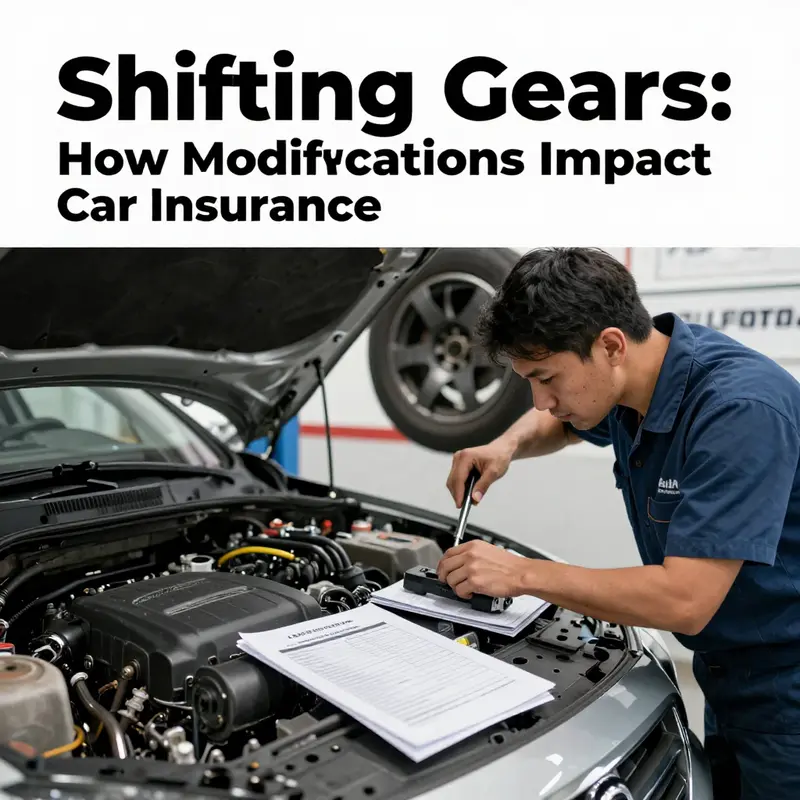
Modifications are not merely about aesthetics or performance. They are a deliberate reengineering of how a vehicle behaves under stress, how it responds to the road, and how its protection should be managed in the event of a mishap. This is not a niche concern for enthusiasts alone. It sits at the core of how insurers evaluate risk, how laws frame responsibility, and how drivers balance the lure of enhancement with the realities of protection. In many cases, the moment a driver adds a new upgrade, the vehicle ceases to be a simple, factory-built object and becomes a moving policy question. A premium quote, a claim, and even the legality of driving can hinge on every bolt turned, every software tune loaded, and every cosmetic tweak applied. The tension between customization and coverage is not about stopping creativity; it is about aligning a changing machine with a changing set of rules designed to keep roads safer and policyholders protected. And because the landscape shifts with each jurisdiction, it is essential to approach modifications with a clear understanding of how risk is assessed and how protections can be preserved.
The practical reality is that insurance companies view modifications through the lens of risk. Standard policies have a baseline that assumes mostly factory specifications and predictable wear patterns. When a vehicle deviates from those assumptions—whether through higher engine output, altered braking dynamics, or structural reinforcements—the insurer reevaluates the odds. Minor cosmetic changes, such as a new color or subtle trim adjustments, are often treated as low impact, particularly if they are reported accurately and do not alter the vehicle’s safety envelope. In contrast, performance-oriented modifications tend to trigger noticeable premium adjustments. Engine tuning, turbo upgrades, advanced suspension, and braking system changes can change the acceleration profile, stopping distance, and handling characteristics enough to warrant a significant reconsideration of risk. In many markets, drivers should expect premium increases of a meaningful portion—sometimes a third to half or more of the baseline—when major performance work is installed. These figures, while generalized, reflect a common pattern across insurers who must balance the thrill of modification with the obligation to assess potential losses in a reformatted risk landscape.
Yet not all modifications ride the same scale. The line between a minor alteration and a transformative change is often drawn by the purpose of the modification and how it affects safety. Cosmetic changes that do not affect crash dynamics or reliability—like a nonstructural audio upgrade or a change in interior materials—tend to have a minimal effect on coverage if properly disclosed. What matters more is transparency. Insurance policies are contracts built on information; withholding material information can undermine the very protection drivers rely on. When a modification is disclosed, the insurer can adjust coverage terms to reflect the new risk posture, often with a written agreement that specifies what is covered, what is excluded, and what documentation is required to sustain the policy. When disclosure is neglected or misrepresented, the consequences can range from denied claims to a total policy lapse, even in the event of a accident where the modification contributed to the outcome. This is why the act of modification should be treated as an ongoing conversation with the insurer, not a one-time update after the work is completed.
The legal and safety layers add further complexity. Many jurisdictions place clear boundaries on what can be altered and how those alterations must be documented. Vehicle regulations, including inspections and registrations, serve as the gatekeepers of legitimacy. In some regions, changes that affect structural integrity, safety systems, or core specifications—such as modifications that alter chassis geometry, engine displacement, or roof strength—may require formal inspection or even disapproval. These rules exist not to spoil experimentation but to maintain a baseline of safety that insurance, law, and the vehicle’s own design all presume. A modification that passes inspection and aligns with regulatory standards can be supported by full commercial coverage, including comprehensive and third-party liability. Conversely, illegal or noncompliant changes can narrow coverage to compulsory liability protections or, in worst cases, leave the owner exposed when a claim is filed. The warranty question also matters. In many cases, modifications can void factory warranties if they involve the engine, drivetrain, or critical safety subsystems. This indemnity gap between the original design and the modified reality is not just a warranty concern; it can influence how a claim is adjudicated and whether repair costs are recoverable through insurance.
For drivers contemplating changes, the path to sustained protection is paved with deliberate, documented steps. The most important rule is to communicate early and clearly with the insurer before any modification begins. The goal is not merely to obtain a yes from the insurer but to secure a written understanding of what is covered, under what terms, and what additional documentation will be required going forward. This is why many recommendations emphasize getting formal approval from the insurer before proceeding. An approved modification plan, accompanied by specifications, part invoices, installation records, and any regulatory clearance, creates a trail that supports claim handling and reduces ambiguity at the time of a loss.
Another practical pillar is to consider supplementary coverage for nonstandard additions. High-value aftermarket components such as advanced audio systems, custom lighting, or specialized seating can represent significant financial risk if damaged in a crash or during a theft event. A dedicated Additional Equipment Loss Insurance policy, or its local equivalent, can bridge the gap between standard coverage and the true value of these parts. Without this protection, owners risk unreimbursed losses or reduced payouts for components that do not fall under factory equipment. In the spirit of responsible ownership, maintaining meticulous records—receipts, installation notes, parts lists, and warranty documents—facilitates smoother communication with the insurer and supports more accurate valuation during a claim.
The discussion would be incomplete without acknowledging the broader safety implications of modifications. Enhancing a vehicle for speed or cornering ability invariably changes the risk calculus on the road. Even seemingly minor tweaks can influence braking performance, tire grip, or steering response, which can alter crash dynamics and occupant protection. The safety trade-off should be weighed against the aesthetic or performance allure of the modification. Any decision to pursue changes should begin with an honest assessment of how the modification will alter risk exposure, not only in the event of a crash but in the context of theft, vandalism, or mechanical failure. The insurance framework, after all, mirrors the larger ecosystem of risk management: more risk requires more robust protection, and less risk can preserve the status quo.
If you want to explore this topic further, consider reading which modifications affect car insurance. This resource helps illuminate how different categories of changes are assessed by insurers, and how disclosure, legality, and regulatory compliance shape coverage outcomes. The practical takeaway is simple: modification is a process that compounds complexity, not a final outcome. Treat it as a project that unfolds within a framework of rules, obligations, and protections. In that frame, the driver can pursue personalization while maintaining a safety net that supports both financial and legal resilience on the road. For readers seeking broader context beyond the immediate policy dialogue, an external reference on vehicle modifications and insurance offers a complementary perspective on how markets elsewhere approach the same questions. External resource: https://www.motortrade.com/insurance/vehicle-modifications-and-insurance
Under the Hood and Under the Policy: How Bonnet Modifications Redefine Insurance Risk
A driver peers into the hood of a car and imagines the future: a lighter, stiffer bonnet that slashes weight, sharpens throttle response, and shortens the distance between desire and acceleration. The project seems simple in concept, a bolt-on upgrade here, a wrap of carbon fiber there. Yet the insurance landscape does not see it in the same way. Modifications—especially those that touch the bonnet or other high-stakes parts of the car—reframe risk in ways that are not immediately visible to the eye. Insurers read a car’s risk profile by assessing how a change alters the likelihood of damage, the severity of a crash, and the cost of repairs. A carbon fiber bonnet can promise performance gains and even improved aerodynamics, but it can also introduce questions about crash energy absorption, repair costs, and the reliability of aftermarket components. The result is a quiet but consequential tension: not every enhancement is treated equally, and not every change remains within the bounds of what a policy is prepared to cover without additional terms or endorsements. This is why conversations with an insurer should begin before any physical work begins and continue throughout the life of the vehicle’s modification journey. It is a reminder that insurance is not a one-time paperwork step but a dynamic partnership that evolves as a car evolves on the road and in the workshop.
The tension is not unique to bonnets; it embodies the broader truth that modifications shift risk. Minor cosmetic updates—like a new color, a different trim, or a non-structural aesthetic tweak—often have limited impact on premiums, particularly if they are properly disclosed and documented. The premium impact is more modest when the modification does not change the vehicle’s safety profile or performance envelope. By contrast, performance-oriented changes—engine tuning, turbochargers, upgraded brakes, altered suspension—redefine how the car behaves under pressure, how quickly it accelerates, and how it stops. These changes tend to trigger noticeable premium increases, sometimes in the range of 30% to 50% or more, depending on the insurer and the jurisdiction. The bonnet sits at an intriguing intersection: it can be a lightweight structural decision designed to improve performance, yet it also touches the very elements that insurers evaluate for crash dynamics and repair costs.
Disclosures are not mere formalities; they are the foundation of coverage. The rule of thumb is straightforward but essential: notify your insurer in writing within a specific window of time after any modification, and seek explicit approval for coverage of the modified vehicle. Without this disclosure, a claim can be delayed, reduced, or denied entirely, even if the modification seems minor by appearance alone. The legal framework surrounding vehicle alterations can complicate matters further. In many places, modifications must pass safety inspections or regulatory checks to remain within the bounds of law and insurance acceptability. If a modification is illegal or undermines safety standards—such as compromising structural integrity or safety systems—the insurer may refuse to provide full coverage. In some systems, illegal changes restrict coverage to mandatory liability protection, with limited recourse for more comprehensive losses. The bonnet example illustrates how seemingly straightforward upgrades can trigger a cascade of regulatory and contractual considerations that policyholders must navigate.
Beyond legality and disclosure, the question of coverage for new parts is practical and concrete. Standard car damage insurance typically covers the vehicle’s original factory equipment. When a car gains new parts—whether a high-end audio system, aftermarket lights, or bespoke seats—these components often require an Additional Equipment Loss Insurance policy to ensure their loss or damage is included in a claim. Without this endorsement, damage to or loss of those upgrades may not be reimbursed, even if the rest of the vehicle is fully covered. In the bonnet scenario, the material is a notable exception: carbon fiber or other aftermarket bonnets may be treated as a significant component with a different risk and repair cost. Some policies may require a higher level of documentation, or may not cover the part without an endorsement or a separate policy. This is precisely why early, proactive engagement with the insurer matters: it clarifies what is and is not covered, and what conditions must be met to maintain protection if the bonnet sustains damage in a crash or in a non-crash event.
The line between legal and illegal modifications is critical for claims. In many jurisdictions, modifications that alter the vehicle’s safety systems, crash structures, or core performance metrics may affect eligibility for full commercial insurance coverage or even the backing of a standard policy in the event of a loss. Insurers value predictability: a known risk, even if it carries a higher price, is easier to quantify and price correctly. An unreported, unapproved modification introduces uncertainty and can complicate or invalidate a claim when a loss occurs. That is why the simplest, most reliable course is to document everything, keep receipts and installation details, and secure written confirmation from the insurer that the changes are approved and covered under the terms of the policy. The bonnet, with its delicate balance between weight, stiffness, safety, and cost, often sits at the heart of this decision matrix. If a lightweight bonnet improves performance but raises concerns about impact energy distribution during a collision or compatibility with safety systems, the insurer may require additional safety assurances, testing, or a specific endorsement to maintain coverage.
The practical steps of managing these changes are not arcane. The first is to communicate early. Do not wait until a suspicion of a claim arises to discuss modifications. Opening a dialogue early allows the insurer to assess the modification’s implications and to outline any conditions for continued protection. The second step is to choose reputable suppliers and ensure components meet recognized standards. Parts that are certified by respected industry bodies tend to reassure underwriters because they offer traceability, quality control, and proven performance under stress. This matters for bonnets and other structural components because insurers are particularly wary of the potential for failure modes that could escalate repair costs or harm occupants. The third step is to document everything. Preserve purchase receipts, installation notes, inspection certificates, and any other documentation that proves the modification was performed correctly and safely. If the bonnet was installed as part of a broader preparation package, a complete bill of materials and a proof of compliance with applicable standards can smooth the underwriting process and reduce friction during a claim.
Understanding policy terms is another essential pillar. Some vehicle policies include endorsements that are designed specifically for modified cars. Others exclude certain categories of changes altogether. The difference can be the line between a hassle-free claim and a dispute over coverage. A careful read of the policy language helps ensure that the modifications align with what the insurer accepts and that there are no surprises should a problem arise. If the modification is unusually substantial or the owner plans several major upgrades over time, it can be prudent to explore specialized insurers who tailor coverage to modified vehicles. These providers often offer endorsements, appraisals, and claims processes that acknowledge the value and risk profile of customized cars. While specialization can come with higher premiums or more complex policy terms, it can also deliver clarity and confidence in coverage when the vehicle is used in daily life, on weekends, or in competitive settings where modifications are common.
A broader framework for thinking about the bonnet and similar changes comes from established industry guidance that many readers will find helpful. For instance, research and guidance from reputable trade bodies emphasize not only the practical steps of disclosure and documentation but also the importance of aligning modifications with safety standards and with the legal framework governing road use. In addition to direct insurer guidance, resources from recognized associations offer a map for best practices, including how to approach modifications with a view toward preserving coverage and ensuring safe operation on the road. For readers seeking a broader normative anchor, an authoritative resource from a leading insurance association provides practical, policy-oriented guidance that complements the more technical, insurer-specific considerations discussed here. This guidance helps car owners weigh the benefits of modification against the responsibilities of maintaining coverage and safety on the road. A link to such guidance is provided below for those who wish to explore the topic further.
In practical terms, the bonnet example crystallizes a broader approach: treat modifications as a moving part of your risk profile. Do not treat them as a one-off checkout at the registry or the shop. Each time you modify, you renegotiate the terms of protection with the person who underwrites the risk—the insurer. The best outcome is a well-documented, well-communicated, and well-understood modification path that keeps the vehicle on the road with the right balance of performance, safety, and coverage. The driver who starts with a careful plan—specifying the bonnet choice, verifying compatibility with safety systems, confirming that the supplier’s components meet recognized standards, and obtaining formal coverage endorsements—builds resilience into their ownership experience. They avoid the sting of a surprise bill after a claim and protect both the investment in the vehicle and the peace of mind that depends on predictable policy outcomes.
For readers who want to explore concrete experiences and perspectives on modified-car insurance, there are reliable resources that discuss how modifications influence insurance coverage, the importance of disclosure, and the value of specialized policies when modifications significantly alter a vehicle’s risk profile. For broader guidance on modifications and their implications for insurance, consult the UK Association of British Insurers at https://www.abi.org.uk/. If you want a more practitioner-focused, region-specific look at insurance for modified cars and related topics, you can also explore discussions on the topic in dedicated automotive modification resources. A relevant internal discussion that addresses the role of modification-related insurance coverage can be found here: insurance for modified cars. This integrated approach helps ensure that drivers who pursue bonnet and other modifications do so with informed expectation and a clear path to maintaining coverage that aligns with their goals on the road.
The upshot is clear: bonnet modifications, like other substantial changes, are not merely cosmetic or recreational choices. They alter the risk landscape in ways that insurance providers quantify, price, and, if necessary, restrict through endorsements. The prudent course remains the same regardless of the jurisdiction or policy framework—communicate early, use reputable components, document comprehensively, understand the policy terms, and consider specialized coverage when warranted. In doing so, car owners not only protect their investment but also strengthen the partnership with their insurer, ensuring that the road ahead remains as predictable as possible, even when the hood and the heart of the machine have changed direction. By embracing this approach, enthusiasts can pursue performance and personalization without sacrificing the security and clarity that a thoughtful insurance arrangement provides.
External resources and further reading can help anchor these practices in a broader industry context and provide additional validation for the strategies outlined above. For broader guidance on modifications and insurance, see the Association of British Insurers at https://www.abi.org.uk/.
Real-World Signals: How Modifications Shape Insurance Costs and Coverage
A modification can change insurance pricing by altering risk. Some cosmetic changes may have little effect if reported properly, while performance upgrades raise both the likelihood of a claim and the cost to repair. Safer equipment, when disclosed and verified, can lead to discounts through lower perceived risk. Nonstandard parts often require additional coverage to protect those components, and failure to report changes can lead to claim denial or adjusted payouts. Drivers should communicate with their insurer before modification, document work, and secure written approval for coverage. In short, transparency and appropriate coverage are the keys to keeping protection intact while pursuing customization.
Final thoughts
Navigating the intricacies of car modifications and insurance can be complex yet rewarding for car enthusiasts. From understanding how premiums can shift in response to aesthetic or performance changes to grasping the importance of disclosure and compliance, knowledge is key. By employing best practices and staying informed through real-world examples, modifiers can turn their passion into a seamless experience that enhances both performance and protection. Ultimately, maintaining open lines of communication with insurers remains critical to ensure that loved modifications don’t lead to unwelcome surprises, allowing your vehicle to represent your personal style without jeopardizing coverage.