
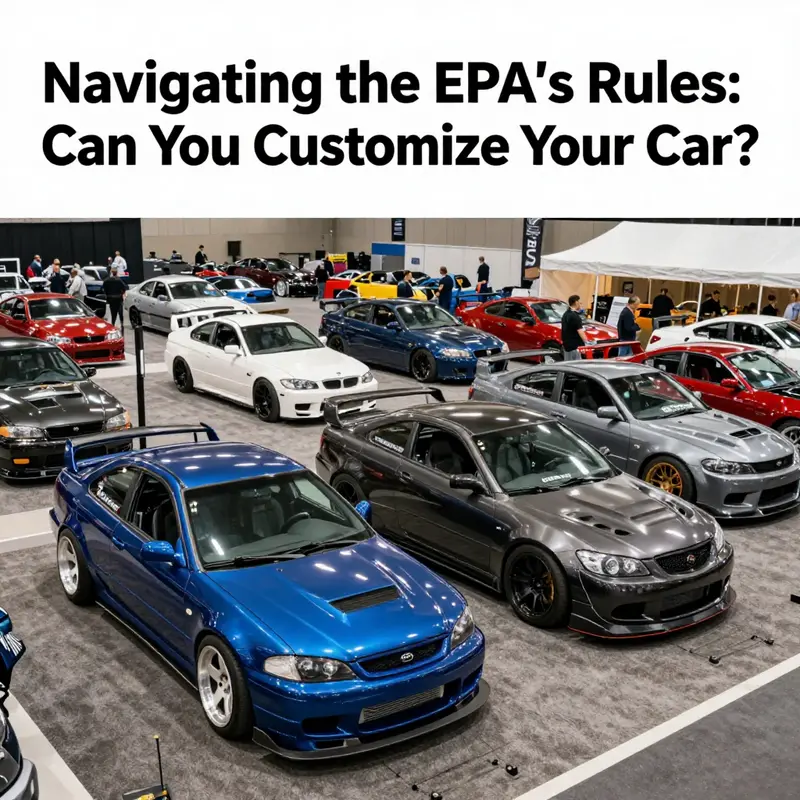
Understanding the environmental regulations surrounding automotive modifications is crucial for anyone passionate about cars. The EPA’s focus is not a blanket ban, but rather a targeted approach aimed at combating harmful emissions by prohibiting certain modifications that defeat emissions control systems. This article delves deeply into the nuances of these regulations, exploring what can and cannot be modified without legal repercussions. Each chapter will examine different facets of the EPA’s guidelines, the impact on car modifiers, the legal implications, consumer rights, and the future of car customization in an increasingly eco-conscious world.
Unraveling the EPA’s Emission Rules: What Car Modifications Are Banished, What They Protect, and Why It Matters to Every Driver
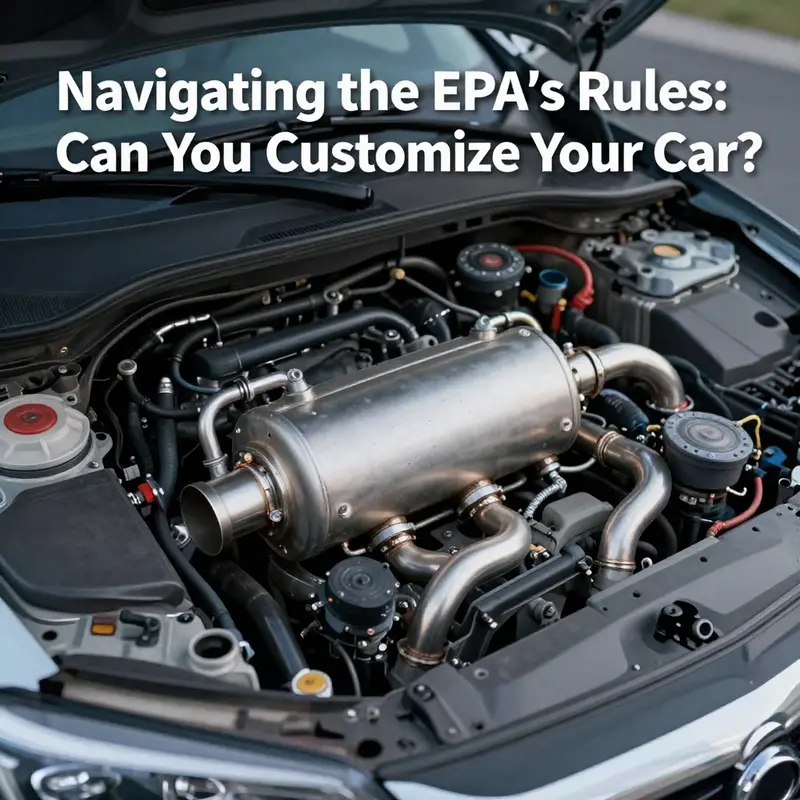
When people ask whether the EPA is out to ban car modifications, the simplest answer is: not all customization, but certainly those that defeat emissions controls. The agency prioritizes clean air and climate protection, focusing on devices, software, or alterations that bypass safeguards designed to keep vehicles within federal pollution limits. In real world terms, the EPA targets modifications that would let a car emit far more pollutants in everyday driving than it would during testing. The story is not about erasing personal expression behind a wheel; it is about preventing a handful of interventions from turning a legally compliant vehicle into a pollution source on the road. The legacy of defeat devices, highlighted by Dieselgate, lives in the EPA’s ongoing vigilance. A defeat device is anything that detects when a vehicle is being tested and temporarily reduces emissions to pass the test, then reverts to higher, less-clean emissions during normal operation. This distinction between test-cycle performance and everyday behavior is central to how the agency defines what is illegal and what remains permissible. The lesson for drivers and enthusiasts is clear: intent matters, and the context of use matters. If a modification is designed to hide emissions performance during a test but not intended to function in regular driving, it crosses a line that the law and the EPA’s enforcement framework treat as cheating public health protections. The enforcement response to defeat devices is not a generic crackdown on customization; it is a targeted intervention against devices and software that compromise the integrity of emissions control systems. That clarity matters because it helps shape both how people modify cars and how manufacturers, tuners, and hobbyists think about compliance from first principles. The broader regulatory landscape sits at the intersection of science, engineering, and public health, with implementation framed by a careful distinction between legitimate personalization and illegal evasion of standards. The EPA’s approach follows a simple logic: if a change reduces the effectiveness of the emissions control system, and if that reduction would cause noncompliance with federal air quality standards, then the modification falls under a prohibition. This logic has practical consequences for a wide range of activities, from ECU tuning and engine hardware changes to exhaust and air intake alterations. It also frames the question of what is allowed when people talk about performance gains or aesthetic customization. The line between a tasteful exhaust note and a system that bypasses catalytic converters is not always obvious to a layperson, but the regulatory standard provides a clear reference point: any modification that degrades a vehicle’s ability to meet the Clean Air Act standards is suspect. The legal framework also extends to the sale and manufacture of parts designed to defeat emissions controls. In other words, the EPA doesn’t merely police what a consumer does in a garage; it also scrutinizes the aftermarket ecosystem to prevent the distribution of parts that would enable defeat strategies. As a result, even if someone buys a component with the intent to improve performance, if that component is designed to defeat or disable emissions controls, it becomes subject to enforcement actions. This directly shapes what aftermarket shops can legally offer and what a buyer should expect when assessing modification options. The practical effect is that enthusiasts who want to explore performance or personalization within the law can still pursue many avenues, including enhancements that do not alter the engine management or exhaust system in ways that raise emissions. Cosmetic modifications, upgraded audio systems, and changes that do not alter the vehicle’s emissions footprint generally remain within the realm of permissible customization. The clear boundary drawn by the EPA is not a prohibition on creativity but a safeguard against reducing the environmental protections embedded in modern vehicles. To understand the scope of the agency’s current work, it helps to look at the latest rulemaking that governs light- to medium-duty vehicles, as well as heavy-duty programs. In 2024, the EPA closed a final rule that broadens and tightens emission standards for these vehicle categories. The new framework is designed to roll out gradually from 2027 through 2032, reflecting a staged approach to adopting cleaner technologies and more rigorous testing regimes. The rule encompasses multiple pollutants and greenhouse gases, signaling a holistic push toward lower tailpipe emissions and higher overall efficiency. Among the notable updates is the revision of how upstream emissions are accounted for in Zero Emission Vehicles and plug-in hybrids. This bookkeeping nuance matters because it affects how manufacturers demonstrate compliance and how regulators verify claims about total life-cycle emissions. Battery durability and warranty requirements were also tightened for light- and medium-duty electric and plug-in hybrid vehicles, acknowledging that consumer confidence hinges on longer-lasting energy storage and predictable performance. In addition, the rule introduces controls for evaporative and refueling emissions, addressing real-world issues that can undermine air quality when a vehicle is stationary or being refueled. The aftermarket dimension is not neglected: the rule includes updated requirements related to aftermarket fuel conversion, vehicle importation, evaporative emission test procedures, and fuel specifications used to measure fuel economy. In practice, this array of updates means that modifications touching the fuel system, the evaporation system, or the calibration of engine management will face stricter scrutiny and clearer compliance pathways. The CFR references – Parts 85, 86, 600, 1036, 1037, 1066, and 1068 – map a regulatory terrain that governs how manufacturers design, certify, and maintain emissions control systems, as well as how aftermarket components are evaluated for compatibility. The docket at Regulations.gov serves as the public record where proposed rules, supporting documents, and public comments are archived, illustrating the procedural backbone that underpins these standards. Heavy-duty vehicles, too, have a front-row seat in the EPA’s emissions program. A final rule issued in April 2024, with corrections in June, establishes new greenhouse gas standards for highway and non-highway engines and vehicles. This demonstrates the agency’s intent to extend clean-air leadership beyond passenger cars and light trucks into the heavy-duty landscape, recognizing that buses, trucks, and other commercial vehicles contribute substantially to regional air pollution and climate impacts. Taken together, these developments show that the EPA’s current approach is not a blanket rejection of modification culture. Rather, it is a calibrated effort to align vehicle design, manufacturing practices, and consumer choices with a comprehensive emissions strategy. The policy is not about erasing personalization but about keeping modifications within the bounds of what science and policy deem acceptable for air quality and public health. For readers navigating this space, a practical takeaway is to distinguish between cosmetic or routine maintenance enhancements and technical changes that affect emissions systems. If a modification touches the engine management, exhaust, or evaporative pathways, it should be evaluated against the latest regulations and test procedures. If there is any doubt, consult technical guidance or seek professional advice to avoid inadvertent noncompliance. If you are curious about the broader legal landscape and how it translates into real-world practice, you can explore the debate and the text of the rules in the official docket. This is the anchor that connects enthusiasts, shops, manufacturers, and regulators in a shared commitment to cleaner air and safer neighborhoods, while still allowing for responsible, lawful customization that does not undermine emissions integrity. The intended balance is delicate but achievable when stakeholders understand where the line is drawn and why these standards exist. For readers who want a concrete, accessible entry point to the legal dimensions of car modifications, there is a discussion that frames the topic in terms of legality and the consequences of illegal modifications. You can read more about those legal considerations at the following resource. illegal car modifications. And for a broader regulatory context, the EPA’s docket is publicly available at Regulations.gov, where the ongoing evolution of standards and compliance expectations is documented: https://www.regulations.gov/docket/EPA-HQ-OAR-2022-0829.
Defeat Devices and the EPA’s Renewed Focus: Navigating Car Modifications and Emissions Compliance

In recent years the public conversation about car culture and environmental policy has centered on what counts as a legal tweak versus an illegal dodge. The straightforward message is that the EPA is not banning customization; it is tightening the rules around a very specific problem: defeat devices. These are mechanisms that recognize when a vehicle is undergoing testing and then alter performance to meet test limits, only to revert to higher-emission behavior during normal driving. The distinction matters because many modifications that enthusiasts pursue—such as cosmetic upgrades or the addition of sensors that improve reliability—do not inherently threaten air quality. What the agency is policing are actions that undermine emissions controls, creating a rift between laboratory results and real-world pollution. The policy conversation therefore hinges on nuance: how to preserve flexibility for legitimate innovation while preventing practices that erode clean-air protections.
A key point in the current landscape is the formal definition of a defeat device and the scope of liability under the Clean Air Act. The law targets devices, software, or modifications that disable, defeat, or evade emission-control systems when a vehicle is used as intended. The Volkswagen Dieselgate saga is often cited as a cautionary tale about the consequences of circumventing environmental standards, not as a blueprint for action. The EPA’s posture is clear: any tool that compromises testing integrity or the vehicle’s ability to meet emission standards is subject to enforcement. This framework is designed to maintain a level playing field across manufacturers and to ensure that performance improvements do not come at the expense of air quality and public health.
Beyond the law, enforcement momentum matters for the entire ecosystem. In early 2026 the EPA publicly highlighted settlements with auto-part producers who distributed defeat devices, signaling that non-compliance carries penalties that can reach significant sums and disrupt supply chains. The message to retailers, distributors, and workshop technicians is practical: profit from devices that defeat emissions at your peril, and beware of the reputational and financial costs of non-compliance. This enforcement wave also reinforces the idea that the responsibility for clean air extends through the entire distribution network, not just at the point of sale to the consumer.
Platform policy shifts have complemented these enforcement actions. E-commerce marketplaces and payment providers have faced pressure to vet listings for illegal modification kits and to restrict access to parts that facilitate defeat devices. The impact is both restrictive and clarifying. It narrows routes for non-compliant parts to reach end users while raising the perceived risk of engaging with questionable products. For consumers, this environment encourages skepticism toward overly aggressive performance claims and promotes a preference for reputable, compliant upgrades that preserve emissions integrity. In this sense, the crackdown can be seen as steering car enthusiasts toward legitimate innovation rather than signaling a blanket prohibition on customization.
So what counts as permissible customization? The boundary is practical and technical: modifications that affect the engine or exhaust system in ways that could raise emissions beyond federal limits are likely to draw regulatory attention. Replacing a catalytic converter with a non-compliant unit, reprogramming an engine control unit to increase pollutants, or installing exhaust or intake components that bypass emissions controls are the kinds of changes that attract enforcement. In contrast, many everyday enhancements—improved aesthetics, roof racks, upgraded stereos—can proceed as long as they do not interfere with emissions equipment or testing accuracy. This distinction helps preserve car culture while safeguarding air quality for communities that bear pollution burdens.
The business implications are equally clear. Compliance and transparency become essential practices for manufacturers and retailers: clear labeling, traceability, and demonstrable non-interference with emission-control systems are features buyers increasingly expect. For consumers, the practical takeaway is that the path from showroom to daily driver now includes an ongoing assessment of how a modification affects compliance, warranty, and potentially insurance coverage. The overarching goal is to enable responsible experimentation that respects the fundamental safeguards built into modern emission-control systems.
Ultimately, the policy trajectory invites innovation that aligns with environmental goals. When performance improvements are pursued without compromising emissions, engineers are drawn to approaches that enhance fuel efficiency, reduce parasitic losses, or optimize thermal management while staying within the lines drawn by the emission-control framework. This creates a competitive advantage for legitimate, compliant upgrades and encourages a culture of design that prioritizes both performance and responsibility. The result is a market where illegal or questionable modifications are discouraged not merely by penalties but by a credible expectation of safe, transparent product development.
For drivers who are curious about the practical boundaries of legality, there are resources and case studies that illuminate how to navigate this space. Guidance from official sources, industry journals, and credible technical discussions can help enthusiasts assess which modifications are likely to be acceptable and which carry unacceptable risk. In the end, the broader narrative is not one of prohibition but of stewardship: a policy framework that preserves the integrity of emissions systems while allowing drivers to enjoy their vehicles within clearly defined limits. The EPA’s renewed emphasis on defeat devices serves as a reminder that environmental protection and personal expression can coexist, provided that innovation proceeds with diligence, transparency, and compliance.
Emissions in Focus: Navigating the Legal Line Between Car Modifications and EPA Compliance
Modifying a car invites impulse and imagination. A new exhaust note, a sharper throttle response, or a brighter visual edge can make a vehicle feel personal and alive. Yet when those modifications touch the heart of how a car manages pollution, the landscape shifts from tinkerer’s curiosity to regulatory necessity. The EPA is not running a ban on every alteration a driver might dream up; it curtails modifications that undermine the vehicle’s emission control system. The result is a nuanced, sometimes misunderstood boundary where performance and personalization collide with public health and environmental protection. Understanding this boundary requires seeing the rules not as a blanket prohibition but as a framework that preserves clean air while allowing conscientious customization that does not degrade air quality or violate federal standards.
At the center of the EPA’s enforcement focus are devices and practices that defeat emission controls. A defeat device is any hardware or software that detects when a vehicle is undergoing testing and temporarily reduces emissions to pass that test, only to allow higher emissions during normal driving. This is the kind of manipulation that sparked the Volkswagen Dieselgate scandal and revealed a vulnerability in the testing regime that regulators were keen to close. When a modification operates in reverse of the vehicle’s designed purpose—elevating pollutants during everyday use or evading verification checks—it crosses the line from hobbyist upgrade to illegal tampering. The law does not indict a hobbyist for a well-tuned engine by itself; it cracks down on mechanisms that deliberately defeat, bypass, or undermine the emission controls embedded by the manufacturer. The distinction matters because it preserves both consumer choice and air quality without stifling responsible innovation.
Beyond defeat devices, the EPA highlights illegal emissions-related modifications. These include aftermarket parts that directly alter the engine’s performance in ways known to increase pollution beyond legal limits. Removing or tampering with catalytic converters stands as a classic example of an alteration that can dramatically raise emissions of harmful pollutants. More subtle, yet equally consequential, are chip tunes or ECU reprogrammings—processes that change fuel injection timing, ignition curves, or boost strategies with the intent of extracting more power. While the adrenaline of horsepower is appealing, the collateral consequence often is higher emissions and degraded exhaust cleanliness. Likewise, aftermarket exhaust systems or air intake kits that bypass or disable factory controls can disrupt the carefully balanced emissions system, undermining catalytic efficiency or sensor feedback. In short, the EPA’s concern is not aesthetic, but functional: any modification that undermines the vehicle’s ability to meet federal clean air standards triggers regulatory scrutiny.
The legal framework that governs these concerns rests most prominently on the Clean Air Act. Under Section 202(a)(1), it is illegal to manufacture, sell, or install any device that defeats the purpose of the emission control system. This is a broad, accountability-oriented provision designed to prevent a marketplace of parts whose sole purpose is to erode environmental protections. It is not a house rule for enthusiasts alone; it applies to individuals, mechanics, and businesses alike. The targeted behavior is deliberate evasion or dismantling of the very systems designed to minimize pollution, which creates a clear standard: if a modification reduces a car’s ability to meet clean air requirements, it risks violating federal law.
Penalties reinforce the seriousness of these violations. Violators can face substantial fines—up to 47,500 dollars per violation—and, in repeat or willful cases, potential criminal charges. The seriousness of that spectrum matters because it signals a long-term risk to personal finances and freedom, not merely a one-off penalty. In practice, a vehicle with unauthorized modifications may fail state emissions inspections, rendering it illegal to operate on public roads. The consequences extend beyond the car itself; insurance rates, registration, and the ability to sell or modify the vehicle can all be affected as authorities pursue the non-compliant parts and their distributors. The EPA’s enforcement toolkit also includes recall authority, enabling regulators to compel manufacturers and aftermarket suppliers to recall or stop distributing parts that defeat emission controls. That authority can reshape markets and steer consumer choices toward compliant solutions rather than risky shortcuts.
Given these stakes, consumer guidance becomes essential. The EPA maintains a system of certifications and compliance checks to help buyers distinguish legitimate, non-defeat parts from dangerous deviations. Parts labeled as EPA-certified or that comply with specified regulations are identified as safer choices when installed properly. This certification ecosystem is not merely an audit; it is a practical roadmap for enthusiasts who want to explore gains in performance without compromising air quality. However, state laws can be more stringent than federal rules, so compliance must be verified at both federal and state levels. For those navigating the world of modifications, the message is clear: seek parts and services with transparent compliance credentials and avoid anything that promises performance gains at the cost of cleaner air.
Real-world adjustments to the relationship between a car and its emissions system are possible, but they require a careful, informed approach. The most reliable path is to treat the vehicle as a coordinated system where performance enhancements do not erode emissions control. This means evaluating every potential modification for its effect on sensors, catalytic efficiency, exhaust flow, and the feedback loops that keep fuel-air ratios within acceptable ranges. It also means recognizing that some upgrades simply do not mix well with the factory controls. The result should be improvements that are demonstrably compatible with emission standards, not compromises that invite compliance headaches or regulatory action. For readers who want a navigable map, it helps to consult official guidance documents, compliance checklists, and online databases of approved parts. These resources exist to prevent unintentional violations while supporting responsible customization.
For readers who want a tangible touchstone while exploring the legality of different ideas, consider looking into the discussion around legitimate avenues of customization. A useful starting point is the broader discourse on legal car modifications, which frames the question not as a prohibition on creativity but as a discipline that protects public health while allowing innovation. This approach emphasizes safety, reliability, and compliance rather than spectacle alone. It also invites conversation about how to pursue upgrades that respect the vehicle’s emission controls and the surrounding community. If you ever feel uncertain about a particular modification, a prudent pause to verify its emissions impact can save time, money, and potential legal trouble. Within this context, even enthusiasts who love the art of car customization can align their visions with the law and with scientific integrity.
For readers seeking practical direction, one path is to engage with resources that summarize the legal boundaries and highlight compliant routes to performance gains. This chapter connects with the broader ecosystem of guidance that helps you assess modifications before making a purchase or a change. In particular, a widely used reference point is the concept of legal car modifications and how they are interpreted under federal guidelines. For those curious to explore further in a structured way, see the following resource that distills the essentials of what is permissible and what is not: Legal car modifications. This link serves as a stepping stone to understanding how to separate cosmetic or non-emissive upgrades from actions that could trigger penalties or inspections. As a next step, readers can also consult state-specific regulations, because the interplay between federal standards and local rules often defines what is permissible in practice.
The overarching message remains practical and hopeful: you can pursue performance and personalization while staying within legal boundaries. The EPA’s framework exists not to dampen passion but to ensure that cleaner air and safer communities go hand in hand with automotive ingenuity. A responsible approach to modification respects the integrity of the emission control system, preserves the accuracy of testing, and acknowledges the broader social obligation to minimize pollution. In that spirit, enthusiasts who study the rules, select compliant parts, and work with qualified professionals can enjoy meaningful upgrades without compromising environmental promises. The road to responsible customization is not a straight line, but it is a well-lit one when guided by accurate information and a commitment to compliance.
External resource: https://www.epa.gov/vehicles
Between Style and Standards: Reading the EPA’s Real Rules on Car Modifications
When people talk about modifying cars, they often mix two impulses: a desire for personal expression and a wish for better performance or efficiency. The tension between these impulses is not a conspiracy against customization; it is a real-world accounting of how cars impact air quality and public health. The Environmental Protection Agency (EPA) does not issue a blanket ban on every tweak a driver might want. Instead, it enforces rules that stop modifications from defeating emission controls or pushing a vehicle out of compliance with federal clean air standards. The core idea is straightforward: owners can personalize appearance or comfort and pursue lawful performance upgrades, but they cannot undermine the very systems designed to keep exhaust pollutants in check. This distinction matters for anyone who cares about both driving joy and the environment that everyone shares.
At the heart of the EPA’s stance are two linked concepts: defeat devices and illegal emissions-related modifications. A defeat device is any device or software that detects when a vehicle is being tested for emissions and temporarily reduces pollutants to pass the test, only to allow higher emissions during normal driving. The most famous example in public memory is the Dieselgate scandal, where manufacturers used software to game lab testing. While that case involved a specific automaker, the implication is broad: a defeat mechanism can live in the software that controls fuel timing, or in a hardware tweak that hides real performance. What matters in practical terms is not the branding of the device but its effect—emissions measured during testing do not reflect emissions during everyday use, and that discrepancy is illegal. The EPA’s prohibition targets precisely this misalignment and seeks to preserve the integrity of both testing regimes and the real-world air we all breathe.
Beyond defeat devices, the agency also prohibits illegal emissions-related modifications. These are changes that alter the engine’s performance in ways that raise pollutant output. Consider tampering with catalytic converters, removing or bypassing catalytic systems, or introducing aftermarket exhaust or intake components that disable or bypass the factory controls. Then there are ECU tunes, often referred to as reprogramming or “chipping,” that adjust fuel delivery and ignition timing in ways that occupants might perceive as more power but which frequently result in higher emissions and degraded air quality. The line here is pragmatic: if a modification can be shown to undermine the vehicle’s ability to meet federal emissions standards, it risks running afoul of the law. The EPA’s enforcement posture makes those lines clear—not because the agency wants to snuff out every performance project, but because the impact of such modifications is measured not just in horsepower, but in pollutants that contribute to smog, health risks, and environmental degradation.
For consumers, the implications are concrete and practical. The EPA forbids selling or manufacturing parts designed to defeat emissions controls or to cause a vehicle to fail an emissions inspection. That means the market has a responsibility to police the intent and the effect of aftermarket parts. The consequence for individuals is often a blend of legal exposure and financial risk. Tampering with emission systems can void warranties and may lead to vehicle disqualification from inspections in states that require emissions testing for registration. The lived realities for owners are not abstract: a modified exhaust system or tuned engine that pushes a vehicle into a higher emissions category can complicate or even bar continued operation in jurisdictions with stringent testing programs. In short, the legal framework aims to preserve the performance gains of legitimate upgrades while maintaining the standards that protect air quality for everyone.
The practical upshot is gentle and targeted. The EPA clarifies that personal cosmetic or convenience changes—altering paint, swapping out stereo systems, installing new wheels (as long as tire dimensions stay within the allowable range), or adding body modifications that do not affect emissions—are not subjects of federal prohibition. These are the kind of alterations that reflect taste and lifestyle rather than engine management. Yet a driver who seeks speed, sound, or style must remain mindful that the path to customization intersects with material consequences for emissions. The policy framework insists that any modification that does alter engine management or exhaust systems in a way that could raise pollutants is subject to scrutiny, potential penalties, and even removal of the vehicle from circulation until fixes are made to bring it back into compliance.
For readers who plan to modify their vehicles, practical guidance flows from a blend of official sources and common-sense checks. First, consult the EPA’s official materials on vehicle emissions testing and compliance to understand what counts as a defeat device and what constitutes permissible maintenance versus noncompliant alteration. The agency maintains a careful distinction between preserving the integrity of the original emissions system and trying to sidestep the rules through clever but illegal tweaks. If you want a straightforward starting point for evaluating whether a particular upgrade is likely to be compliant, look for parts that are marketed as EPA-Compliant or CARB-Approved, where applicable, and verify that the modification is designed to meet rather than defeat emission standards. Additionally, many consumers benefit from reviewing reputable guides that translate policy into practical guidance about legal and safe modifications. For those exploring this terrain, a useful resource is the guide on legal car modifications, which helps align personal goals with the regulatory framework. Legal car modifications offers a clear pathway to assessing what changes can be made without crossing legal lines.
Yet even with the best intentions, owners should approach customization with an awareness of life-cycle considerations. A modification that seems innocent at installation can have hidden repercussions later—for example, when a car undergoes emissions testing, or when a warranty dispute arises because a modification is viewed as affecting the engine’s emission controls. The Clean Air Act enforcement framework emphasizes that emissions-related integrity matters at every stage of a vehicle’s life. This underscores a broader point: the aim of regulation is not to police taste but to safeguard air quality as a public good. The engine and exhaust are not merely performance components; they are part of an integrated system designed to minimize pollutants such as nitrogen oxides, carbon monoxide, and particulates. When those controls are compromised, the environmental cost is not isolated to a single car but is spread across communities through higher ambient pollution, more frequent smog events, and greater exposure for vulnerable populations.
The conversation around modifications also touches on the social contract between individuals and the state. Vehicle owners enjoy the freedom to tailor their cars within the boundaries of the law, and in exchange, they accept the responsibility to ensure that their choices do not impose disproportionate costs on others. In many regions, this balance is reinforced by inspection regimes that check whether emissions control systems remain intact and functional. The goal is to maintain trust in the system: drivers should be able to show that their vehicles comply with current standards, even after the modern, modular age of aftermarket parts. The EPA’s enforcement notes that maintaining compliance is a shared obligation—manufacturers, retailers, and drivers all have a stake in preserving clean air.
As readers move from theory to practice, the nuanced picture emerges: the EPA is not asserting a blanket prohibition on all modifications. It is enforcing a precise, health-centered reservation: changes that defeat or undermine emission controls are illegal, while cosmetic or non-emission-related upgrades remain permissible. In this sense, the policy is less about policing personality and more about protecting public health, reducing pollution, and ensuring that the air quality gains from tighter standards are not eroded by risky or deceptive alterations. To stay within bounds, consumers should seek reputable information, favor legitimately certified parts, and remain vigilant about how their modifications interact with the vehicle’s emissions system over time. In a culture that values both performance and responsibility, those choices should reflect a careful alignment with the law and with the broader aim of cleaner air for all.
External Resource: For official standards and enforcement guidelines, readers may consult the EPA’s vehicle emissions testing page to better understand how emissions testing informs regulatory decisions and how to keep a vehicle compliant over its useful life. https://www.epa.gov/vehicle-emissions-testing
Steering the Future of Car Modifications: Environmental Safeguards Meet Enthusiast Freedom
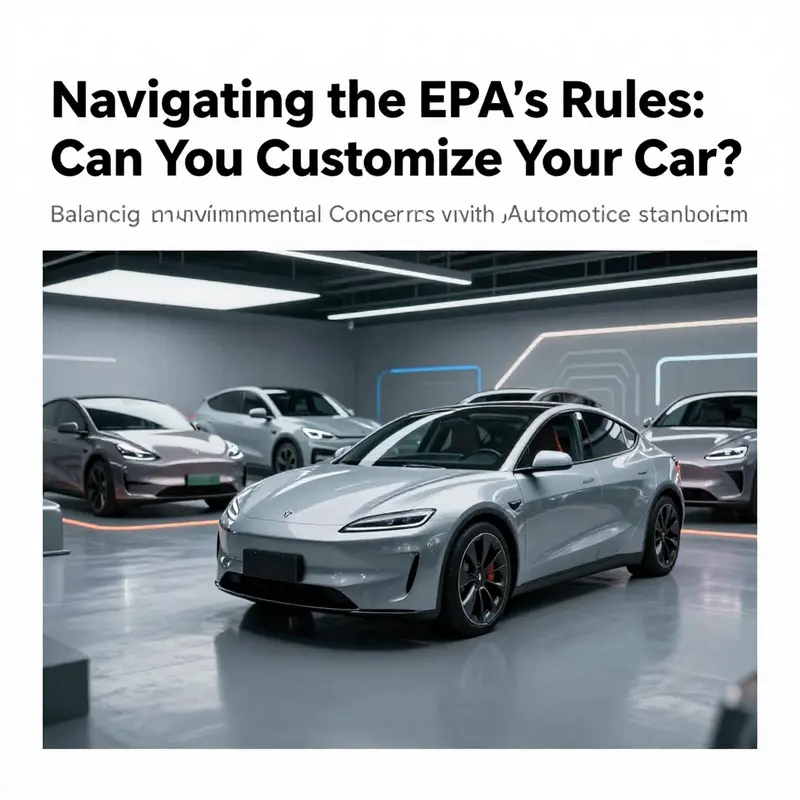
The conversation around car modifications has reached a pivotal crossroads. It is not a war on personal expression or performance, but a careful negotiation between creativity on the road and accountability for the air we share. The EPA’s enforcement narrative centers on one clear core idea: protect the integrity of emissions controls. This means the agency is not banning every alteration a driver might enjoy, but it is actively prohibiting devices, software, and tweaks intended to defeat or circumvent emissions systems. In practice, that distinction matters. It preserves the space for aesthetic and functional customization while closing the loopholes that let a vehicle slip past clean air standards during real-world driving.
Defeat devices, the term that keeps surfacing in regulatory and public discourse, are a specific class of cheat. They detect when a vehicle is undergoing testing and temporarily reduce emissions to pass a laboratory or inspection protocol. Once the test ends, emissions can climb back to higher levels. The Dieselgate scandal cemented the public memory of this tactic and crystallized the legal and ethical stakes involved. The EPA’s prohibition on defeat devices spans hardware, software, and any mechanism that produces a deceptive dip in emissions during tests. This careful targeting helps ensure that the protection of air quality remains robust under real driving conditions, not just during the test cycle.
Equally important are illegal emissions-related modifications. Some enthusiasts pursue performance gains by tampering with the engine or exhaust in ways that push the vehicle beyond legal emission limits. Removing catalytic converters, ECU reprogramming or “chipping” to alter fuel timing, and aftermarket exhaust or intake components that bypass factory controls are classic examples. The law is clear: altering a vehicle in a way that increases pollution or undermines compliance is illegal. The EPA also restricts the sale or manufacture of parts designed to defeat emissions systems, so the ripple effects extend through distribution networks, repair shops, and secondhand markets. In effect, the message is precise: shortcuts that degrade air quality have no safe harbor in the regulatory framework.
Yet the broader arc of the story is not simply enforcement. It is a shift in how the car culture itself envisions modification. People who love cars increasingly see performance and sustainability as a shared horizon rather than as opposing poles. Advances in greener technologies—electric powertrains, lightweight materials, and smarter aerodynamics—are redefining what counts as a modification. These evolutions allow enthusiasts to pursue speed, handling, and responsiveness without compromising environmental goals. The trend lines in the industry point toward efficiency as a performance-enabler, not a constraint. A 2021 life cycle assessment study cited in the research results suggests that targeted modifications, such as replacing internal combustion propulsion with electric motors, upgrading tires for higher efficiency, or even exploring solar integration, can meaningfully reduce a vehicle’s environmental impact over its lifetime. In other words, the hunt for better performance can be harmonized with a lighter ecological footprint when guided by rigorous design and responsible stewardship.
The future of car modifications, as the research indicates, is not a simple catalog of parts but a philosophy shift. Enthusiasts are increasingly embracing a framework where technology serves both thrill and stewardship. Lightweight materials reduce energy draw, intelligent suspensions optimize road feel without wasteful power use, and aerodynamic refinements balance speed with efficiency. This is not a surrender to conservatism but an expansion of possibility. The collision of performance engineering with cleaner technologies invites a broader community to participate in shaping the next generation of driving experiences. It is a landscape that rewards experimentation, but with guardrails that protect health and environment.
Another layer of complexity comes from the integration of smart systems and, more broadly, automated highway concepts. As vehicles become more connected and capable of cooperative speed and energy management, there is a legitimate question about how modification can align with these shifts. The idea of connecting to electrified rails or adopting low-emission mobility corridors is less about erasing the love of cars and more about finding practical, scalable ways to move people with less pollution. In this sense, modifications move from being purely mechanical or cosmetic to becoming elements of a holistic mobility system. The aim is to preserve the joy of driving while reducing urban congestion, improving air quality, and enabling smarter use of energy.
For readers who want to explore modification within a sustainable frame today, the path is convergent rather than contradictory. Some enthusiasts are pursuing electrification swaps or hybridization as a method to retain the driving feel they crave while cutting emissions. Others are upgrading to high-efficiency tires, adopting regenerative braking strategies, or incorporating energy recovery and storage solutions that complement electric propulsion. The outcome is a product of thoughtful engineering and value-driven decision-making, not a rejection of customization. And as the market grows—driven by technology advances and shifting consumer values—the spectrum of permissible, responsible upgrades expands.
This is not to gloss over the practical realities. The legal landscape remains a critical compass. Modifications that compromise a vehicle’s ability to meet federal clean air standards, particularly those involving the engine management or exhaust systems, remain outside the boundaries of lawful practice. The EPA’s mandate is clear: preserve air quality, deter deception during testing, and maintain the integrity of emissions controls. Car owners and modifiers alike benefit from understanding where those lines lie and how to navigate them responsibly. For readers seeking concrete guidance on what counts as legal modification, there are reputable resources and communities that emphasize compliance, safety, and informed decision-making. A helpful starting point is to learn about the legality and scope of modifications through sources that focus on compliant upgrades and safer practices, such as the discussion on legal car modifications.
The culture around car customization thrives on curiosity and ingenuity, but it also benefits from a shared commitment to public health and environmental stewardship. As greener technologies become more capable and affordable, the reasons to keep improving performance while reducing pollution become stronger. The intersection of performance and responsibility invites a broader audience to participate—engineers, hobbyists, students, and professionals—each contributing to a future where the driving experience is as memorable for its speed as for its sustainability. The driving joy remains real, but the frame around it becomes more rigorous, more inclusive, and more resilient against a legacy of cheating or casual disregard for air quality.
If you want to dig deeper into how people are reconciling modification with legality and sustainability, you can explore discussions on legitimate modification paths and their implications for insurance, resale value, and upkeep. For instance, discussions about what counts as legal car modifications can provide useful context for ensuring that a project stays within the boundaries of the law while still fulfilling its performance or aesthetic goals.
Ultimately, the trajectory of car modifications will be shaped by continuous innovations in propulsion, materials, and control systems, guided by a public health imperative. The EPA’s targeted approach does not sterilize a hobby; it reframes it. It asks the community to pursue enhancements that uplift efficiency and safety as much as they elevate the driving experience. The future is not a choice between purity of the air or purity of the road passion; it is a negotiation that preserves both with integrity and imagination. As the chapters of this article unfold, readers will see how this balance evolves in policy, industry, and everyday practice, and how a greener, smarter, more enjoyable driving culture emerges from a thoughtful embrace of change. For more on how compliant modifications and broader environmental goals intersect in practice, the EPA’s Green Vehicles information offers official context and guidance on reducing environmental impacts through responsible vehicle choices and technologies.
External resource: Learn more about federal clean air standards and how modifications intersect with those standards at the EPA Green Vehicles page. https://www.epa.gov/greenvehicles
Final thoughts
In an age where environmental responsibility is paramount, the EPA’s regulations on car modifications represent a necessary compromise between car enthusiasts and regulatory bodies. Understanding these regulations allows enthusiasts to navigate their passions without facing legal consequences. While certain performance enhancements may be restricted, creativity and innovation thrive in the automotive space. By adhering to EPA guidelines, car modifiers can still indulge in their passion while contributing to a healthier planet. The future promises a landscape where automotive passion and environmental sustainability can coexist harmoniously.