
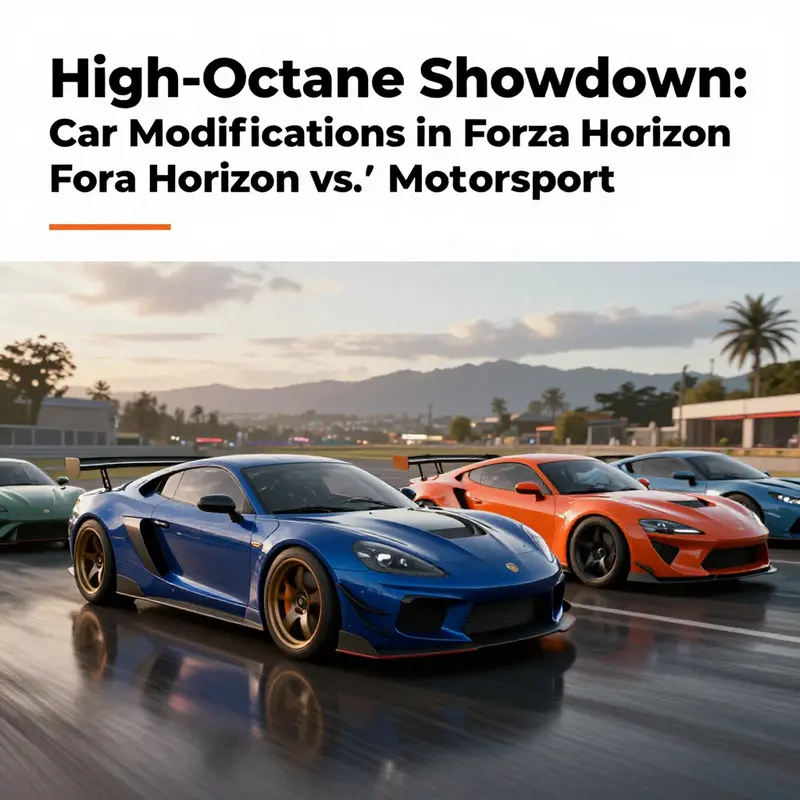
The relentless pursuit of automotive perfection drives car enthusiasts, whether they’re tuning a real vehicle in a garage or modifying a digital one in a video game. Car modification is not just about performance; it’s a form of self-expression, creativity, and an art form in itself. In the realm of virtual racing, the competition between Forza Horizon and Forza Motorsport showcases two distinct philosophies in car modification. While both games harness core tuning mechanics, their approaches cater to different experiences and audiences. This article will critically explore how car modifications operate in each game, delving into their similarities and differences, with a specific focus on visual customization, creative freedom, gameplay impacts, and overall accessibility and fun. By the end of this journey, enthusiasts will gain a comprehensive understanding of how these two celebrated titles enrich the car modification experience, whether in the digital realm or the real world.
null
null
Visual Language of Speed: How Open-World Racing Expands Aesthetic Expression Beyond the Core Simulation
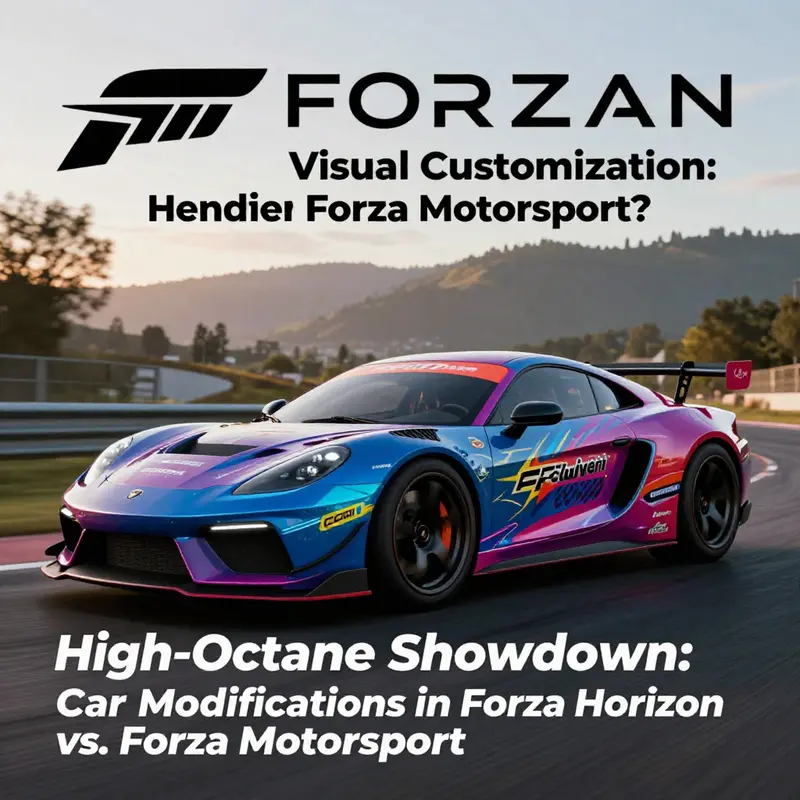
The conversation about car modification in modern open-world racing titles often centers on two intertwined ideas: tuning for performance and shaping a personal, recognizable presence on the road. In the open-world, festival-spirited lineage, visual customization and world integration sit alongside mechanical tuning as a defining feature. This chapter explores how Horizon-style titles broaden the scope of modifications beyond the traditional, simulation-heavy toolkit, and why that expansion matters for players who seek not just speed, but identity in their rides. While the core tuning mechanics share a common foundation with the more traditional, track-focused lineage, the Horizon approach treats aesthetics as a first-class companion to performance. In practical terms, this means players are invited to sculpt not only how a car goes, but how it looks, sounds, and fits into a vibrant, living world where every corner of the map can reflect a player’s tastes. The result is a modification culture that prizes expression as much as engineering, creating a feedback loop between the car, the driver, and the environment that is hard to ignore when navigating the game’s open spaces and social playgrounds.
At the heart of this broader visual culture is a deepened emphasis on avatar and character personalization. Horizon-style experiences often present players with extensive options to craft a distinct digital identity. Characters become extensions of the vehicles they drive, and players come to see their avatars as co-stars in the show of their cars. In this design logic, facial features, hairstyles, skin tones, and clothing choices are more than cosmetic choices; they are statements about who is behind the wheel. Updates in the broader Horizon lineage have pushed this idea further, introducing new hair color options, voice selections, and outfit systems that can be acquired through in-game activities and rewards. The upshot is a stronger sense of belonging and personality within the world, a sense that the player is not merely tuning a car but composing a larger narrative through appearance and style. For players who care deeply about identity in a game world, this shift is transformative. It also subtly reframes what counts as “modification”: the visual presentation of a character often becomes as legible as the car’s silhouette against a neon-lit skyline.
The environments themselves are another arena where Horizon-style titles democratize modification. The open world is designed as a visual stage, with dynamic weather systems, day-night cycles, and highly detailed landscapes that respond to player choices. Weather and lighting are not just backdrops; they are tools for storytelling and photography, enabling players to craft scenes that feel cinematic or quirky, depending on mood and intention. While the core game engine delivers realism and polish in the cars themselves, the surrounding world becomes a reflection of the player’s taste. Players push the bounds of visual customization by aligning their car’s wrap, decals, chrome accents, and lighting with the way they stage a photo shoot or a rally through a rain-soaked canyon at dusk. In this sense, the Horizon experience elevates visual tweaking from a cosmetic add-on to a central method of world-building and self-expression. Players who enjoy a dramatic, color-rich, and showy presentation will find the horizon-verse particularly forgiving and rewarding, because the world itself becomes a canvas that evolves alongside the car.
This emphasis on artistry extends to a broader set of creative tools that enable mashups and hybrid glimpses of what a car could be. A distinctive feature in the Horizon family has long encouraged players to explore parts and styles beyond strict real-world authenticity. The result is a culture of experimentation where hybrid concepts—cars assembled from disparate parts and adapted for fantasy or near-fantasy performance—are not just possible but actively celebrated. Such creative freedom is not merely decorative; it directly ties into how players approach progression and competition. Upgrades can be pursued through social and competitive modes, so that the visual and the functional advance together as players showcase their unique builds in events that emphasize drift, rally, or sprint style. The practical implication is clear: while traditional tuning remains an important tool for handling and speed, the Horizon approach treats modification as a holistic practice that blends form, function, and fantasy.
The contrast with the more traditional, track-focused lineage should not be mistaken for a claim that Horizon abandons performance discipline. On the contrary, the underlying tuning framework—engine power, suspension, drivetrain, tire characteristics—continues to inform behavior and control. What changes is the value placed on the extra dimensions of modification. The visual and stylistic systems interact with performance in meaningful ways; for example, a car’s color, wrap complexity, and lighting can influence how it stands out in a crowd, which affects a player’s confidence, risk-taking in overtakes, and the way others perceive and respond to that vehicle. In simple terms, the Horizon approach treats aesthetics as a form of feedback that can influence gameplay decisions in open-world scenarios, where exploration and social interaction are as common as laps around a circuit. This is not mere decoration; it is an extension of the player’s agency within a living, reactive world.
From a practical perspective, the Horizon philosophy also makes tuning feel more accessible and immediately rewarding. The act of adjusting a vehicle’s appearance and lighting is quick, visual, and gratifying. The effect is instant: the car looks the part in a crowded festival setting, photographs well against dramatic backdrops, and often serves as a validation that the player’s choices matter beyond a single race result. This tactile immediacy contrasts with the more technical, numbers-forward tuning that characterizes the mainline simulation lineage. That difference matters because it shapes who engages with the game’s modification systems and how they experience the game’s progression loop. A player drawn to spectacle and social play will likely feel more at home in an environment where every hue, pattern, and glow contributes to a personal narrative linked to the car, the race, and the story unfolding around them.
The impact of visual customization on the player community is another important thread. When players can express themselves through vehicle aesthetics and avatar identity, the social fabric of the game expands. Shared images, photo spots, and themed events become a language through which players communicate taste and personality. This social dimension reinforces the idea that modification is not a solitary exercise but a communal practice that binds players through recognition, style cues, and the bragging rights that come with a distinctive look. It also invites players to explore the broader ecosystem of community-created content, where wraps, decors, and lighting schemes circulate beyond a single play session. In this milieu, the creative potential of modification becomes a shared asset that enriches the game world for everyone, even those who lean more toward the technical side of tuning.
For readers curious about the broader spectrum of visual customization and its cultural resonance, consider exploring a related discussion on unusual car aesthetics and the ways players push the boundaries of modification culture. Weird Customized Cars offers a snapshot of how far the imagination can travel when players are empowered to make a vehicle their own, both in appearance and in the stories they tell on the road. While that article sits in a different corner of the hobby, it helps illuminate why the Horizon-style ecosystem prioritizes expressive possibility as a core feature, not merely a garnish. The link serves as a window into a broader conversation about how visual identity intersects with play, community, and narrative in racing titles.
As this chapter threads through the topic, it becomes clear that the horizon approach to car modification—rooted in open-world exploration, character personalization, dynamic environments, and collaborative culture—presents a distinctive philosophy. It does not abandon performance; it repositions aesthetics and world-building as essential components of the racing experience. In contrast to the more restrained, simulation-heavy approach that prioritizes realism and track authenticity, Horizon-style tuning invites players to craft a living, visually rich identity that travels with the car across diverse landscapes and social settings. The chapter thus returns to the central question with a nuanced answer: yes, horizon-style games broaden the concept of modification beyond the constraints of a purely performance-focused toolkit, and they do so in ways that reshape how players perceive speed, style, and belonging on the road they share.
External reference: https://en.wikipedia.org/wiki/Vehicle_modification
Creative Freedom in Car Modifications: Forza Horizon’s Expression-Driven Tuning vs. Forza Motorsport’s Precision
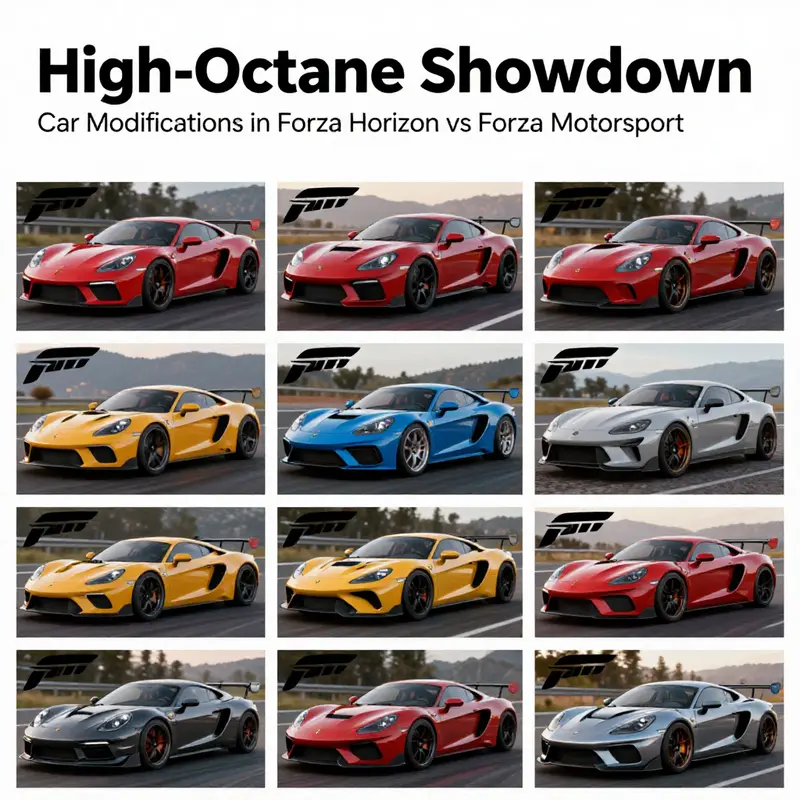
Racing games often ask a simple question: what makes a car truly yours on the track? In the Forza ecosystem, two distinct answers emerge from its twin branches. Forza Horizon leans into freedom, spectacle, and self-expression within a vibrant open world. Forza Motorsport, by contrast, anchors its identity in technical realism, strict adherence to engineering principles, and precision contest logic. Both share a common mathematical heartbeat—the way a car’s performance can be tuned, balanced, and pushed to the limit. Yet the routes they take to reach that limit are noticeably different. If you wonder whether Forza Horizon has the same car modifications as its simulation-focused cousin, the answer is nuanced: they share core tuning mechanics, but Horizon broadens the field with creative, aesthetic, and community-driven layers that Motorsport does not emphasize. The result is a spectrum of modification that invites both meticulous setup and expressive experimentation, depending on what players value in their drive.
At the core, both titles preserve the essential tuning toolkit that the real world engineering world recognizes. You still adjust engine output, turbo behavior, ignition timing, transmission behavior, differential settings, suspension geometry, spring rates, damping, and tire characteristics. In both games, these choices are not cosmetic. They redefine how a car accelerates, corners, and brakes, and they influence stability across different terrains and weather conditions. The physics model remains grounded in realism, which is crucial for players who drift within a safe zone of authenticity or chase the most stable lap times around a circuit. But Horizon takes the tuning premise and folds it into a broader, more accessible play space. The tuning still matters, but the emphasis shifts toward how tuning feels as a part of a living, shared world rather than a solitary drill on a dry test track.
Where Horizon expands the horizon, so to speak, is in how players interact with their cars visually and socially. The paint booth becomes an art studio, and the wrap editor a gallery. Horizon’s visual customization offers a depth and variety that invites players to express their identity through color palettes, vinyls, decals, chrome accents, and even lighting effects like neon underglow. This is not merely vanity; in a game world built around festivals, photo-worthy moments, and spontaneous sport-pride, a car is a moving banner of personal style. The car you drive through a drift zone or a rally sprint can communicate a mood, a culture, or a joke that resonates with the community. It’s a different kind of performance—the ability to attract, to be recognized, or to simply enjoy a standout look as you drive through a sunlit vista or a neon-lit city street.
Crucially, the Horizon option set includes Creative Modes that empower players to go beyond swapping engines and tuning gears. A standout feature in Horizon’s design is the capacity to assemble entirely new vehicles from parts across multiple cars. This isn’t about building a hypothetical real-world machine; it’s about reimagining what a car can be within the game’s physics sandbox. The result is a hybrid or a radically customized machine that doesn’t exist outside the game. This kind of freedom speaks to a philosophy: the journey is as important as the destination, and the vehicle itself acts as a canvas for the player’s imagination. The same spirit extends to EventLab, which invites players to craft new events with unique rules, objectives, and even physics settings. The community becomes a studio, and the festival world becomes a testing ground for ideas that extend far beyond a single race series.
That creative freedom changes the way players think about progression. In Horizon, upgrades are not only about shaving tenths off a lap time; they’re tied to how you perform in Drift Challenges, Rally events, and speed trials that weave through open-world environments. Cars are instruments for experiencing the world in new ways. Upgrades and tuning choices ripple through the gameplay loop, shaping which events feel natural or exciting and which ones feel like a challenge to conquer with a particular driving style. The integration with social modes turns modification into shared culture. Your car’s look and its performance profile become part of a player’s identity within a wider, constantly evolving cluster of events, challenges, and creations. This is not a detour from racing; it’s a redefinition of what racing can feel like when the world itself is a playground rather than a straight line between two checkpoints.
In Motorsport, the emphasis remains relentlessly on realism and technique. The tuning tools exist, but they are framed as precision tools, used to extract every conceivable ounce of performance under real-world constraints. Tire pressures, camber, ride height, brake bias, gear ratios—all of these sit within plausible operating windows that correspond to real engineering limits. The aim is not to push a car into a spectacle of style but to tune it to tight, repeatable performance criteria on authentic circuits or simulated race conditions. Visual customization is present, but it plays a more restrained role, often tied to liveries and branding that mirror sponsorships and professional teams. The emphasis is on mastering dynamics, tire behavior, weight transfer, grip, and the relationship between grip and aero load. The reward is measurable: faster lap times, improved consistency, and a deep understanding of how a vehicle behaves at the edge of stability under high-speed, high-precision driving.
The contrast becomes more than just a difference in features. It’s a reflection of how players approach the sport of driving within a virtual world. Horizon invites experimentation, play, and personal storytelling through cars that look and feel distinctive. It rewards players who enjoy turning heads as much as they conquer a time trial. Motorsport rewards players who enjoy the discipline of racing at a professional cadence, where every setting has a reason grounded in real physics and racecraft. Both share a DNA of authentic simulation, but Horizon adds a layer of accessibility, sociability, and creative exploration that broadens who gets to enjoy the art of car modification.
For readers who want a direct comparison: Horizon’s modification system is not an exact mirror of Motorsport’s. The core tuning knobs—engine, drivetrain, suspension, aero—are present in both, but Horizon layers on the aesthetic and generative capabilities that Motorsport does not emphasize. The visual customization volume—hundreds of wraps, colors, decals, rims, and lighting—transforms the car into a moving canvas. The “Customize” fashionably expands that canvas by letting players assemble parts into hybrids and by enabling events that allow for variable physics settings. The way in which these changes ripple through gameplay is also different. In Horizon, a car’s modification can unlock or tailor new event paths, shape your social competition, and become a part of your festival identity. In Motorsport, tuning is a tool for achieving the fastest time under competitive constraints, with a focus on reproducibility and real-world physics fidelity.
This does not mean Horizon abandons realism, nor does Motorsport reject creative flair. Instead, it highlights a spectrum within the same franchise where players can choose a path that aligns with what they seek from a racing experience. If the question is whether Forza Horizon has the same car modifications as Forza Motorsport, the practical answer is that the underlying physics and performance tuning models are aligned—yet Horizon significantly broadens the scope of modifications to include extensive visual and creative layers. Those layers transform the act of modification from a purely technical exercise into a social and personal pursuit: a way to narrate one’s identity through a car that moves as much as it looks.
For readers who want to explore more about how modification fits into broader car culture and game design, a practical guide on general car modifications can be helpful. See the discussion at car-modifications-guide for broader context on how changing setup and aesthetics interact with value, insurance, and performance in a real-world frame of reference. While the real world imposes different constraints, the core idea remains: customization is a braid of function, identity, and risk, stitched together by the player’s choices.
In summary, Forza Horizon and Forza Motorsport share a common engineering heartbeat but diverge in spirit. Horizon treats modification as a gateway to creativity, culture, and social play in an expansive, festival-inspired world. Motorsport treats modification as a disciplined discipline, a craft aimed at consistent elite performance under realistic constraints. If the goal is to know whether Horizon can replicate the exact same modification experience as Motorsport, the answer is nuanced and honest: not in totality, but in key parts of the tuning backbone; yes, in the sense that Horizon expands the canvas with expressive, community-driven layers that make car modification a living, evolving art form. This is the heart of Horizon’s appeal—where the drive is as much about who you are behind the wheel as about how fast you go.
External resource: https://www.xbox.com/en-US/games/store/forza-horizon-6-deluxe-edition/9n8z4l2j7xkq
Tuning Worlds: How Car Modifications Shape Play in Forza Horizon vs Forza Motorsport
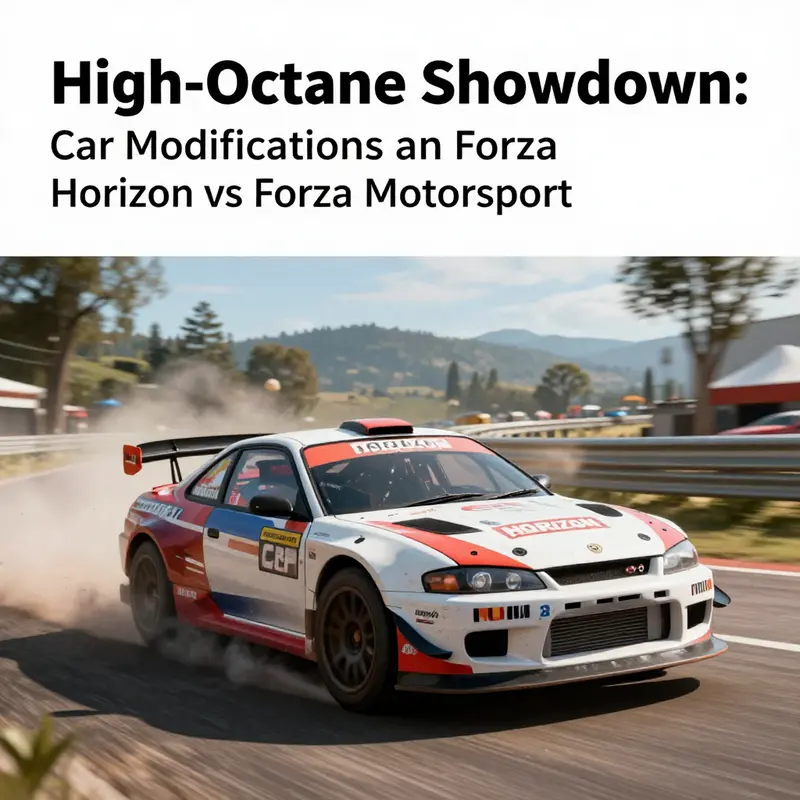
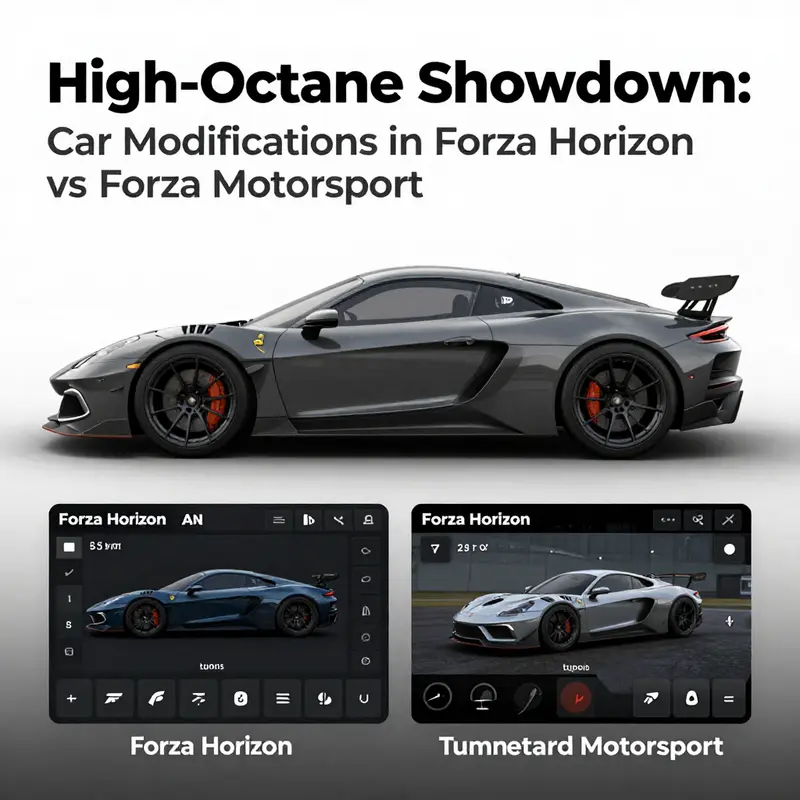
Car modifications do more than tune numbers in racing games; they shape how a driver experiences the world of each title. When you compare the Horizon series with the Motorsport line, the core idea of tuning—adjusting engine output, drivetrain behavior, suspension, tires, and aero—remains a common thread. Yet the way those adjustments feel, look, and influence the driving experience diverges in meaningful ways that reflect each game’s design priorities. The Horizon games lean into open-world exploration and social play, while the Motorsport titles lean into circuit precision and engineering realism. This divergence doesn’t erase similarity; it reframes it. The same toolkit—turbo pressure, gear ratios, spring rates, dampers, tire compounds, and downforce—exists in both, but the destination changes. In Horizon, tuning is a bridge to creativity and spectacle; in Motorsport, it is a bridge to authenticity and competitive mastery. The chapters of tuning thus read as a single story about how players shape a vehicle to fit a chosen stage and a chosen style of play, even as the stage and the style differ. With that in mind, the modifications in Horizon and Motorsport operate like two sides of the same coin: shared physics, distinct aims, and a shared conviction that setup matters, just not in the same way for every chase, race, or stunt ahead.
In both horizons, the fundamental tuning mechanics map directly onto the driving problem: how to coax more grip without surrendering too much speed, how to balance stability with agility, and how to make a car feel predictable enough to push through a corner at the limit. Engine tuning, drivetrain configuration, suspension geometry, and tire behavior are the levers that players learn to pull. The goal remains to optimize performance for the intended environment—whether it is a twisty circuit or a sunlit, variable-open world. In a broad sense, the engineering mindset travels with you from one title to the other: understand grip, balance, and response, then align those traits with your driving style. But the experiential delivery of that knowledge shifts because Horizon and Motorsport reward different kinds of mastery. Horizon rewards expressive control and responsive feel across diverse terrains and weather conditions; Motorsport rewards precise feedback, repeatable behavior, and mini-trade-offs that reveal their truth on a race track.
Forza Horizon 5, in particular, expands the canvas on which car behavior plays out. Visual customization and aesthetic freedom are not afterthoughts; they are integral to how players engage with the world. You can alter paint schemes, wraps, decals, vinyls, chrome accents, and even lighting, creating a vehicle that stands out in a festival-brimming landscape. This is not mere vanity; it is a form of tuning that affects how a car interacts with the world’s social dimension. When a vehicle’s look signals its personality—aggressive, playful, outrageous—players approach it with a different mental model. The same car, with the same mechanical setup, can feel dramatically different because of the confidence and identity it communicates to its driver and to other players. Horizon’s modifications thus become a language for expression as well as performance. A unique wrap or neon underglow can reduce the cognitive load of distinguishing your car in a crowded rally or drift event, enabling faster recognition and more fluid decision-making on the track or road. This visual language is deliberately aligned with Horizon’s festival atmosphere, where spectacle and accessibility are part of the game’s core appeal.
Equally transformative is Horizon’s embrace of creative freedom through features that let players assemble hybrids from parts drawn from multiple vehicles. This Assemble-and-Create approach opens a pathway to experimentation that is largely absent in a simulation-focused realm. The thrill of building a car that defies strict real-world authenticity—part drag-car, part rally-buggy, all yours—feeds a sense of ownership and immediacy. It also reframes what counts as “tuning success.” In this world, success is not merely a faster lap time but a better fit for a player’s aesthetic, driving style, and the way they move through Horizon’s open map. The subtle balance Horizon must strike is to keep the system approachable enough to invite lap-by-lap experimentation while maintaining enough depth to reward refined tuning choices. When downforce settings, suspension upgrades, and tire compounds are tuned with an eye toward a specific event type—Rally, Drift, or Speed Challenge—the changes are felt not only in telemetry but in the story the car tells while the driver navigates a snowy rally stage or a sunlit coastline drift run.
In Forza Motorsport’s realm, the design philosophy steers toward fidelity and predictability under pressure. Here, the same tuning elements—engine maps, turbo parameters, differential bias, brake balance, suspension geometry, and tire pressure—are treated as precise instruments. The physics engine simulates real-world constraints with a level of nuance that rewards methodical thinking. A larger rear wing angle may yield higher downforce for stability in a long, high-speed sweeper, but it penalizes top-end speed and fuel economy in a way that top-tier drivers learn to anticipate and compensate for in the setup phase. Even minor adjustments to grip, weight distribution, or camber can yield measurable changes in lap times and driver feedback. In Motorsport, the objective quality of the setup is not only the speed you find on a single lap but the consistency you can sustain across practice, qualifying, and the race. The discipline is to keep the car predictable and linear so feedback channels—steering, pedal input, and throttle response—remain honest and actionable, enabling a driver to push without guessing.
The contrast between Horizon’s expressive, accessible tuning and Motorsport’s technical, performance-centered tuning also reveals itself in how feedback is delivered to the player. Horizon leans into visual feedback and a sense of immediacy: you feel the car respond to a downforce tweak as you skim the edge of a cliffside road, or you sense that a suspension upgrade cushions a jump with fewer lurches and more control. The world’s color and motion amplify the effect of changes, making tuning feel less like a lab experiment and more like a character choice in a scene you’re living. Motorsport, by contrast, relies on data, telemetry, and feel. The game offers a feedback loop grounded in chassis dynamics and track realism. A driver learns to parse tire temperatures, brake balance shift, and aerodynamic load in a way that translates into faster sector times and cleaner corner exits. The driving experience becomes a narrative of precision: every inch of alignment, every pound of downforce, every degree of toe contributes a known and measurable tweak to performance.
This divergence is not a moral choice about what is right for car modification. It is a design decision about what the player will do with the car and where the car will take them. Horizon invites players to explore, experiment, and express, turning tuning into a form of play that blends stunts, challenges, and open-world exploration. Motorsport invites players into a workshop where every component is a tool for mastery, and the payoff is the quiet satisfaction of shaving fractions of a second from a time trial. The two experiences complement each other in a larger sense: they demonstrate that the same underlying physics can be packaged in ways that serve different goals—joyful spontaneity on a vast map versus disciplined, repeatable performance on a detailed circuit.
In the end, the question of whether Forza Horizon offers the same car modifications as Forza Motorsport is not a simple yes or no. The core mechanics—tuning engine, drivetrain, suspension, tires, and aerodynamics—are shared, but the emphasis shifts. Horizon uses modifications to fuel personal expression, social play, and creative experimentation within a living, colorful open world. Motorsport uses modifications to support authenticity, precision, and a rigorous training-ground for driving skill and strategic thinking. The chapter of tuning in each game thus reads as a different act of a shared craft: in Horizon, a festival of setup and style; in Motorsport, a laboratory of performance and discipline. Players can arrive at similar performance outcomes, but the routes and the motivations differ, shaped by what each game asks of a driver and how each world invites them to engage with the car they drive.
For those curious about how to balance grip with top speed, or how a downforce tweak can alter tire heat and cornering stability, a deeper dive into the physics behind these effects can be enlightening. A handy resource on the broader principles of aerodynamics offers context for why up to a point more downforce improves grip but eventually hinders top-end performance. See this general overview of aerodynamics for a more rigorous background. If you want a concise guide to tuning that is more aligned with Horizon’s style—while still grounded in real-world principles—you can consult the car modification guide linked here: car modification guide. This resource emphasizes practical tuning steps, blending performance with accessibility so players can experiment safely and enjoyably across Horizon’s world. Together, these references provide a map for understanding how modifications translate into feel and results across both Horizon and Motorsport, reinforcing the idea that tuning is a bridge between physics and play, between realism and imagination, between the street and the circuit.
Open-World Tuning: Expressive Mods and Realistic Physics
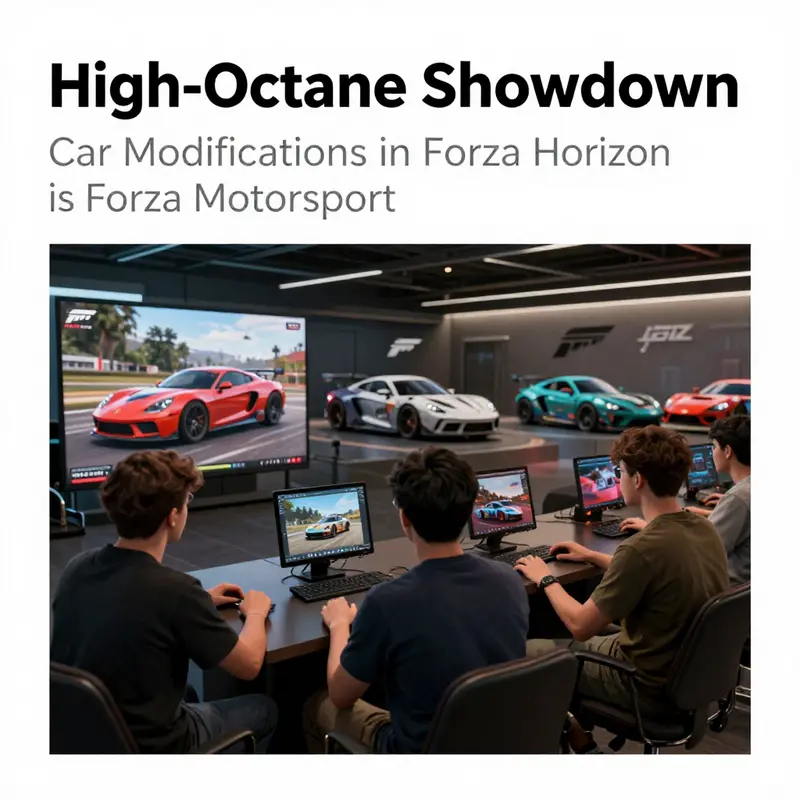
Open-world racing games reframe tuning as a social and expressive act as much as a technical one. The same physics foundations underlie both open-world platforms and traditional simulators, but Horizon-style tuning blends depth with accessibility: you adjust engine, suspension, aero, and tires while also shaping appearance through paint, wraps, decals, neon, and lighting. The result is a vehicle that communicates identity and participates in a living community, with immediate visual and tactile feedback that rewards experimentation. A visible modification loop makes changes feel meaningful beyond seconds shaved off a lap time, and the world itself responds to your setup as you explore rally routes, drift zones, and speed challenges. The toolset supports hybrids by mixing parts from different vehicles, enabling creative experimentation that tests intuition and adapts strategy to diverse event types. Social play, showcasing, and personal storytelling sit alongside performance to form a cohesive tuning culture where aesthetics and feel influence how you approach driving. Accessibility is baked in through clear interfaces, adjustable speeds, subtitles, color options, and control remapping so more players can engage with the tuning journey without losing depth. In contrast, traditional simulators prioritize realism and precision, with deep, data-driven tuning focused on track performance. They reward meticulous tuning of gear ratios, torque curves, aero balance, and suspension damping, often at the expense of immediate visual appeal or broad accessibility. The key takeaway is that both approaches serve different player motivations: inclusive creativity and social expression on one side, uncompromising fidelity and advanced engineering on the other. For players who want both, a belt-and-suspenders approach – physics-grounded tuning with expressive customization – offers a path to participate in a vibrant community while still chasing authentic handling. For readers seeking practical grounding, a concise car-modifications guide condenses the core trade-offs of engine, suspension, aero, and cosmetics; the guide provides core ideas for understanding tuning choices and their effects without getting lost in jargon. This material highlights accessibility features across platforms and how inclusive design broadens who can enjoy high-speed driving and customization without diminishing tuning depth.
Final thoughts
In the vibrant and competitive realm of virtual racing, the differences between car modifications in Forza Horizon and Forza Motorsport reflect distinct philosophies that cater to varying tastes among automotive enthusiasts. Forza Horizon impresses with its expansive visual customization, buoying creativity and personal expression, while also engaging players in fun, action-oriented gameplay. In contrast, Forza Motorsport prioritizes an authentic and technical tuning experience, appealing to those who revel in precision and simulation. As you embark on your automotive journey, whether in game or reality, both titles offer valuable insights into the art and science of car modification. Ultimately, it’s about finding the right balance between performance, style, and personal joy—the defining characteristics of any true car enthusiast’s experience.