
Car modification is an art, a passion, and for many, a way to express individuality. However, this creative process can encounter legal boundaries, especially regarding illegal modifications. Understanding the fine line between legal enhancements and illicit alterations is crucial for hobbyists, professional tuners, and classic car restorers alike. From engine tweaks to structural changes, this article serves as a comprehensive guide to navigating the regulations that govern car modifications. We will explore three main categories of illegal modifications: engine alterations, chassis and frame changes, and body tweaks. Each chapter will dissect these aspects and emphasize their implications, ensuring that your passion for car culture stays on the right side of the law.
Power Without Permission: The Legal Edge of Engine Modifications
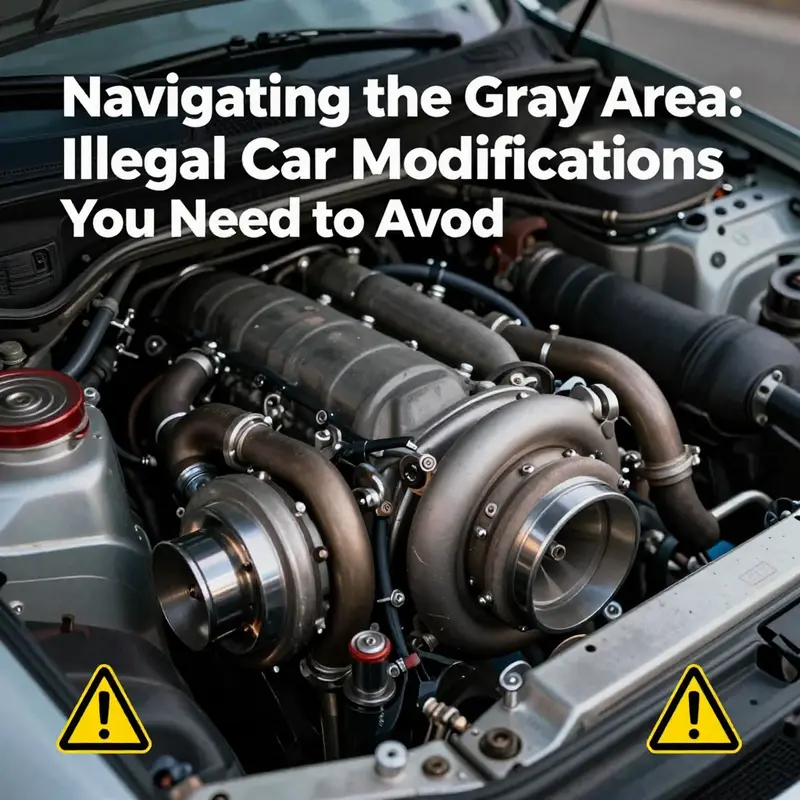
Engine modifications sit at a paradoxical crossroads in modern driving culture. On one hand, enthusiasts chase the thrill of extra response, sharper throttle, and improved efficiency. On the other, regulators and insurers worry about how those changes ripple through safety, air quality, and accountability on the road. This tension is not a mere academic footnote. It translates into real consequences that can alter the fate of a driver, a vehicle, and the people around them. When a builder starts tapping the engine for more power, the modification can slip from a purely mechanical adjustment into a legal risk. The entry point to this risk is simple to describe, yet its implications spiral widely: altering the engine in a way that bypasses the factory configuration or violates emissions standards. What looks like a straightforward performance upgrade can, in many places, become a violation of law and a challenge to the vehicle’s public safety and environmental obligations.
The core idea behind engine modifications is straightforward. The engine is a highly integrated system. Its combustion process, fuel delivery, ignition timing, exhaust flow, and onboard diagnostics work in concert with the vehicle’s braking, suspension, transmission, and safety systems. Changing one piece of that orchestration without proper adjustment of the others can undermine reliability and predictability. For instance, increasing engine power through tuning or internal changes can push the engine beyond the cooling capacity designed by the manufacturer. It can alter turbocharger behavior, alter fuel-air ratios, and shift sensor readings in ways that the rest of the car is not calibrated to handle. The result may be a car that feels more powerful in a straight line but responds unpredictably in emergency maneuvers, or that consumes more fuel and rides rougher under real-world loads. In such cases, the risk is not merely a potential for a malfunction; it is a potential for a safety compromise on ordinary streets and highways.
Across different countries, the boundaries between permissible and illegal engine work are set by a web of environmental, traffic safety, and vehicle registration rules. In the United States, the Environmental Protection Agency has long established that emission control devices and their proper functioning must be maintained. The regulatory framework is designed to ensure that modifications do not cause vehicles to emit pollutants beyond what the law allows. When engines are altered to bypass or defeat emission controls, the law steps in. Even changes that seem small, such as reprogramming the engine control unit for faster acceleration or removing a catalytic converter, can trigger noncompliance under federal environmental statutes. State environmental agencies and department of motor vehicles may mirror or extend these rules, adding their own testing and certification layers. The upshot is a landscape where power fantasies must contend with air quality standards, and where a balance must be struck between performance goals and the public interest in clean air and safe roads.
One can see the legal stakes most clearly in the area of emissions control devices. These devices, including catalytic converters, oxygen sensors, and particulate filters, are not decorative appendages. They are integral to how the engine converts fuel into usable energy while minimizing the release of pollutants. When modifications remove or defeat these devices, the engine may produce higher levels of nitrogen oxides, carbon monoxide, and fine particulates. The science is straightforward: more pollutants contribute to smog, respiratory issues, and long-term health risks for communities, especially those living near busy corridors. Regulators enforce limits on emissions per model and per roadworthy year. Defeating or bypassing those systems undermines public health protections, and it is treated seriously by authorities. The legal consequences can escalate quickly from fines and mandatory restoration to more severe penalties if the modification is deemed deliberate evasion or causes significant environmental harm.
The regulatory narrative also encompasses functional and safety implications. Engine work can influence how the vehicle’s braking systems coordinate with engine torque, how transmission control adapts to new power bands, and how sensors monitor exhaust temperature and backpressure. If the engine responds more aggressively to throttle input without corresponding adjustments in the transmission or braking systems, the risk of loss of control rises, particularly in adverse weather or on dynamic driving routes. Legal frameworks frequently emphasize the vehicle as a whole—alterations that threaten a car’s crashworthiness or that impair critical safety features can trigger penalties independent of emission considerations. In practice, this means that even well-intentioned performance upgrades must pass through a safety lens. The risk is not merely regulatory; it is about ensuring that the car remains predictable and controllable under real-world conditions.
The cultural appeal of engine modification is powerful and persistent. It blends engineering curiosity with a desire for personal expression and competitive edge. But that appeal does not erase the fact that engines operate within a broader system: the road, other drivers, and a framework of laws designed to protect air quality and safety. For many drivers, the right approach is to pursue mods that stay within the boundaries of both safety and law. This often means engaging with the vehicle’s emission-control architecture rather than working around it. It also means seeking official approvals or certifications when a modification is expected to affect the car’s compliance or inspection status. The risk of wandering into illegal territory is not just about a potential stop by law enforcement. It can also mean losing insurance coverage, being relegated to an uninsurable status, or facing a forced restoration order that erases months of labor and investment.
What constitutes an illegal engine modification can vary by jurisdiction, but some patterns are common across many regulatory regimes. Changing the engine model without authorization, increasing horsepower beyond what the design supports, or altering internal components—whether through turbocharging, recalibration, or other means—are frequent red flags. In several legal environments, these changes are prohibited because they disrupt the design balance that ensures the engine and the vehicle can perform reliably under load, heat, and road conditions. The consequences are not abstract. They can include warnings, fines, and a requirement to restore the vehicle to its factory configuration. In more severe cases, a vehicle that fails to meet emission standards or that has unsafe modifications may be barred from annual inspection, which can lead to registration suspension and even compulsory scrapping if the problem persists across multiple checks. The practical effect is that the line between a personal project and a legal violation can be thinner than many owners expect.
In the United States, the legal ecosystem emphasizes accountability for emissions and safety in equal measure. The EPA provides a national baseline for what must be kept intact, particularly with regard to emission control systems and diagnostic readiness. States add layers through their own testing regimes and registration rules, sometimes tightening the leash on modifications that affect vehicle emissions or that alter the vehicle’s true condition for inspection purposes. The result is a two-front challenge: an owner must comply with federal environmental requirements and must also satisfy state or local roadworthiness standards. The complexity grows when a modification touches the sensors or emission devices that feed into the onboard diagnostics system. If a mod causes a mismatch with the data the car reports to its computer, it can trigger a fault indication, a failed test, and a cascade of corrective mandates from regulators.
Beyond environmental and safety angles, insurers have a keen eye on engine modifications. An engine that has been tuned for substantial increases in power changes the risk profile of the vehicle. Insurance policies often rely on risk assessments tied to the car’s factory configuration. When modifications push the car outside that configuration, insurers may request disclosures, adjust premiums, or in worst cases deny coverage or void policies after an incident. The situation becomes especially consequential if the modification is considered unapproved or illegal. The resulting coverage gap can leave the driver with substantial out-of-pocket exposure after an accident or theft. The legal and financial dimensions thus converge in a single, practical question for many drivers: does the modification stay within the bounds of law, safety, and insurance terms, or does it push into a zone that makes driving riskier on every front?
For readers who want to navigate this terrain with more precision, the route is to anchor decisions in regulation rather than impulse. Start with a clear assessment of how a proposed modification interacts with emissions controls. Is the change designed to improve performance while preserving catalytic converters and sensors? If so, it may still require certification or an approved path through the regulatory process. If the change is designed to bypass those controls, expect a high likelihood of illegality and the attendant consequences. Documentation matters: keep records of parts, installation, and any certifications. Seek guidance from qualified technicians who understand both engineering and compliance requirements. And when in doubt, err on the side of preserving the car’s original regulatory posture rather than rushing into a modification that could trigger noncompliance, failed inspections, or insurance disputes. A thoughtful, compliant approach protects not just the car and driver, but the broader ecosystem of road users who depend on predictable behavior and safe performance from every vehicle.
For those curious about how this topic fits into a larger conversation about car culture, it is worth thinking of engine modification as a case study in how expertise, risk, and law intersect. The same curiosity that fuels a home mechanic’s fascination with engine behavior can turn into a breach of environmental or safety rules if pursued without awareness of the consequences. This is not a plea to abandon experimentation; it is a call to pursue knowledge responsibly. In practice, responsible modification means working within the framework of regulatory approvals, staying informed about the latest environmental and safety standards, and recognizing that some roads, including public streets, require a consistent baseline of compliance. The better path is to design upgrades that enhance performance without compromising the engine’s integrated systems, without defeating sensors, and without compromising the vehicle’s ability to pass inspection. Only then can a driver enjoy measurable gains in performance while preserving the trust of the public and the integrity of the road system.
To connect these ideas to concrete inquiries, consider the broader landscape of illegal modifications as they relate to engine work. In some legal systems, the threshold for illegality is not simply about power figures but about the integrity of the vehicle’s emissions and safety infrastructure. This nuance explains why many enthusiasts choose to work with professionals who understand certification processes and the acceptable boundaries of modification. It also clarifies why some jurisdictions maintain clear, published lists of prohibited changes and provide guidance on what adjustments may be approved under specific conditions. The underlying principle is straightforward: performance does not exist in a vacuum. It exists within a chain that includes regulatory compliance, road safety, environmental stewardship, and financial responsibility. When any link in that chain is weakened, the entire enterprise becomes fragile and potentially hazardous.
For readers seeking a compact reference point on the broader topic of illegal engine work, a concise overview is available that discusses the common categories of unlawful modifications and the rationale regulators apply to them. This background helps place engine tuning within a larger framework of legal risk and public interest. illegal-car-modifications
In conclusion, engine modifications can be a source of legitimate ambition and technical learning. They can also be a doorway to unintended violations that carry meaningful consequences. The safest and most prudent path is to align any engine work with the law, preserve the car’s regulatory features, and pursue upgrades in a way that keeps the vehicle safe and compliant. When the modification process is approached with legal clarity and professional guidance, drivers can enjoy improved performance without sacrificing safety, accountability, or peace of mind. The car remains not just a machine for pleasure but a responsible participant in a shared road system. And that responsibility begins with understanding the exact boundaries of legal engine work, the impact on emissions and safety, and the practical steps necessary to stay within those boundaries over the lifetime of the vehicle.
External resource for further reading on environmental compliance and vehicle emissions standards can be found at the following official site: https://www.epa.gov/vehicle-emissions-testing
Structure Under Scrutiny: The Legal and Safety Boundaries of Chassis and Frame Modifications
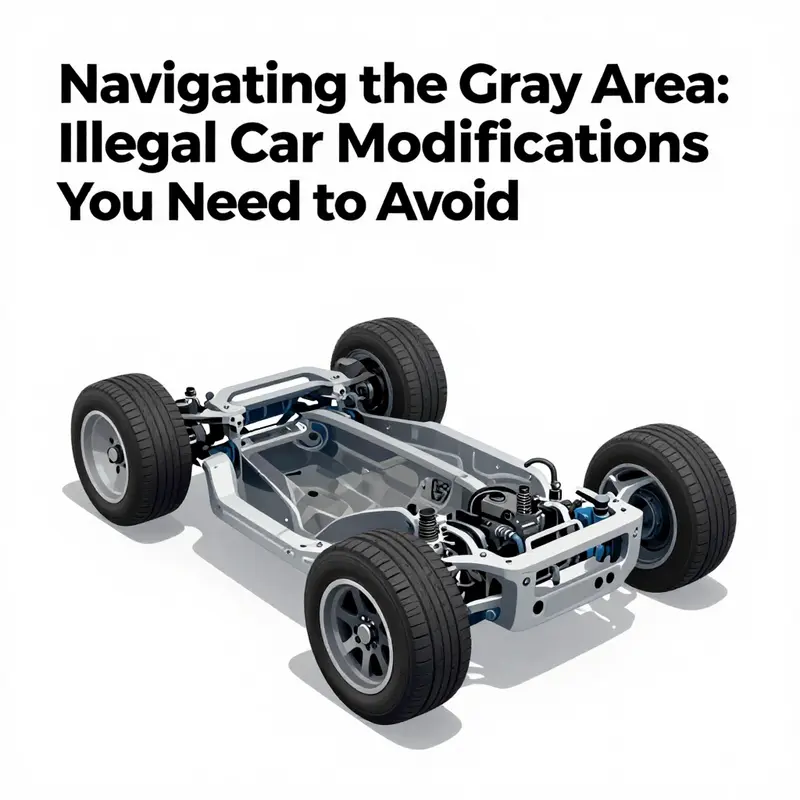
Modifying a car’s chassis or frame is more than a simple upgrade; it is a reengineering of the vehicle’s core safety architecture. In any discussion about illegal modifications, the chassis and frame occupy a special, non negotiable position. They are not merely metal and welds; they are the primary determinants of how a car will behave in a crash, how it maintains rigidity under load, how the passenger compartment is protected, and how the vehicle interacts with safety systems that were designed around its original geometry. When car enthusiasts speak about tuning or modifying, the chassis is usually the last frontier because it is the most tightly regulated and the most consequential. Any alteration that weakens, reconfigures, or otherwise defeats the original design intent raises the risk not only for the driver and passengers but also for other road users. The regulatory framework around chassis and frame work is designed to prevent those risks from becoming real-world tragedies, and it is built on a combination of crash science, manufacturing standards, and ongoing safety testing that rarely tolerates ad hoc experimentation on the scale of structural changes. This is why the topic bears such heavy weight in the landscape of illegal car modifications and why it warrants careful examination within any comprehensive guide to lawful vehicle customization.
To grasp the gravity of these rules, it helps to start with the basic premise that the chassis and frame are not interchangeable parts. They are integral to the vehicle’s crash energy management, alignment geometry, and overall integrity of the passenger cell. Even modest changes can ripple through a car’s performance envelope. For example, altering the frame in a way that changes how the vehicle absorbs impact can shift load paths during a collision, potentially compromising seat anchors, airbags, and occupant retention systems. In other words, the same safety devices that help prevent serious injury may become less effective if the underlying structure is altered without proper evaluation and authorization. When regulations specify limits on how much a chassis can be modified, they are not restricting creativity for its own sake; they are protecting a protected set of variables that engineers rely on to predict real-world behavior under diverse crash scenarios.
Regulatory agencies consistently emphasize the need for preapproval when structural changes are contemplated. In jurisdictions around the world, any alteration involving cutting, welding, reinforcing, or replacing major frame components typically triggers a formal review process. The goal of such reviews is to verify that the modification will still meet safety standards for crashworthiness, occupant protection, and overall vehicle integrity. In the United States, for instance, authorities like the National Highway Traffic Safety Administration (NHTSA) focus on how structural changes impact the vehicle’s compliance with federal safety requirements. They are concerned with whether the redesigned chassis continues to support essential safety features, maintains proper crumple zones, and preserves the integrity of load paths during a collision. The same logic applies in other major markets, where regulators insist on evidence that modifications will not erode the car’s ability to protect occupants or to meet emissions, noise, and performance standards.
The spectrum of illegal chassis and frame changes is broad, but some patterns consistently appear in enforcement discussions. One common category includes any modification that alters the frame’s fundamental shape or its metalwork. This could involve cutting away parts of the frame, adding non-OEM reinforcements without certification, or replacing major sections of the frame with aftermarket components that have not undergone the necessary validation. Even when a new frame member promises greater rigidity or improved crash performance, regulators require evidence that such a change has been tested and approved for that specific vehicle model and configuration. Without this, the modification is deemed unlawful because it disrupts the designed load paths and the predictable behavior programmers rely on when calibrating airbags, seatbelt pretensioners, and other restraint systems.
Another frequently cited illegal practice is the alteration of identification data that ties a vehicle to its official documentation. tampering with the chassis number, VIN, or other identifiers may seem purely administrative, but it has far-reaching safety and liability implications. These identifiers anchor a vehicle’s regulatory history, including recalls, service bulletins, and conformity certifications. When someone changes or obscures these identifiers, it becomes nearly impossible to ascertain the vehicle’s safety lineage or to enforce compliance standards. The legal consequences of such actions can be severe, ranging from fines to impoundment and, in some jurisdictions, criminal charges. This is not a peripheral concern; it directly affects the ability of authorities to protect the public and to ensure that any subsequent repairs or safety upgrades can be traced to an authorized baseline.
The discussion also encompasses reinforcements and modifications that claim to improve performance but do so in a way that undermines safety. For example, the temptation to add a tic-tac-toe frame or a metal guard plate is not unusual among builders seeking extra rigidity or protection. However, when these additions are installed without the rigorous testing, certification, and approval processes that govern vehicle safety, they become illegal in most places. Such reinforcements can alter crash energy distribution, interfere with occupant restraints, or introduce new failure modes under stress. In short, even well-intentioned attempts at strengthening a chassis can backfire if they bypass the established regulatory channels designed to evaluate crash dynamics and safety performance.
The authors and regulators consistently remind us that any chassis modification must not compromise emissions standards or crashworthiness. A frame alteration that shifts engine mounts, suspension geometry, or powertrain alignment can indirectly affect brake cooling, steering feel, and steering lock characteristics. In worst cases, these changes may invalidate the vehicle’s crash test results and certification label, effectively turning a legally compliant model into one that no longer meets the conditions of its original approval. This is not merely a bureaucratic nuisance; it is a fundamental safety issue. For that reason, authorities require that any structural change undergo formal assessment, often including engineering analyses, load testing, and, where appropriate, validation against recognized standards. When those steps are not taken, the modification is considered illegal, regardless of the intent behind it.
In practice, vehicle owners and modifiers who are considering chassis work should treat approval as a prerequisite rather than an afterthought. The process commonly involves consultation with certified engineers, approval from regulatory bodies, and, in many cases, an updated registration or conformity certificate that reflects the vehicle’s new configuration. This pathway is not universally straightforward; it varies by country, state, or province, and it is influenced by whether the vehicle remains a passenger car, a light truck, or a special-purpose vehicle. Nevertheless, the underlying principle is universal: structural changes cannot be assumed legal simply by virtue of being technically feasible. They require rigorous evaluation and documented compliance.
The consequences of proceeding without proper authorization are severe and practical. Even a small modification that appears to improve one aspect of performance can trigger a domino effect of regulatory violations. The vehicle may fail annual inspections, be deemed noncompliant with local road traffic laws, or be banned from public roads until the issues are corrected. Insurance ramifications are equally serious. Insurance providers routinely assess compliance with safety and regulatory standards when determining coverage terms. If a vehicle is found to have illegal chassis work, claims related to accidents or damages can be denied, or the policy may be voided entirely. In some jurisdictions, drivers may face criminal liability if an illegal modification is linked to an accident that causes injury or property damage. These risks underscore the reality that legality and safety are inseparable in the realm of structural vehicle work.
There is, however, a measured space for legitimate, safety-enhancing work on chassis and frames under the right conditions. Minor or clearly defined modifications that do not alter critical load paths or safety systems may be permitted, provided they are explicitly authorized. In the data compiled from safety and regulatory discussions, such as the listed exceptions, these minor changes might include, for example, the installation of front or rear anti-collision bars on certain small passenger cars, or the use of wind deflectors or other nonloading accessories on freight vehicles. Interior modifications that do not affect occupant protection or the vehicle’s certification data can also fall within the permissible zone. The crucial caveat is that even these exceptions are conditional and context-dependent. They rely on regulatory guidance, engineering assessment, and proper documentation. They do not represent a free pass to modify any frame element at any time or for any reason.
To translate these principles into practical guidance, one must consider the single most important rule: if a planned chassis modification would require changes to the vehicle’s crashworthiness, its safety systems, its alignment with emission or performance standards, or its identification documentation, it almost certainly falls into the domain of illegal or at least heavily regulated work. This is why most reputable workshops and engineers will default to advising against structural changes unless there is a clearly defined approval path. They will also emphasize the importance of preserving the original design’s intent and of documenting any changes in a way that regulators can verify and re certify if needed. The result is a careful balance between safety, legality, and the engineering integrity that underpins modern automotive design.
In reflecting on these topics, it is useful to consult official resources that summarize the expectations around modifications and to recognize that knowledge about local rules is indispensable. For those who want a practical, real-world sense of how the law treats illegal modifications, a concise reference point is the broader discussion of illegal car modifications across various jurisdictions. This resource can help readers understand what specific examples look like in everyday settings and why some seemingly minor changes trigger serious regulatory responses. illegal-car-modifications
What this means for anyone who loves to tinker is clear. Structural changes belong to a highly regulated category where safety demands evidence and verification. If a modification could alter the chassis’s ability to manage crash energy, support the occupant cell, or interact with safety restraints, the correct path is not improvisation but consultation and formal approval. The temptation to push the boundaries is real, especially for those who view their vehicle as an expression of mechanical artistry. Yet the road to lawful modification runs through understanding, documentation, and cooperation with competent authorities. This approach protects not just the driver but every other road user who relies on the predictable performance of a well-engineered vehicle.
In the broader arc of the article, the chassis and frame serve as a cautionary tale about the line between innovation and illegality. It is a reminder that some aspects of a car—those that govern structural integrity and crash safety—require the disciplined rigor of engineering approval and regulatory oversight. The careful reader will recognize that there is a legitimate, safety-driven space for improvement, but that space is bounded by law and by the practical tests that demonstrate real-world reliability. By keeping to these boundaries, enthusiasts can pursue performance and customization without compromising safety, legality, or the trust that the road places in every driver.
External resource for further safety standards and enforcement guidelines: https://www.nhtsa.gov/
External linking note: The content above references regulatory considerations and potential consequences that can vary by jurisdiction. Always verify local rules with official sources or certified regulators to ensure any proposed changes are compliant and properly documented.
Between Style and Statute: Navigating the Legal Tightrope of Car Body Modifications

In China, the state treats changes to a vehicle’s exterior and structural presentation with particular seriousness. Any alteration that departs from the factory configuration or the legally registered data without official authorization can be deemed illegal. This is not merely a bureaucratic inconvenience; it is a safety and accountability issue. Vehicle characteristics—such as dimensions, weight distribution, lighting, and the integrity of safety structures—must align with the technical data approved for that model. When a car’s appearance becomes a platform for unvetted modification, it can undermine crash protection, mislead inspectors, or jeopardize other road users through misalignment of lighting, aerodynamics, or signaling systems.
The legal framework that governs these boundaries includes the Regulations on Motor Vehicle Registration and the Road Traffic Safety Law, which together set expectations for what must be approved, what must be reported, and what consequences follow unauthorized deviations. A typical penalty package may include a warning, a monetary fine (often up to ¥500), and a requirement to restore the vehicle to its original configuration; repeated offenses can lead to denial of safety inspections or even compulsory scrapping. The emphasis is on explicit approvals and ongoing accuracy of registration data rather than ad hoc changes. Practically, owners should treat significant exterior or interior alterations as regulated projects. Before any work, one should consult the local vehicle management office or other authorized institutions to verify compatibility with the model’s approved configuration. Any modification that is approved should be reflected in the vehicle’s registration data, and documentation should be kept to prove compliance. Minor changes that do not affect safety or registration data may be permissible, but only when they are properly documented and authorized within the official channels. The guiding principle is transparency: ensure that the car’s on-paper identity matches its real-world configuration to avoid penalties or insurance complications.
In closing, the Chinese framework seeks a balance between personal expression and road safety. It recognizes that some cosmetic or functional enhancements can be legitimate, but only when they are fully vetted, officially approved, and properly recorded. The road to lawful customization runs through official pathways, thorough documentation, and ongoing alignment between registered data and the vehicle’s actual configuration.
Final thoughts
Understanding illegal modifications is vital for anyone involved in the automotive world—from enthusiasts to professionals. By adhering to legal guidelines, you not only protect your vehicle but also foster a safer environment on the roads. Remember, engaging in modifications that fall outside the law can lead to hefty fines and potential safety risks. Stay informed, pursue your passion responsibly, and ensure your modifications reflect not only your personal style but also your respect for automotive regulations.