
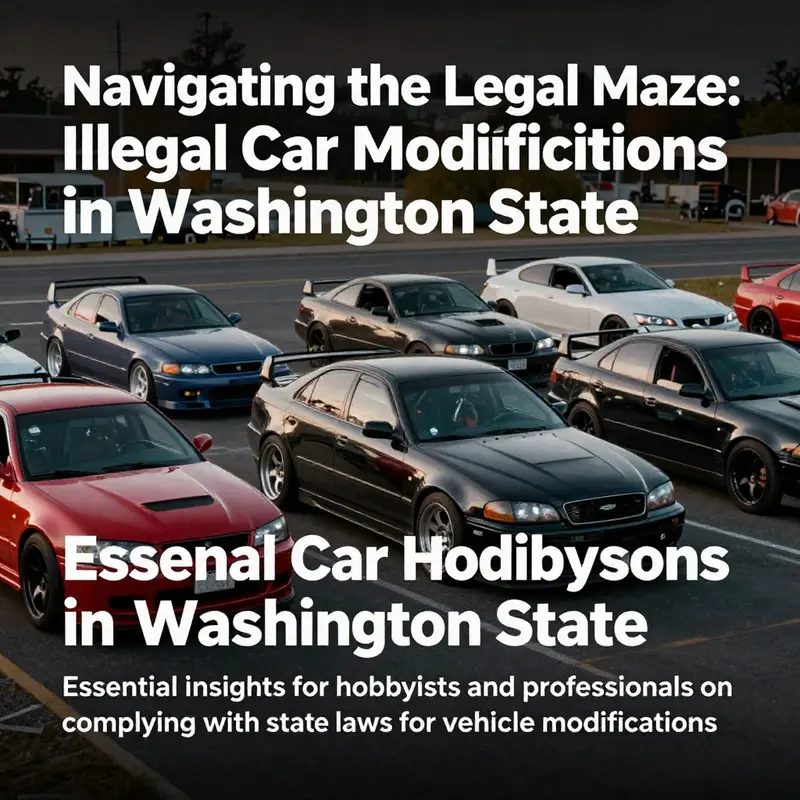
Washington State has specific regulations governing vehicle modifications, aimed at maintaining safety and environmental standards on the roads. As a car enthusiast, whether you are a hobbyist, professional tuner, or restoration specialist, understanding what constitutes an illegal modification is crucial. Violating these regulations not only jeopardizes the legality of your vehicle but may also lead to fines and penalties. Each chapter in this article dives into different types of illegal modifications, including emissions control alterations, exhaust system changes, lighting modifications, window tinting regulations, and safety-compromising body modifications. By the end, you’ll have a comprehensive understanding of what to avoid to keep your vehicle compliant and roadworthy.
Emissions at Stake: Navigating Washington’s Prohibited Emissions-Control Modifications
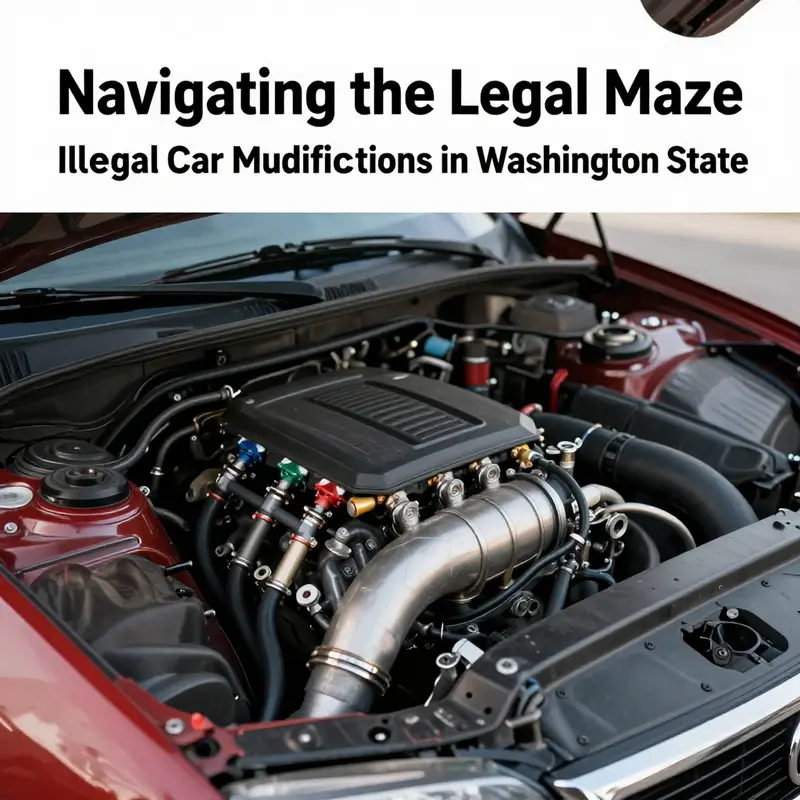
In Washington State, protecting air quality is woven into the fabric of how vehicles are regulated on public roads. The state’s approach is practical as well as principled: vehicles must meet both state and federal emissions standards, and any modification that tamps down the performance of the emissions-control system or alters it in a way that increases pollution is viewed as illegal. This framework is not just about compliance for compliance’s sake; it is about ensuring that every vehicle contributes to cleaner air and healthier communities. The Zero Emission Vehicle (ZEV) standards and the Clean Car Law set a baseline for what counts as acceptable, and enforcement rests with agencies that monitor and enforce those standards. The result is a system that rewards maintenance of proper emissions controls and penalizes anything that undermines them. When a driver considers changes to an engine or exhaust that could affect those controls, the question is not merely “Does this make my car louder or faster?” but rather, “Does this modification keep the vehicle within the rules designed to protect air quality and public health?” The answer, in most cases, is that any modification altering the function or integrity of emissions equipment is off-limits unless it is explicitly compliant with the applicable standards. For readers who want to see how these rules fit into a broader conversation about modifications, you can explore a concise overview of illegal modifications in the state: illegal car modifications. This resource helps situate emissions-control alterations within a wider landscape of prohibitions, but the Washington-specific emphasis remains clear: emissions-control integrity is not optional.
Raising the Hush: Navigating Washington’s Exhaust System Rules for Legal, Quiet Power
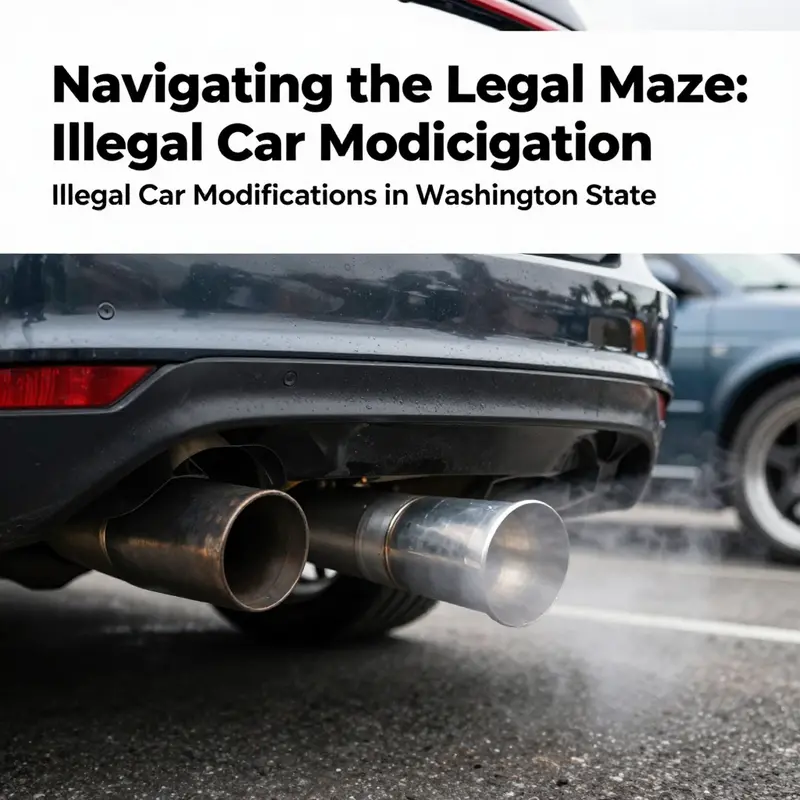
In Washington State, the sound a car makes can be as much a legal matter as its emissions or safety features. The state treats exhaust modifications as more than a matter of personal preference; they are a public policy issue aimed at reducing noise pollution, preserving sleep and concentration on busy streets, and maintaining predictable driving conditions for all road users. This chapter centers on exhaust system changes, revealing how a modification designed to unleash more bark from the tailpipe can cross from a performance choice into a regulatory violation. The core idea is straightforward: any alteration that increases the engine’s noise is not just discouraged—it can be illegal. The practical effect for drivers is simple but real: before altering an exhaust, a motorist should consider how the change will sound to neighbors, pedestrians, and law enforcement, and whether the modification will keep the vehicle within the bounds of state guidelines. The aim is to balance personal customization with the collective right to a quieter, safer public space while still letting enthusiasts enjoy legitimate performance options under law.
At the heart of Washington’s approach is a clear statutory standard. No person shall alter the exhaust system of a motor vehicle in a manner that will amplify or increase the noise emitted by the engine. This formulation places the focus on the result— louder sound—rather than the intent or the specific components used. In practice, this means that a part or configuration intended to boost noise is suspect from the outset. Law enforcement and inspectors interpret this rule through both objective measurements and practical assessment. The Washington State Patrol and local agencies may compare a vehicle’s sound against established norms and, if necessary, use decibel measurements or field observations to determine if a modification crosses the line. In other words, the regulator’s question is not only “What did you install?” but also “Did the change make the car noisier than it should be in public spaces and during normal operation?”
When people think of exhaust, they often imagine aggressive sounds and eye-catching setups. In Washington, however, the simplest and most common illegal move is installing a straight-pipe or otherwise unresonated exhaust that eliminates standard mufflers or resonators. Such configurations typically yield a sound that is noticeably louder and more piercing than stock. The law’s emphasis on increasing noise means that even a technically legal system can become noncompliant if a component is chosen specifically to amplify the engine’s volume. Owners should be aware that the same rule applies to aftermarket exhausts sold as performance upgrades; if their installation ends up amplifying sound beyond what is legally permissible in everyday driving, the modification can be deemed unlawful. This approach helps ensure that a vehicle remains safe and considerate of the community around it, while still allowing for reasonable performance enhancements when properly designed and installed.
The allowance for compliance does not end with exhaust alone. While the law focuses on noise, it sits within a broader framework of vehicle safety and emissions standards. A modification that changes how an exhaust interacts with the engine’s emissions-control system can create a different kind of hazard, and tampering with controls such as catalytic converters or oxygen sensors is illegal under separate regulations. Yet the immediate concern for noise violations remains practical and tangible for most drivers. A modification that efficiently channels exhaust gasses without the muffling effect or one that seeks to maximize exhaust flow for power can inadvertently raise the vehicle’s noise levels to an unlawful degree. The message is a simple one: pursue performance within the boundaries of sound, not beyond them. If in doubt, check the plan against official guidelines and seek a professional opinion before making a purchase or beginning an installation.
For many drivers, the distinction between “loud” and “illegal” may hinge on context and perception. A vehicle that cruises through suburban neighborhoods at steady speeds may draw less scrutiny than one that roars through a school zone or around downtown cores. Still, the standardized rule applies across settings. If the engine note thickens to the point of disturbing others—whether by creating a continuous drone near residential areas or a sharp snap when accelerating—this can raise red flags during a traffic stop or inspection. Public safety considerations support the law’s emphasis: excessive noise can mask other concerns, degrade the reliability of horns and warning signals, and contribute to stress and distraction for other road users. Washington’s framework treats these consequences as part of the reason to regulate exhaust noise, not merely as a matter of taste or aesthetics. In practice, drivers are encouraged to favor designs that maintain functional performance while preserving a calm, predictable driving environment for everyone on the road.
Understanding what counts as legal and illegal requires more than a cursory glance at parts catalogs. The state’s modification guidelines are designed to be navigable for everyday motorists, but they reward due diligence. If you plan an exhaust change, start by evaluating whether the chosen system preserves the vehicle’s original intent for noise levels. Some aftermarket options are designed specifically to maintain the sound characteristics and resonance of a stock system, or to comply with noise limits while still delivering improved exhaust flow. In contrast, others are marketed purely for aggressive sound, which often signals a violation risk. The difference can be subtle and invites careful review. A responsible approach combines manufacturer specifications, professional installation, and documentation that confirms the modification’s compliance with Washington standards. Keeping receipts, installation notes, and any measurements taken during or after installation can prove invaluable if questions arise during roadside checks or inspections.
Given the stakes, vehicle owners should consult authoritative sources and verify that any modification is aligned with state rules. The Washington Department of Licensing (DOL) offers comprehensive guidelines and official interpretations that clarify what is permissible and what crosses the line. The DOL portal provides vehicle-modification specifics, including how noise levels are evaluated in practical terms and how to assess compliance before a project begins. Access to those resources helps drivers avoid the cost and complications of noncompliant modifications, such as fines, mandatory removal of parts, or the need to restore the vehicle to stock condition. For a broader discussion on legal and illegal modifications, readers can explore further resources and community perspectives linked in the referenced article about illegal car modifications.
To place this guidance in a broader context, consider how the state’s exhaust rules intersect with other common modification concerns. Emission-control integrity remains a paramount concern: tampering with catalytic converters, oxygen sensors, or exhaust gas recirculation systems is illegal and can trigger penalties even if the noise level stays within a normative range. This means enthusiasts must navigate a web of overlapping regulations. The core principle remains consistent: any adjustment must preserve safety, emissions integrity, and public comfort. If a modification promises more power or a sportier exhaust note but carries a risk of violating noise limits or bypassing emissions controls, the prudent course is to forgo that path or seek guidance from a licensed professional who understands both performance goals and regulatory boundaries. In the end, compliant modification is not a concession but a disciplined approach that respects both individual interest and collective welfare on Washington’s roads.
For readers seeking a concise entry point into the broader topic of illegal modifications, a helpful resource summarizes why certain changes are flagged and how to approach modifications responsibly. This piece complements the official guidance by offering practical considerations—ranging from noise perception to the long-term impact on vehicle reliability and resale value—and it frames modification decisions within a legal and social context. You can read more about the general topic at illegal-car-modifications to understand how different jurisdictions treat similar choices and what questions to ask before purchasing or installing aftermarket parts.
Finally, since state regulations evolve and interpretations can vary by jurisdiction, it is wise to verify current requirements with the Washington State Department of Licensing. The official Vehicle Modifications page provides the most up-to-date guidance and compliance steps needed to keep a vehicle both legal and road-ready. This resource is central to building a modification plan that enhances performance without inviting penalties or safety concerns. Visit the official page to review the specifics: https://www.dol.wa.gov/vehicles/vehicle_modifications.shtml.
Illumination Under Regulation: Washington’s Lighting Modifications and the Safe Line Between Style and Safety
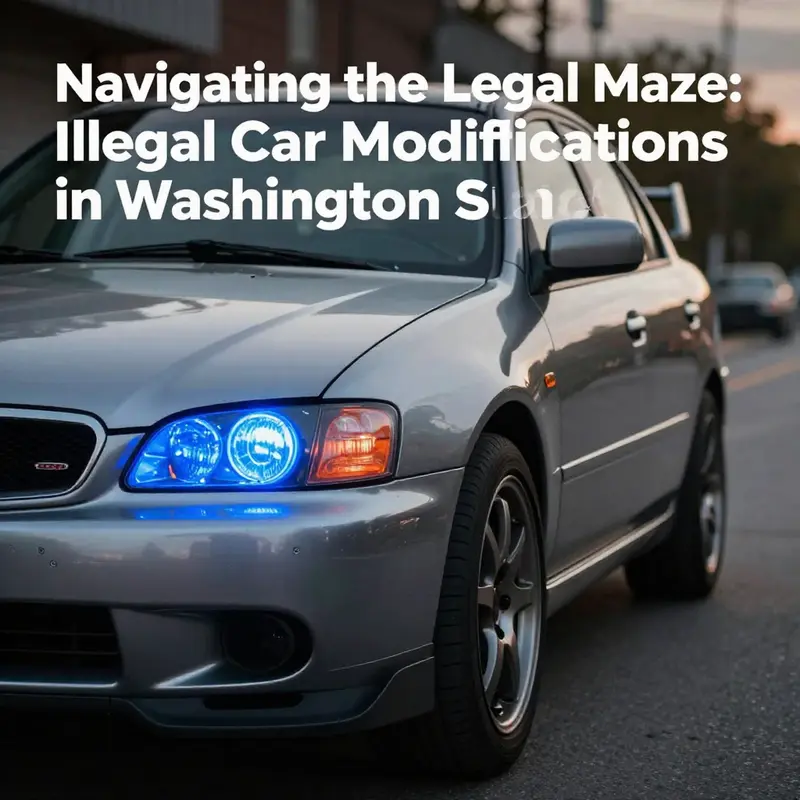
Lighting is often the most visible and most scrutinized aspect of car customization. In Washington State, the line between a tasteful upgrade and an illegal modification is drawn not by taste, but by safety and statutory standards that keep headlights, taillights, and auxiliary lighting functioning as intended for all drivers on public roads. The state’s approach to lighting modifications centers on preserving clear visibility, preventing glare that could blind other drivers, and ensuring that the vehicle’s lighting system, in its original and any approved configurations, performs as designed. This is not a vague preference but a concrete regulation that is enforced by police officers and inspectors who understand the critical role that lighting plays in low-light conditions, rain, and fog when good illumination can mean the difference between a safe stop and a collision. The framework that governs these modifications hinges on two pillars: the Washington Administrative Code and the Revised Code of Washington. Together they set the baseline expectations for what can stay on a vehicle and what must be removed or adjusted to remain compliant. The practical takeaway is simple: any modification to lighting must not diminish the effectiveness of the original lighting system or introduce new hazards for other road users. When a modification does more than adorn the vehicle—when it alters color, intensity, or placement in a way that interferes with standard driving visibility—it crosses into illegal territory.
At the heart of Washington’s lighting rules is the prohibition on adding, altering, or removing components that affect the primary lighting system’s ability to illuminate the road and communicate the vehicle’s movements to others. Specifically, the state’s regulations state that any act of adding bulbs, reflectors, or other motor vehicle equipment that compromises the effectiveness of the existing lighting is illegal. Practically, this means you cannot install extra headlights whose brightness overwhelms oncoming traffic or place auxiliary lamps that cast a beam pattern designed to dazzle or confuse other drivers. The intent is to preserve a predictable lighting profile across all vehicles, so that drivers can anticipate where others will be and respond accordingly. A clear consequence of crossing this line is that law enforcement can regard the modification as a safety hazard, potentially leading to a citation, a required removal of the modification, or a more extensive inspection of the vehicle’s lighting system. The emphasis is not merely on what is visually appealing but on how the lights interact with public roadways under various weather and lighting conditions.
A central, explicit constraint concerns not only the quantity of light but its color. Washington enforces color standards designed to ensure that headlights emit white or amber light, and taillights emit red light. Altering this color scheme can confuse other drivers and obscure the vehicle’s signals in ways that undermine road safety. The prohibition extends to adding or adapting lighting that deviates from these established colors, and it remains applicable even when an owner’s intent is cosmetic rather than functional. The rules become more stringent for devices that can be mistaken for emergency lights; blue and green lights, for instance, are generally restricted to authorized emergency or official vehicles. For a civilian, installing such lighting is not just unwise—it’s typically illegal. The state’s aim here is straightforward: conserve standard visual cues that all drivers expect and can interpret quickly, especially when speeds are high and decisions must be made in a fraction of a second.
The regulatory landscape also recognizes the practical realities of driving in Washington’s varied climates. In wet and dim conditions, headlights must perform consistently, not degrade the driver’s ability to see and be seen. The code acknowledges that some people want additional lighting for off-road use or certain weather scenarios; however, any such additions must not compromise the primary lighting system’s function, must align with the approved color guidelines, and must avoid creating glare that would impede other road users. The warning is clear: adding powerful auxiliary lights or altering the aim and distribution of the beam should be undertaken with caution and professional oversight. The state’s posture is careful and safety-first, balancing individual expression with the collective responsibility of keeping roads safe for everyone.
Enforcement and penalties are integral to the framework. Washington treats violations of lighting regulations as traffic infractions that can carry fines and other legal consequences. Depending on the nature of the modification and its impact on visibility, a law enforcement officer may issue a ticket, require the vehicle to be brought into compliance, or compel removal of the offending equipment. In some cases, more than a simple ticket could apply if the modification creates an ongoing hazard or if it involves purposefully disabling an emissions or safety system in ways that interplay with lighting. The broader principle is that safety standards are not optional add-ons; they are enforceable requirements designed to keep roads predictable and safe for all users. Car owners who fail to comply may face the inconvenience of corrective work, possible vehicle impoundment in extreme cases, and the burden of revisiting registration or inspection processes to demonstrate conformity with state standards.
To navigate these rules without inadvertently crossing the line, it helps to frame modifications within a process of due diligence. Before making changes, consult the official guidelines and consider a professional installation that emphasizes maintaining the integrity of the original lighting system. Practically, this means verifying that any aftermarket lighting remains within legal color ranges and does not alter the beam pattern in a way that could blind other drivers. It also means ensuring any extra lights are mounted in positions and with hardware that do not obstruct the primary lights, do not interfere with air resistance or vehicle dynamics, and can be secured safely during normal operation and routine maintenance. A responsible approach also includes testing the vehicle at night in various weather conditions to confirm that the lighting remains clear, stable, and compliant. If there is any doubt about whether a modification meets Washington’s standards, err on the side of conservatism and seek guidance from the Department of Licensing or a qualified automotive technician.
The legal landscape becomes even clearer when viewed through the lens of the state’s formal guidance. The Washington Administrative Code explicitly addresses modifications that affect lighting. It states that any unauthorized alteration that impairs the effectiveness of the lighting equipment is unlawful. This phrasing captures the essence of safety: the intention is to prevent diminished visibility on the road, which could lead to accidents or miscommunications between drivers. Similarly, the Revised Code of Washington underscores that violations of lighting requirements or the failure to meet their standards constitute traffic infractions. This linkage between specific regulatory provisions and the general traffic code ensures enforcement actions are grounded in clearly stated expectations rather than discretionary judgment.
For readers seeking a broader framing beyond lighting alone, it can be enlightening to explore discussions about the scope and limits of car modifications in general. For a broader view on what counts as illegal car modifications, see illegal-car-modifications. This resource helps situate lighting issues within the larger conversation about modifications, safety standards, and legal compliance in Washington and beyond. It is important, however, to treat lighting as a distinct area with its own explicit rules and practical implications for daily driving. Even if a modification is attractive or aligned with personal taste, it must still respect color standards, beam patterns, and the unobstructed functioning of the vehicle’s lighting system.
If you are unsure about the precise limits, an authoritative reference is the Washington State Department of Licensing. Their official materials spell out requirements for visibility, color compliance, and permissible configurations. You can consult their site for the official language and any updates to the regulations, which are periodically reviewed as technology and vehicle designs evolve. The overarching message is not hesitation about personal expression but a clear obligation to keep lighting safe and consistent with state expectations. In practice, this means approaching any lighting modification with a mindset of compliance and cautious testing rather than risk-taking experimentation.
External resources: Washington State Department of Licensing guidance and the current statutory framework provide the definitive baseline for what is permissible. See https://www.dol.wa.gov for official information on lighting and other vehicle modification requirements. This mirrors the principle that safety fundamentals should be verified through trusted, state-backed sources before any modification is undertaken.
Internal link reference: For a broader discussion on how modifications are evaluated legally in everyday practice, readers can review the wider article on illegal car modifications at illegal-car-modifications. This context helps distinguish lighting-specific rules from other categories of modifications that may require different regulatory considerations.
Tinted Boundaries: Unpacking Washington’s Window Tint Regulations and the Road to Compliance
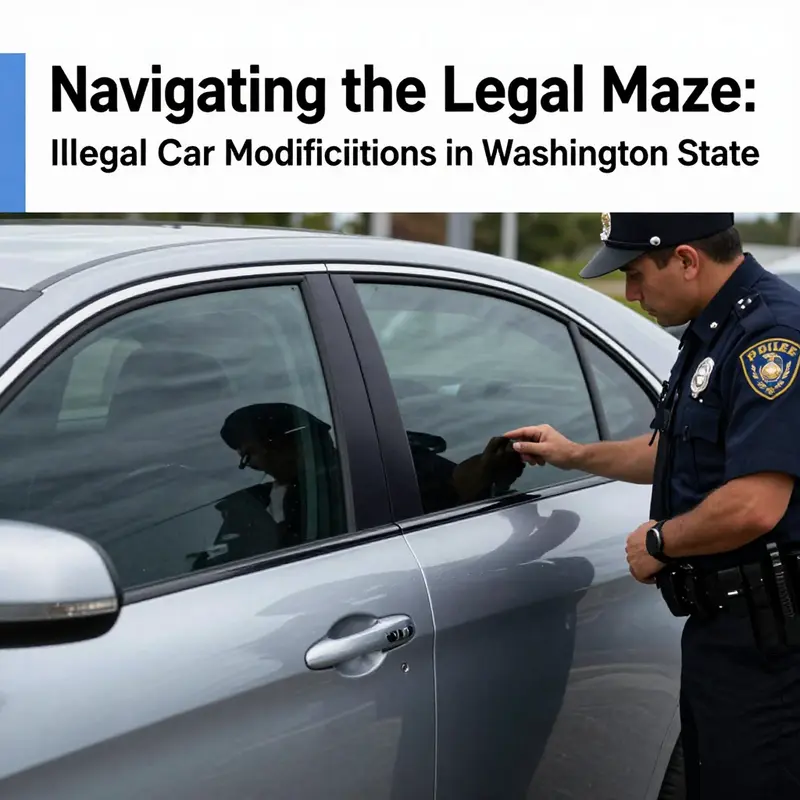
Window tinting sits at the edge of choice and regulation in Washington State. It’s easy to see tint as a cosmetic tweak, a way to keep the sun off and curb glare. Yet in the eyes of state law, tint is also a safety feature that can affect visibility for drivers and responders alike. This chapter follows the thread of window film rules through the Washington code, revealing how a seemingly minor modification can become illegal if it drifts beyond the line drawn by RCW 46.37.430. The essence of the rule is straightforward: the amount of light that passes through a window matters more than the appearance of the film itself. The switch from a personal preference to a legal constraint happens when the film alters how clearly someone can see through the glass or how much light reflects off it. In practice, this means that any tint placed on most windows, except the windshield, is judged by how much light is allowed to reflect back to the outside world and, by extension, how much light still finds its way into the vehicle for the driver and passengers. The underlying principle is simple and enduring: safety is a function of visibility, not style, and the law codifies that balance to keep roads safer for everyone who shares them.
The core statutory anchor is RCW 46.37.430, a provision that defines the permissible limits of window film in terms of reflectance rather than mere darkness. The language is purposefully technical: the “net film sunscreening” of any window, excluding the windshield, must have a total reflectance of 35% or less. In plain terms, the film cannot bounce more than 35% of the ambient light back out toward the street. This matters because reflectance is different from transmittance, the latter of which is the measure often discussed in consumer guides as the percentage of light transmitted through the film. The Washington standard uses reflectance as the governing metric to ensure that the visible presence of film does not obscure the driver’s ability to see through the glass as conditions change. It also reduces the chance that reflective glare becomes a hazard for other road users. The windshield is exempt from the tinting limits under this rule, reinforcing the idea that certain safety-critical views must remain unobstructed.
From a practical standpoint, this means a few important considerations for vehicle owners and modifiers. First, tint installers are not free to choose any shade or darkness they prefer; they must assess both the film itself and how it performs on the specific window in question. The 35% reflectance cap applies to any non-windshield window, so the front doors, rear doors, and rear glass are all within the same regulatory framework. In some discussions outside of formal codes, you may encounter references to light transmission thresholds such as 35% front side windows and 20% for rear windows or back windows. While these numbers appear in consumer guidance and local practice, the formal Washington standard centers on reflectance. The practical takeaway is that a film that looks relatively light from the outside can still reflect a substantial portion of light and be noncompliant, and a darker-looking film can pass if its reflectance remains within the 35% ceiling. This nuance underscores why compliance testing and professional installation matter: two films that seem similar in shade can behave very differently in terms of reflectance.
Enforcement of window tint regulations tends to follow routine checks during traffic stops, safety inspections, and at times when a vehicle is subject to a modification review. Violations are treated as illegal modifications because they represent a deviation from the safety and equipment standards that Washington state aims to uphold on public roads. The consequences can be practical and immediate. A driver cited for excessive reflectance could face fines, depending on the jurisdiction and the specifics of the stop. Beyond the ticket, there is the possibility of vehicle inspection failure. Since the law is tied to vehicle safety and compliance, inspectors may require the tint to be altered to meet the standard if a vehicle cannot demonstrate compliance. These consequences create a clear incentive to align tint choices with the legal framework from the outset, rather than risking penalties or the hassle of a rework after the fact.
The path to staying within the law begins with a clear understanding of what counts as compliant tint. For anyone considering tinting, the starting point is choosing film with known specifications regarding reflectance and obtaining documentation from the installer that confirms the film’s performance. It’s wise to request independent testing or certification if available, to avoid disputes about what a particular film is capable of achieving on a given vehicle. Visual estimates or generic claims about darkness are not reliable substitutes for measured reflectance data. The Washington DOL’s guidance is the authoritative reference for what the law requires, so consulting it directly can help buyers and installers align expectations before any work is performed.
When contemplating how tint interacts with day-to-day driving, consider how light conditions shift during dawn, dusk, and nighttime driving. Reflectance can influence not only visibility from the outside in but how well a driver can observe the road when light levels are changing rapidly. A film that performs well in bright sun might still degrade visibility under streetlights or rain. The 35% reflectance limit is designed to prevent both excessive glare and the risk of reduced driver awareness, especially in adverse conditions. This balancing act is part of why window tint has earned a reputation as a regulatory area rather than a purely aesthetic modification. Drivers must recognize that while tint can offer comfort and glare reduction, it does not grant a license to obscure or degrade visibility.
For readers seeking more context beyond the statutory language, a broader view of how modifications intersect with safety, legality, and risk is helpful. There is value in recognizing how this particular modification fits within the larger framework of Washington’s vehicle regulations. The state revisits these rules through official channels and legal texts to ensure they reflect current safety standards and enforcement priorities. In practice, this means any window film that pushes the bounds of the 35% reflectance limit is technically illegal and could be challenged during inspections or encounters with law enforcement. In parallel, vehicle owners should be mindful of the broader landscape of modifications that have legal implications, including emissions control, lighting, and suspension work, all of which may interact with tint decisions in complex ways. The takeaway is consistent: know the rule, verify the film, and avoid the risk of noncompliance.
In the spirit of clear guidance, here is a concise navigational tip: when you are evaluating tint options, ask the installer for the film’s reflectance specification under realistic lighting conditions and request a test print or a compliance certificate. If the installer cannot provide verifiable data, seek another provider. If you receive a citation or are confronted with the question of compliance, refer to RCW 46.37.430 as the controlling standard and consult the Washington State Department of Licensing for official guidance. For broader understanding of how tint intersects with other vehicle modifications and to situate tinting within the wider regulatory framework, you can explore additional perspectives on illegal car modifications through this resource: illegal car modifications.
Finally, keep in mind the value of official resources as your primary reference. The Washington State Department of Licensing website provides the definitive statement of the law and any updates to the regulatory approach. As you plan any tinting project, treat the DOL page as the authoritative map for compliance and safety. External resources can offer helpful interpretations or examples, but the statutory standard remains the bedrock for determining legality on Washington’s roads. External resource: https://www.dol.wa.gov
Unsafe Alterations: How Washington State Regulates and Penalizes Illegal Car Modifications on Public Roads
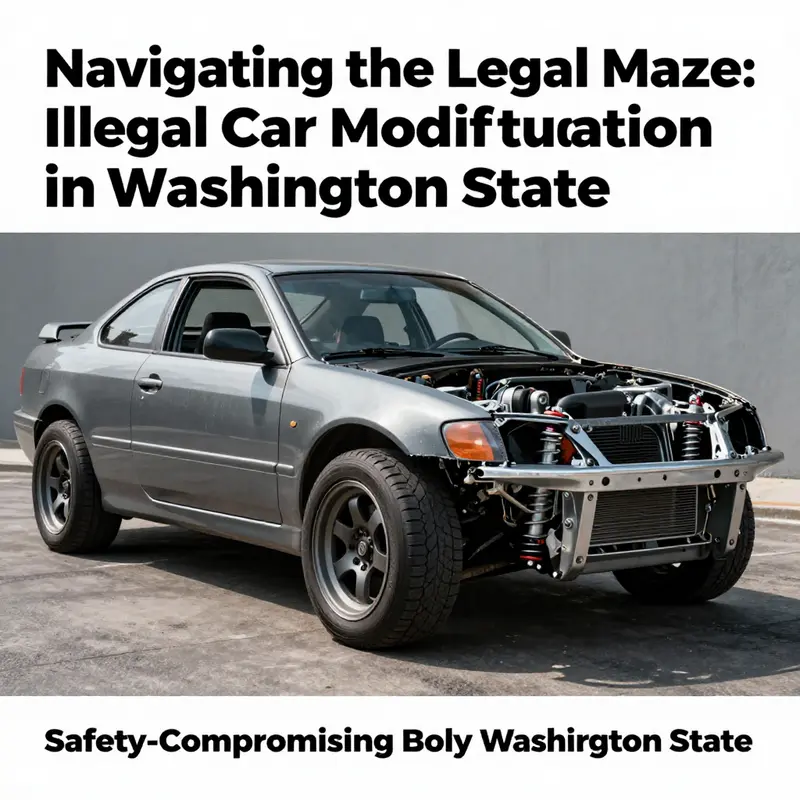
In Washington State, the line between a cherished personal upgrade and a dangerous modification is drawn not by taste but by safety, standards, and accountability. The legal framework rests on the premise that vehicles operated on public roads must meet minimum safety and emissions requirements, both at the federal level and as implemented by the state. This means that many cosmetic touches or performance tweaks that riders might pursue for style or speed can cross a regulatory threshold if they compromise the vehicle’s fundamental safety systems or violate established standards. The core idea is straightforward: any change that alters how a vehicle behaves in traffic, how it stops, or how it withstands a crash must be measured against manufacturer specifications and regulated parameters.
To understand what counts as illegal, it helps to look at the way Washington categorizes vehicle alterations. A key piece of the puzzle is RCW 46.04.161, which defines a vehicle as a “custom vehicle” when modifications to major component parts – those listed in RCW 46.80.010 – change the appearance or performance of the vehicle from its original configuration. This matter matters not only for the look of a car but for how it responds in critical situations: braking, steering, acceleration, and stability through varied road surfaces. When a modification pushes the vehicle outside the safety envelope the manufacturer designed, the risk to the driver, passengers, and other road users rises. The Washington State Department of Licensing (DOL) enforces these standards to keep roads safe by ensuring that every vehicle remains within the bounds of tested, documented specifications.
A practical way to think about this is to imagine alterations that influence the vehicle’s core handling characteristics. Suspension changes that lower ride height beyond reasonable limits can dull steering feedback, increase the likelihood of bottoming out on rough pavement, or exacerbate roll during sharp maneuvers. Modifications to the frame or chassis that undermine crashworthiness can alter how a car behaves in a collision, potentially turning a routine incident into a life-threatening one. The DOL does not ban all customization; instead, it cautions that any change which undermines structural integrity or safety features may render a vehicle illegal to operate on public roads. The emphasis is on maintaining predictable response under normal driving conditions and during emergency maneuvers, not merely on improving speed or aesthetics.
Beyond the frame and suspension, Washington regulates other major routes to illegal modification, focusing on how a car interacts with safety and environmental standards. Emissions control alterations are a frequent flashpoint. Tampering with catalytic converters, oxygen sensors, or exhaust gas recirculation systems, or installing aftermarket parts that bypass these systems, is illegal. These controls are designed to limit pollutants and ensure engines perform within tested limits. Exhaust modifications present a parallel risk: while an aggressive exhaust might be appealing to some owners, systems that produce excessive noise can be deemed unlawful if they exceed the state’s reasonable limits. The line in practice is drawn by a standard that considers the overall noise impact and its potential to disturb neighbors or distract other drivers. In Washington, officers and inspectors evaluate whether a muffler or exhaust setup creates an “unreasonably loud” condition, a determination that can lead to citations and required changes.
Lighting, window tint, and visibility are equally regulated because they directly affect a vehicle’s conspicuity and the driver’s ability to perceive the road. Changing headlight colors from standard white or yellow, or taillight colors from red, can render a vehicle noncompliant with state expectations for reflectivity and recognition by other road users. The use of blue or green lighting on a passenger vehicle is restricted unless the vehicle is an emergency or authorized service vehicle. Window tinting is another frequent flashpoint; front side windows typically must transmit a certain light percentage (often around 35%), with rear windows and back windows allowed to be darker but still within defined limits. Tint that reduces transmission below legal thresholds can be subject to enforcement action and required remediation. These rules are not meant to erase personal style but to preserve visibility, nighttime recognition by other drivers, and equitable road safety.
A broader layer of the conversation revolves around how “custom vehicle” status intersects with professional responsibility, training, and compliance. The health and safety risks associated with poorly executed or unapproved modifications extend well beyond mechanical failure. They can raise accident rates and endanger everyone on the road. This broader concern is reflected in a comprehensive needs assessment by the Washington State Department of Labor and Industries, which underscores the importance of proper training and safety protocols in industries that often encounter vehicle modifications, such as collision repair. It is a reminder that the impulse to optimize or personalize must be balanced against rigorous safety standards and the practical realities of public driving environments. When shops or individuals undertake substantial alterations, they are expected to align with the applicable safety and emissions standards and to document that alignment. The law requires this alignment not only to protect wearers of the road but to maintain a predictable and inspectable vehicle population.
Within this framework there is nuance. A modification is not automatically illegal simply because it is custom or aftermarket. The test is whether the change preserves or enhances safety, whether it adheres to manufacturer specifications, and whether it remains compliant with local, state, and federal requirements. If a modification drives a vehicle outside the medical, mechanical, or regulatory boundaries established for safe operation, it becomes a legal concern rather than a personal preference. The practical effect is that owners contemplating upgrades must approach the project with a safety-first mindset, seeking professional assessment where necessary, preserving critical systems, and ensuring that any changes are compatible with standard operating procedures rather than against them.
For those who pursue modifications, it is wise to engage with the right sources of information and support. The Washington DOL and related agencies publish guidance on what constitutes permissible alterations and what falls into illicit territory. The regulator’s message is clear: modify with care, and ensure the vehicle can still meet the baseline expectations for safety, emissions, and appearance as it was originally designed to perform. This framework encourages owners to consider both the regulatory consequences and the real-world risk to themselves and others. It also suggests a pragmatic pathway: consult the official regulations, obtain professional evaluations, and document compliance through appropriate certifications and inspections where required. This approach minimizes the risk of costly rework or penalties that could arise from inadvertent noncompliance.
The broader discussion also touches on how these rules interact with other concerns, such as insurance, resale value, and liability. When a vehicle deviates from its factory specifications in ways that are not clearly approved, insurers may scrutinize coverage, and buyers may weigh whether a modified vehicle remains a safe, reliable purchase. A well-documented modification project that preserves safety margins and aligns with regulatory standards can ease these concerns, whereas clandestine or poorly executed changes tend to complicate coverage and resell options. The interconnections among safety, compliance, and financial risk are a reminder that modifications carry responsibilities as well as rewards.
If you are navigating the world of car modifications in Washington, the path is not about denying personal expression but about prioritizing safety and regulatory compliance. A thoughtful approach starts with defining the goals of the modification, then assessing whether the chosen changes maintain the vehicle’s structural integrity, handling characteristics, and emissions profile. When in doubt, consult the relevant guidelines and, if needed, seek evaluation from qualified professionals who understand both the technical and legal dimensions of modifications. In every case, the end goal remains consistent: a car that reflects its owner’s preferences while continuing to perform reliably, handle predictably, and comply with the standards that protect everyone on the road.
Internal link: for a broader discussion of the legality of modifications and how it intersects with insurance and ownership considerations, see Illegal car modifications. This resource provides context on how different jurisdictions approach legality and helps readers gauge where Washington fits within a wider landscape of automotive modification rules.
External resource: for the statutory framework that governs custom vehicles in Washington, refer to RCW 46.04.161 and related provisions, which outline the criteria for what constitutes a custom vehicle and when a modification may breach safety or regulatory requirements. https://app.leg.wa.gov/rcw/default.aspx?cite=46.04.161
Final thoughts
Understanding the legal landscape around car modifications in Washington State is imperative for any vehicle enthusiast. This article has explored critical areas where hobbies can turn into legal pitfalls, including emissions alterations, exhaust modifications, lighting violations, improper window tinting, and safety-compromising changes. Adhering to these guidelines not only ensures compliance but also enhances the driving experience without the looming threat of legal trouble. Remember, being a responsible modifier means respecting regulations that prioritize safety and environmental responsibility.