
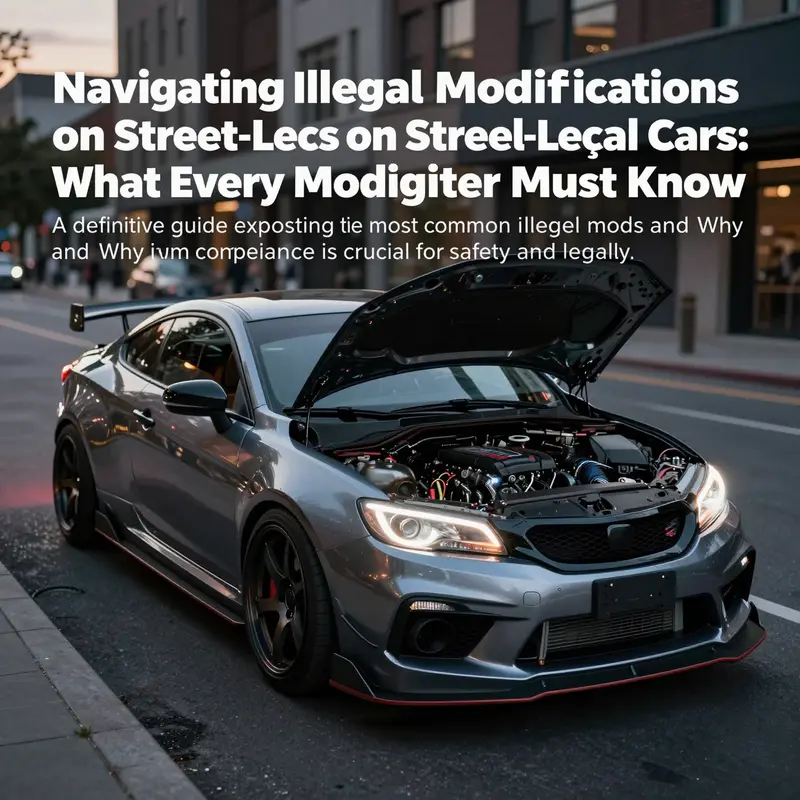
Modifying vehicles is a passion shared across the globe—from hobbyists tuning their daily rides, professional shops enhancing performance, to classic car restorers breathing new life into vintage models. Yet beneath the thrill of upgrading lies a strict legal framework designed to protect road safety, preserve environmental standards, and ensure fair compliance in public traffic. Understanding which modifications cross the line into illegality is essential not only to avoid fines and penalties but to ensure your vehicle remains roadworthy and insurance-valid. This journey will break down four key areas where illegal modifications frequently occur: exhaust systems, lighting upgrades, suspension and ride height adjustments, and engine & powertrain alterations. Each chapter reveals the nuances of these unlawful changes, the reasons behind restrictions, and their consequences, empowering you to mod smarter without crossing legal boundaries.
Exhaust at the Edge: Why What You Replace Can Make Your Street-Legal Car Illegal
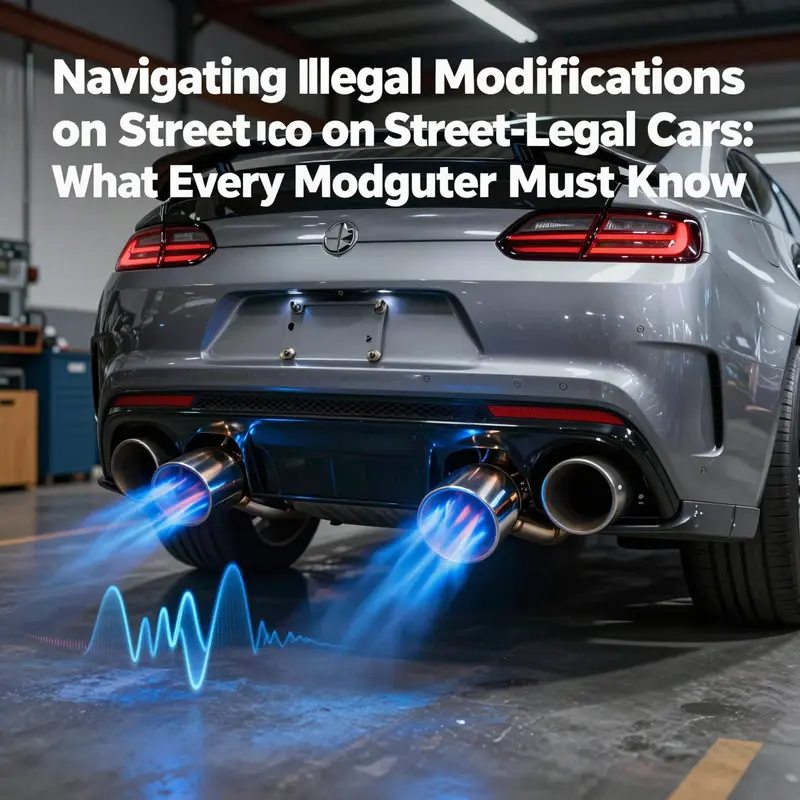
In the realm of street-legal cars, the exhaust system sits at a paradoxical crossroads. It is a source of personal satisfaction for those who crave deeper tones, quicker throttle responses, and a sportier aura. It is also a locus of regulatory scrutiny, where the line between a permitted upgrade and a criminal alteration can be razor-thin. The law’s concern is not sound alone; it is the cascade of emissions, safety standards, and the predictable behavior of a vehicle on public roads. From the moment a driver contemplates swapping a factory exhaust for something louder or more efficient, the conversation shifts from performance fantasies to legal responsibilities. This tension—between the delight of a louder note or marginal gains and the obligation to stay within safety and environmental rules—defines the modern landscape of aftermarket exhaust modifications. To understand why many exhaust changes are illegal on street-legal cars, it helps to see three threads interwoven in the policy fabric: emissions control, noise regulation, and vehicle safety. Each thread operates on its own technical logic, yet all are designed to protect the public and the environment, while preserving a baseline of vehicle reliability that can be tested on the road and checked in the shop.
The core legal issue with exhaust modifications lies in emissions control. Modern cars rely on a tightly integrated system of catalytic converters, oxygen sensors, and exhaust pipes designed to meet specific pollutants and fuel-use targets. In the United States, the federal Clean Air Act forbids tampering with emissions-control equipment and makes it illegal to remove or bypass components that EPA rules and state regulations rely on to curb harmful pollutants. The practical effect is that a significant portion of aftermarket exhaust work—especially work that eliminates, bypasses, or defeats catalytic converters, exhaust gas sensors, or other emission-control devices—falls squarely into illegal territory. States further refine these rules with their own enforcement regimes, often pairing them with noise limits that vehicles must meet to pass annual inspections or roadway checks. A loud exhaust system that sounds aggressive in a quiet neighborhood might still be technically compliant in a jurisdiction with no decibel cap, but the moment it triggers emission-control problems or a violation of a state noise standard, the vehicle can be deemed illegally modified. In short, there is no universal badge that says “legal exhaust” — legality is a function of the exhaust’s impact on emissions, its effect on the vehicle’s sensors and computer, and its compliance with the jurisdiction’s noise rules.
The noise dimension is almost as consequential as the emissions dimension, and often the more visible one. Many post-market systems claim louder tones, deeper rumble, or a racing-inspired sonic signature. However, the legal boundary is defined by decibel thresholds that vary by jurisdiction and by vehicle type. When a system increases sound pressure beyond the permitted range, it can fail a roadworthiness check or a police stop, even if the exhaust otherwise keeps emissions in check. In some places, the threshold is a fixed decibel level measured at a standardized distance from the exhaust while the engine is running at a prescribed speed. In others, it is tied to a “not-to-exceed” limit in specific driving scenarios or to a general prohibition against noise that unreasonably disrupts the peace. The practical takeaway is that a loud exhaust is not just a nuisance or a rebellious badge; it is a measurable, regulated attribute of a vehicle’s design and operation. When a modification raises noise toward or beyond the upper end of the regulatory envelope, the car crosses from a permitted upgrade into an illegal modification.
Beyond emissions and noise, the safety considerations of exhaust modifications are nontrivial. Exhaust systems influence backpressure, exhaust-gas temperatures, and even engine timing in certain conditions. Modifications that alter backpressure can cause the engine to run lean or rich in ways that the original calibration did not anticipate. This has implications for fuel economy, drivability, and long-term engine health. More subtly, some aftermarket configurations can interact with exhaust manifolds, oxygen sensors, and catalytic converters in unpredictable ways, triggering check-engine lights, misfires, or sensor faults that jeopardize the vehicle’s essential safety systems. The result can be an inconvenient maintenance cycle or a dangerous situation if a miscalibration goes unnoticed while the car is in traffic. In short, the goal of the law is not to punish enthusiasts for pursuing better sounds or a sportier ride; it is to prevent modifications that compromise essential safety functions or degrade a vehicle’s predictable behavior on the road.
The legal narrative around exhaust modifications shifts depending on jurisdiction. In the United States, the Clean Air Act makes tampering with emissions-control systems illegal, and federal guidance is complemented by state-level rules that govern noise, inspection, and vehicle configurations. Some states require periodic safety and emissions testing that explicitly checks for compliance with factory emissions control. If a modification disables a catalytic converter, deletes sensors, or otherwise bypasses emission controls, penalties can follow in the form of fines, failed inspections, or confiscation of the vehicle in extreme cases. In California, for example, CARB standards add another layer of scrutiny, with stricter emissions and sometimes more rigorous testing regimes. Across the Pacific, the situation in China reflects a different regulatory culture. Article 16 of the Road Traffic Safety Law prohibits altering a registered vehicle’s structure or characteristics—including the exhaust system—without authorization. The consequences in that jurisdiction include fines, potential blacklisting for high-emission vehicles, and, in extreme cases, confiscation or restricted access to certain zones. The Chinese framework emphasizes the annual inspection regime, where illegitimate modifications often fail to pass muster, thereby cutting the vehicle off from legal road use. In both the U.S. and China, a vehicle that begins as street-legal can quickly lose that status if the exhaust system is altered without proper authorization, and the penalties can be severe enough to deter risky experimentation.
To the casual observer, a dual single-outlet exhaust conversion might seem like a minor cosmetic or aesthetic preference. Yet in the eyes of regulators, such a change is a function of how the exhaust system interacts with the engine’s emissions controls and the vehicle’s sound profile. The legal approach leans toward a cautious, if sometimes conservative, interpretation: any modification that demonstrably alters the vehicle’s emission output or that takes the exhaust outside the prescribed sound envelope is a modification that requires formal authorization and, often, re-certification. In the narrative of legality, minor decorative changes are not the decisive factor; the decisive factor is whether the modification preserves or undermines the vehicle’s compliance with emissions and safety standards. This is why, in practice, the same exhaust change can be lawful in one jurisdiction and unlawful in another, depending on how the change interacts with local regulatory frameworks and the vehicle’s integrated control systems. For enthusiasts who prize performance gains or a more visceral sound, the prudent path is clear: seek official channels, obtain the appropriate approvals, and ensure that modifications are aligned with the standards that govern road use. The alternative is a costly and potentially dangerous gamble with the state’s road-usage regulations.
A crucial note for readers who are curious about the nuance of legality across borders is that some regressions are not simply a black-and-white ban on all aftermarket work. While major tampering with emissions control is broadly illegal, there are regions that tolerate certain aesthetic choices so long as they stay within regulated noise and emissions limits. The line is often hardest to determine when a driver is balancing the desire for a more aggressive exhaust note with the necessity of staying within the lines drawn by regulators. This is why many owners choose to consult official channels before modifying, and to document how a modification was tested and certified to meet applicable standards. As a practical matter, owners who want to explore performance improvements but also preserve street-legal status often pursue three parallel tracks: first, consult the vehicle’s manufacturer guidance and local regulations; second, engage licensed technicians who understand the regulatory context and can help plan an compliant pathway; and third, secure written authorization or approval through the relevant vehicle-management or environmental agencies before making any installation. This approach minimizes the risk of a future enforcement action, protects the owner’s investment, and preserves the vehicle’s roadworthiness.
For readers who want a broader sense of the regulatory landscape, it is instructive to consider the example of high-end hypercars, which pose particular challenges in many markets. Cars renowned for extreme performance—while not categorically banned—often face scrutiny because their design, exhaust routing, and leaner emissions profiles push the envelope of what regulators are willing to accept on public roads. In practice, meeting the standards for such vehicles can require extensive, costly compliance work and, in some cases, exemptions or special approvals from agencies like NHTSA and the EPA. The Koenigsegg scenario sometimes referenced in popular discussions illustrates the complexity: although not universally prohibited, the process to obtain street-legal status for such a vehicle can involve substantial compliance work, testing, and paperwork. This reality underscores a broader truth: street legality is a dynamic construct, not a fixed label, and it is driven by ongoing regulatory expectations as technologies and environmental concerns evolve.
The practical takeaway for a reader navigating the question “what modifications are illegal to a street-legal car?” is that illegal exhaust work is not about a single trigger—noise, emissions, and safety all converge. A modification that improves performance in isolation might still be illegal if it worsens emissions, alters the exhaust flow in a way that bypasses sensors, or pushes noise beyond the permitted limits. The path forward is to treat exhaust upgrades as a regulatory project, not just a mechanical upgrade. Before any change, the owner should verify that the modification is allowed in their jurisdiction, ensure that the change does not compromise the emissions-control system, and obtain all necessary approvals. If a modification cannot be clearly certified as compliant, it should be avoided on public roads. In this way, the hobby of tailoring a car’s exhaust remains within the realm of legal and safe experimentation, rather than venturing into potentially costly penalties and safety hazards.
For readers seeking further jurisprudential context, one can consult official sources on vehicle safety and compliance, which provide guidance on whether specific modifications meet federal and state standards. legal car modifications in the United States offers perspectives on how these issues play out in everyday ownership, while continued study of regulatory texts and agency guidance remains essential for anyone who plans to alter a street-legal car. As a closing reflection, the tension between desire and duty when it comes to exhaust modifications is not merely an academic concern. It is a practical, enforceable boundary that shapes how people experience performance, sound, and safety on real roads. The objective is not to stifle curiosity or curb engineering creativity, but to ensure that the car on the street remains predictable, safe, and compliant with the standards designed to protect everyone who shares the roadway.
External resource for further reading: National Highway Traffic Safety Administration (NHTSA) – Vehicle Safety and Compliance. https://www.nhtsa.gov/vehicle-compliance-and-regulations
Casting Shadows Under the Streetlights: The Legal Tightrope of Lighting Modifications on Street-Legal Cars
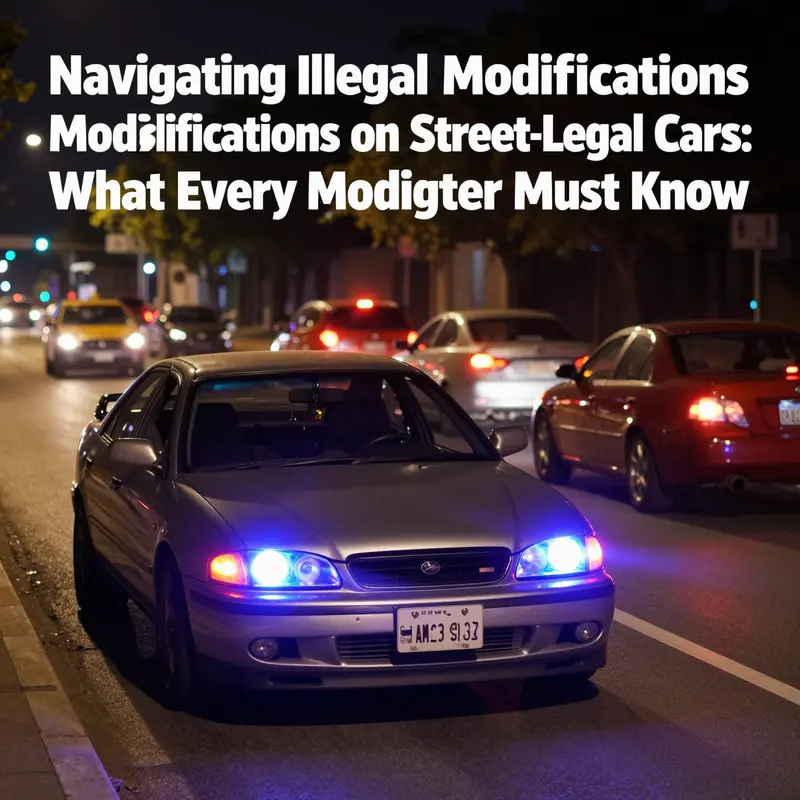
Light is both a tool and a signal. It guides our way, reveals hazards, and communicates intent to other drivers. Yet when people talk about modifying a street-legal car, lighting often becomes the flashpoint where aesthetics collide with law, safety, and accountability. The chapter of modifications most likely to trip up a vehicle’s legal status is not the dramatic engine swap or the bespoke exhaust; it is the lighting system. In many jurisdictions, even a well-intentioned upgrade—designed to improve visibility or appearance—can push a car out of compliance and into a gray area where safety standards and enforcement converge. The legality of lighting modifications, unlike some monotone mechanical tweaks, hinges on a delicate balance between how a vehicle is seen, how it is perceived by others, and how the law defines what is admissible on public roads.
In the United States, the regulatory terrain for lighting is built around federal standards that govern visibility, glare, color, and placement. The federal framework sets a baseline, the kind that traffic officers and inspectors must use when evaluating a car as it moves from private driveway to public roadway. The message is blunt: headlights, taillights, turn signals, and auxiliary lamps must align with safety standards that safeguard other road users. A modification that alters the beam pattern, introduces colors outside the allowed spectrum, or adds lamps that distract or blind other drivers can render a once streetworthy vehicle illegal for road use. It is not simply a matter of what looks better on the night drive; it is about predictable signaling and consistent visibility for everyone on the road.
At the same time, the legal picture in the United States is layered with state-level nuances. While federal rules provide a foundation, many states impose further restrictions on brightness, color, and beam alignment. A car that clears a federal check might still fail a state inspection if its lighting diverges from that jurisdiction’s standards. This is where the practical danger of lighting mods lies: a modification can be technically compliant in one region and illegal in another, making ownership and operation a patchwork of compliance checks and potential penalties. A car owner who travels across state lines or relocates may discover that what was legal in one place becomes unlawful elsewhere, particularly when the modification involves color-changing bulbs, misaligned headlights, or the addition of auxiliary lighting that violates local glare or mounting requirements.
Across the Atlantic and in other corners of the globe, lighting rules echo the same emphasis on safety and visibility, even as the specific requirements differ. In the United Kingdom, for instance, upgrades such as certain high-intensity or modernized lighting configurations are allowed only if they meet strict safety and visibility standards. Headlights must not dazzle oncoming traffic, and aftermarket bulbs need to be approved by the relevant authorities. In the UK, tinted rear lights remain a sensitive issue, with clear visibility at night required to preserve safe operation. Daytime running lights, too, must conform to established European standards. The logic is consistent with the American approach: any change that risks confusing others about a vehicle’s presence or intentions can be deemed unlawful. The camera pans slowly across the entire signal system, highlighting how color balance, brightness distribution, and beam pattern become the deciding factors that separate lawful upgrades from illegal alterations.
In China, the regulatory language centers on national GB standards. Auxiliary lights, such as spotlights or fog lamps, are permitted only if their installation respects the integrity of the original lighting system and adheres to prescribed color and intensity limits. The law is explicit about glare, visibility, and the appearance of the vehicle on public roads. Here, as elsewhere, the core principle remains: lighting changes should preserve or enhance the vehicle’s safe signaling and should not introduce new hazards for other road users. The enforcement landscape has grown more visible in recent years, with cases illustrating how even seemingly minor tweaks can trigger penalties if they stray from the documented safety parameters.
A useful throughline across these jurisdictions is the tension between safety and personalization. On one hand, improved illumination, wider field of view, quick signaling, and even daytime conspicuity can enhance safety in challenging conditions. On the other hand, the line between enhancement and unsafe distraction is thin. A bright, color-shifting front light might be legal in one market and illegal in another if it dazzles or confuses other drivers. A set of auxiliary lights mounted off the standard beam pattern can, at speed, fracture a driver’s ability to absorb information from the road. This is not merely a theoretical concern. It translates into real-world consequences when a vehicle is stopped by law enforcement or fails an annual inspection because the lighting system no longer meets the required standard for color, brightness, or beam placement.
Consider the broader picture, where high-performance or hypercars enter the frame. These vehicles often push the envelope with distinctive exhaust notes and aggressive aerodynamics, creating a perception of risk in the realm of compliance. While not strictly banned, such cars face a demanding regulatory gauntlet for street legality. The primary issues tend to focus on exhaust system sound levels, emissions controls, and, indeed, the interaction of high-performance lighting with regulatory thresholds for glare and beam behavior. The point is not to single out a brand or a class of car; rather, it is to acknowledge that when performance aims collide with public safety standards, the simplest route to legality is careful, documented conformity with the approvals process. Modifications that seem minor to an enthusiast—like changing the color temperature of front lighting or adding luminous accents—can become major obstacles if they alter the signaling profile that other drivers rely on.
The practical implications of illegal lighting modifications extend beyond the moment of a police stop or a roadside check. Drivers may find themselves unable to pass annual vehicle inspections, leading to fines, points on their license, or even impoundment until the vehicle can be brought back into compliance. The process of restoring compliance can be costly and time-consuming, requiring the removal or reversal of the modification and, in some cases, the replacement of components with factory-spec parts. This is a sober reminder that the legal status of a car is not a fixed attribute at the moment of purchase; it is an ongoing condition contingent on maintenance of safety standards as certified by the appropriate authorities.
From a narrative perspective, the discussion of lighting mods also touches on the social contract of driving on public roads. The road is a shared space where drivers must anticipate the actions of others. Lighting is one of the most immediate signals a vehicle communicates. When lighting changes erode that predictability—whether through excessive brightness, unusual color, or misdirected beam patterns—the risk profile rises for all road users. This is why regulators tend to favor conservative, well-documented modifications. It is not a rejection of innovation but a framework that helps ensure that any improvement in visibility does not come at the expense of others’ safety. The careful calibration of light, color, and placement becomes a measure of responsibility as much as a matter of taste.
For readers seeking a concise synthesis of where this terrain stands, the takeaway is simple: lighting modifications on a street-legal car are subject to a mix of federal standards and local regulations. An upgrade must preserve standard signaling, avoid dazzling other drivers, and stay within color and brightness limits. Any deviation risks noncompliance, with real penalties ranging from failed inspections to legal penalties. It is of practical value to consult official sources before proceeding. A useful starting point is a broader discussion of illegal car modifications, which captures the tension between customization and compliance and helps readers understand the larger ecosystem in which lighting decisions sit. Illegal car modifications offers a foundation for those who want to explore how other tweaks intersect with the law, before diving into the specifics of lighting.
Ultimately, the chapter on illegal lighting modifications is a reminder that the road is governed by rules designed to keep everyone safe. Innovation in lighting should be pursued thoughtfully, with an eye toward regulatory acceptance and accountability. When in doubt, the safest path is to align changes with reported standards, obtain any necessary approvals, and retain documentation that demonstrates compliance. This approach preserves the car’s road-legal status while still allowing thoughtful improvements to visibility and signaling.
For readers who want to go deeper into the legal framework guiding vehicle safety and compliance, the National Highway Traffic Safety Administration (NHTSA) provides authoritative guidance on how changes to a vehicle affect its conformity with federal safety standards. This resource is essential for understanding the baseline expectations and the enforcement context that surrounds all kinds of vehicle modifications. External reference: https://www.nhtsa.gov/vehicle-compliance-and-regulations
Between Grip and Regulation: The Legal Frontier of Suspension and Ride Height on Street-Legal Cars
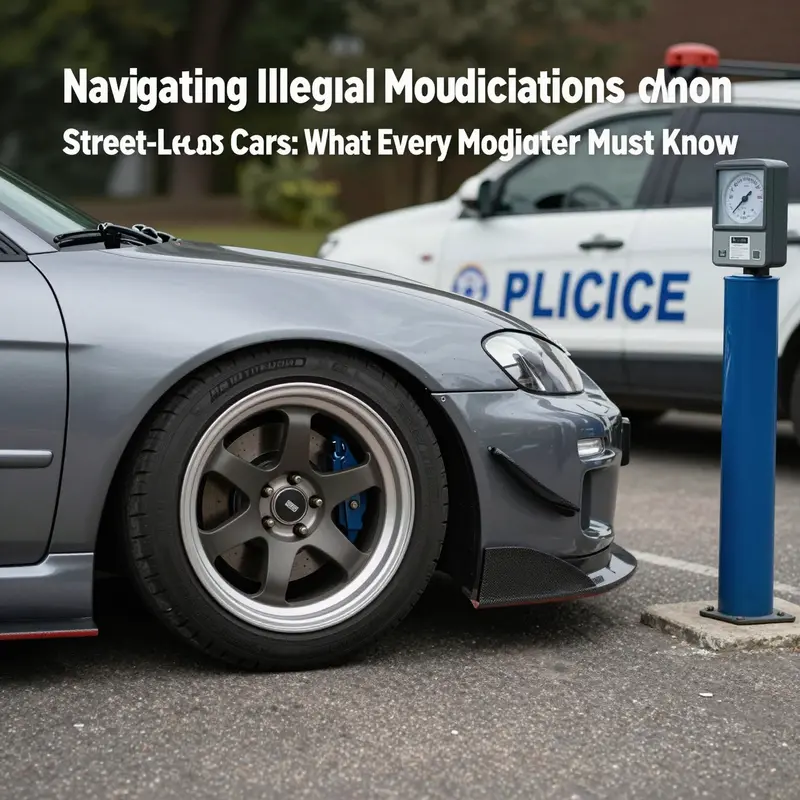
Suspension and ride height sit at the quiet edge of car culture, where a tasteful lowering or a sport-tuned setup can feel like a natural upgrade, yet the governing lines are drawn by safety, law, and the practical realities of road use. The tension isn’t about taste or performance alone; it rests on how changes alter a vehicle’s fundamental characteristics, from handling and braking to clearance and stability. In many jurisdictions, there is no single federal ban on all suspension or ride height modifications. Instead, the legality hinges on whether a modification counts as a “material alteration” to the vehicle’s original design and safety profile. The precise threshold is defined not by intent but by effect: does the change meaningfully alter how the car behaves on public roads, and does it push the vehicle outside the bounds of established safety standards? When the answer is yes, a modification that might seem minor in a private driveway can become illegal in the eyes of regulators and inspectors.
For those who own a street-legal car, the safety calculus of altered suspension is not just about what happens when the driver hits a corner or a sudden obstacle. It stretches into the way the car interacts with its tires, chassis, steering, and braking system. The suspension system is not a cosmetic element; it is a core component that translates the driver’s intent into controlled motion. Changing the suspension geometry, stiffness, or ride height can alter weight distribution, tire contact with the road, and even the vehicle’s turning radius. If these changes push the car beyond what federal safety standards anticipate or beyond a state’s specific rules for ground clearance, bumper overhang, or suspension travel, authorities may deem the modification illegal. NHTSA guidance emphasizes that any alteration impacting safety, performance, or emissions must comply with applicable federal regulations, and states often translate that federal framework into their own inspection and licensing requirements. This is why a car that left the factory under one set of safety assumptions can be treated as noncompliant after the wrong suspension tweak, even if the car remains on public roads.
State-by-state variation adds another layer of complexity. California, long regarded as a testing ground for stringent vehicle rules, illustrates how hard limits can be when it comes to suspension. The California Vehicle Code prohibits altering a suspension in ways that reduce ground clearance or otherwise change the vehicle’s intended function without the proper approvals. The practical consequence is that a lowering or lifting modification that goes beyond factory specifications can fail a state inspection, trigger fines, or require restoration to original geometry before the vehicle can be legally operated on public streets. This vignette is not an isolated case; across many states, inspectors and DMV officials balance the desire for customization with a bedrock insistence on predictable vehicle behavior, predictable stopping distances, and adequate visibility. The upshot is that what might be celebrated as a performance enhancement in a garage or on a closed track can be treated as a legal liability on a public road if it compromises these core safety tenets.
In the layer cake of suspension changes, the distinction between minor and major becomes a practical litmus test. Minor adjustments—such as replacing shocks or springs with components that maintain the general geometry and ride characteristics—are often permissible when they preserve the vehicle’s overall safety envelope and do not alter crucial dimensions beyond what the law allows. Even then, such changes require careful selection of parts that are certified for road use and properly installed, with attention to alignment and tire wear patterns. Major modifications, by contrast, include dramatic lowering or lifting, extreme camber adjustments, or any alteration that seriously shifts the vehicle’s center of gravity or reduces ground clearance to levels that regulators view as unsafe. When the suspension modification is extensive, the risk is not merely a stiffer ride or a sharper cornering profile; it is an increased likelihood of bottoming out, impaired braking response, or unpredictable behavior at highway speeds. In these cases the modification typically crosses from a consumer preference into an illegal alteration, unless the owner can demonstrate compliance through engineering analysis, testing, and, in many cases, approvals from the relevant regulatory bodies.
The practical consequences of crossing that line are real. A vehicle that has been significantly lowered or altered can fail annual safety inspections, trigger penalties, and in some jurisdictions be impounded or subject to restoration orders. Beyond the immediate legal penalties, there is a cascade of downstream effects. Insurance coverage can be at risk when the insurer discovers that a vehicle’s suspension has been modified beyond what was disclosed or approved. This can translate into higher premiums, exclusions, or even outright denial of coverage in the event of a claim. Warranties and new-car incentives often assume factory-specified suspension geometry; substantial deviations can void warranties or complicate service agreements. The reputational and resale consequences are also material. A car that has a documented history of illegal or noncompliant suspension work may be harder to insure, harder to resell, and more vulnerable to disputes in the event of an accident. In this gray zone, the safest course for a driver who values both performance and street legality is careful planning, conservative implementation, and a clear-eyed appreciation of the regulatory landscape.
Even high-performance machines, celebrated for their engineering prowess and raw speed, confront these regulatory rails. The case of hyper- or exotic-performance cars illustrates how design priorities that push the envelope can collide with street-legal requirements. The very features that give these cars their extraordinary dynamics—extreme aerodynamics, low ride heights, and specialized exhaust approaches—are often at odds with ordinary road safety standards. While such vehicles are not categorically banned from the road, they almost invariably require a comprehensive compliance pathway that may involve engineering modifications, testing, and approvals at both federal and state levels. The practical takeaway is that high power and precision handling do not guarantee street legality; they require a matching program of regulatory alignment and professional engineering validation. Without that alignment, even a car that began life as street legal can become a legal liability once a modification steps beyond what is permitted on public roads.
The route to lawful tailoring of suspension and ride height then becomes a careful negotiation rather than a freehand transformation. The first step is to consult the relevant DMV or regulatory body before any change is made. This consultation is not a formality; it is a crucial risk mitigation step that can spare car owners from expensive restoration work and legal trouble. The second step is to source parts from reputable manufacturers that are certified for use on public roads and to insist on professional installation and alignment procedures. The third step is to document the process—engineering notes, testing data, and inspection receipts—that can be presented if a regulator questions the modification. Finally, owners should anticipate the need for potential inspections or modifications to bring a car back into compliance if the regulation landscape changes or if new safety standards are adopted.
For readers seeking a concise consolidation of the legal risk, consider that one key resource often cited is the broader catalog of illegal modifications. A quick reference is available in discussions about illegal car modifications, which highlights that the issue is not merely about breaking a rule but about preserving a vehicle’s fundamental safety characteristics. See the detailed discussion at Illegal car modifications for a broader context of how the line between customization and illegality is drawn across jurisdictions. This reference is useful for grounding the discussion in practical implications and common regulatory concerns, even as the specifics will vary by state and by the nature of the modification.
The overarching message is harmonized: any suspension or ride height change should be approached with an eye toward safety, legality, and long-term stewardship of the vehicle. This means acknowledging that even seemingly small changes can have outsized legal and safety consequences on public roads. It also means recognizing that a car designed for dependable street use can still demand a disciplined, rule-aware approach when the owner wishes to tailor it beyond factory specifications. The public road is not a test track for improvisation; it is a shared space where predictable performance, clear signaling of intent through the vehicle’s geometry, and robust safety margins are nonnegotiable.
As readers contemplate their own projects, the practical implications become clear. A street-legal car is a carefully balanced system engineered to perform reliably under a wide range of conditions. Modifications to suspension and ride height must respect that balance and the regulatory framework that guards road safety. The aim is not to suppress individuality or to dampen the thrill of tuning, but to ensure that personal expression does not undermine the safety of others on the road. In the end, the legal frontier of suspension and ride height is less about curbing creativity and more about preserving a shared standard of dependability and accountability when a vehicle takes to public streets. It is a reminder that the road is a common space with common rules, and staying within those rules is the most responsible way to enjoy the performance that cars can offer.
External resource: For a federal perspective on vehicle safety and compliance, see the National Highway Traffic Safety Administration guidance at https://www.nhtsa.gov/vehicle-compliance-and-regulations.
Power in Check: The Legal Boundaries of Engine and Powertrain Modifications on Street-Legal Cars
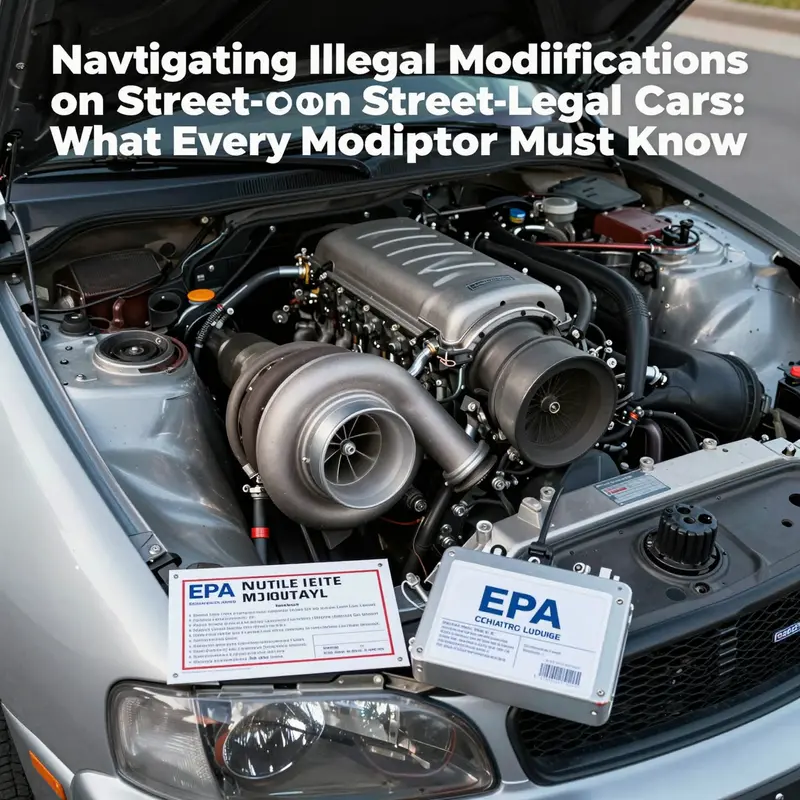
A street-legal car is a fragile equilibrium. It carries a badge of public safety and environmental responsibility, yet it also bears the hopeful promise of personal expression. When someone slides beneath the hood to poke at the engine, or rewires the powertrain to pull more horsepower from the same steel and pistons, that balance is at risk. Engine and powertrain modifications sit at the heart of this tension. They alter how a vehicle breathes, how it consumes fuel, how it responds to throttle input, and how reliably it stops and steers at speed. Every adjustment to displacement, boost, fuel flow, ignition timing, or torque delivery has the potential to shift the center of gravity for risk: louder exhausts can mask critical mechanical noise, tuned fuel maps can elude exhaust and emissions sensors, and a stiffer or lower drivetrain can push a car beyond the predictable envelope of handling. The result is not just a matter of taste or performance; it is a legal question defined by safety, emissions, and sound standards that publics rely on to keep roads functioning with a minimum level of order and predictability.
In many jurisdictions, the line between a permitted upgrade and an illegal alteration runs where the modification begins to undermine the baseline standards that govern road use. A vehicle that leaves a factory line is designed to meet a particular set of safety metrics, engine control logic, exhaust treatment, and noise limits. When an owner changes the engine’s internal parameters, swaps components that are designed to work with specific performance envelopes, or rewires critical safety systems, those assessments are no longer guaranteed. The legal framework treats such changes with scrutiny because the consequences are not merely theoretical: a miscalibrated control unit can cause unintended acceleration, a misfiring ignition can increase the risk of fire, and a modified exhaust can elevate noise to a level that affects other drivers and pedestrians. The rule is simple in its intent, though the details differ by place: modifications that impair safety, undermine emissions compliance, or produce excessive noise typically fail to meet the standard required for a street-legal vehicle.
The governing logic is reinforced by two essential pillars that cross borders, even as the specifics diverge. One pillar is safety. Agencies charged with vehicle compliance want to ensure that a car behaves as the public expects under ordinary conditions and in emergencies. When a powertrain is altered, the calibration that translates pedal movement into fuel delivery, ignition timing, and throttle response can become unpredictable. The car may accelerate more aggressively in situations where controlled deceleration and predictable intervention are critical. The other pillar is environmental stewardship. Cars are not isolated mechanical systems; they contribute to air quality and noise in the communities through which they move. Changes to the engine and exhaust that bypass or defeat sensors, or that remove or bypass catalytic converters and other emissions-control devices, almost inevitably push emissions beyond permitted limits. In practice, that means an altered powertrain can violate federal, state, or provincial laws designed to curb pollution and protect public health.
A significant portion of illegal powertrain work falls under changes to engine hardware and the control systems that govern it. Modifications that alter displacement, introduce forced induction, replace the exhaust with a noncompliant configuration, or recalibrate fuel and ignition maps are flagged because they can directly affect how clean a vehicle burns fuel and how it behaves when driven. The line between permitted tuning and illegal manipulation is not always a sharp threshold of horsepower; rather, it is a spectrum that ranges from adjustments meant to enhance drivability without affecting emissions to full-scale overhauls that bypass the very systems designed to regulate performance for safety and environmental reasons. The general principle remains consistent: if a modification renders the vehicle noncompliant with the standards it was designed to meet, it risks becoming illegal for street use.
In the context of the United States, the framework is complex and layered. At the federal level, the Environmental Protection Agency enforces the Clean Air Act, which governs what can be done to a vehicle’s emissions-control systems. Any change that increases tailpipe pollutants or undermines the effectiveness of a catalytic converter, oxygen sensor, or other part of the exhaust after-treatment chain is typically prohibited. The National Highway Traffic Safety Administration adds another dimension by focusing on safety compliance: modifications that could impair braking systems, steering, or crashworthiness, or that remove essential safety features, are not permissible on a street vehicle. States then layer their own rules, which can include additional permit requirements, inspection standards, or decibel limits for exhaust. The practical implication is plain: even if a modification might seem purely cosmetic or performance-oriented in isolation, the combined effect on safety and emissions determines legality on public roads. A vehicle may be legally modified for track use or display in some jurisdictions, but the moment it returns to public streets, the full regulatory load reasserts itself.
Within this landscape, many individuals encounter a stark reality: not all high-performance ambitions can be realized within the boundaries of law. A powertrain upgrade that requires bypassing emissions controls, or a reengineered fuel system that destabilizes idle behavior or warps fuel economy, is frequently out of bounds. Even seemingly small steps—such as recalibrating engine timing, removing a factory emissions device, or installing a different intake or exhaust profile—can produce cascading compliance failures when measured against the data and testing standards used by regulators. The practical consequence is that the legal status of a car can shift post-modification. A vehicle that once cleared an annual inspection may fail it after a wrench turns on a different mapping or a component is replaced. In some places, the penalties are explicit: fines, mandatory restoration to factory condition, intrusive inspections, and, in the worst cases, impoundment. The message from authorities is clear: gains in speed or thrill are not worth forfeiting the essential public safeguards that vehicles must uphold.
The Chinese enforcement narrative offers a parallel illustration of strict control over powertrain alterations. Article 16 of the Road Traffic Safety Law restricts alterations to a motor vehicle’s body shape or registered technical parameters without authorization. The practical effect is that engine and exhaust changes, if done outside the official process, can be deemed illegal. Public security authorities have demonstrated this in recent cases, where vehicles presented with altered exhaust configurations, changed body color, added spoilers, or lowered suspensions were ordered back to factory specifications and fined. The emphasis in these reports is not merely on punishment but on restoring a known, verifiable baseline for safety and compliance. Such enforcement highlights the universal logic: powertrain changes are permissible only when they can be demonstrated to meet the same stringent safety and environmental criteria that applied at the factory.
This risk calculus extends beyond formal penalties. Insurance coverage and resale value are also affected by engine or powertrain modifications. Insurers often require disclosure of any substantial changes, and failure to disclose can void coverage or reduce benefits. From a consumer perspective, the cost of compliance can be substantial: not only the price of the parts and labor but also potential testing, verification, and re-certification costs if a jurisdiction requires them. Even when a modification is technically reversible, the road back to compliance can be expensive and time-consuming. The broader implication is that driver aspiration toward more power must be tempered with a long view of the legal and financial consequences. For many, the prudent course is to pursue enhancements through sanctioned channels—approved performance parts and official tuning programs that maintain traceability to the factory baseline and preserve compliance over the life of the vehicle.
The practical takeaway for readers is straightforward. If the aim is to personalize a street-legal car, do so within the constraints of the law. There are legitimate paths to improved performance that align with safety and environmental requirements. Upgrades should be selected with regulatory compatibility in mind, documented for inspection, and verified through the appropriate channels. A responsible approach treats customization as an ongoing dialogue with regulators, not a one-off experiment under the hood. For readers seeking to explore these issues in a broader context, discussions on illegal-car-modifications offer a concise lens into how the regulatory framework views limits and exceptions, and how the boundary between permissible and prohibited work is drawn. illegal-car-modifications provides a compact reference point that captures the practical realities automotive enthusiasts confront when pursuing power while staying within law.
The broader arc connects to the chapter’s broader aim: to map out what is truly off-limits and why, while acknowledging that the boundaries are not only legal texts but also public safety imperatives and social expectations. The emphasis on safety, emissions, and noise isn’t merely bureaucratic; it reflects a society that seeks to balance personal passion with communal responsibilities. When an owner considers a powertrain modification, a moment of deliberation should follow: does the potential performance benefit justify the risk of noncompliance, the cost of restoration, or the chance of losing access to the road? The chain of consequences—quicker acceleration, altered handling, increased noise, potential exhaust emissions conflicts, possible insurance withdrawal, and the threat of penalties—often proves heavier than the thrill of additional horsepower. In this sense, the route to a true, street-legal upgrade lies in a careful partnership with standards and regulators, rather than a solitary act under the hood.
As this chapter flows into the broader discussion of how a vehicle can be personalized without surrendering its street-legal status, the throughline remains consistent. Engine and powertrain modifications are among the most consequential changes a car can undergo. They cut to the core question of what it means to own a road-legal vehicle: one that not only satisfies design and performance expectations but also upholds the safety, environmental, and civic responsibilities shared by all road users. The legal path forward is not a denial of ambition but a disciplined route that channels innovation through compliance, testing, and transparent oversight. In the end, true customization thrives not in circumventing rules but in meeting them with thoughtful engineering and principled stewardship.
External reference: For an official, jurisdiction-spanning perspective on regulatory standards and enforcement practices, see the national public safety and environmental authorities’ guidance, such as the Chinese Ministry of Public Security’s materials on vehicle modifications and enforcement actions. https://www.mps.gov.cn
Final thoughts
Awareness of the legal framework surrounding car modifications is paramount for anyone passionate about vehicle tuning and restoration. Illegally modified cars risk not only enforcement actions but also compromise safety, environmental health, and community respect. By understanding the boundaries—whether it’s the exhaust’s noise limits, the color and brightness of your lights, the safe ride height of your suspension, or the compliance of your engine upgrades—you position yourself as a responsible modifier who values both performance and legality. Adhering to these regulations ensures your car remains street-legal, your investments protected, and your driving experience both thrilling and worry-free. Raise the bar on your customization journey and ride with confidence in both style and compliance.