
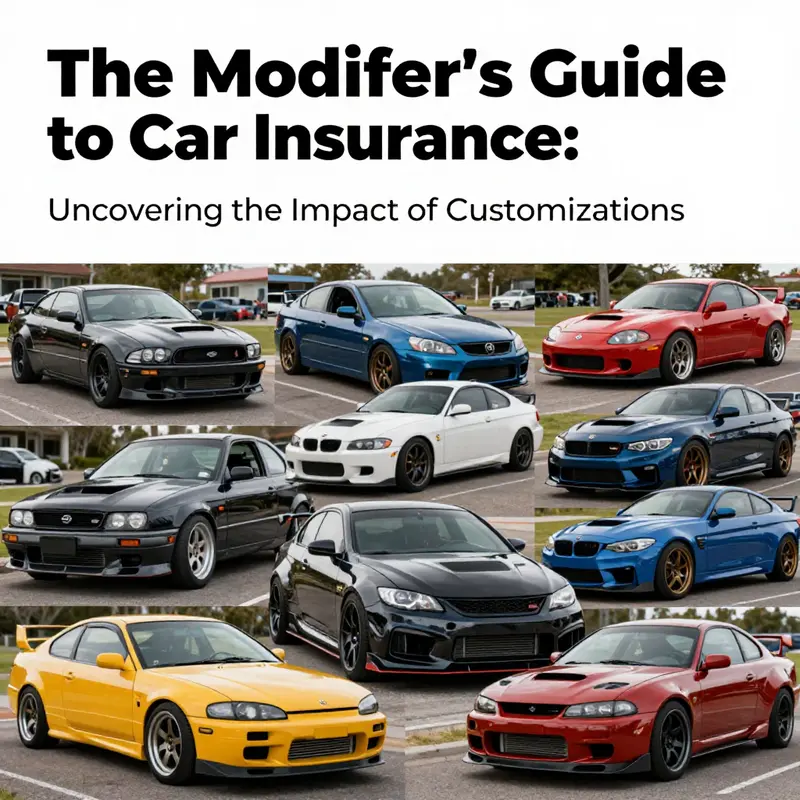
For hobbyists, professionals, and enthusiasts alike, car modifications symbolize freedom, identity, and performance. However, when it comes to insuring these customized vehicles, many owners face crucial questions about the impact of their modifications on insurance policies. Insurers assess vehicles not just for their base model but consider every layer of customization, from cosmetic changes to performance enhancements. Understanding how each modification plays into your insurance premium and coverage eligibility is essential for car modders. This article dissects the relationship between different types of modifications—cosmetic, performance, and safety—highlighting their significance in the insurance landscape. As we delve into the nuances of insurance policies for modified vehicles, we aim to empower enthusiasts to make informed decisions that protect their pride and joy.
Beyond Appearance: How Cosmetic Car Modifications Shape Insurance Premiums
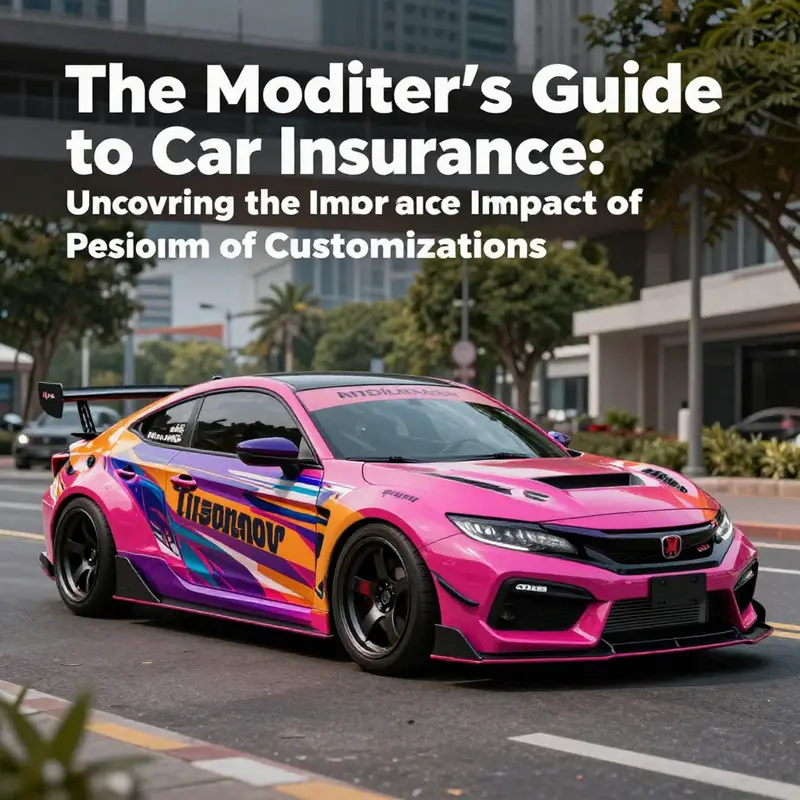
When you start shopping for auto insurance, the process often feels like a careful audit of risk factors rather than a simple price tag exercise. Among the questions insurers ask, modifications to your vehicle sit high on the risk radar, even when the changes seem purely cosmetic. The reason is straightforward: what you see on the surface can signal a different risk profile to an underwriter who must anticipate how the car will perform in the real world, how repair costs might rise, and how the vehicle may be targeted by thieves. In practice, cosmetic modifications—think bold body kits, aftermarket wheels, or striking paint jobs—are not just about personal expression. They can shift the odds in ways that affect your premium, your coverage options, and, ultimately, the likelihood that a claim will be honored in the event of an accident or theft. This interconnected web of risk assessment and policy language is why transparency remains the backbone of any successful insurance arrangement for modified vehicles.
To understand the influence of cosmetic changes on insurance pricing, it helps to frame modifications as signals to the insurer about value, risk, and repair complexity. Value matters because most policies are designed to replace or repair a vehicle with comparable components and costs. If you’ve added parts that raise the vehicle’s overall replacement cost, the insurer’s exposure increases accordingly. Complexity follows—the more specialized or unique the parts, the more expensive it can be to source, install, or repair them. These factors feed into the premium calculation, even if the modification itself did not alter the vehicle’s performance.
Cosmetic modifications also intertwine with theft risk in a practical sense. Personalizing a car with high-visibility enhancements or custom features can make it more desirable to thieves or, conversely, less attractive if the modifications are less common or obscure. Insurers weigh this dynamic alongside regional crime trends, the vehicle’s storage environment, and the owner’s security practices. The net effect can be a premium that reflects not only the car’s intrinsic value but also its salience to theft and vandalism. The broad takeaway is simple: appearances matter, but the resulting premium depends on a careful blend of value, risk, and the insurer’s specific policies.
The application process itself makes this logic explicit. When you apply for auto coverage, you will encounter questions about any alterations to the vehicle. Some questions are straightforward, such as whether the car has a turbocharged engine or a suspension upgrade. Others target cosmetic changes, like custom paint, decals, or aftermarket wheels. The essential principle is not to trap or penalize owners for self-expression but to ensure the insurer can accurately assess exposure and, if needed, adjust coverage terms. In cases where modifications sit outside the ordinary scope of a factory-equipped vehicle, an insurer may request documentation, photos, or even a professional appraisal to verify the nature and scope of the changes.
The consequences of non-disclosure can be severe. Policies often include language requiring full disclosure of modifications that could affect risk. If a driver hides or underreports modifications that influence safety, repair costs, or theft risk, a claim can be denied or reduced after an incident. The logic here is not punitive; it is about ensuring that the risk model aligns with the actual vehicle and its use. In a best-case scenario, transparent disclosure leads to peace of mind: you know what you’re paying for, and the insurer accepts your stated risk with a clear coverage scope. In a worst-case scenario, undisclosed modifications, when discovered, can unravel the claim process precisely when you need coverage the most. The stakes are especially high for alterations that change the vehicle’s purpose or operation, such as turning a personal car into a vehicle used for ride-hailing or other commercial activities. In those situations, the policy may be voided, or the claim denied, because the risk profile had shifted in ways not disclosed at the outset.
Cosmetic modifications, while often viewed as purely aesthetic, can still influence premium calculations through several interlocking channels. First, there is the value channel. Any addition or change that increases the car’s replacement cost or the complexity of repairs contributes to a higher expected payout in the event of damage. A car with a custom paint finish and forged wheels may carry a higher replacement value than a stock version, and insurers must account for the possibility that unique parts will be harder to source or more expensive to replace. Second, there is the repair-cost channel. Some cosmetic parts require specialized labor or rare components. Even if the modification does not affect performance, the price tag for repairs can rise, and this risk is reflected in the premium. Third, the theft-risk channel. Distinctive appearance makes a vehicle stand out in a crowd, potentially attracting more attention from thieves. The insurer will assess how much of a premium is warranted to offset that incremental risk. Finally, there is the coverage-term channel. Some insurers offer specific riders or endorsement options for modified vehicles, providing clearer terms but often at a higher cost. These options can be attractive to drivers who want certainty about what’s covered and how claims will be processed in the event of a loss.
Within this framework, not all cosmetic changes will trigger a premium spike. Some modifications are minor enough that the overall risk remains close to the stock baseline, especially if they involve cosmetic-only changes that do not alter the vehicle’s performance, safety features, or theft profile. For example, interior upgrades like a premium sound system may be considered low risk if they do not affect critical safety components or the vehicle’s value as a whole. It is not unusual for insurers to separate cosmetic enhancements from performance or safety upgrades, applying different treatment to each category. The result is a nuanced pricing landscape where the type and scope of modification matter more than the mere fact that a change occurred.
Insurance providers also vary in their approach to modifications. Some offer flexible coverage with riders that accommodate a range of cosmetic changes, while others may require more formal documentation and assessment. A number of insurers have dedicated products for modified vehicles that outline explicit terms, conditions, and exclusions. These policies are designed to prevent disputes during claims by ensuring both sides share a common understanding of what has been changed and how those changes are covered. In practice, this means that cosmetic modifications can either raise the premium or be bundled into a specialized policy framework that provides clearer coverage terms, depending on the insurer’s philosophy and the complexity of the modification.
For vehicle owners who have embraced personalization, there is a practical pathway to navigate the insurance maze without compromising coverage. The first step is to engage in a transparent conversation with the insurer or a licensed broker. Share a detailed inventory of all modifications, including the make, model, year, and the precise parts installed. Documentation matters: invoices, receipts, photos, and, when possible, a professional appraisal can help the insurer understand what’s been added and how it affects the vehicle’s value and risk profile. It can also expedite the underwriting process by providing concrete data rather than relying on generic assumptions. When the modification touches on safety features or performance, it becomes even more important to demonstrate that the changes do not introduce new safety concerns or alter the car’s handling in ways that could heighten risk. If a modification affects braking, steering, or airbag deployment, the underwriter may request engineering assessments or certifications to verify that the car remains compliant with safety standards.
In some cases, the insurer may propose premium adjustments based on the expected impact of the modification. If the changes raise the vehicle’s value, the replacement cost coverage might be recalibrated to ensure the insurer can fully indemnify the owner after a loss. If the modifications involve high-cost parts or specialized labor, a higher deductible could be offered as a cost-containment measure for the policyholder, with the understanding that coverage remains intact for the broader risks. In other circumstances, the insurer might offer a discount or a tailored policy if a modification enhances safety features, such as enhanced braking systems or advanced driver-assistance elements that reduce the likelihood of accidents. Although this is less common for cosmetic changes, some insurers do recognize value in upgrades that improve overall vehicle safety and reliability. The key is to discuss options openly with the insurer to understand where the boundaries lie and what terms they are prepared to offer.
The broader policy ecosystem also matters. Some drivers pursue specific end-to-end guidance from regulators or industry groups to ensure that their modifications are reported accurately and that their coverage remains enforceable. For instance, the National Association of Insurance Commissioners provides general guidance about how modifications can influence auto insurance, underscoring the importance of truthful reporting and the potential consequences of non-disclosure. While not a substitute for personalized advice from a licensed professional, such guidance can help owners frame their conversations with insurers and set realistic expectations about what modifications may cost in premiums and how coverage may be structured. When you need tailored information, your best resource is your own insurer’s policy documents, which spell out exactly how each modification category is treated and what documentation is required for full disclosure.
From a practical standpoint, this means adopting a thoughtful, informed approach to modifications rather than relying on assumptions. If you have cosmetic changes that are largely aesthetic, start with a candid assessment of how you use the vehicle, where you store it, and how much you drive it in various conditions. If you routinely park in high-theft areas, or if the vehicle’s appearance makes it a target, these risk cues may push the insurer to adjust the premium more readily. Conversely, if you add features that improve security, such as a quality immobilizer, reinforced doors, or a high-quality alarm system, you may mitigate some of the theft-related risk and potentially soften the financial impact of a modification on your premium.
There is also value in aligning your goals with your financing and ownership status. If you financed or leased the car, modifications may require permission from the lender or the leaseholder, and failing to disclose modifications could complicate matters if the vehicle is repossessed or if the lease is reassessed at renewal. Some lenders impose restrictions on certain types of modifications or require them to be removed at the end of the term. In these cases, ongoing communication among the owner, insurer, and lender can prevent disputes and help ensure continuous coverage without surprises during claims processing. For many owners, the simplest path to harmonizing these interests is to document every change, obtain written approval where required, and maintain a centralized file of receipts and warranties that clearly explain the role and limits of each modification.
What all of this means in practice is that cosmetic modifications are not inherently a cause for alarm or automatic premium increases. Rather, they represent variables in a risk equation that insurers compute at renewal or when a policy is first written. The results depend on a confluence of factors: the specific modification, the vehicle’s baseline value, the parts’ availability and repair costs, theft risk in the owner’s locale, and the insurer’s own product design. Some vehicles will see modest premium shifts, while others may face more substantial changes or even a decision to issue a separate modified-vehicle policy. The common thread across all outcomes is transparency. By declaring modifications upfront, owners help ensure that coverage remains intact and claims can be processed smoothly when problems arise.
For readers who want practical steps to manage the impact of cosmetic changes on insurance, here is a concise path: begin with a comprehensive modification inventory; collect documentation; discuss the changes with your insurer or broker; consider whether a specialized rider or policy makes sense for the extent of your modifications; if the car’s purpose has changed, reassess whether a commercial-use policy is required; and finally review your policy at each renewal to ensure it reflects any new modifications and the current driving pattern. This proactive approach reduces the risk of claim disputes and adds predictability to premiums, which is especially valuable for owners who plan to keep a modified vehicle for several years.
Internal link for further context: what modifications affect car insurance. This resource offers a practical overview of how different modification categories tend to influence coverage and pricing, helping readers translate the general principles discussed here into concrete actions for their own situation.
In the end, the chapter on cosmetic modifications reveals a core truth about auto insurance: risk is multifaceted, and the way you present your vehicle to the insurer matters as much as the modifications themselves. When you approach the process with openness, detailed documentation, and a clear understanding of how your changes intersect with value, theft risk, and repair costs, you can navigate the pricing landscape with confidence. The resulting coverage is not just a financial shield but a reflection of a carefully considered balance between personalization and protection. The chapter’s core takeaway is straightforward: cosmetic changes may influence premiums, but accurate disclosure and thoughtful risk management can preserve coverage and clarity when you need it most.
External resource: https://www.naic.org/
The Weight of the Wrench: How Performance Modifications Shape Insurance Underwriting
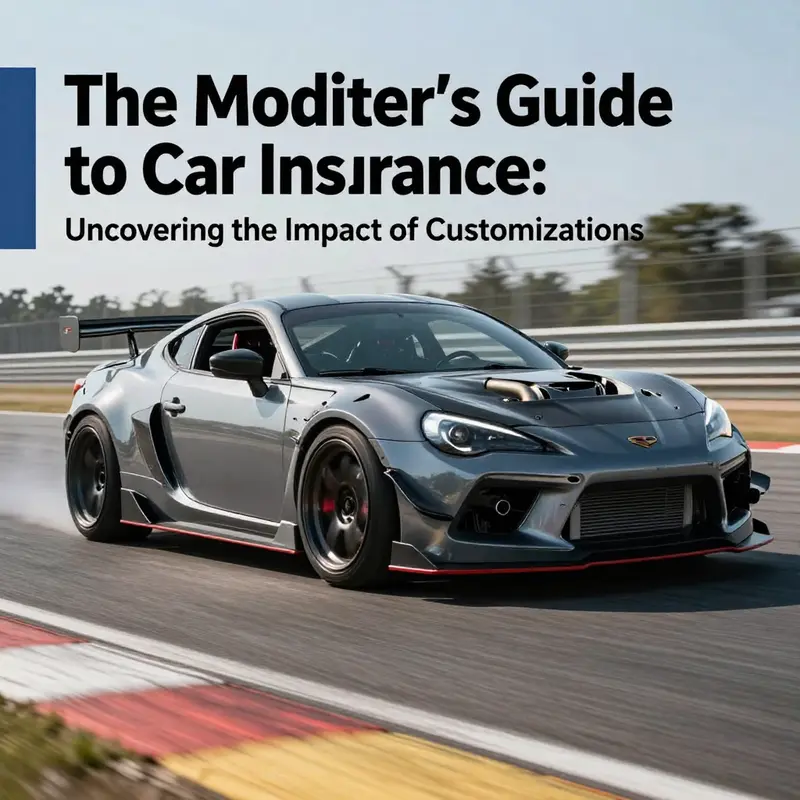
When you apply for auto insurance, the questions you answer about your vehicle are more than a checklist. They are a careful ledger of risk. Insurance companies lean on underwriting to translate every tweak, upgrade, or alteration into a probability curve that estimates future claims. This process, at its core, seeks a balance: pricing that fairly reflects risk while keeping the policy affordable for responsible drivers. Among the most consequential items in that ledger are performance modifications. Upgrades to engines, exhausts, suspensions, or brake systems do not merely change how a car feels or how it performs; they can recalibrate the driving risk profile in ways that ripple through premiums, coverage terms, and even eligibility for a policy. The chapter on modifications thus hinges on understanding how underwriters quantify risk, how disclosure shapes outcomes, and why transparency is both a shield and a prerequisite for fair protection on the road ahead.
To begin, insurers do not treat all modifications the same. They categorize changes into broad strata to gauge their impact on risk and on the vehicle’s behavior during operation. Cosmetic alterations—body kits, customized paint, aftermarket wheels, or other appearances—can catch the eye of a thief or influence a vehicle’s center of gravity and handling, depending on the change. Such alterations are often flagged as potentially increasing theft risk or altering vehicle dynamics enough to affect control in sudden maneuvers. Performance modifications, by contrast, represent a different kind of risk calculus. Engine tuning, turbocharging, upgraded exhausts, or enhanced braking systems can push a car toward higher speeds, sharper acceleration, or altered throttle response. These factors can elevate the probability of high-severity accidents and, consequently, the expected cost of claims. It is not a simple matter of one modification equaling a higher premium; the risk assessment hinges on how the modification changes real-world performance, reliability, and usage patterns.
Even within the broad categories, the insurer’s evaluation is nuanced. A modification that improves safety or reliability can be viewed differently from one that increases speed potential or alters the vehicle’s dynamics in unpredictable ways. For instance, advanced driver-assistance features or upgraded navigation systems may be treated as neutral or even beneficial to risk management. They can provide data streams that help the driver avoid incidents or facilitate safer driving behavior. Yet, the picture is not uniformly favorable: some enhancements may introduce new failure points, electrical complexities, or installation risks that bear on claim likelihood and cost. The complexity of modern vehicles means that the underwriting team must consider not only the feature itself but also how it interacts with other components, how it is maintained, and whether it was installed by a reputable professional or as a do-it-yourself project.
A key thread in this risk tapestry is disclosure. When you disclose modifications, you enable underwriters to reassess the vehicle’s risk profile with a transparent view of its capabilities and limitations. Conversely, nondisclosure—intentional or inadvertent—can undermine the validity of a policy. If a claim arises and the insurer discovers that a significant modification was not disclosed, they may question whether the change constitutes a material fact that affects risk. Depending on the jurisdiction and the precise terms of the policy, nondisclosure can lead to partial or total denial of a claim, even if the event itself falls within what would otherwise be covered. Over the past several years, legal interpretations have reinforced the principle that material changes to a vehicle’s use or performance must be communicated to the insurer. Failure to do so is not a mere paperwork oversight; it is a risk management failure on the part of the insured that can leave a policyholder unexpectedly exposed when a loss occurs.
This emphasis on disclosure dovetails with a broader industry objective: accurate pricing through underwriting. Insurers strive to price risk so that premium income covers expected losses and operating expenses over time. The financial heartbeat of underwriting rests on the combined ratio, a metric that combines incurred losses and expenses divided by earned premiums. A combined ratio below 100 percent signals underwriting profitability; above 100 percent indicates a loss on the core insurance activity. Modifications influence this calculus by shifting both the frequency and severity of claims. If performance upgrades meaningfully increase crash risk or damage severity, the insurer may respond with higher premiums, stricter coverage terms, or even exclusions that limit certain claims. If, however, a modification demonstrably reduces risk—for example, a high-end braking system that lowers stopping distances or a dash camera system that provides objective incident data—the premium adjustment may be muted or even favorable in some cases.
In practice, the underwriting decision flows from a blend of data, professional judgment, and policy design. Processed data sources can include the type and extent of modifications, the vehicle’s age and mileage, the driver’s history, and the intended use of the car. A key question becomes how to map a modification’s intent to its risk implications. A performance upgrade aimed at track days, high-speed events, or frequent spirited driving introduces different risk patterns than the same upgrade installed for daily commuting with cautious driving. Insurers look not only at what was changed but also at how the vehicle is likely to be used and maintained. Maintenance quality matters because a poorly installed or poorly maintained modification can fail in demanding conditions, potentially triggering an incident or complicating a claim. This is why some insurers require a professional installation receipt, maintenance logs, or periodic inspections for vehicles with substantial performance or safety modifications.
A broader trend in risk management also shapes how modifications influence pricing and coverage. Environmental, social, and governance (ESG) disclosures, particularly those related to climate action, are making their way into risk assessment practices. Insurers are increasingly attentive to climate-related risks and the implications for capital requirements and pricing strategies. In this evolving landscape, a company that transparently discloses climate-related exposure linked to vehicle technology and usage patterns may be better positioned to manage risk and communicate resilience to investors and customers. While these considerations do not replace the core mechanical and behavioral risk assessments, they color the long-term risk profile and can influence underwriting decisions and policy design.
The practical upshot for drivers with modified cars is twofold. First, honestly disclosing modifications helps ensure that coverage remains intact and that a claim, if needed, is adjudicated fairly. When in doubt, a transparent conversation with the insurer about the scope, purpose, and installation of a modification can prevent later disputes. Second, drivers should expect that not all modifications yield the same financial effect. Some alterations may trigger rate increases, while others may be neutral or only modestly affect cost. The decisive factor is the modification’s demonstrated impact on safety, reliability, and the probability and cost of future claims.
Embedded in the underwriting conversation is a practical awareness of how policy structures accommodate modifications. Some insurers offer specialized policies for modified vehicles. These policies are built on full disclosure and often feature more detailed coverage terms that explicitly address the modification landscape. They may come with higher premiums, but the price is paired with clarity about what is covered and what is excluded, reducing disputes during claims processing. For a consumer, a modified-vehicle policy can be a path to alignment between expectations and protection. It is not, however, a universal solution; the suitability of a specialized policy depends on the extent and nature of the modifications, the driver’s risk profile, and the insurer’s risk appetite.
A common but essential theme across all these considerations is the potential consequence of not sharing information that could influence risk. If a vehicle is altered in a way that changes its purpose—for instance, converting a personal car into a ride-share vehicle—the risk landscape shifts dramatically. In such cases, the insurer may reclassify the policy, adjust limits or premiums, or refuse coverage altogether if the changes render the original underwriting terms invalid. This scenario underscores the broader principle that insurance is a contract built on accurate information about risk exposure. When that information changes, the policy terms should adapt accordingly to preserve coverage’s integrity.
From a consumer perspective, approaching modifications with a mindset of ongoing disclosure and dialogue is advisable. Documentation matters: keep receipts for parts and installation, gather maintenance records, and maintain a professional service history when possible. If an insurer asks about modifications during the application, the most prudent response is to provide a clear, comprehensive picture of what was changed and why. In some cases, insurers will request an inspection or verification before finalizing coverage, especially for vehicles with substantial performance or safety enhancements. This process may require more time, but it is a prudent investment in ensuring that coverage remains in force when a loss occurs.
The broader traffic of information around modifications and insurance also helps explain why drivers might encounter mixed pricing outcomes. Some insurers use static underwriting templates that gradually adapt as more information becomes available, while others lean on more dynamic models that can quickly reflect new data about modification types, usage patterns, and driver behavior. In any case, the principle remains constant: the more transparent and precise the information, the more accurately the insurer can price risk and tailor coverage. In the long run, this alignment between risk and protection can reduce disputes and support smoother claims handling, which benefits both parties.
For readers seeking practical guidance, a concise entry point exists in discussions that summarize how modifications influence insurance. These resources address common questions about which changes typically affect premiums, how to report changes, and what to expect during claims. A useful starting point is the resource that explicitly discusses how modifications affect car insurance, offering a plain-language overview that complements the more technical underwriting literature. What Modifications Affect Car Insurance provides a straightforward map of modification types and their likely insurance consequences, helping drivers decide whether to pursue certain upgrades or how to structure them in a way that aligns with their protection needs. This kind of guidance can be especially valuable for drivers navigating first-time modifications or transitioning to vehicles with heavier customization.
Turning back to the underwriting framework, it is important to recognize that risk assessment is not static. It evolves with data about driver behavior, accident trends, and the performance of various modification categories across different vehicle segments. Hedging strategies and financial risk management practices influence, but do not replace, the core actuarial work of estimating claims costs. Hedge accounting and related financial tools may stabilize earnings from year to year, but the underlying risk profile — including how modified vehicles perform in real-world driving conditions — remains the anchor for pricing. In this sense, undertakings to quantify risk and manage it through financial instruments are complementary to the more tangible judgments about vehicle modification and usage.
Historical and contemporary research in the field supports this integrated view. In-depth studies note that the combined ratio remains a central barometer of underwriting health and the discipline with which insurers price risk over time. They also point to the growing attention paid to ESG disclosures and climate-related risk as factors shaping capital requirements and strategic direction. Although these elements do not replace the need for precise, vehicle-level risk assessments, they do influence the longer horizon for product design, pricing strategy, and policy options that a modern insurer can offer to drivers with modified cars. In practical terms, this means that drivers who pursue modifications should anticipate not only immediate premium implications but also possible shifts in policy flexibility, coverage options, and the availability of specialized products as the market matures.
The chapter’s overarching message is straightforward yet nuanced. Modifications do matter to how insurers assess risk, but their impact is not monolithic. The most important takeaway for drivers is transparency, precision, and proactive engagement with the insurer. By providing a complete picture of modifications, drivers enable underwriting to price risk accurately and equity, reducing the likelihood of claim disputes later on. For those considering modifications, it is worth weighing the safety, performance, and enjoyment benefits against the potential changes in protection and cost. In many cases, the right approach is to pursue modifications with professional installation, robust maintenance, and an emphasis on safety and reliability, all while maintaining open lines of communication with the insurer to ensure coverage stays aligned with the vehicle’s new profile.
In sum, performance modifications trigger a careful, data-informed risk assessment that sits at the heart of auto insurance underwriting. This assessment translates into pricing, policy terms, and sometimes the viability of coverage itself. The weight of the wrench, so to speak, is measured not only by the force of the upgrade but by how clearly the change is explained, how reliably the modification functions, and how well it fits within the insurer’s risk appetite and product design. By embracing transparency and seeking out policy options designed for modified vehicles, drivers can protect their investment while enjoying the capabilities that modern automotive upgrades offer. The result is coverage that reflects reality on the road, rather than a mismatch between expectation and protection when a claim is filed.
External reference for further exploration on risk management in insurance: Financial Risk Management and Performance of Insurance Companies.
Beyond the Sticker: How Safety Features and Vehicle Modifications Shape Auto Insurance
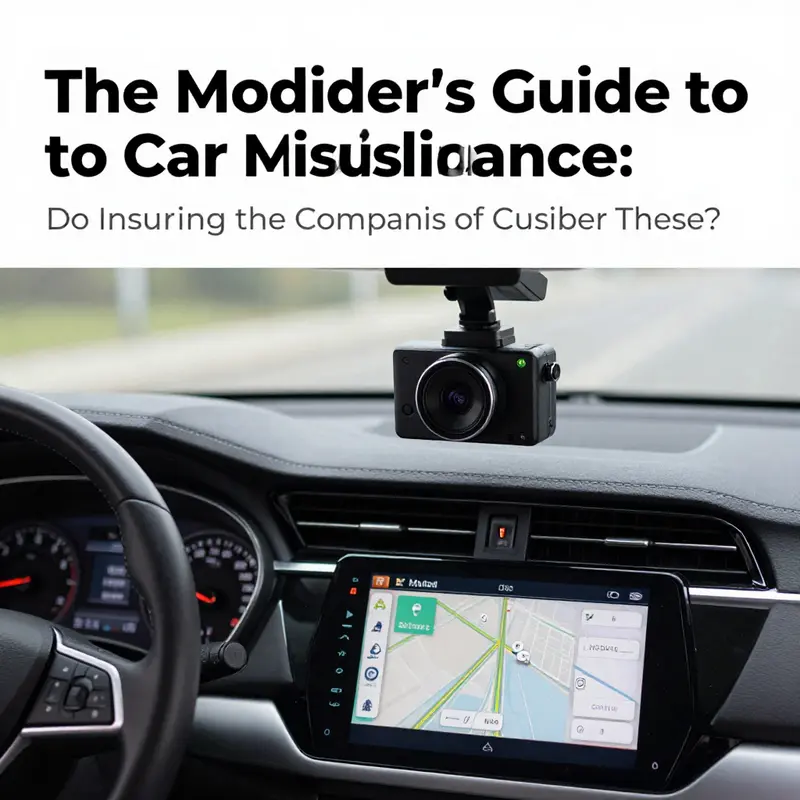
When you shop for auto insurance, you quickly learn that the car you drive is not the only thing that matters. The insurer wants to know the story of the vehicle inside and out, and modifications are central to that story. Any alteration to a car can shift the risk profile in subtle or dramatic ways. That is why the application process routinely asks about the changes you have made or plan to make, from the cosmetic tweaks on the exterior to the performance upgrades under the hood, and including any safety or convenience add ons. The aim is not to punish creativity or customization but to ensure that pricing and coverage fit the real risk you bring to the road. A transparent approach helps prevent surprises if a claim is filed later, and it helps insurers assess whether your policy remains valid after a modification has changed the vehicle in meaningful ways. This is not a simple yes or no issue, but a nuanced evaluation that blends the type of modification, its intent, its effect on the vehicle dynamics, and the way you use the car in daily life or for work. When you look at the landscape of modifications, you can see why insurers separate them into broad categories yet understand that a single altered car can straddle several risk profiles at once. Cosmetic add ons such as body kits, custom paint, or aftermarket wheels may seem purely aesthetic, but they can influence how a car behaves in real life conditions and how thieves target it. Performance modifications, including engine tuning or turbo upgrades, fundamentally alter acceleration, handling, and braking. These changes can elevate the likelihood of high speed driving and more aggressive driving behavior, which translates into higher exposure for the insurer. On the other hand, safety or convenience enhancements tend to be viewed differently. Upgraded brakes or suspension systems designed to improve control can lower the chance of a crash, while features such as dash cams or enhanced navigation systems can affect the way a claim is documented and processed. The net effect of these categories is that the premium you pay often reflects a careful balance between the added risk you introduce and the potential risk mitigation you gain through better safety or theft deterrence. For many drivers, the question is not simply whether a modification exists, but how it shifts risk in the insurer’s books and what that means for price and coverage. The information you provide during the application process is a material factor that helps determine whether you qualify for standard coverage, a modified vehicle policy, or a specialty plan that is tailored to your car and its modifications. This is where the ordinary becomes extraordinary. The car you drive, the modifications you have made, and the way you drive all come together to paint a picture that is read by underwriters who are trained to spot potential gaps between perceived risk and actual risk. If a builder type or hobbyist has made extensive changes to the engine, fuel system, exhaust, or electronics, the underwriter has to decide whether those changes heighten the chance of a breakdown, an accident, or a claim that requires specialized expertise to settle. In other words, the modifications you reveal act as a kind of risk map for the insurer, guiding not only the price but the scope of coverage the policy should provide. The conversation around modifications is also about what constitutes disclosure and how much detail is required. Some applicants assume that minor tweaks go unnoticed or are too insignificant to matter. Others fear that mentioning any alteration will immediately inflate the premium or trigger a refusal of coverage. The truth lies somewhere in between. Insurers are accustomed to dealing with a spectrum of changes, from the cosmetic to the highly technical, and most of them articulate a clear policy position: full and honest disclosure is essential for claims to be paid and for premiums to reflect true risk. When you fail to disclose a modification that increases risk, you risk a denial or partial denial of a claim because the insurer was not provided with all the material facts needed to assess risk accurately. This principle persists across jurisdictions and policy types. It is reflected in the legal and underwriting guidance used by insurers, which emphasizes that a modification can alter how the vehicle operates, how it is used, and how vulnerable it is to theft or failure in a crash. There is no universal rule that every modification will lead to a higher premium, but most modifications will at least trigger some review. A key part of that review is whether the change is covered under the policy and whether it aligns with the policy’s stated purpose and limits. Some insurers also offer specialized policies for modified vehicles. These policies recognize the reality that a car that has been significantly altered requires terms that standard coverage may not cover fully. Specialized policies can provide clearer coverage terms and minimize disputes during claims processing, though they often come with higher premiums. The decision to pursue a specialized policy depends on how extensive the modifications are, how they affect core aspects like safety and theft risk, and the driver’s willingness to accept certain premium levels in exchange for tailored coverage. The relationship between modifications and insurance is dynamic. For drivers who lean toward safety and technology, the landscape often looks favorable. Manufacturers increasingly embed advanced safety features as standard or optional equipment, and insurers increasingly reward those features with discounts. These protections do not reduce risk to zero, but they do reduce the likelihood or severity of crashes, which is exactly what underwriters monitor. For instance, automatic emergency braking, lane departure warnings, blind-spot detection, adaptive cruise control, and rearview cameras are widely recognized as reducing collision risk and mitigating the severity of collisions when they occur. In such cases, insurers may translate these advantages into premium reductions or improved coverage terms. The logic is straightforward: if a car can avoid an accident or limit damage, the insurer faces lower expected losses over time. This is why many insurance providers explicitly note discounts tied to strong safety ratings and built in protections. While the exact discount formulas and eligibility criteria vary by company and by market, the principle remains clear: safety features can yield tangible savings, and when combined with prudent driving behavior, they produce a visible impact on both price and claims outcomes. When the focus shifts to aftermarket safety modifications, the picture becomes more nuanced. Dash cams, for example, can be helpful in documenting events and supporting a claims decision, particularly in disputed scenarios. They can provide video evidence that clarifies fault or proves the sequence of events. Security systems and anti theft devices have the potential to reduce theft risk, which is a factor that can influence premiums in regions with high theft rates or for high value vehicles. However, insurers also weigh the reliability of aftermarket devices, their installation quality, and whether they have been certified or tested to meet certain standards. As a result, the benefit from aftermarket safety improvements is often smaller than that of factory installed features, and discounts may be modest or uneven across insurers. In the end, the insurer is trying to quantify risk using a practical framework. They consider how the modifications impact crash risk, repair costs, theft likelihood, and the stability of the vehicle in various driving conditions. A modification that improves braking or steering feel, for instance, can help a driver avoid a crash, but if the modification introduces new failure modes or makes repairs more expensive, those elements must be factored into the risk calculation. The application process is where all of this comes to life. When you fill out the form, you will be asked to disclose modifications and provide details such as the exact make and model of the part, the date of installation, the parts’ origin and quality, and whether the modification was installed by a professional or as a DIY project. You may be asked for receipts or invoices, photos of the installed components, and even safety validation records if the modification is safety critical. Providing thorough documentation helps the underwriter form a precise picture, reducing the chance of later disputes. In some cases, the insurer may offer to review the modification with a specialist or request independent confirmation that the modification is safe and properly installed. This is not unusual, particularly for high value or performance oriented vehicles. The process may extend to the vehicle’s classification, particularly if a modification changes the vehicle’s intended use. Turning a personal car into a ride share vehicle, for example, is a change that can alter risk exposure dramatically. The insurer might require a separate policy or a rider that explicitly addresses the altered use, and this can carry different premiums, terms, and conditions. It is worth noting that full disclosure of modifications also helps when you are financing or leasing a vehicle. Leased or financed cars hold another layer of requirements, and lenders often insist on compliance with maintenance and modification policies as a condition of the contract. Modifications that affect the value of the vehicle or the lender’s collateral can trigger additional reporting and documentation. In some cases, you may need permission from the lender before making substantial changes, or you may have to sign an addendum that acknowledges the modifications and their impact on insurance coverage. For drivers who value customization or who own a high value or rare vehicle, the decision between standard coverage and a modified vehicle policy becomes central. A standard policy might still cover the basics, but the scope of coverage may be narrower when a vehicle has significant modifications. A specialized policy can offer terms that more accurately reflect the true risk and the actual costs of repairs or replacement in the event of a total loss. The cost of insurance is rarely determined by a single factor. It is the aggregate of motor vehicle risk arising from the driver, the vehicle, and the use case. Modifications influence that aggregation in multiple ways. A clean driving record, regular maintenance, and a history of responsible ownership can offset some of the potential price increases linked to a modification, especially if the modification is aimed at improving safety or reliability. Conversely, modifications that directly boost speed, enhance throttle response, or alter engine management can raise risk and thus premiums, even if the driver otherwise maintains excellent records. If you feel uncertain about how a particular modification will affect your insurance, approach the conversation as a risk management dialogue rather than a price negotiation. Speak with an agent, present your documentation, and ask for a forecast of how the modification might influence your premium and coverage. The goal is transparency. The insurer benefits from a clear understanding of the vehicle, while you benefit from clearer coverage terms and fewer disputes if a claim occurs. To ground this discussion in a practical approach, consider how you would present a modification history. Keep a file with the installation dates, the names of the installers, the quality and origin of parts, any warranties, and the maintenance steps you have taken since installation. When possible, photograph the modifications in place and keep a separate record of the vehicle’s performance characteristics after the modification has been made. These records can be very helpful if a claim arises where the modification is relevant to the accident or the damage. In some cases, the conversation may reveal a straightforward answer: you may be eligible for a standard policy with a modest adjustment, or you may qualify for a specialized policy that precisely accounts for the imposed risk and provides clearer coverage terms. In other cases, you may be advised to revert a modification to regain the standard coverage terms or to pursue a different type of policy that aligns better with your anticipated use of the vehicle. Either way, the path to secure and accurate coverage starts with honest disclosure and a willingness to engage in a shared risk assessment. For readers who want a quick orientation on how modifications affect insurance, a concise overview exists in the broader literature that the industry references. This overview highlights the impact of safety features on premiums and notes that aftermarket safety devices have the potential to influence terms, albeit with more variable outcomes. It also underscores the importance of documenting modifications and engaging with the insurer early in the process to clarify coverage. To further explore this topic, you can review a general guide that discusses how Car Modifications Affect Insurance, and you may find it helpful to compare the specifics with your own vehicle and circumstances. For readers who prefer a deeper dive into the mechanics of how modifications are evaluated, it can be valuable to talk directly with a representative from your insurer and to use any online quote tools that offer an initial risk assessment based on the modifications you plan. The guidance from industry resources emphasizes that the best practice is to treat modifications as part of your car’s ongoing profile, not as a one off afterthought. When you do that, you position yourself for a smoother claims journey and a more accurate premium. If you want to broaden your understanding with a practical lens, you might explore targeted discussions about how to declare modifications to an insurance policy and how such declarations interact with policy language. There is a growing body of material that focuses on the responsibilities of the policyholder to declare the modifications and the consequences of non declaration. It is a reminder that the relationship between modifications and insurance is not simply a costs issue; it is also about maintaining coverage integrity and ensuring the policy truly reflects how the car is used. In this light, your modifications can be a bridge to better protection or a potential source of friction, depending on how you approach the disclosure and the terms you negotiate. To peel back the layers and see how this topic unfolds in real life, consider the practical example of a driver who upgrades to a high performance exhaust system and a tuned engine. The vehicle now has enhanced power and a different ignition and fuel management profile. The driver uses the car for weekly weekend drives and occasional track events, with most miles accumulated on routine commuting. In such a scenario, underwriters will assess the incremental risk, including how the modifications influence speed, acceleration, and handling. They will also consider the potential repair costs and the likelihood of the car being targeted in theft. If the modifications are professionally installed and documented, if the parts are of reputable origin, and if the vehicle is maintained according to the new specifications, the risk assessment can tilt toward a manageable premium increase or, in some cases, a favorable discount if the safety and control aspects prove beneficial. The bottom line is that insurance companies do not ask about modifications to test your commitment to customization alone. They ask to calibrate risk, to ensure coverage is aligned with actual exposure, and to determine the appropriate price. Modifications are a part of the risk profile, and their influence can be positive or negative, depending on the modification, its quality, the driver’s usage, and the insurer’s policies. If you want to explore more about how modifications affect insurance and how to navigate the process with confidence, a concise resource that touches on this topic is available. For a quick reference, see What modifications affect car insurance. What modifications affect car insurance. This helps frame the conversation as a risk management decision rather than a price trap, and it reinforces the idea that transparency and documentation are your allies when modifying a vehicle. As you proceed, remember that the goal of insurance is to provide protection in the event of a loss, not to penalize ingenuity. The most reliable path to that protection lies in clear disclosure, careful selection of modifications, and a candid dialogue with your insurer about how your car will be driven and maintained after the changes. In the end, the knobs and dials you turn on your vehicle become part of a larger system of risk management where safety technology and thoughtful customization can coexist with fair, predictable coverage. With that mindset, you can pursue your preferred modifications while preserving the integrity and clarity of your insurance protection. External resource that offers a comprehensive view on safety features and coverage terms can provide additional context for readers seeking an external perspective: State Farm safety features.
Final thoughts
Navigating the landscape of auto insurance as a car modifier can feel daunting, yet understanding the implications of your choices is crucial. The interplay between cosmetic, performance, and safety modifications is a complex dance that directly influences insurance premiums and coverage decisions. By proactively disclosing modifications and acknowledging their impact on risk assessments, enthusiasts can safeguard their investments and ensure smooth claims processing. Whether you’re enhancing aesthetics or pushing the performance envelope, aligning your modifications with your insurance strategy is essential for enjoying your custom ride without future complications.