

Car modifications are a captivating journey for enthusiasts, from hobbyists to professional tuners. However, one must tread carefully, as local, state, and federal laws govern the permissibility of these alterations. This guide dives deep into the intricate legal landscape of car modifications, helping you understand which changes are allowable across various jurisdictions. Chapter one will explore legal guidelines specifically concerning emissions modifications and how they can impact your vehicle’s performance and compliance. In chapter two, we’ll discuss the crucial safety considerations to ensure your alterations do not jeopardize your safety or that of others on the road. Finally, chapter three will shed light on structural regulations that dictate what can be altered without compromising the integrity of your vehicle. Each chapter serves a pivotal role in fostering a comprehensive understanding of legal car modifications.
Emissions in the Driver’s Seat: How Legal Guidelines Shape the Modifications You Can Make to Your Car
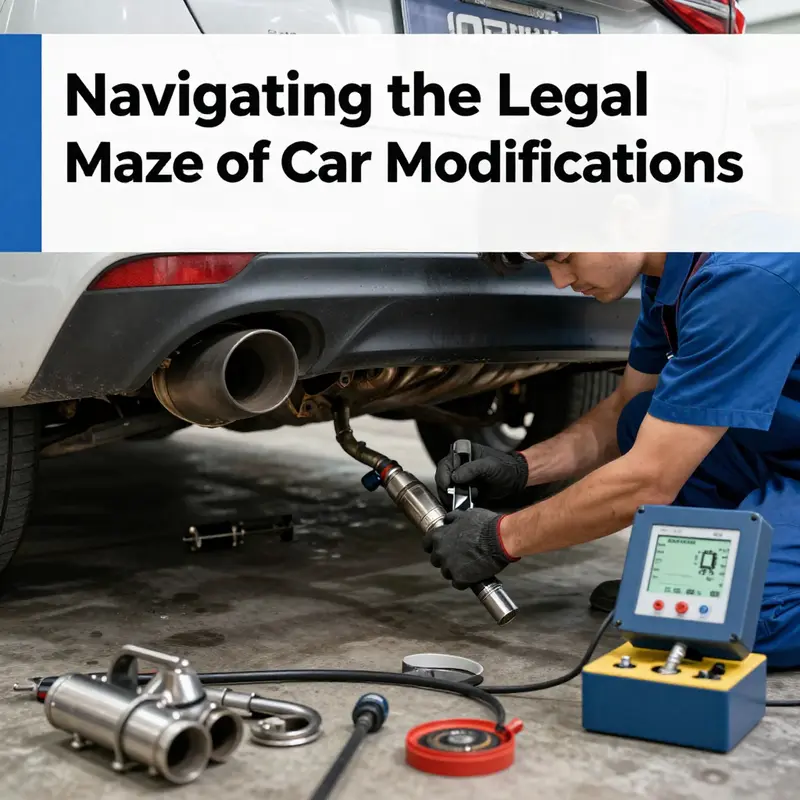
Regulatory landscapes around car modifications are not a patchwork of random rules but a carefully arranged system designed to balance personal choice with public health, road safety, and the climate goals that steer modern vehicle policy. In the European Union, the focus has shifted decisively toward reducing CO2 emissions from new passenger cars and light commercial vehicles, with the aim of steering the automotive industry toward cleaner technologies and greater efficiency. This framework does not merely dictate how a car must perform at the factory line; it demarcates the boundary between what a vehicle can be modified to do and what would push it outside the lane of legally compliant operation. The result is a nuanced, sometimes intricate, set of principles that governs the relationship between design choices in the showroom and the modifications a driver may legally pursue after purchase. The recent governance landscape highlights two features that are essential for anyone thinking about modifications: the regulatory emphasis on emissions controls and the practical mechanisms that allow some flexibility for manufacturers while preserving stringent environmental objectives for the fleet as a whole.
At the heart of the EU’s approach is a regulatory framework aimed at ensuring that CO2 performance remains within the targets set for new vehicles. These rules are centrally designed to push manufacturers toward cleaner propulsion, more efficient drivetrains, and smarter vehicle systems that make real-world emissions lower than they would be with older technology. Rather than focusing the law on every individual vehicle’s every possible tweak, the EU targets the industry-wide results that collectively shape the market. This distinction matters for practical driving because it places the emphasis on how a model is engineered and certified, not just how a single owner tweaks a component after purchase. The alignment between the vehicle’s original type approval, its reported emissions, and the fleet-wide targets creates a framework in which modifications by owners are evaluated against their potential to affect that calibration. In plain terms, if a change alters the vehicle’s compliance with the official CO2 profile for its class, it could breach the conditions of type approval and thus be unlawful or at least subject to enforcement actions.
Two recent developments broaden and clarify this landscape. First, the EU Council’s targeted amendment, adopted on May 27, 2025, introduces greater flexibility for car manufacturers in meeting future emission targets. This is not a relaxation of environmental ambitions but a recalibration of how progress toward those ambitions can be achieved. The amendment acknowledges that manufacturers may pursue a mix of strategies—such as refining technologies, optimizing production processes, or leveraging earned credits—to meet the same ultimate goal of lower fleet-wide emissions. Second, the flexibility is paired with clear guardrails to prevent backsliding on environmental objectives. The mechanism of credits—where low-emission or zero-emission vehicle production can offset higher emissions elsewhere in a manufacturer’s portfolio—serves as a tool for balancing innovation with accountability. Extended timelines, where permitted, allow a manufacturer additional runway to reach compliant emissions levels without compromising safety and consumer protections. This structured flexibility is deliberately designed to steady investment in cleaner technology while maintaining confidence that the transition will continue to bend the emissions curve downward toward the long-term neutrality target set for 2050.
For readers trying to parse what this means on the ground, the distinction between what is permissible in an industrial setting and what an individual can legally modify after purchase is crucial. Manufacturers, under the EU framework, must demonstrate compliance with CO2 criteria for each vehicle model through the type-approval process. Their adjustments—whether new powertrain configurations, improved aerodynamics, or energy management innovations—must still add up to a CO2 outcome within the negotiated targets for that model year. The new flexibility recognizes that a program of innovations can yield fleet-level gains even when particular models require more time or additional credits to align with the ultimate standards. But this does not translate into a green light for drivers to alter their cars in ways that would erode the model’s validated emissions performance. If a modification were to cause a vehicle to exceed its certified CO2 footprint or to undermine documented efficiency gains, it would be at odds with the type approval framework and could trigger regulatory penalties, vehicle recalls, or insurance and registration issues.
These principles are complemented by practical guardrails around what kinds of vehicle modifications are even scrutinized for emissions impact. The EU’s emphasis remains on emissions sources that have a direct effect on how much fuel is burned and how efficiently it is used—engine calibration, exhaust aftertreatment, and systems that alter fuel economy are the most commonly considered levers. Modifications that broadly reduce a vehicle’s emissions performance or mask true operating conditions—such as removing or defeating catalytic converters, tampering with exhaust treatment, or adjusting engine control software in a way that increases emissions—are treated with particular seriousness. In the regulatory discourse, such changes risk transforming a compliant vehicle into one that no longer meets its certified emissions profile. The consequences range from fines and vehicle unregistration to a potential denial of insurance coverage or even criminal penalties in jurisdictions where tampering with emissions controls is explicitly illegal. The broader message is simple: while the EU’s new amendments create room for manufacturer-level flexibility, they do not grant owners carte blanche to push a car’s emissions in a direction that defeats the original certification.
The emphasis on compliance is not merely a compliance badge for the sake of regulation; it is a safeguard that protects air quality, public health, and the integrity of the road system. When a vehicle is modified, the risk is not confined to raw emissions figures alone. There are knock-on effects to safety and performance that can ripple through a car’s systems—how the engine manages fuel, how the exhaust system handles heat and back pressure, how the braking and stability controls interact with altered dynamics, and how the vehicle communicates its fault states to the onboard computer. These interactions can influence regulatory compliance in a broader sense. It is therefore prudent for anyone contemplating modifications to approach the question with a holistic mindset: will this change push the car into a regulatory gray area? Will it require recertification or inspection? Could it invalidate insurance or registration? These questions, although they may seem bureaucratic, are central to preventing unintended legal and safety consequences.
The practical takeaway for owners is that the EU’s CO2-centered framework remains fundamentally about preserving a system in which cleaner technology diffuses through the market. It recognizes that manufacturers operate under a complex set of incentives and timelines, but it also places a high premium on the integrity of the type-approval process. As a driver, your most reliable route to a lawful modification is to understand how any change you are considering would interact with the vehicle’s certified emissions profile and with the specific rules that apply in your country or region. In many cases, this means seeking modifications that are designed to preserve, rather than undermine, the vehicle’s emissions control systems and avoiding alterations that would disable or bypass those systems. If you want a practical guide that translates these concepts into everyday decision-making, you can consult resources that discuss the broader legal landscape around car modifications, such as articles on legal car modifications. When considering any change, the safest approach is to verify with your national authority or a trusted specialist who understands both the technical and the regulatory dimensions of modifications.
This regulatory tapestry does not operate in a vacuum. It also interacts with national and local rules that can further specify what is permissible in a given jurisdiction. While EU-level guidelines set the overarching frame, the day-to-day consequences of a modification—whether it affects the thinking of a local inspector, the terms of your vehicle’s registration, or your insurance coverage—will often hinge on local implementation and enforcement practices. Some countries may allow certain exhaust and hardware changes within strict noise limits or require a conformity assessment after a modification. Others may impose a blanket prohibition on modifications that affect emissions-related components. The point is not to paralyze the decision-making process but to illuminate the need for due diligence before making adjustments that could alter a vehicle’s regulatory standing.
For readers seeking a deeper dive into the EU’s regulatory approach and its implications for the automotive industry, the official European Commission publication on automotive regulations offers a detailed roadmap of how emissions targets are set, how compliance is assessed, and how credit mechanisms and extended timelines operate within the broader climate strategy. This document provides the formal articulation of the principles discussed here and serves as a reliable, up-to-date reference for industry stakeholders and informed consumers alike. External readers can consult the EU Commission’s automotive industry guidance to understand the precise regulatory language and the calculations used to determine fleet-wide compliance. External resource: https://ec.europa.eu/growth/industry/automotive_en
In parallel with these continental standards, many readers will encounter a family of practical questions about what is feasible in daily life. What does a modification that improves fuel economy look like in real terms? How can a car be upgraded for safety or comfort without crossing a regulatory line? How do insurers view modifications that alter performance or emissions, and what documentation is typically required to ensure coverage remains intact? The answers depend on the specifics of the modification, the vehicle, and the jurisdiction, but a common thread runs through them: legal modification is not a license to circumvent the vehicle’s emissions controls or to obscure its real-world performance. It is an invitation to pursue improvements that are thoughtfully designed, correctly certified, and aligned with the ongoing public policy goal of cleaner, safer roads. When in doubt, approach the modification as you would a major service item—consult the manual, seek professional guidance, and confirm that the change complies with the vehicle’s certifying standards and with the local laws that govern your road use.
If you are exploring the terrain of modifications with the aim of better understanding what is legally permissible, consider engaging with curated resources that outline the common-sense boundaries many jurisdictions draw around emissions-related changes. For a practical overview that translates these principles into actionable guidance, see the resource on legal car modifications. This kind of overview helps connect the high-level regulatory logic with the concrete decisions that car owners face when considering exhaust changes, engine tuning, or other alterations that touch emissions or safety systems. And while the EU framework provides the macro-level map, always pair this with the specific guidance from your own country’s transport authority or statutory body before committing to a modification. The road to compliant customization is navigable, but it requires staying anchored to the certifiable baseline of your vehicle and its regulatory lineage.
In sum, the European Union’s emitters-and-innovators strategy demonstrates how a policy framework can encourage faster progress toward cleaner mobility while safeguarding consumer interests and road safety. The May 2025 amendment signals a pragmatic path that grants manufacturers room to pursue long-term targets without sacrificing the clarity and enforceability that protect the public good. For individual drivers, the core lesson remains stable: modifications that touch emissions or safety require careful scrutiny and, most often, alignment with the vehicle’s type approval. When in doubt, seek professional guidance, verify against official regulations, and remember that the ultimate objective is a cleaner, safer road environment. The question “what modifications are legal on cars?” does not have a single universal answer, but it does have a reliable compass: stay within the boundaries of certified performance, respect the integrity of the emissions controls, and consult authoritative sources before you turn a tweak into a legal problem. External reference to broad EU policy context provides the formal backdrop, while the practical considerations lie in local enforcement and professional consultation. And as the EU’s climate goals push forward, the balance between innovation and accountability will continue to shape what is possible—and permissible—in the evolving world of car modifications.
For readers navigating these waters, a final practical note: remember that regulatory clarity is a moving target, not a fixed signpost. Always verify compliance with your local transport authority and consult official government resources for the most current rules. Emissions-related modifications carry heavier regulatory weight than cosmetic changes, and even modifications that seem small can have outsized consequences if they affect certification or safety systems. Keeping to this mindset makes it possible to enjoy legitimate, well-considered customization without compromising legality or safety. And if you need a quick summary of a broader perspective on the topic, the linked internal resource on legal car modifications can serve as a useful starting point to distinguish what is typically considered permissible from what is not.
Internal link reference: legal car modifications
External resource for further depth on EU regulatory context: https://ec.europa.eu/growth/industry/automotive_en
Safety at the Throttle: Understanding Legal Car Modifications and Their Hidden Risks

Modifying a car is rarely a purely cosmetic endeavor. Behind every change that alters a vehicle’s appearance or performance lies a chain of safety considerations, regulatory expectations, and practical consequences that extend far beyond personal preference. The chapter that follows moves through the landscape of legal car modifications as a continuous, interconnected narrative rather than a checklist of do’s and don’ts. It emphasizes that safety is not a single feature but a system-wide realization: brakes, tires, steering, suspension, lighting, emissions, and even the vehicle’s electronic control units (ECUs) all interact in ways that can amplify risk if one link in the chain is weakened or altered without due care. In this sense, the legality of a modification is inseparable from its safety implications, because law departments, insurers, manufacturers, and road users collectively rely on predictable vehicle behavior to keep people out of harm’s way. If a change improves performance on a racetrack but compromises real-world stopping distance in wet weather, the modification falters on both safety and legality in one sweep, even if it meets a specific emissions or noise threshold. The fundamental idea is simple: modifications that touch the core safety or regulatory levers of a vehicle require careful scrutiny, formal approval when appropriate, and transparent communication with authorities and insurers. This awareness becomes particularly important as technology evolves and as the boundaries between factory settings and aftermarket options blur. The same basic principle—prioritize safety, verify compliance, and avoid surprises—remains a compass across jurisdictions, even as the specific rules shift from country to country, state to state, or region to region. In many places, the core test is whether a modification maintains or improves safety margins rather than simply whether it is technically possible to execute. Emissions controls, braking performance, lighting levels, tire fitment, structural integrity, and the reliability of safety-critical software are all front-line considerations that regulators assess when deciding if a modification can be road legal and insurable. The practical consequence is that modifying a car is not merely about owning tools or a basement workshop; it is a process that intertwines engineering judgment, regulatory constraints, and financial prudence. A prudent approach begins before any tool makes contact with the vehicle. It begins with a clear understanding of what is permitted in the jurisdiction where the car is registered and where it will be driven. In many places, the path to legality runs through formal channels: adherence to standards, test procedures, and declarations that a modification does not undermine the vehicle’s basic safety profile. For readers in the United States, the regulatory scaffold includes federal agencies such as the Environmental Protection Agency (EPA) for emissions and the Department of Transportation (DOT) for safety standards, complemented by state-level regulations that may impose additional constraints. The message is not a restrictive parade of rules. It is a call to build a bridge between desired changes and the higher purpose those changes must serve: to keep drivers and other road users safe while maintaining environmental and regulatory commitments. In the United Kingdom, the trajectory is defined in relation to the Vehicle Certification Agency and the broader framework of type approval and compliance with standards that cover emissions, lighting, sound levels, and structural safety. A louder exhaust, more aggressive ride height, or altered lighting could be legal in one vehicle category and illegal in another, depending on how the modifications align with the prescribed standards, the approval processes, and the road-use classifications. The theme that runs through these frameworks is not simply adherence for its own sake but an acknowledgement that vehicle modifications have real consequences for how a car handles, brakes, steers, and remains detectable by the safety systems that monitor roadworthiness. This interconnection matters not only for the vehicle’s performance in ordinary driving but also for the boundaries that separate a street-legal car from a hedge of regulatory penalties. In practice, this means that before any change is undertaken, a driver should ask two practical questions: Will this modification affect the core safety systems I rely on every day, including braking, stability control, tires, and suspension? And will this modification, or its installation, require approvals, inspections, or disclosures that I must trace through official channels? If either answer is uncertain, the prudent path is to pause and seek clarity. The value of this cautious approach extends beyond personal risk. Insurance coverage, a critical financial safety net, frequently hinges on the exact nature of modifications. Many insurers require notification or documentation, and some may adjust premiums or modify coverage based on how a change affects risk. Some modifications may even void coverage, exposing the driver to significant exposure in the event of an accident. This is not an accusation against modification as a form of expression or engineering curiosity; it is a practical acknowledgment that insurers design products around predictable risk profiles. Transparent communication with an insurance provider—before finalizing any modification—helps ensure that coverages remain intact and claims are not compromised when the inevitable questions arise after an incident. The collaboration with insurers can also produce benefits beyond coverage. In many cases, an insurer’s input helps steer modifications toward safer, more compliant solutions. For example, changes to braking performance or suspension settings may require calibration to maintain stability and predictability. An insurer might request demonstrations of how the vehicle remains controllable under diverse conditions or may require that certain safety features function as originally intended. This cooperative dynamic is not a one-way street where the insurer simply extracts concessions; it is a shared recognition that a well-documented, safety-conscious approach to modification supports both financial protection and road safety. The practical reality is that local regulations often mandate or encourage an inspection, certification, or type-approval process for certain alterations. In the United Kingdom, for instance, changes that affect emissions, lighting, noise levels, or structural safety must be evaluated within a framework that ensures continued roadworthiness. The existence of a formal process does not merely create red tape; it serves as a structured checkpoint that reduces the likelihood of unsafe or non-compliant configurations being placed back on public roads. For readers seeking authoritative guidance, official resources such as the UK Driver and Vehicle Standards Agency offer accessible advice on how to navigate the space between personal customization and legal compliance. The point to take away is that legality is not a static label assigned at a factory; it is a dynamic status that can change with legislation, vehicle category, and the intended use of the vehicle. A modification that is permissible for a track-only car may be unlawful for a car that roams city streets, and a change that passes emissions tests on a laboratory bench could fail under real-world driving conditions. This is precisely why the decision to modify should be accompanied by thorough research and, when appropriate, professional consultation. The risk of misjudging a modification is not merely financial but safety-related. For instance, altering tire size without recalibrating suspension geometry, steering geometry, or braking performance can compromise handling, steering feel, and stopping distances. Likewise, modifying a braking system without ensuring compatible pads, rotors, hydraulic components, and software calibration can lead to uneven braking, pedal fade, or loss of ABS performance. In many cases, such changes have a cascading effect: a tire with a different contact patch may alter grip and heat generation, which then interacts with the anti-lock braking system and electronic stability control. The complexity of these interactions highlights why a holistic approach to modifications is essential. It is not enough to upgrade one component in isolation; the entire system’s behavior in realistic conditions must be considered. This is where professional testing, manufacturer guidance, and regulatory compliance converge to form a robust decision framework. For individuals who enjoy modifying vehicles while staying within the safety and legal boundaries, a disciplined process helps protect both people and property. Start with a clear objective—what performance, aesthetics, or practicality does the modification seek to achieve? Then map the change to the vehicle’s safety-critical systems. Next, verify the applicable regulations in the jurisdiction of registration and operation. This often means checking state or national guidance for emissions, lighting, noise, and structural integrity, as well as whether a formal approval or inspection is required. If a modification touches any of these domains, it is wise to prepare documentation, engage qualified installers, and obtain third-party evaluations where available. The explicit inclusion of documentation is not merely bureaucratic overhead; it is a safety-oriented practice that supports continuity of care for the vehicle as it ages. When modifications are properly documented, it becomes easier to demonstrate to authorities that the vehicle remains road-legal and to present a coherent, auditable history if a regulatory question arises or if the car changes ownership. This is particularly helpful in the context of resale value. Modifications that are officially approved or certified often carry a more predictable impact on resale, and some buyers may value documented compliance as a reliability signal. Conversely, undocumented or poorly executed modifications can complicate ownership transfer, invite regulatory scrutiny, and erode confidence from potential buyers who worry about safety and legitimacy. The broader ecosystem surrounding vehicle modification also includes a spectrum of case-by-case considerations. Some jurisdictions allow a wide latitude for modifications that do not impact safety or emissions and leave others to the observer to determine compliance. In other cases, the law provides detailed limits on modifications such as permissible torque outputs, exhaust noise levels, or the maximum allowable ride height. The absence of a universal standard underscores the importance of localized due diligence. For drivers who intend to operate their car across borders or in areas with different enforcement practices, the risk of inadvertent noncompliance increases. A modification that passes in one locale may fail in another due to variations in testing standards, noise thresholds, or the interpretation of what constitutes safe use. The practical implication is that cross-border modification decisions should be approached with caution, and the safest path is to maintain a consistent, legally compliant baseline for road use in the primary jurisdiction of registration. Finally, there is a cultural dimension to the discussion of legality and safety in car modifications. Car enthusiasts often pursue modifications as a form of expression, engineering exploration, or performance enhancement. Recognizing this passion does not absolve the need for responsibility; rather it invites a more thoughtful approach that embraces safety, regulatory alignment, and open communication. Creating a culture of safety-minded modification—where enthusiasts, installers, insurers, and regulators collaborate—strengthens the legitimacy and enjoyment of vehicle customization while reducing the risk of harm or regulatory trouble. If you are ever unsure, a simple rule of thumb helps: treat the road as the ultimate test bed and the law as a map that points you toward safe, verifiable, and accountable changes. For readers who want to delve deeper into the regulatory landscape, there is value in consulting official guidelines and practical summaries from recognized authorities, which can offer clarity during the planning phase and reduce misinterpretation in the installation phase. In addition to official sources, practical literature and community knowledge—when sourced carefully—can provide useful perspective about typical pitfalls, common misinterpretations, and pragmatic solutions to common challenges in the modification journey. It is essential, however, to differentiate between anecdote and regulated standard, to avoid basing decisions on examples that may not hold up under scrutiny in your jurisdiction. The chapter that unfolds here does not aim to condemn the practice of modification but to elevate it through an ethic of safety, legality, and informed decision-making. The goal is to empower readers to pursue their automotive aspirations while maintaining a responsible, legally compliant approach that preserves life, protects property, and sustains the value and reliability of their vehicles. For a concise, practical overview of the legal landscape and what typically counts as a modification in many jurisdictions, readers may refer to the resource focused on legal car modifications, which distills broad regulatory themes into accessible guidance while emphasizing the importance of verification with local authorities. Legal car modifications. In closing, remember that the pursuit of personal automotive expression does not exist in a vacuum. It is part of a broader ecosystem that includes safety standards, regulatory oversight, insurance policies, road user expectations, and the long-term stewardship of a vehicle. Modifications should be framed not as shortcuts around rules but as thoughtful enhancements that respect safety margins and legal obligations. When done with care, modifications can satisfy appetite for improvement and style without compromising the very purpose of a car: to move people and goods safely from point A to point B. This mindset turns modification from a reckless gamble into a governed, enjoyable practice that aligns passion with responsibility. External resources exist to guide those who want a deeper dive into the legal architecture that underpins vehicle modifications. For authoritative, jurisdiction-specific guidance, consider consulting official materials such as the UK government’s vehicle modifications guidance, which offers structured insight into how to evaluate and implement changes in a manner consistent with safety and roadworthiness. External resource: https://www.gov.uk/government/publications/vehicle-modifications-and-safety
Structural Gatekeeping: How Modern Regulations Make Car Modifications Legal

Regulation often feels distant until it touches the things we care about, like the way a car looks, sounds, or performs on the road. The global landscape around vehicle modification reflects a tension between personal expression and public safety. In the United States and Europe, the familiar refrain centers on emissions, safety standards, and proper documentation. But the pace of change is not uniform. A regulatory framework in Asia, including a digital pre review requirement for certain structural changes, clarifies what is allowed and how modifications are certified and tracked. The emphasis is on predictability, safety, and environmental accountability. Modifications remain possible within defined limits, with professional testing and clear documentation guiding every step. A key finding is that certification and traceability are the backbone of legality in modern vehicle customization.
Final thoughts
Understanding the legalities surrounding car modifications is essential for any enthusiast. From emissions regulations that protect the environment to safety specifications that ensure the well-being of drivers and passengers, each aspect is critical. Structural regulations further clarify what modifications can be made without compromising a vehicle’s safety and integrity. By adhering to these guidelines, car modifiers can enjoy their passion while staying within legal bounds. Always remember to check local laws and consult with authorities, ensuring that every modification enhances your ride without risking legal trouble. Embrace your journey of customization with knowledge and responsibility.