

Car modification is a beloved pursuit in the UK, allowing enthusiasts to showcase individuality while enhancing vehicle performance. However, the road to customization is marked by strict regulations designed to maintain safety, legality, and environmental standards. Understanding what modifications are permitted involves navigating the complex guidelines set by authorities such as the Vehicle Certification Agency (VCA) and the Department for Transport (DfT). This article breaks down the types of legal modifications, discussing exterior enhancements, performance upgrades, safety compliance, and environmental considerations. Each chapter will arm you with vital information to ensure your modifications align with UK law and maximize your driving experience.
Exterior Modifications in the UK: How to Style Your Car Within the Law
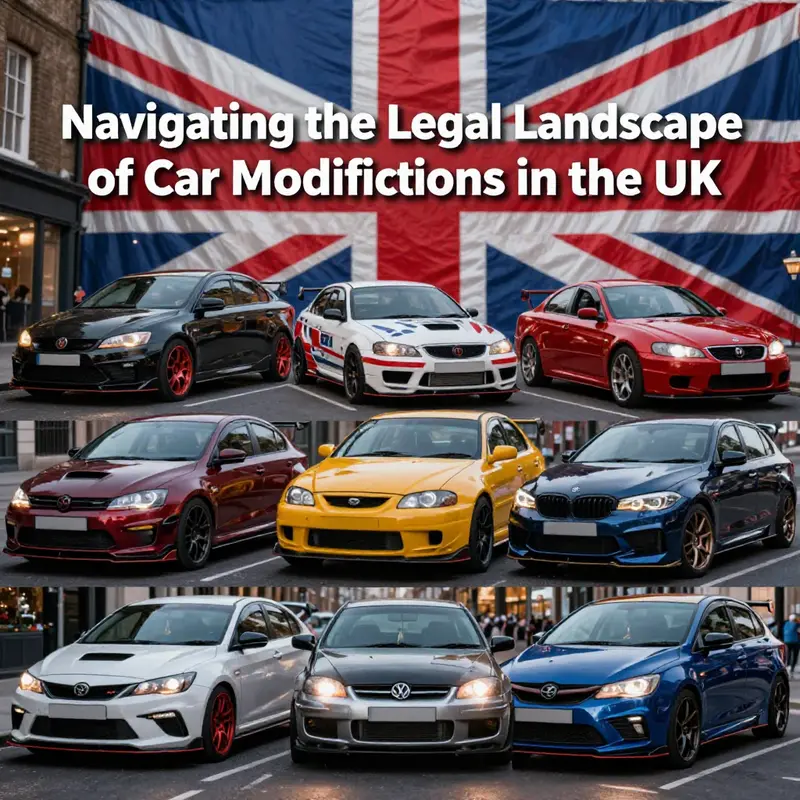
The exterior of a car is the first thing road users notice, and in the UK that first impression must be earned within the framework of clear regulations. Regulation here is not about stifling personal expression; it is about preserving safety, roadworthiness, and environmental performance for everyone who shares the road. The rules governing exterior changes flow from a web of guidelines issued by the DVSA and the Department for Transport, then anchored in the Road Vehicles (Construction and Use) Regulations 1986 and, more broadly, in environmental and safety legislation. This legal backbone means you can pursue a wide range of styling decisions, but you must understand when a modification crosses a line that triggers re-approval, testing, or even penalties. The key is to consider how a change affects a vehicle’s dimensions, visibility, braking, steering, lighting, and emissions, all of which are scrutinized during checks like the MOT and any re-approval processes that might follow substantial alterations.
A practical starting point is to treat color, finish, and minor cosmetic changes as potential but generally permissible choices, provided they do not obscure critical safety elements. A fresh paint job or a vinyl wrap is usually acceptable if registration plates remain clearly visible and the lighting system remains unaltered in a way that affects visibility. The law around wraps and paints intersects with rules about reflective materials and visibility standards; if you opt for reflective wraps, they must comply with the relevant British Standards. This nuance matters because a glossy, eye-catching finish can be attractive without being unlawful, but a wrap that interferes with plate legibility or light emission risks roadside enforcement and failed inspections. In other words, personal expression through color is not banned, but the safety envelope within which color sits is not negotiable.
Exterior changes that affect a vehicle’s size or shape, however, are different. Body kits that extend beyond the original wheel arches or widen the car beyond the typical legal width can be illegal if they push the vehicle past the standard 2.55-meter width common in many passenger cars. More ambitious alterations that change dimensions or weight distribution do not just require a modification permit; they may necessitate approval under the Vehicle Construction and Use Regulations 1986 as amended. The DVSA and the VCA are explicit that any change altering a vehicle’s original type approval should be carefully reviewed to determine whether re-approval or extensive testing is necessary before the vehicle can remain on public roads. The decision is not a matter of taste but of compliance with the type-approval framework that underpins modern vehicle safety and environmental performance.
Tinted windows are among the most common exterior concerns for UK drivers. The law negotiates a balance between privacy and safety by setting minimum light transmission levels for windscreens and front side windows. Windscreens must allow at least 75% light transmission, and front side windows at least 70%. Rear windows are less restricted, but even darker tinting must not compromise visibility to the driver or interfere with safety features such as rearview mirrors. The DVSA emphasizes that non-compliant tinting can lead to an MOT failure and potential fines. This is a reminder that while tinting is technically an exterior modification, its legality is tightly bound to the practical safety it affords or negates.
Lighting choices are another arena where aesthetics meet law. Aftermarket LEDs and additional lighting can be fitted, but they cannot dazzle other road users or create new hazards. Functional lighting—headlights, indicators, brake lights—must comply with the relevant standards, and certain colors are reserved for specific uses. In particular, blue or red emergency colors are restricted to authorized vehicles, and roof-mounted or flashing lights are typically reserved for emergency services. There are also specific regulations, such as the Road Vehicles Lighting Regulations 1989, that govern how lighting can be used on public roads. The line between enhancement and distraction is narrow, and the law is designed to keep it clear.
For those contemplating more substantial exterior work, the consequences become more technical and costly. Lowering a car, fitting a wide-body kit, or altering suspension geometry can shift the vehicle’s center of gravity, handling, braking, and weight distribution. If such changes take the vehicle outside its original type approval, the owner may need to seek Type Approval Certification from the DVSA, or engage a registered testing facility to revalidate the vehicle’s status. The cost and effort are significant, but the risk of driving an unapproved or unroadworthy vehicle is greater still. The MOT test, which checks safety and environmental compliance, serves as a practical gatekeeper here. Any modification that touches brakes, steering, suspension, tyres, or emissions must be scrutinized to ensure continued compliance.
Paints and wraps occupy a middle ground in this framework. They are typically permissible if they do not obscure essential features and remain compatible with visibility requirements. Reflective or highly conspicuous finishes can inadvertently trigger safety concerns, especially if they affect other drivers’ perception. In such cases, the regulator’s concern is not merely the look but the potential to confuse or dazzle others on the road. It is worth noting that a change of color or finish does not automatically necessitate re-approval, but the overall change to the vehicle’s exterior should be assessed for its impact on safety, visibility, and emissions standards. The safest approach is to keep a clear record of what was changed and verify that the vehicle still meets the original type approval and MOT criteria.
Another practical consideration is exhaust systems and noise. Aftermarket exhausts must meet both emissions and noise standards; a loud exhaust could fail the MOT if it exceeds the legal noise limit, commonly measured at a defined speed during testing. This is not just about being quieter; it is about ensuring that the exhaust does not introduce excessive emissions or undue disturbance, which would contravene environmental directives and the type-approval framework. It is entirely possible to achieve a more refined sound or performance without crossing into non-compliance, but it requires careful selection of components and professional installation that respects the vehicle’s certification.
In the broader narrative of legality, the concept of significant modification often brings the question of certification to the forefront. If a change is substantial enough to alter the vehicle’s structure, performance, or emissions, a formal re-approval process may be required. This is not a punitive measure but a safety check. The DVSA’s pathways for approval, including the possibility of a Vehicle Modification Certificate (VMC) for certain significant alterations, are designed to ensure that a modified vehicle remains safe and compliant on UK roads. The ability to obtain such certification varies with the extent and nature of the modification and with the vehicle’s original configuration.
For readers who want to navigate these waters with more confidence, a practical approach is essential. Start with a clear plan that outlines what exterior changes you intend to make and how each change could influence dimensions, visibility, lighting, brakes, suspension, or emissions. Check the vehicle’s original type approval documentation and any relevant DVSA guidance to determine whether the modification requires re-approval or testing. Documentation matters: keep receipts, conformity statements, and any DVSA correspondence that pertains to the modification. These records will simplify the MOT process and any potential future resale questions about the vehicle’s compliance. A thoughtful, step-by-step approach reduces the risk of costly backtracking or penalties and helps safeguard the vehicle’s road legitimacy.
For readers seeking a concise consolidated overview of what counts as legal versus illegal, there is value in consulting resources that summarize the broad landscape without getting lost in technical minutiae. A practical starting point is to explore a dedicated guide that distills the core principles of legal exterior modifications, helping to distinguish between changes that are permissible and those that demand formal approval. Legal car modifications provides a focused lens on these questions and can help readers assess whether a planned modification is likely to stay within the law while achieving the desired aesthetic or performance outcome. While such guides are valuable, they should complement, not replace, official DVSA guidance and, when in doubt, a consultation with a qualified technician or a DVSA-approved testing facility is prudent.
In sum, UK law does not outlaw style; it channels it through a framework that preserves safety, clarity, and environmental respect on public roads. Exterior modifications are permitted in many forms, from tasteful color changes to carefully chosen lighting or aero features, provided they do not undermine the vehicle’s safety or its compliance with original type approvals. The critical discipline is to foresee whether a modification could affect dimensions, safety features, emissions, or the integrity of the vehicle’s certification. When in doubt, approach changes conservatively, seek professional advice, and treat any significant alteration as a potential re-approval project rather than a straightforward vendor swap. The objective is not simply to avoid penalties; it is to ensure that every modification contributes to a safer, more dependable road experience for you and for everyone else using the highway.
External resource: For official guidance on vehicle standards and roadworthiness, see the DVSA’s guidance at https://www.gov.uk/government/publications/vehicle-standards-and-regulations-for-owners-and-manufacturers/vehicle-standards-and-regulations-for-owners-and-manufacturers/
Legal Throttle: A Cohesive Guide to Performance Modifications in the UK Road-Use Landscape
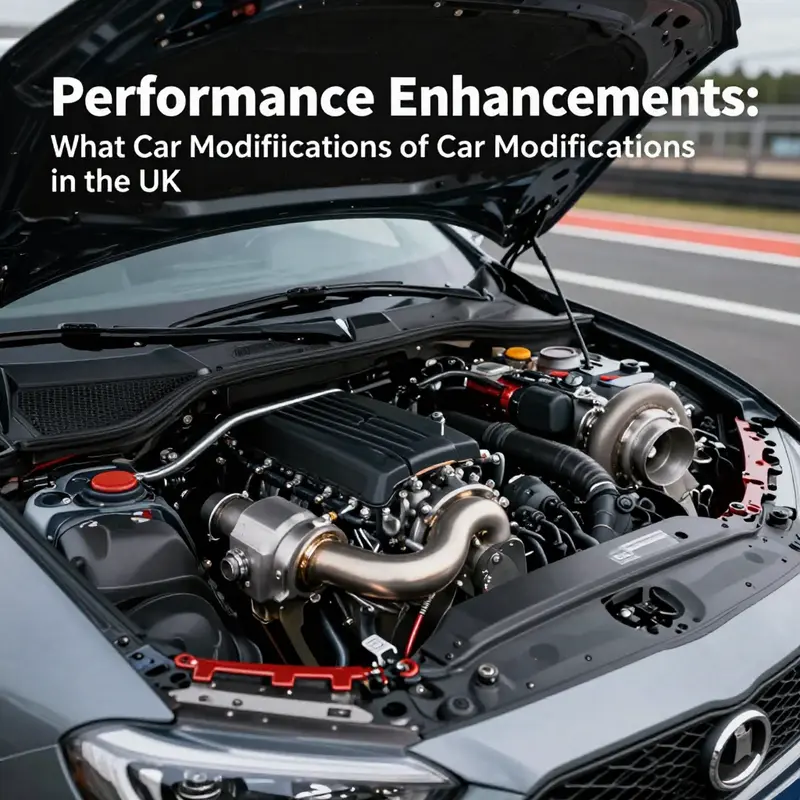
Performance feels at its sharpest when a driver can extract more from a car without compromising safety or legality. In the United Kingdom, the road rules around performance modifications are not a single, simple checklist. They are a web of standards designed to keep vehicles safe, predictable, and compliant with environmental expectations. The core of this framework rests with the agencies that regulate vehicles on public streets and the rules that govern type approval, emissions, and the ongoing checks at the MOT. While it is tempting to chase horsepower or torque through a bolt-on upgrade or a clever remap, the UK system requires that every significant enhancement remains within the bounds of what the manufacturer certified, what the law permits, and what the vehicle can continue to be tested on in a standard way. The distinction between a modification that is permissible and one that crosses the line often comes down to how the change interacts with emissions, safety, and the vehicle’s original certification. In practice, this means a careful, informed approach to performance upgrades rather than a quick dash to the nearest tuning shop.
At the heart of legality is the principle of type approval. Vehicles sold in the UK are approved to meet specific standards for emissions, safety, and performance as part of the manufacturer’s original certification. Any modification that undermines the integrity of that certification—whether by increasing power, changing the way the engine breathes, or altering the way the vehicle is certified to meet a particular standard—can put the car outside the scope of its original approval. The implication is clear: modifications must be evaluated not as isolated parts but as changes that interact with the whole vehicle system. This is not merely a theoretical concern. It translates into real-world consequences at the point of inspection, such as the MOT, where a vehicle must still meet the safety and environmental criteria set by the government. If a modification pushes emissions beyond what the type approval allows, or if it affects crucial safety systems, it risks failure, fines, or more serious penalties for non-compliance.
Emissions compliance sits high on the list of priorities for any performance upgrade. The European and UK regulatory framework requires that any alteration to the powertrain or exhaust path does not cause emissions to exceed the levels certified by the manufacturer. Engine tuning, ECU remapping, turbocharging, or supercharging can all change the way an engine burns fuel and produces exhaust. If those changes push CO₂ or other pollutants outside the permitted range, the vehicle may fail the MOT and could be considered non-compliant for road use. The nuance here is that the modification itself is not automatically illegal; it is illegal if it causes the vehicle to breach the emissions envelope established during type approval. This means that performance work must be conducted with an eye toward preserving the balance of power, efficiency, and emissions that the vehicle was originally designed to achieve. For some cars, that balance is delicate, and the only safe path forward is a coordinated approach that pairs a performance upgrade with proper testing and, where required, re-approval along the way.
The mechanics of a permitted upgrade also involve how the change is integrated with the vehicle’s existing certification. A turbocharger or supercharger, for instance, is not categorically forbidden. It is permissible so long as the engine continues to operate within the emissions and certification framework and remains properly approved for use with the modified setup. However, exceeding the manufacturer’s power output without appropriate re-approval can invite legal risk. This is not a matter of mere tinkering; it relates directly to the type approval and the potential need for a formal re-certification or a Vehicle Modification Certificate process if the alteration is substantial. For many enthusiasts, the practical takeaway is to plan engine enhancements in consultation with qualified technicians who understand regulatory boundaries and whose work can be documented in a way that supports compliance.
Exhaust systems offer a clear example of where the line is drawn. Aftermarket exhausts can deliver a desired tone and performance, but they must conform to noise and emission standards. A loud exhaust is not merely an aesthetic choice; it is a potential safety and environmental issue that can cause a vehicle to fail an MOT. The regulatory limit for noise is measured in specific conditions, and exceeding that limit can trigger a failure. Beyond noise, emissions come into play as well. An exhaust upgrade that changes backpressure or oxygen sensor responses without proper calibration may alter emissions in ways that breach the original type approval. In short, the exhaust path is a common pressure point for legality: it can deliver the desired performance and sound but only within a framework that keeps emissions and noise within permitted levels.
Beyond the mechanical and regulatory specifics lies the broader responsibility of safety. The pursuit of more power or faster response must not compromise the car’s brakes, steering, suspension, and stability systems. The dynamic balance of a vehicle—how it stops, how it handles load changes, how it remains controllable in cornering and braking—depends on components that work in harmony with one another. If a modification impacts braking efficiency, throttle response in a way that reduces predictability, or suspension geometry in a way that alters handling characteristics, a vehicle can become more dangerous, especially in unpredictable traffic conditions. This safety lens is why the MOT and any required re-approval steps are not mere bureaucratic hurdles; they are essential checks that confirm the car remains safe under the redesigned operating conditions.
A key procedural element in the UK is the documentation trail. Owners who pursue significant performance upgrades should not rely on memory or informal notes. Keeping a robust paper trail helps demonstrate that the vehicle remains compliant with its type approval and with current legislation. In some cases, significant modifications—such as converting a van into a camper or altering seating provisions—might require more formal approvals, such as a Vehicle Modification Certificate via the DVSA. Even when a change is technically reversible, the maintenance of documentation helps establish the vehicle’s status during inspections and potential future resale. It also provides a clear path for insurers who will, in many cases, want to see evidence that a modification has been properly assessed and documented.
Speaking of insurance, the relationship between modification and coverage is a practical reality for many drivers. Modifications can change risk profiles, which means insurers may revise premiums or, in some cases, refuse coverage unless the modifications are disclosed and appropriately validated. Transparent communication with a trusted insurer, along with technical assessments and receipts from certified garages, becomes part of the process of staying on the right side of both the law and the policy. The interconnection between legality, safety, and insurance means a modification is not merely a technical decision; it is a multidisciplinary one that touches engineering, regulation, and risk management. For drivers who want to push performance while staying within the boundaries, the takeaway is straightforward: engage with professionals who can document the approach, ensure alignment with emissions and safety standards, and anticipate the paperwork that may be required at renewal.
On a practical level, what does all this mean for someone who has a clear performance goal in mind? The pathway to a legal upgrade begins with a careful assessment of how the modification interacts with emissions, type approval, and safety. Start with a plan that identifies the intended horsepower or torque target, the likely hardware changes, and the calibration strategy. Then consult a certified garage or specialist who understands the regulatory framework. A qualified technician can help map out what can be upgraded without triggering non-compliance and what steps are needed to maintain compliance if a change requires re-approval. Documentation should accompany every major step: part specifications, calibration files, test results, and any official endorsements or re-certifications. This approach minimizes the risk of a last-minute MOT failure or an insurance dispute and keeps the project focused on performance that can be enjoyed on public roads without legal friction.
For readers seeking a concise regulatory anchor, it is worth noting that the governing principles are captured in government guidance and the rules set by the DVSA and the Department for Transport. The overarching idea is to safeguard safety and environmental standards while allowing enthusiasts the opportunity to enhance their vehicles within a clear, auditable framework. As you chart a course for a performance upgrade, remember that a modification is not purely a mechanical change; it is a change to the vehicle’s identity in the eyes of the law and the road. The better prepared you are, the more likely you are to enjoy the benefits of enhanced performance without compromising legality or safety. For a deeper dive into the official guidance and the precise regulatory references, the government’s guidance on vehicle modifications and legal requirements provides a solid, authoritative foundation to consult during planning and implementation.
Internal link: For practical implications on how modifications can affect insurance, you may explore more about this aspect here: What Modifications Affect Car Insurance.
External resource: Official guidance from the UK government offers a detailed framework for understanding what modifications are permitted and what requires re-approval or additional testing. See the government’s guidance on vehicle modifications and legal requirements at the following link: https://www.gov.uk/guidance/vehicle-modifications-and-legal-requirements. The combination of regulatory clarity and professional support helps ensure that enthusiasts can pursue performance while staying safely within the law.
Between Performance and Compliance: Navigating Safety, Law, and Roadworthiness in UK Car Modifications
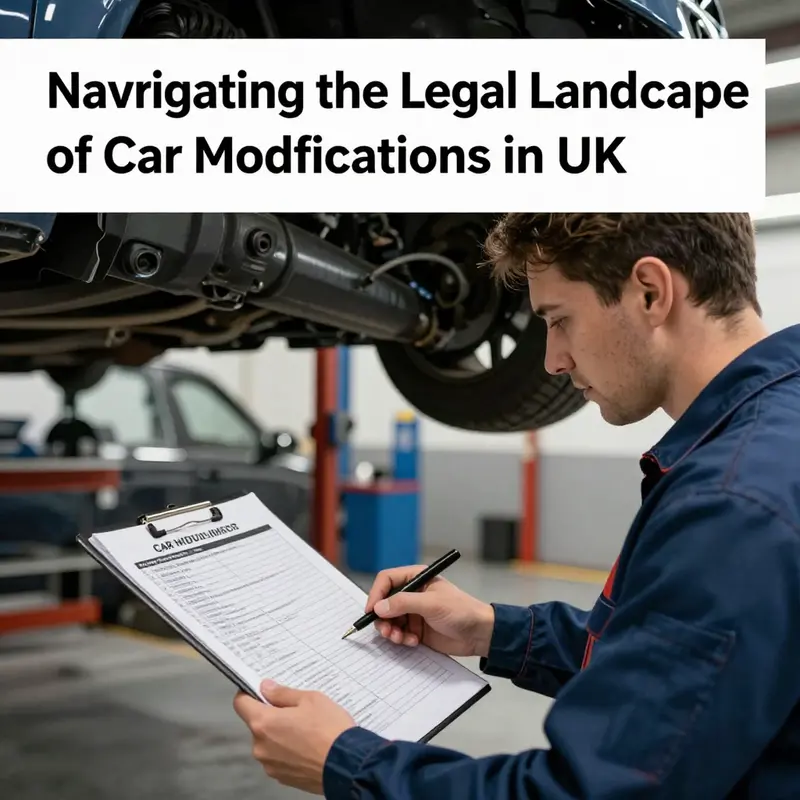
The allure of upgrading a car—whether to sharpen performance, refine aesthetics, or improve everyday usability—often runs up against a set of nonnegotiable boundaries in the United Kingdom. The aim of these boundaries is simple and essential: to keep every vehicle safe to drive, predictable to other road users, and compliant with environmental standards. When a driver imagines a modification, the first question should not be how it looks or how fast it could go, but whether it can remain roadworthy under the rules that govern every road vehicle. At the core of this framework lies the Road Vehicles (Construction and Use) Regulations 1986, a statute that requires a vehicle to stay roadworthy and to conform to its type approval unless a specific allowance is granted. This is not a historical footnote; it is the operating manual that governs every practical decision about altering a car. The intent is to prevent changes that would compromise braking, steering, suspension, or visibility, and to ensure emissions stay within the limits established for the vehicle when it left the factory. The regime is managed by a trio of authorities—the Department for Transport, the Driver and Vehicle Standards Agency, and the Vehicle Certification Agency—whose roles interlock to assess, approve, or reject modifications based on how they affect safety, performance, and environmental impact. For more substantial changes, the pathway to legality often involves formal checks and, in some cases, re-approval that confirms the vehicle still meets its original certification. This is especially true for significant modifications that touch the chassis, drivetrain, or structural components. A car’s modification journey thus begins with a close reading of the type approval that accompanied the vehicle from new and ends with a determination that it remains within those original design bounds or has been appropriately re-authorized. In this landscape, even well-intentioned upgrades must pass a practical test: does the change preserve, or at least not undermine, the predictable behavior of the vehicle in all common driving situations? Any alteration that could alter weight distribution, braking balance, steering response, or load-bearing characteristics invites closer scrutiny and possible re-certification. When a modification touches emissions, the stakes rise further. Engine tunes, remaps, or exhaust changes can improve performance, but they must not push emissions beyond the Euro standards that the vehicle was certified to meet. If a modification causes CO2 or other pollutants to drift above those limits, the vehicle risks becoming non-compliant with UK and EU emissions standards and could fail an MOT on environmental grounds. The MOT itself is the recurring checkpoint where the state of roadworthiness is verified. Inspectors assess brakes, steering, suspension, lights, tires, and emissions; any modification that interferes with these systems is likely to fail. This is not a one-off test but an ongoing assurance that a car, after modification, continues to perform safely across a wide range of conditions. The emphasis on safety is not merely about avoiding penalties; it is about preventing accidents and protecting other road users. Even cosmetic or convenience-oriented changes can have unintended consequences if they interact with the vehicle’s safety systems in unforeseen ways. For example, changing the lighting array is not inherently illegal, but it must be done with attention to visibility, glare, and conformity to standards. Non-standard underglow lighting is generally restricted unless it forms part of an approved system and does not dazzle other drivers. Similarly, the use of blue or red lighting beyond the legitimate domain of emergency vehicles is strictly prohibited. Exterior alterations, such as body kits, wideners, or modifications that extend beyond the original wheel arches, are tightly circumscribed by width limits that apply to most cars; exceeding those limits can render the modification illegal. Paint and wraps, while flexible in terms of color and finish, must not obscure the registration plate or interfere with visibility. They may include reflective materials only if they comply with British Standards, which adds a layer of quality control to surface finishes that affect nighttime visibility. The internal logic of these rules is that appearance should not come at the cost of safety. The same care applies to powertrain changes. Engine tuning and ECU remapping are permissible only to the extent that emissions remain within the limits established by the manufacturer’s type approval. A tune that increases CO2 emissions beyond what the manufacturer certified can trigger non-compliance with both national and European standards. In practice, this means that an otherwise well-executed remap must be evaluated not just on horsepower gains but on its downstream effects on exhaust composition and regulatory compliance. When a modification introduces forced induction—such as turbochargers or superchargers—the same ceiling applies: the engine must stay within the emissions envelope of its original certification. Pushing beyond that envelope without proper re-approval risks non-compliance and, in the worst case, legal penalties. The approach to exhaust systems follows a parallel logic. Aftermarket exhausts must satisfy noise and emissions standards. A loud exhaust that exceeds the legal noise limit, which is measured under controlled conditions, can lead to an MOT failure and potential fines. The safety and environmental requirements extend to more dramatic changes as well. Significant alterations—such as converting a van into a camper or reconfiguring seating layouts—may require a Vehicle Modification Certificate, obtained through DVSA processes. This pathway is designed to ensure that the new configuration is not only fit for purpose but also compatible with the vehicle’s safety systems and structural integrity. The practical implication of these rules is that modifications should be planned with a clear understanding of what the law requires, not after the fact when a vehicle fails an MOT or a certification check. To navigate this landscape, it is wise to consult official guidance from the DVSA and the Department for Transport. The DVSA’s guidance outlines what modifications are permitted without extra certification, and it points to scenarios where formal approval is needed. Manufacturers also provide lists of approved accessories and modifications that maintain compliance, which can be an invaluable resource for enthusiasts seeking to preserve roadworthiness while pursuing personal style or performance goals. It is prudent to work with a certified garage or engineer who understands the current regulatory environment, reducing the risk of inadvertent breaches. The larger message is that legality is not a fixed category but a continuum anchored in safety, accountability, and traceability. A well-documented approach helps when changes are reversible, or when ownership transfers occur, since records can demonstrate that a vehicle remains compliant or has received the necessary approvals. The practical mindset for any would-be modifier, therefore, is to treat the modification journey as a compliance project as much as a performance project. It should start with a careful assessment of whether the intended change will alter the vehicle’s fundamental design, weight distribution, or emissions profile. If it does, expect to chart a path that may include formal approvals, re-certification, or even a change of documentation such as a Certificate of Conformity from the manufacturer or an approved body. In terms of everyday decision-making, this means that most cosmetic upgrades, wheel swaps within specified size and offset tolerances, and the use of parts that comply with British Standards may proceed more smoothly, provided they do not impinge on the vehicle’s safety-critical systems or emissions performance. It also means that more ambitious endeavors—the kind that would alter the chassis, suspension geometry, or core drivetrain—should be approached with professional guidance from the outset. Those who are unsure can consult the referenced official guidance and, when appropriate, review case studies or guidance that outline what has been deemed acceptable in similar circumstances. For readers seeking a starting point that aligns with formal guidance, one useful resource is the legal car modifications guide that aggregates practical, regulation-aligned considerations. Legal car modifications offers an overview that can help bridge personal goals with regulatory expectations, though it is not a substitute for official government or DVSA material. As a final note, the journey toward modification should always consider the broader implications beyond legality. Car enthusiasts often weigh resale value, insurance considerations, and long-term maintenance. While these factors are important, they should be evaluated in conjunction with safety and compliance to ensure a modification adds value without compromising road safety or legal standing. The most responsible path is to anchor modification plans in official guidance, obtain any necessary certifications, and preserve thorough records of parts, approvals, and testing. This practice not only minimizes risk but also supports smoother future inspections, ownership transitions, and ongoing enjoyment of a vehicle that remains fully aligned with the standards that keep UK roads safe. For those who want to deepen their understanding of the formal framework and to verify the specific requirements for their situation, the official guidance is readily accessible. External resources, such as the government publication on vehicle modifications and MOT testing, provide authoritative context and procedural detail. External resource: https://www.gov.uk/government/publications/vehicle-modifications-and-mot-testing
null

null
Final thoughts
Understanding the legality surrounding car modifications in the UK not only empowers enthusiasts to express their individuality but also protects them from potential legal issues. By following outlined regulations regarding exterior and performance modifications, ensuring safety compliance, and considering environmental impacts, car modifiers can innovate confidently. As you venture into the realm of car tuning and personalization, let this knowledge guide you in making informed choices, merging passion with responsibility on the roads.