

Car enthusiasts often see modifications as a pathway to enhance performance and personalize vehicle aesthetics. However, these alterations can significantly impact a vehicle’s load-carrying capacity, often in ways that may not be immediately visible. Hobbyist car modifiers, professional tuners, and classic car restorers must understand how specific changes, from aftermarket suspensions to improper frame reinforcements, can lead to unintended consequences. This exploration delves into three critical areas: the impact of aftermarket suspension modifications, the risks associated with improper body reinforcements, and how tire and wheel upgrades can affect load capacity. By gaining a deeper understanding of these aspects, vehicle modifiers can make informed decisions, preserving both safety and functionality.
Payload Under Pressure: How Aftermarket Suspension and Chassis Tweaks Redefine a Car’s Load Capacity
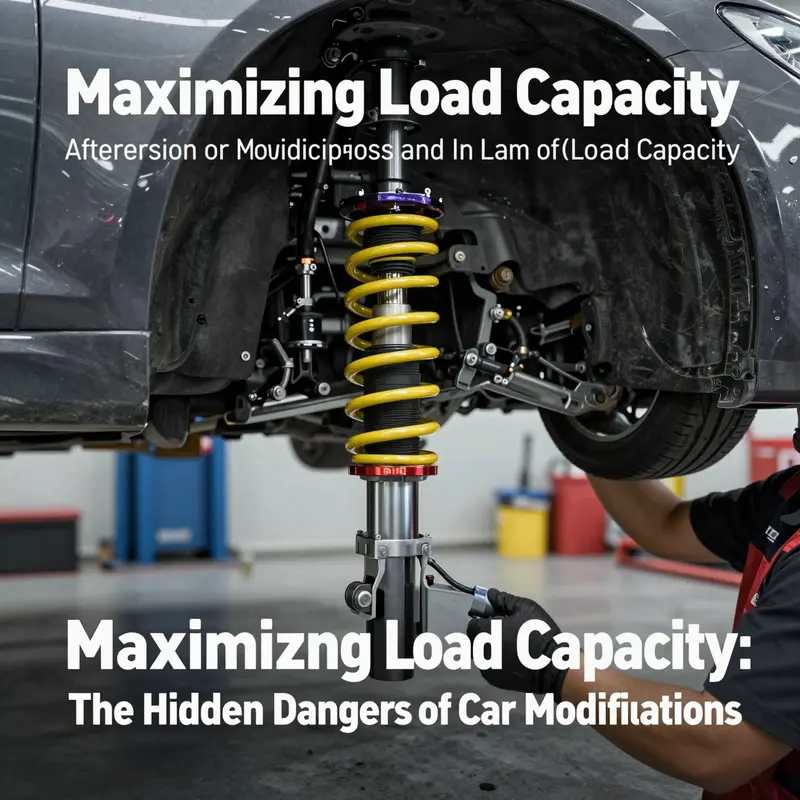
The desire for better cornering, a crisper ride, or a more aggressive stance can lure a vehicle owner toward aftermarket suspension and chassis modifications. Yet the moment a kit is installed, the car is no longer just a transporter of people and cargo but a carefully tuned system whose safety margins hinge on the precise interaction of geometry, weight, and strength. In the quest for performance or aesthetics, it is easy to overlook a fundamental truth: changes to what supports the car—its suspension, frame, and related safety systems—inevitably alter how much weight the vehicle can safely bear. The idea that payload capacity is a fixed figure, carved into the vehicle’s VIN and stamped on a label, is a simplification. Real-world loads, road conditions, and the dynamic forces generated during acceleration, braking, and cornering interact with altered components in ways that can shrink the usable payload even if the static weight does not appear to change dramatically. This chapter weaves together the mechanical realities, safety implications, and regulatory guardrails that govern how suspension and chassis modifications influence load capacity. It aims to illuminate why payload is not a stubborn fixed ceiling but a dynamic constraint that shifts with engineering decisions, installation quality, and ongoing maintenance.
One of the most immediate and observable consequences of aftermarket suspension work is the alteration of ride height. A kit that lowers or raises the vehicle changes the angles at which control arms, tie rods, and the driveshafts operate. Even a modest change in ride height can push components to operate outside their originally engineered range. Consider a lowered stance: while it may improve aerodynamics and reduce body roll, it also tilts the suspension geometry closer to the limits of articulation. The result is a higher propensity for misalignment under load, particularly when a vehicle is carrying a full payload or is subjected to aggressive driving inputs. Misalignment does not always manifest as a dramatic failure; more often, it manifests as gradually increasing loads on bushings and ball joints, accelerated wear, and, in worst cases, premature fatigue. These stress concentrations can erode the safety margins that the manufacturer built into the suspension and chassis, thereby reducing the vehicle’s ability to safely support weight during dynamic maneuvers.
The second axis of impact centers on the distribution of weight and the path that load travels through the car’s structure. Upgrades that stiffen the suspension or alter damping characteristics often shift how loads are damped and delivered to the chassis. A performance-oriented setup may tame body roll and improve grip, but those gains come with a trade-off: the chassis endures different force paths during acceleration, braking, and cornering. In heavy payload scenarios, those altered force paths can translate into higher peak stresses at critical contact points where the frame, control arms, and subframes connect. Even if the vehicle’s static weight remains within the GVWR, dynamic loading under real-world conditions can breach what the structure can safely support. The upshot is that a modification designed to enhance handling can unwittingly erode load-carrying safety if it is not matched with compatible load management strategies across the drivetrain, suspension mounts, and body structure.
A further consideration is the discipline of camber and alignment. Many aftermarket suspensions offer camber adjustment as a key feature to optimize tire contact patch and wear, but some kits constrain or misalign camber in ways that aren’t compatible with the vehicle’s original balance when laden. Under empty or light loads, altered camber might be tolerable, even beneficial. When a full or near-full payload is added, however, the same camber setting can cause uneven tire contact, premature wear, or compromised traction at the crucial moments when weight shifts to the front or rear axles. The drive dynamics become more complex, especially on wet or uneven surfaces where grip is already a limiting factor. The practical implication is straightforward: camber control cannot be treated as a one-size-fits-all adjustment. It must be revisited and recalibrated for the vehicle’s typical cargo profile, especially after any payload- relevant modification is introduced.
Compounding these geometric and load-path considerations is the reality that many aftermarket suspensions are engineered with performance in mind rather than payload capacity. A kit might be designed to deliver crisper steering, reduced body movement, or longer tire life by minimizing friction in steering linkages or by altering spring rates for a more planted feel. But performance tuning does not automatically translate to higher payload tolerance. In some instances, the very features that improve handling—stiffer springs, different damping curves, or lower unsprung weight—can reduce the margin of safety when the vehicle is loaded. A vehicle that handles well when empty can feel predictably but dangerously different when it carries a heavy load. The chassis, which houses the mounting points for springs and dampers, also bears the brunt of any misalignment or over-stiffening. There is a delicate balance between response and robustness, and when that balance tilts toward precision in handling, the safety reserve that keeps a full payload within the design envelope can shrink.
Then there is the matter of road input and resonance. The acoustic and vibrational fingerprints of a suspension package can reveal a lot about how the car behaves under load. Some aftermarket configurations can transmit more road noise and vibrations into the cabin. This is not merely a nuisance; it is a signal that the overall dynamics of the system are altered. Increased cabin noise and vibration often accompany changes in stiffness and geometry that can amplify load-induced forces in ways not fully anticipated by the original design. While comfort is a legitimate goal, it should not be pursued at the expense of predictable load handling. A system that sounds and feels more composed at moderate speeds but exhibits elevated peak strains when fully loaded presents a safety risk that is easy to overlook in the showroom or on a quiet street.
The regulatory and warranty dimensions of suspension modification cannot be ignored. A key insight from authorities and safety advocates is that any modification affecting a vehicle’s structure, suspension, or safety systems must be evaluated against federal standards and manufacturer specifications. The National Highway Traffic Safety Administration emphasizes that deviations from designed load conditions—a vehicle’s GVWR in particular—can not only reduce safe load capacity but can also void warranties and complicate insurance or resale. When a suspension kit or chassis reinforcement is installed without proper engineering assessment, it can create a mismatch between the vehicle’s real-world performance and the legal limits designed to protect occupants. The literature cautions that exceeding a GVWR or undertaking unauthorized changes can expose the owner to both safety risks and legal liabilities while undermining the vehicle’s intended payload tolerance.
From a practical standpoint, recognizing these risks begins with a sober assessment of the vehicle’s current and anticipated needs. If the goal is to improve ride quality or handling, the plan should start with a careful evaluation of the payload scenarios the car is expected to face. If the vehicle routinely carries full passenger loads or heavy cargo, the safest path is to verify that any suspension upgrade complements the factory load ratings rather than tests them. This means seeking a comprehensive engineering evaluation that considers static weight, dynamic weight transfer, tire load ratings, and the interplay with other safety systems such as the braking and steering ensembles. It also means selecting components that are explicitly rated for higher loads or for compatibility with the vehicle’s GVWR, rather than relying on a generic performance solution that might provide a stiffer ride at the expense of payload—an exchange that can prove costly in real-world use.
In many cases, the most prudent course is not to chase performance at all costs but to pursue a modification strategy that maintains or enhances payload capacity while delivering meaningful gains in safety and reliability. This is where careful integration matters. The installation process itself must be handled by technicians who understand how changes to ride height, spring rate, damping, and alignment interact with vehicle dynamics under load. Proper installation can minimize the risk of unintended consequences such as binding, misalignment, or accelerated wear on structural joints. A well-executed modification plan will also include a re-evaluation of tire selections. Tires are an essential link in the load-bearing chain, and their load rating must align with the vehicle’s gross weight under the expected operating conditions. In some instances, upgrading wheels and tires in a coordinated fashion can preserve safe load capacity, provided the new components are accurately rated and installed in a way that preserves the intended weight balance.
One practical consideration is the customization of payload strategies themselves. If the owner’s use case changes—say, the vehicle is repurposed from a family sedan to a light-duty cargo carrier—the payload requirements shift. In such cases, a modular approach to suspension upgrades can be advantageous. Instead of a single kit that rigidly redefines the vehicle’s dynamics for all situations, a system that allows adjustments or swapping of components to suit different load profiles can help maintain safety margins. A modular approach should preserve the original load-bearing design where feasible and only enhance the system with components explicitly engineered to maintain or improve payload capacity under the new use case. This perspective aligns with a broader principle in engineering: enhancements should expand the safe operating envelope, not shrink it.
To offer direction without oversimplifying the complexity, it is useful to center the discussion on three guiding questions when evaluating any suspension or chassis modification: Will the modification maintain alignment and suspension geometry across the vehicle’s anticipated payload range? Does the change alter the load paths in a way that could overstress components under real-world driving? And does the modification respect the manufacturer’s GVWR and weight tolerance while delivering the desired performance outcomes? Answers to these questions should come from a qualified professional who can model the vehicle’s behavior under anticipated loads, rather than from a marketing brochure or a quick swap at a garage that focuses only on appearance and immediate grip.
It is also essential to recognize that the literature cautions against treating payload capacity as a passive casualty of customization. In the real world, removing or altering safety systems to shed weight or using non-compliant modifications to cheat GVWR is a path to legal exposure and safety hazards. The principle here is not to stifle creativity but to promote modifications that respect the vehicle’s fundamental design constraints. The vehicle’s structure, its suspension interfaces, and its safety features are not independent add-ons; they operate as an integrated system. When one element is altered, the entire system’s safe operating space shifts. Respect for this interdependence is the hallmark of responsible customization. For readers who want to pursue modifications, a disciplined approach—rooted in manufacturer specifications, rigorous engineering assessment, and adherence to safety standards—offers a clearer route to gains in handling without sacrificing payload integrity.
A note on practical resources can help anchor this approach. For those who are curious about how suspension changes are analyzed and implemented in a more technical manner, there exists a broader technical discussion on suspension upgrades and their applications. While the world of hobbyist forums and how-to guides can be informative, they should be read with a critical eye toward safety margins and regulatory compliance. If you are considering a particular project, you can start with installation guidance that walks through the steps and checks necessary to ensure components are correctly affixed and aligned. For a concise collection of practical installation advice, see How to install car modifications. This resource emphasizes careful alignment, torque specifications, and iterative checks that help protect the vehicle’s payload capability when changes are made. It is important to emphasize that installation quality is not a cosmetic afterthought; it can determine whether a modification maintains the vehicle’s safe payload range or inadvertently narrows it.
Beyond installation, the discussion touches on the broader landscape of duty-of-care responsibilities that accompany any modification. Keeping a vehicle within its rated specifications is not just about avoiding a warranty dispute; it is about ensuring occupant safety and maintaining predictable performance under routine and extreme conditions. When suspension or chassis work alters ride height, weight distribution, or the behavior of the steering and braking systems, it is reasonable to schedule a follow-up verification with the installer or a dealer. A post-modification inspection can help identify early signs of excessive wear on critical components, misalignment, or compromised connections that could translate into payload-related risks over time. Routine maintenance—such as checking fasteners, inspecting bushings for signs of fatigue, and validating tire pressure and load ratings—becomes even more important after alterations that touch the vehicle’s fundamental architecture.
The interplay between payload and modification also touches on insurance considerations. While the legal ramifications of noncompliant modifications are beyond the scope of mechanical analysis, the real-world consequences are felt at the level of risk exposure and premiums. Insurers often scrutinize weight-related ratings and structural changes to predict the likelihood of damage and to adjust coverage terms accordingly. From the vehicle owner’s perspective, staying within manufacturer-prescribed weight limits and ensuring any modifications are explicitly disclosed can prevent unpleasant surprises in the event of a claim. The overarching message is that enhancing performance should not be pursued in a way that silently undermines the very safety margins that allow a car to carry its intended load.
In summarizing the trajectory of these considerations, the central takeaway is that suspension and chassis modifications must be evaluated through the lens of load capacity as a dynamic constraint. Ride height, component stress, alignment, and the integrity of safety systems all contribute to the vehicle’s true payload tolerance after modifications. A modification that is dimensionally or geometrically mismatched to the vehicle’s original design can reduce the safe payload even if the static weight remains within the GVWR. Therefore, a responsible approach blends engineering judgment, precise installation, and adherence to regulatory and manufacturer guidelines. In practice, this often means choosing components with official or tested compatibility, insisting on a detailed alignment and load analysis in the shop, and delaying or declining modifications that threaten payload integrity when the vehicle regularly bears substantial loads. The goal remains clear: to enjoy the benefits of suspension enhancement—improved handling, better stability, longer tire life—without sacrificing the ability to carry passengers and cargo safely.
For readers pursuing deeper technical insight, a comprehensive guide titled a technical overview of Honda Fit suspension upgrade offers a rigorous look at how specific suspension components interact with the chassis and under what conditions payload dynamics become a critical factor. The resource, published on February 1, 2026, provides detailed specifications and applications that illuminate why certain upgrades improve handling but may not translate into higher payload tolerance. This cross-reference helps underscore the broader principle that every modification is a system-level decision with potential implications for load capacity as well as performance. External readers can consult that source to connect the general principles discussed here with a concrete, engineering-focused case study that explores the trade-offs between ride quality, handling, and payload capacity.
Ultimately, the responsible path forward is to treat payload capacity as a variable to be preserved rather than a number to be surpassed. The modern vehicle is an integration of structure, suspension, safety systems, and weight management. Each modification should be measured against the question: will it keep the car within its safe operating window when fully loaded, under real driving conditions, and across the range of use that the owner expects? The practical answer, distilled from the available research and regulatory guidance, is that modifications to suspension and chassis can indeed reduce load capacity if they disrupt alignment, alter load paths in unfavorable ways, or compromise safety systems. But with thoughtful design, careful installation, and ongoing verification, owners can pursue performance gains without eroding the very safety margins that protect occupants and cargo alike.
External reference for further reading: https://www.hondafitforums.com/technical-overview-honda-fit-suspension-upgrade/
When Rigidity Turns Risk: How Improper Body and Frame Reinforcements Undermine a Vehicle’s Load Capacity

Reinforcing a vehicle’s body and frame is a task that sits at the border between beneficial engineering and risky adaptation. The developer’s intent is often straightforward: to increase rigidity, improve handling, or support higher-performance demands. Yet when reinforcements are improperly executed, the same changes that promise safety and strength can backfire, diminishing the car’s true load-carrying capacity. This paradox hinges on how loads travel through a chassis, how stress is distributed, and how every added kilogram of reinforcement interacts with the vehicle’s original design. In this context, the chapter returns to a core question that anchors the broader article: what modifications can end up reducing the practical load a vehicle can safely bear? Improper body or frame reinforcements illustrate this vividly, because they touch the fundamental mechanics of how weight, stiffness, and safety margins are managed by the engineering that sits beneath the skin of a car.
At the heart of the issue are two technical concepts that manufacturers embed into every vehicle: the technical permissible maximum load (tPMLM) and the technical permissible maximum axle load (tPMAM). These limits, derived from exhaustive testing of the chassis, suspension, and body, represent not merely a sum of parts but an integrated, dynamic system. When reinforcement work is carried out without strict adherence to the original design ethos, those limits can drift in ways that are not immediately obvious. A reinforcement that seems to add strength in one area can, paradoxically, shift stress to another, creating what engineers call a stress concentration or a mismatched load path. Even if the total payload remains within the vehicle’s stated tPMLM, an uneven amplification of stress on one axle or one corner can push the tPMAM past its safe threshold. The result is not a stronger vehicle, but a higher risk of component fatigue, failure under dynamic conditions, and sometimes a total loss of control during demanding maneuvers.
There are concrete mechanics behind this phenomenon. Every car’s frame is a complex network of members designed to work in concert with the suspension, drivetrain, steering, and even the roof and body panels. When a reinforcement uses substandard materials, the problems multiply. In load paths, a brittle weld or an inconsistent joint can become a crack initiation site. A brace added to increase rigidity may inadvertently create a rigid island that resists optimal load transfer. In such a case, the reinforcement bears more load than it was designed to carry, or it distorts the way load flows through the structure, changing how the chassis flexes during acceleration, braking, and cornering. The practical implication is subtle but dangerous: a vehicle could meet a static weight specification while behaving unpredictably under real driving conditions, especially when the payload shifts during road irregularities or evasive maneuvers.
The physics of the problem become clearer when we consider the role of welding quality and material integrity. Improper welding—errant heat input, cold shuts, or insufficient penetration—creates microstructural weaknesses that can grow into visible fractures under the repeated cycling of road loads. Substandard reinforcement materials may not have compatible yield strength, ductility, or fatigue performance with the original structure, creating a car that is stiffer in places but more brittle overall. The mixed material interface becomes a potential crack initiation site or a zone where load-transfer efficiency plummets. In practice, this translates to a higher likelihood of structural distortions when the vehicle carries a load near or at its legal limit, especially on long highway runs or unsettled surfaces where dynamic forces are at their peak.
Beyond materials and joints, there is the more subtle, yet equally consequential, impact of reinforcement geometry on load distribution. A reinforcement that shifts stiffness locally can alter the global torsional rigidity of the chassis. This, in turn, changes how load is shared between the front and rear axles. If load is funneled unevenly to one end due to an imbalanced reinforcement, that axle’s individual load can exceed its own tPMAM even while the overall payload stays within the tPMLM. The law of unintended consequences applies here with precision: a well-meaning modification that hardens one region of the frame can soften another region’s response to dynamic excitations, producing a chain reaction of safety compromises.
To place this in a regulatory frame, the Code of Practice for the Loading of Vehicles emphasizes that load sheets and securing methods must be suitable for the vehicle’s rated capacity. Modifications like reinforcements must not compromise safety margins or structural performance. When a reinforcement is installed without a design review that aligns with the manufacturer’s specifications, the vehicle’s certification to carry its intended load can be invalidated. This is not merely a bureaucratic concern; it is a practical signal that the vehicle’s safe operating envelope has shifted in unpredictable ways. In such cases, even slight payload increases can push the vehicle into conditions where tires, suspension, and steering systems are no longer operating within their tested limits, raising the risk of tire blowouts, axle failures, or loss of control.
The implications extend beyond the mechanical and into the realm of safety culture and liability. A reinforced frame that performs poorly under load increases the probability of catastrophic failure, not only endangering the occupants but also posing a risk to other road users. Insurance coverage can be jeopardized when modifications compromise the safety system’s ability to function within its intended operating parameters. Warranties can be voided, and the owner may face legal liabilities if the modification contributed to an accident. In short, the pursuit of added rigidity or payload capability without engineering discipline can convert a seemingly practical upgrade into a source of systemic vulnerability.
From a practical standpoint, several signs can hint at trouble. The most telling is the emergence of new cracks or deformations in reinforcement joints after loading events, particularly under cornering or braking. A vehicle that exhibits unusual handling characteristics—such as excessive body roll, unpredictable steering response, or asymmetric tire wear—may be signaling an imbalance in how load is distributed through the chassis. Listen for changes in ride quality: a stiffer, more jarring ride that betrays a mismatch between the reinforcement and the original suspension geometry can indicate that load transfer pathways have been altered in ways the manufacturer did not intend. In such cases, the responsible course is a thorough revalidation by qualified engineers, not a quick fix with another bolt-on brace.
For readers navigating the tension between performance, payload, and safety, this is where a cautious, design-forward approach matters most. The interest in lighter weight, stronger frames, and higher payloads is undeniable. Yet every reinforcement should be treated as an engineered interface rather than a standalone add-on. The integration challenge is not merely about adding more material; it is about ensuring that any addition harmonizes with the vehicle’s structural hierarchy, suspension geometry, and dynamic load regimes. This means that a proper reinforcement plan should begin with the vehicle’s original design data, proceed through simulations that predict how loads travel through all modes of operation, and culminate in validated testing that confirms the reinforced structure keeps the tPMLM and tPMAM within safe margins under real-world use.
The broader narrative of vehicle modification teaches a critical lesson: not all strength lies in more material, and not all rigidity is beneficial. In fact, extra stiffness can be an impediment if it disrupts the delicate balance of load paths and dynamic responses. Because load-carrying capacity is a function of how weight, stiffness, and safety systems interact, any reinforcement that does not respect that balance risks reducing the very capacity it seeks to enhance. This insight aligns with the spirit of responsible modification, which prioritizes preserving, or even improving, the structural and regulatory envelope that governs safe operation.
From a practical standpoint, the responsible path is collaborative. Vehicle manufacturers design for a specific set of loads, and any departure from those specifications deserves a professional appraisal. The aim is not to resist creativity but to channel it through a rigorous engineering process that accounts for weight distribution, material compatibility, joint integrity, and long-term durability. A well-planned reinforcement that adheres to tested standards can, in the best case, improve both safety and performance. An ill-conceived reinforcement, by contrast, can erode the very safety margins that make a vehicle trustworthy under load.
To readers seeking further guidance on how to approach modifications responsibly, the car-modifications-guide offers structured information about planning, execution, and verification of modifications. It emphasizes the importance of aligning changes with the vehicle’s original design philosophy and safety standards, a principle that holds especially true when the modification touches the frame or body. car modifications guide
The dialogue about load capacity and reinforcements, therefore, must be framed not just in terms of heavier or stiffer, but in terms of safer, better-integrated systems. The short-term gains of added rigidity or support must be weighed against the long-term risks of altered load paths, uneven axle loading, and compromised structural integrity. When viewed through this lens, the warning is not that all reinforcements are inherently dangerous, but that improper reinforcements—whether due to substandard materials, poor workmanship, or misaligned geometry—can degrade a vehicle’s real-world load-carrying capacity as reliably as any accident-prone design flaw.
Ultimately, the path to preserving or enhancing load capacity without inviting risk lies in disciplined engineering judgment and transparent compliance with standards. It requires designers and owners to treat the vehicle as an integrated system rather than a collection of add-ons. The goal is to create a reinforced structure that remains compatible with the vehicle’s suspension behavior, wheel and tire capacity, and stability controls. Achieving this harmony may demand advanced tools such as finite element analysis, fatigue testing, and careful consideration of how reinforcement interacts with dynamic loads in three dimensions. It may also require the humility to revert to manufacturer specifications when a proposed reinforcement cannot be shown, through data and testing, to preserve the vehicle’s safety margins.
External resources reinforce this message. The National Highway Traffic Safety Administration’s guidance on vehicle weight and load limits underscores the precautionary principle: modifications that affect structure, suspension, or safety systems must comply with federal standards to maintain safe load capacity. When in doubt, consult a qualified engineer and rely on validated testing rather than intuition.
External resource: https://www.nhtsa.gov/vehicle-weight-and-load-limits
Wheels, Tires, and the Hidden Weight on Your Payload: How Tire and Wheel Upgrades Can Undermine Car Load Capacity

Upgrades to tires and wheels often carry the promise of better grip, aesthetics, or performance. But behind that promise lies a quiet truth: every alteration to the tire and wheel combination interacts with a vehicle’s weight budget in ways that can reduce its safe load capacity. This chapter follows that thread, threading together physics, engineering limits, and real-world operating conditions to reveal how a seemingly simple swap can ripple through a car’s safety envelope. The conversation begins with the most fundamental factor: the tire load rating. Each tire carries a load rating that describes how much weight it can carry under prescribed conditions. This rating is not a vague guideline; it is a specific constraint tied to the tire’s size, construction, and speed rating. When owners select tires that carry a higher load rating, they might expect a direct uptick in safe payload. In theory, that is true—the tire itself can bear more weight. In practice, the relationship is more nuanced. The vehicle’s load capacity is the minimum of several interacting limits: the gross vehicle weight rating (GVWR) provided by the manufacturer, the rated capacities of the tires, and the strength of the suspension, frame, and safety systems in play. A higher load rating on the tire does not guarantee a higher overall load capacity if other components are not upgraded accordingly or if the wheel-tire combination interacts unfavorably with the vehicle’s dynamics. The tire’s load rating is influenced by several factors, including the tire size, construction, and speed rating. Larger tires can demand different construction choices, and that shift can alter the way the tire distributes weight at contact with the road. A higher load rating in itself is a sign of greater capacity, but it must be aligned with the rest of the system. When the wheel and tire combination changes in ways that the OEM did not anticipate, a mismatch can appear in the form of reduced safe payload. For instance, upgrading to a larger wheel often requires a lower-profile tire. Lower-profile tires, while sometimes perceived as sportier, can carry a lower load per tire than the original equipment (OE) setup. If the replacement tires do not preserve the sum of the load ratings across all tires, the vehicle’s total safe payload decreases correspondingly. This is not merely a matter of a single tire’s rating. The total-ready-to-carry load is calculated by summing the load ratings of all tires, then factoring in vehicle dynamics, braking, and suspension behavior under load. If one tire becomes the bottleneck, the entire system can be constrained. The second major intent behind upgrading wheels and tires—improved aesthetics or performance—can mask a practical outcome: the rolling diameter. When you increase wheel diameter, you usually select tires with lower sidewall height to preserve overall rolling diameter. This adjustment changes the contact patch geometry and the tire’s compliance under load. A stiffer, shorter sidewall can transmit road shocks more directly to the chassis. In a heavy-occupancy scenario, that stiffness can magnify the stresses at suspension mounting points, chassis brackets, and body mounts. Under dynamic conditions, such as cornering or braking while carrying a substantial payload, the stiffer suspension response can lead to altered load transfer characteristics. The result may be a perception of improved handling, but under load it can translate to higher peak forces on components that were not upgraded. The third dimension to consider is the way wheel and tire changes interact with the vehicle’s electronic and mechanical systems. Modern vehicles rely on sensors, control units, and stability management strategies that expect a certain range of wheel sizes, tire circumferences, and rolling diameters. When the diameter deviates too far from the OE specification, traction control, anti-lock braking, and the speed sensing signals can misbehave. Correcting speedometer readings or recalibrating control systems is not merely a matter of comfort; miscalibration can alter how weight transfer is managed during acceleration, braking, and cornering. With a payload on board, those control loops have to be calibrated to account for a different inertia profile. Improper upgrades can exacerbate suspension loading or alter brake balance, leading to uneven wear, reduced brake performance, or even premature system fatigue when the vehicle carries a heavy load over long distances. This is why the tire and wheel selection must always be evaluated as a system, not as a collection of independent upgrades. A larger wheel might look impressive, but if the combination requires lower-profile tires with a lower load index or a rolling diameter that triggers sensing or control anomalies, the net effect can be a tightened safe payload envelope rather than an expanded one. The chassis and suspension themselves respond to heavier loads with a complex sequence of reactions. Upgrading wheels can shift the unsprung weight, the portion of the vehicle that rests between the suspension and the wheel. Heavier wheels add inertia to this part of the system, increasing peak dynamic loads during braking and in moments of rapid weight transfer. When payload is added, those amplified forces can hasten wear on springs, dampers, sway bars, and bushings. If the rest of the drivetrain and braking systems have not been designed to cope with this revised load dynamic, it is only a matter of time before premature wear or even component failure becomes a cost of ownership rather than a performance benefit. The tire’s role in this chain is not limited to supporting static weight. The tire must also absorb and distribute dynamic forces generated during acceleration, braking, and cornering. If the tire’s construction or tread pattern is chosen to enhance grip at the expense of sidewall flexibility, the tire can resist lateral deformation too aggressively. In a loaded state, the combination may produce a stiffer platform where weight transfer during cornering becomes concentrated in fewer structural points, increasing the likelihood of fatigue in suspension components. Conversely, tires that are too soft for the vehicle’s load profile can lead to excessive deflection, which, under heavy loads, can compromise steering precision and brake performance. The interplay between tire construction, load rating, and the vehicle’s suspension is delicate. A tire chosen for a higher load rating may come with stiffer shoulders or heavier carcass construction. If the total wheel-tire package does not align with the vehicle’s spring rates and damper settings, the suspension can become overburdened, leading to accelerated wear or, in extreme cases, structural fatigue in critical mounting points. The physics of load transfer under motion also matters. As a vehicle carries payload, more weight shifts to the rear or to particular axles, depending on the vehicle’s design and weight distribution. If the wheel and tire upgrade shifts the contact patch or the effective stiffness distribution in a way that amplifies peak axle loads, the axle assemblies and bearings can experience higher stress than the OEM design intended. This is why a carefully matched upgrade is essential. The practical takeaway is not simply to chase higher load ratings or bigger wheels in isolation. Instead, approach tire and wheel upgrades as a balancing act: the goal is to preserve or improve OEM load capacity while achieving the desired performance or appearance. When contemplating changes, one should consult the vehicle manufacturer’s guidelines and the tire manufacturer’s load index and speed rating charts to verify compatibility and to confirm that the new combination can sustain the intended payload safely. A structured way to approach this is to view the upgrade as a system exercise, where every component—from the tire’s load rating and sidewall height to the wheel’s mass and diameter, and up through the vehicle’s suspension geometry and control systems—contributes to the total safe payload. Those who want a practical starting point can explore established guidance that consolidates these considerations into consumable steps. For readers seeking a consolidated overview, a structured resource such as car-modifications-guide can provide a forum for aligning tire and wheel choices with overall safety and compliance goals. This kind of guide helps ensure that a modification does not unintentionally erode the vehicle’s loaded performance envelope, and it emphasizes the principle that safety and legal compliance should guide all upgrade decisions. It is important to remember that the goal of any modification, including tires and wheels, is not simply to alter appearance or to chase performance metrics. It is to preserve or enhance the vehicle’s essential safety functions while allowing the operator to carry the intended payload within the manufacturer’s design envelope. In the end, the underscore never shifts: a tire and wheel upgrade must be compatible with the vehicle’s GVWR and the chassis’s ability to manage load transfer without compromising brake performance, steering integrity, or occupant safety. When in doubt, revert to OEM specifications or seek a professional evaluation that considers load capacity, dynamic behavior under load, and regulatory compliance. The broader article’s aim is to equip readers with a coherent framework to assess modifications not in isolation but in context. Each modification interacts with the vehicle’s structural elements and safety systems in ways that can either preserve or reduce the safe cargo carrying capability. Tire and wheel changes are a vivid illustration of this principle: seemingly minor choices can cascade into meaningful shifts in how much weight a car can safely carry. For readers who want to dig deeper into how these decisions fit within the wider spectrum of modifications, the pathway is to view tire and wheel upgrades as part of an integrated decision making process rather than as stand-alone edits. The takeaway is simple but powerful: always measure the impact of a change against the original vehicle specifications, and prioritize safety, regulatory alignment, and long-term reliability over fashionable appearances or short-term improvements. When the objective is to carry a defined payload with confidence, the best practice is to validate the entire system against the GVWR, ensure compatible tire load ratings across all tires, and preserve balanced performance across suspension, drivetrain, and safety systems. External resources, including authoritative regulatory guidance, can anchor these decisions and prevent unintended reductions in capacity. For a grounded reference to standard vehicle load guidance, see the external resource linked at the end of this chapter. And for those who prefer a structured, reader-friendly guide to modifications and their implications, the internal link discussed earlier offers a practical entry point into the broader conversation about safe and compliant vehicle customization.
Final thoughts
In the quest for enhanced performance and aesthetic appeal, car modifiers must remain vigilant regarding the implications of their modifications on load capacity. Aftermarket suspension or chassis changes can introduce stress points to the vehicle’s structure, while improper body reinforcements may weaken integrity instead of strengthening it. Additionally, tire and wheel upgrades require careful consideration to ensure compatibility with load ratings. By understanding these crucial factors, hobbyists, professionals, and restoration enthusiasts can maintain their vehicles’ safe operational limits while achieving the desired enhancements. Stay informed, mod responsibly, and prioritize safety in every modification decision.