

Rally cars represent an intriguing blend of daily practicality and high-octane competition. At their core, they originate from standard production models designed for everyday road use, selected for their reliability and performance characteristics. Whether it’s the compact hatchback or the agile SUV, these are vehicles built to be street-legal and user-friendly. Yet, behind the scenes, extensive modifications are waiting. This exploration delves into what these rally cars originally are, emphasizing their roots in consumer markets. Each chapter will address fundamental aspects, including the production models upon which they are based, the transformation they undergo to compete in harsh rally conditions, and key features that define their performance before tuning them for racing. Join us as we unravel the essence of rally cars before they morph into powerful machines.
From Street-Legal Baselines to Stage-Winning Machines: The Original Form Rally Cars Take Before Modifications
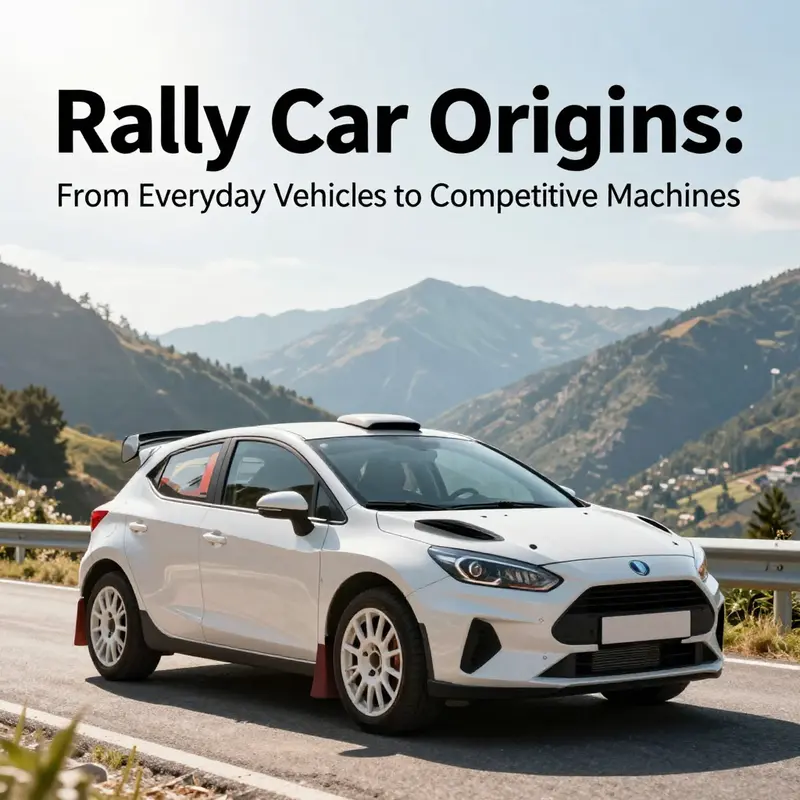
Rally racing is as much about the car you begin with as the roads you conquer. When we talk about rally cars in their pre-modified state, we are tracing the lineage of a high-performing machine back to something familiar and mundane: a street-legal vehicle produced for everyday use. The point of origin is not a shape born on a race track but a shape designed for real roads, with compromises that balance comfort, efficiency, and reliability. The selection of these base models is deliberate. Engineers and teams look for a vehicle that can endure long roads and rough terrain alike, parts that can be sourced widely, and a chassis that has a reasonable safety margin. In practical terms, the starting point is a mass-produced model that people can buy, own, and service without specialized facilities. This makes the base form both accessible to the general public and a sensible platform to evolve into a rally machine through targeted modification rather than a complete redesign.
What, then, are the characteristics that define this original form? At its core, a rally-ready base car must be robust. It should feature a suspension system capable of absorbing sharp bumps and deep ruts while preserving predictable handling. The goal is not to deliver the soft ride of a showroom cruiser, but to tolerate the punishing cadence of a rally stage. The engine must offer a balance of power and reliability, delivering usable torque across a wide range so a driver can maintain momentum on slippery gravel as easily as on asphalt. A street car’s engine might be naturally aspirated or turbocharged, but what matters is that the powertrain can be tuned upward with predictable behavior and can withstand the rigors of endurance-style driving.
Another essential trait is traction. In rally competition, grip is a daily challenge, whether the surface is dust, mud, snow, or loose gravel. The most common route to that grip is through an all-wheel-drive configuration, which distributes power to the wheels with the most traction and helps maintain control as surfaces change unexpectedly under load. The baseline car’s drivetrain needs to be adaptable enough to accommodate a drivetrain upgrade without dissolving the car’s overall balance. If all-wheel drive is not a standard feature, engineers often consider an architecture that can be retrofitted or modified to improve traction across variable terrain. The vehicle’s steering feel, braking response, and weight distribution all factor into whether a particular base model is worth the investment for rally work.
Beyond mechanical attributes, the original form carries the practical DNA of a road-going car. Interiors are designed for daily use, safety systems meet road-legal requirements, and electronics manage comfort as well as efficiency. A rally team does not seek a vehicle that is utterly unrefined for the sake of performance; instead, the base model provides a familiar platform with predictable behavior that can be augmented in a controlled, traceable way. This is important because the same car that navigates a gravel stage in January must also serve as a reliable daily driver off the regatta of service parks where the team stores parts and equipment. The pre-modified version thus keeps one foot in the consumer market while quietly promising a future where it will be pushed beyond conventional boundaries.
A critical theme in the evolution from street to stage is modularity. The base car’s architecture must tolerate a spectrum of upgrades without collapsing under the added weight or altered geometry. This means engineers look for a structure that can be reinforced in key areas while preserving the essential safety and crashworthiness the car was designed to deliver. The chassis, once a straightforward backbone for daily transport, becomes a skeleton that can be fortified, tuned, and rebalanced. In the modern rally environment, the reinforced structure does not simply protect the occupants; it also provides a solid platform for performance parts like upgraded braking systems, stiffer suspension components, and more rigid subframes. The transformation is incremental, measured, and carefully documented so that the vehicle can be serviced and repaired with parts from a broad supply chain.
It is also worth noting the broad spectrum of base models used in rallying. Because the sport values reliability and the ability to source components widely, teams often lean toward vehicles that have large production runs and extensive service networks. A compact hatchback might be favored for its light weight and nimble handling, while a rugged SUV offers durability and space for equipment. A sports-oriented coupe or sedan can provide a strong foundation for higher power brackets, as long as the chassis and drivetrain can support the increased loads. The key factor remains the blend of everyday practicality and mechanical resilience. A base model chosen for rally work is always the one that can be prepared to withstand the severe demands of rough surfaces while still delivering predictable performance on tarmac—precisely the kind of dual-use versatility that makes these cars uniquely suited for the sport.
From there, the transformation into a rally machine unfolds with a clear logic. The first layer of modification typically concentrates on safety and chassis rigidity. Roll cages become a non-negotiable feature, transforming the interior into a secure cockpit where the driver and co-driver can operate under extreme forces and high glare conditions. The cage also requires careful integration with the car’s existing structure so that the overall weight is managed and the center of gravity remains favorable. With the structural safety net in place, engineers turn to the mechanical side: suspension geometry is altered to increase travel and durability, dampers and springs are tuned to handle repeated impacts, and anti-squat or anti-dive characteristics are adjusted to maintain stable handling under heavy braking and acceleration on varying surfaces.
Powertrain adjustments follow, aimed not at merely squeezing more peak horsepower but at delivering usable, controllable torque across a broad rev range. Turbocharging, intercooling, intake and exhaust tuning, and fuel delivery are tuned with a rally-appropriate temperament in mind. The goal is a power band that remains linear and forgiving when drivers require instant throttle response on a slippery surface. In parallel, the brakes are upgraded for endurance and heat management; larger discs, more robust calipers, and strategic cooling are deployed to prevent fade during long stages with aggressive braking demands. The tires themselves are a crucial variable; the base car’s tires are swapped out for rally-specific compounds and tread patterns that can bite into gravel, snow, or mud while staying durable enough to survive thousands of kilometers of use.
The story of a rally car’s original form is thus a study in balance. The street-legal model provides a dependable chassis, a serviceable drivetrain, and a dashboard full of familiar controls. It also anchors the project in a reality where these cars can be bought, repaired, and prepared in workshops around the world. The transformation that follows—ranging from reinforced safety cages to adaptive aerodynamics and advanced engine management—builds on that foundation, but the essence of the car remains tethered to its road-going roots. That is how teams maintain a practical, repeatable process: start with something people can buy off the showroom floor, then evolve it into a purpose-built rally tool through careful, documented modifications.
This approach matters not only for the engineering team but also for fans and participants who appreciate how a rally challenger comes to life. The pre-modified form reveals much about the car’s potential and its limits. It shows how engineers weigh the benefits of weight, stiffness, and power against the realities of maintenance, parts availability, and the constraints of service logistics. It explains why a broad class of production models continues to serve as the backbone of modern rallying, even as each season pushes those base forms toward greater extremes. The concept that a rally contender begins as a street-legal, production-bound machine helps demystify the sport. It also highlights a continuous thread: competition thrives on the slow-peeling back of a familiar shell to reveal a purpose-built heart that can endure the harsh tests of speed, grip, and grit on every kind of surface.
For readers seeking a concise overview of how changes accumulate from street to stage, a practical look can be found in the car-modifications-guide. The guide outlines how components migrate from everyday use to performance-focused upgrades, providing context for the choices teams make when preparing a base model for rally duties. This reference helps connect the dots between a car’s original form and the evolved, competition-ready machine it becomes on the rally stage. The journey from showroom to service park is not a single leap but a sequence of deliberate steps that preserve the car’s identity while expanding its capabilities.
The original form of rally cars, then, is less about a single prototype and more about a philosophy of transformation. It recognizes the value of a road-going baseline that can be reliably produced, serviced, and replaced. It celebrates the engineering discipline that converts a familiar vehicle into a capable adversary on gravel and snow. And it reminds us that the most dramatic feats in rallying grow out of a predictable, well-understood starting point—one that any enthusiast can recognize and, in time, watch evolve through the craft of modification. As new generations of rally cars arrive, the narrative remains consistent: begin with a trusted, road-legal model, then add the safeguards, the grip, and the guts that make it a contender on the world’s most demanding stages.
External reference: https://www.autocar.co.uk/car-news/racing/what-is-a-rally-car-20260304
From Street-Ready Foundations to Rally Stage: Understanding What Rally Cars Are Originally Before Modifications

Rally cars do not begin their lives as purpose-built machines sculpted purely for competition. They emerge from the garage floors of everyday automakers, as production models designed for street use, practicality, and broad appeal. The idea behind the original form of a rally car is not to create a miniature race car but to select a reliable, widely available platform that can be adapted through a carefully choreographed sequence of engineering changes. This foundation matters because it anchors the entire philosophy of modern rallying: to create a high-performance machine while preserving a tangible link to consumer vehicles that people can buy, service, and understand. The road-legal essence of a base model remains the reference point for all subsequent development, providing both a physical and a regulatory foothold for teams and regulators alike. In this light, the journey from showroom floor to winner’s podium begins with a particular kind of vehicle—a hatchback, a compact sedan, or a small SUV—that embodies a balanced mix of weight, packaging, and maintenance practicality that makes it suitable for adaptation under the sport’s rules. The choice is deliberate, not arbitrary. It reflects the sport’s insistence that high-speed, high-stress competition should unfold on platforms that run in the same family as vehicles a fan could plausibly purchase and maintain in a ordinary workshop. The appeal of such a starting point lies in predictability as much as performance: predictable supply chains, known service intervals, and a pool of parts that teams can source from a broad network of dealers and suppliers. This is not a marginal preference, but a core design principle mandated by the governing framework that shapes rally competition across its different tiers.
Within the spectrum of rally categories, the influence of the production origin is most visible in the ratio of performance to mass and in the packaging of powertrains and drivetrains. In the top tier, where the championship demands the most advanced technology, the base platform is still a production model, rebuilt to accommodate the rigors of endurance, constant exposure to rough terrain, and the intense vibrations of high-speed sprinting across loose surfaces. The base vehicle’s design language informs practical considerations: where to locate the battery, how to route cooling for an engine that will work under extreme heat, and how to protect occupants in a roll-over scenario—all while preserving a chassis that can remain repairable between events. The underlying principle is resilience with a nod to efficiency. Teams favor platforms that can shed nonessential mass without sacrificing structural integrity, allowing the car to carry enough safety equipment and performance hardware to survive a rally’s demanding stages.
The production origin also governs how teams envision the car’s balance and handling. A street-legal model is built around a particular weight distribution, tire geometry, and suspension architecture that, in its original state, is oriented toward comfort and drivability rather than cornering limits or off-road endurance. Rally rules acknowledge this by permitting a thorough, targeted transformation rather than a complete rebuild. That transformation begins with safety—an FIA-mandated roll cage, reinforced subframes, and a harness system that keeps occupants protected during aggressive maneuvers on rough surfaces. The cage is not merely a cage; it is the scaffolding that must coexist with the car’s original structure, allowing engineers to reinforce weaknesses without compromising the baseline architecture. The result is a hybrid of sorts: a production-car skeleton that can be augmented with race-grade engineering in a way that remains recognizable as a road car at its core.
The regulatory frame that governs modern rallying crystallizes this principle in precise terms. In the highest level of competition, the FIA’s Rally1 category defines a production-based platform with a specific constraint: the base vehicle must come from a production model with a minimum annual production volume. This rule ensures that the car retains a link to consumer vehicles even as it becomes a high-performance machine. The emphasis on a production backbone serves several strategic purposes. It guarantees a degree of supply chain stability, keeps costs in check by relying on familiar parts and assemblies, and preserves a pathway for automakers to translate road-car expertise into race-day technology without dissolving the link to the buyer market. It also creates a common ground for performance engineering, where teams can push the envelope within a shared framework rather than starting from a blank sheet each season. The exact specifications that define Rally1—such as a turbocharged engine paired with a hybrid power unit, delivering over five hundred horsepower, and operating under a strict weight ceiling—are designed to extract maximum capability from a platform that began life as a road-legal hatchback or small crossover. By anchoring the project in a production base, the rules acknowledge the realities of automotive development while inviting bold, responsible engineering leaps.
Even within the top echelon, the production base continues to influence how teams approach reliability and serviceability. A rally car that starts from a consumer-focused platform inherits certain manufacturing realities: a network of spare parts, a common set of wear items, predictable maintenance intervals, and a chassis that can be controlled and repaired across a multinational service crew. The production origin also informs the interior’s minimalistic conversion. The goal is to preserve a habitability that allows engineers to perform rapid changes in a rally service park while keeping essential controls and safety systems accessible to the driver and co-driver. In practice, this means that the car’s cockpit remains recognizable, while the exterior and mechanicals shift toward race readiness. The balance is delicate: too much departure from the base model can reduce the car’s reliability in the eyes of teams and fans, even as it improves performance; a model that remains too close to showroom form may not endure the punishment of rally stages. The art is to extract performance while retaining the predictable, sustainable traits that make production-based platforms uniquely suited to long rally campaigns.
In lower-tier categories, the same philosophy persists, albeit with more room for cost-conscious engineering. Rally2 and Rally3 emphasize even greater accessibility by leaning on production hatchbacks with more modest power outputs and simpler drivetrain configurations. Here the emphasis shifts toward teaching and learning: chassis tuning, tire choice, and suspension setup become the primary avenues for chasing pace. Yet the underlying principle remains: a closed loop between a real-world vehicle and a rally machine. These classes highlight how a production hatchback—front-wheel drive or all-wheel drive—can serve as a training ground for drivers and teams who will later step up to higher categories. The affordability trajectory is not accidental; it mirrors a broader motorsport philosophy that uses accessible, production-based platforms to cultivate talent, deepen engineering know-how, and keep the sport tethered to the realities of consumer automotive design.
If you look beneath the hood at the precise specifications that define the modern rally base, you encounter a measured blend of performance architecture and regulatory discipline. At the top level, regulatory bodies require a base engine configuration that remains compact yet capable of high output, often featuring a turbocharged cylinder layout tuned for rapid response across a broad rev range. When combined with a hybrid system, the car can harvest electrical energy during deceleration and redeploy it to amplify acceleration out of corners, a synergy that is particularly valuable on mixed-surface rally stages. The weight constraint—strict and non-negotiable—forces engineers to make intelligent choices about materials, chassis stiffness, and thermal management. The result is a vehicle that embodies a paradox: it is simultaneously lighter and more powerful than its road-going cousin, while still retaining the essential characters of the production model from which it sprang. The audience senses this lineage in every wheel spin and every gulp of dust—an echo of the original street-legal car that once rolled off a factory floor.
From a storytelling perspective, this origin matters for more than just engineering. It anchors public perception of rallying as a sport that grows from familiar technology. Fans recognize the lineage when they see a car that shares the silhouette, door count, and interior ergonomics of something they could buy, even as that same machine is tuned for competitive endurance and hill-climb precision across unforgiving terrain. The production model is not a relic; it is a living blueprint that travels from showroom, to workshop, to the service park, and finally to the stage where nerves, weather, and geometry determine the outcome of a race. This lineage helps explain why manufacturers invest in road-car development with an eye toward competition, and why fans celebrate the moment when a street-born platform demonstrates extraordinary resilience and speed under pressure.
The broader message is clear: rally cars originate in the everyday, and their transformation is a controlled and codified process. The base vehicle’s characteristics—weight distribution, packaging, drivetrain layout, and even routine maintenance considerations—shape how teams plan modifications and how they balance speed with reliability. As the car evolves, the product’s core identity persists: it remains a road-going entity at its heart, even while its bones are reinforced to withstand the rigors of rally stages. It is this tension between the familiar and the extraordinary that defines the sport’s most compelling machines. The original hatchback, sedan, or compact SUV thus becomes a platform of infinite potential, a base that can be stripped of nonessential comfort and rebuilt with purpose without severing its connection to the consumer market.
For readers curious about the practical implications of modifying a production model to compete, this perspective also helps frame the conversation about what to expect when a road car becomes a rally weapon. When a dealer-quality car leaves the showroom, it carries with it a set of tolerances, a warranty framework, and a maintenance culture that differs from what a race team needs. The modification process is therefore not about breaking a car’s spirit but about translating a familiar, supported design into a high-performance instrument capable of surviving the most punishing terrains. The rules of engagement emphasize that development should build on the strengths of the production base rather than erase them. The result is a machine that maintains enough of its showroom DNA to remind spectators of its origins while showcasing the extraordinary capability that only rigorous, disciplined engineering can unlock.
To connect this discussion with the broader landscape of how road cars are prepared for sport, consider the practical guidance that exists for car enthusiasts who want to understand the implications of modifying vehicles in general. A useful resource that lays out the considerations of how modifications interact with insurance, value, and safety can be found in practical guides such as car-modifications-guide, which offers perspectives on the responsibilities and trade-offs involved in moving from street legality to performance readiness. While rally cars operate under a highly specialized set of rules, the core principle remains the same: the road car you start with sets a ceiling and a pathway for the performance you can achieve, and every modification must respect that origin while pursuing new horizons of speed and durability. car-modifications-guide
For those who want to explore the regulatory framework in more formal detail, the official governing body for international motorsport provides comprehensive, up-to-date information about Rally1 and related categories. This information helps explain why the production-based approach remains central to the sport and how the balance between consumer relevance and competition-grade engineering is maintained at the highest levels. Fans and scholars alike can appreciate how the rules evolve to reflect advances in powertrain technology, data-driven performance optimization, and the ongoing push for safer, more sustainable competition. The FIA’s page offers a window into how these considerations translate into technical specifications, homologation procedures, and the ongoing evolution of the rally pyramid, illustrating how the original road car is continually reimagined within a framework designed to test human skill and machine capability in equal measure.
In sum, the original form of rally cars is not a footnote but a foundational narrative. It explains why teams choose certain classes, why engineers work within specific displacement and drivetrain envelopes, and why the sport maintains a strong affinity with the production cars that populate streets around the world. The path from showroom to service park to stage is a careful choreography, one that respects the road car’s legacy even as it harnesses the most sophisticated technologies available. This is the essence of rallying: a sport built on the proven reliability and accessible engineering of production models, transformed through disciplined modification into machines capable of conquering the most challenging courses on earth. It is the continuity between everyday mobility and extraordinary performance that gives rallying its unique character and enduring appeal.
External reference for deeper regulatory context: https://www.fia.com/
From Street-Legal to Stage-Ready: Tracing Rally Cars Back to Their Everyday Roots
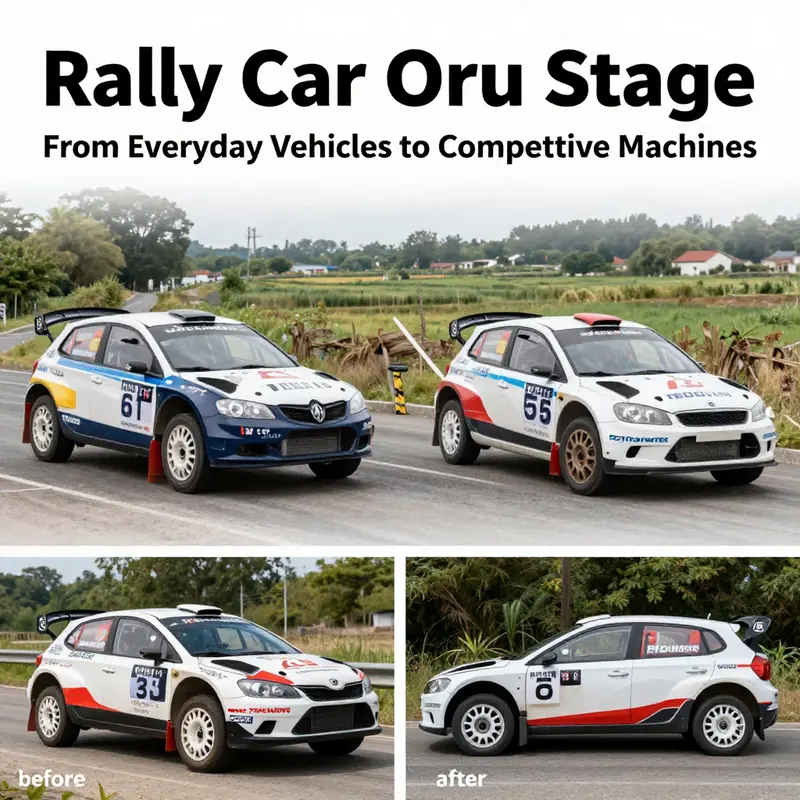
Rally cars carry a paradox in their bones. They look like purpose built machines but their origin lies in ordinary, road going hardware. The transformation from street to stage is as much a story of engineering philosophy as it is a story of endurance, control, and the relentless testing that happens off the pavement. What began as a car you might see in a showroom or on a daily commute is reimagined, re engineered, and repurposed to endure the extremes of rally competition. The journey begins in the garage and ends on rapier gravel, mud, or snow, with the vehicle shedding much of its everyday restraint in favor of a new, race ready identity.
The base for any rally project is chosen with a clear eye on reliability, availability, and the predictable behavior of the stock model. These are not high end exotic machines designed for track only use; they are mass produced, widely accessible vehicles that can be sourced, repaired, and serviced around the world. The original form of a rally car is therefore a street legal automobile, a compact hatchback, a family SUV, or even a sports car, produced by a manufacturer for consumers. This is the starting point that makes rally programs feasible in the first place: a chassis and powertrain with a known history, parts that can be sourced from a broad network, and a baseline level of safety that is enough to get the vehicle to the competition in the first place. Often, those early rally projects carry only minor factory reinforced components or upgraded brakes. They still wear street legal tires, still feel the road through a normal suspension, and still obey the general limits of everyday driving. Yet even the most modest stock form carries a latent potential, a framework that can be rebuilt into a machine capable of confronting the most demanding stages as the team, the engineers, and the driver push the limits.
The decision to convert a street car into a rally contender is anchored in a few fundamental principles. One is that the model must be robust under the flexing, twisting, and jolts that come with rough terrain. Another is that the engineering team must have confidence in a platform that can evolve through the years as rules change and as the field becomes more demanding. It is a practical balance: keep a connection to road usability and complexity, but insist on a chassis that can be reinforced and a drivetrain that can be tuned without sacrificing the vital reliability that made the stock model famous for daily driving. In this sense, the original car is more than a shell or a starting line. It is the seed from which a completely different creature grows, one that can live off the adrenaline of speed while still retaining a trace of its street origins.
As the build moves from concept to reality, the most visible and transformative changes focus on the drivetrain. In professional rallying, the single most important upgrade is the switch to all wheel drive. Wheels turning in harmony on a single axle unlock traction that moves the car forward on loose surfaces, climbs through ruts, and stabilizes the car when the surface abruptly shifts under the tires. The AWD system alters the vehicle’s dynamics in profound ways. Power, once neatly distributed to the road through a single front or rear axle, is now spread across all four corners. This redistribution shifts weight, changes how the car squats under acceleration, and modifies how it responds to steering inputs. The result is a platform that behaves with greater confidence in slippery, uneven, or unpredictable conditions. The AWD upgrade is not cosmetic; it defines how a rally car negotiates the most challenging terrain and sets the tone for every other modification that follows.
But AWD is only the beginning. The chassis itself must be reinforced to withstand the extraordinary loads generated by high speed, rough surface transitions, and the sheer force of aggressive handling. The structural backbone—the frame and its connections—receives additional welds, braces, and, when necessary, redesigned mounting points to resist fatigue. The aim is to create a more rigid, more predictable platform that does not flex excessively when a car lands from a jump or is driven through a tight corner at race pace. A stiffer chassis translates into sharper steering feel, more precise alignment control, and the ability to maintain the same handling characteristics across a wider range of operating temperatures and terrains. All these factors matter because rally stages compress a lot of physics into a few minutes of intense activity.
Suspension is the part of the car most exposed to the brutal real world of rallying. Street tuned dampers and springs are simply not built to sail over whoops, humps, and unpredictable ruts without compromising ride quality, control, or tire contact. In the rally build, the suspension is overhauled with stiffer springs, upgraded dampers, and a suspension geometry that can be adjusted to suit a variety of surfaces. The result is a system that can be tuned to keep tires planted at high speed while absorbing the jarring transitions of gravel, snow, or mud. Adjustable components are common, allowing engineers to dial in ride height, rebound, and compression to balance traction and stability. This level of control matters because it affects how quickly a car can be pushed into corners, how well it holds line on long sections, and how it recovers from a bump mid corner without losing grip.
Engine performance, too, is often redesigned atop the stock heart. A rally powerplant is tuned not just for peak horsepower but for broad, usable torque across the rev range. Turbocharging is frequently employed to extract more air and fuel, increasing power output while preserving the reliability needed for multiple stages in a single event. Improved cooling systems are a practical necessity; rally engines must shed heat efficiently when the car is under sustained load, such as during long gravel stages or steep climbs. Custom engine mapping, enhanced fuel delivery, and, when regulations allow, performance optimizations help deliver a more responsive throttle and a wider operating window for the driver. The engine is not a mere bolt on; it becomes a core part of a carefully engineered system designed to survive repeated high stress and to perform consistently under variable conditions.
Safety in rally cars is a defining feature, because the environment is unforgiving and the margins for error are slim. A robust roll cage becomes the skeleton of the machine, designed to maintain passenger survival space even in severe crashes. A dedicated fire suppression system is installed to protect the occupants in case of an engine bay or cockpit fire. Seats and harnesses are upgraded to hold the driver and co‑driver securely through jolts, high g forces, and rapid decelerations. The goal is to preserve a safe, intact cockpit where the driver can concentrate on the road ahead even when the car has to contend with a late hit on a rough surface. This safety architecture runs alongside the earlier mechanical upgrades; both are necessary to translate raw speed into real stage performance without compromising on the primary aim of protecting people in a high risk sport.
Even with these dramatic changes, the scope of modification is tempered by the rules that govern professional rally competitions. The extent of what is allowed—and what remains within the frame of a production based platform—forces teams to work creatively within constraints. In some less prestigious or cost constrained events, teams may run modified cars that retain some rear wheel drive characteristics, particularly on tarmac focused rounds where the discipline favors handling and driver skill over raw traction. Yet for elite rallying, the AWD platform is the standard bearer because it provides stability and control that cannot be matched on the most difficult stages. This is a practical inversion of the street car’s natural tendencies: what was once front heavy or rear biased in daily driving becomes a balanced, multi axle system designed for four wheel control and relentless resilience. The transformation is thus not just mechanical; it is an explicit redefining of a vehicle’s identity, from a practical commuter to a formidable competitor on the world’s most demanding stages.
Despite the complexity and scale of the transformation, the essence of the street car remains a touchstone. The vehicle that begins as a road going model retains a link to its roots through the concept of reliability and the idea of predictable, reproducible behavior. Engineers and designers, working within a framework of safety and competition rules, push the limits while ensuring that the core platform can be repaired, restored, and serviced far from the track. This balance—between the original design ethos and the demands of extreme performance—defines the most compelling stories in rallying. It is a narrative of evolution rather than annihilation: an everyday machine, re imagined, re engineered, and re born as a high speed, high risk platform that can dance across gravel, snow, and mud with a grace that surprises those who first saw it as merely a road car.
For a practical overview of how such modifications are implemented, see car-modifications-guide. This resource offers a concise perspective on the logic of upfits, the sequence of steps from safety to power, and the way teams plan their work within the constraints of budget, regulations, and the unpredictable nature of rally stages. While the scope here is descriptive rather than prescriptive, the guide reinforces the idea that the street car is the seed from which a rally weapon grows. The growth is not happenstance but a deliberate, repeatable process guided by testing, feedback from drivers, and the evolving demands of the sport. As new generations of rally cars emerge, the fundamental recipe remains grounded in a few essential ideas: preserve the integrity of the base platform, reinforce what must withstand stress, and tune every subsystem to work as a coordinated whole under the most demanding conditions.
The chapter of a rally car that begins on public roads closes with a reminder of the broader context. These vehicles exist at the intersection of production engineering, motorsport technology, and the human courage to push through uncertainty. The appeal is deeper than horsepower or speed; it lies in the almost primal satisfaction of mastering a machine that has been shaped to obey the road and then re imagined to conquer it anew. From street to stage, the transformation is a study in how ordinary things can become extraordinary through careful, disciplined craft. The same car that ferried a family to its destination can be rewritten to carry a team into the forest, across a stage, and through the finish line under a sky full of dust and cheers. It is a reminder that origin and ambition are not opposed, but entwined in the same engineering thread that turns a daily commuter into a hero on the global rally stage. External resource: https://www.rallytechinsights.com/technical-overview-rally-car-kit-specifications-applications
The Original Blueprint: Key Features Rally Cars Share Before Modifications
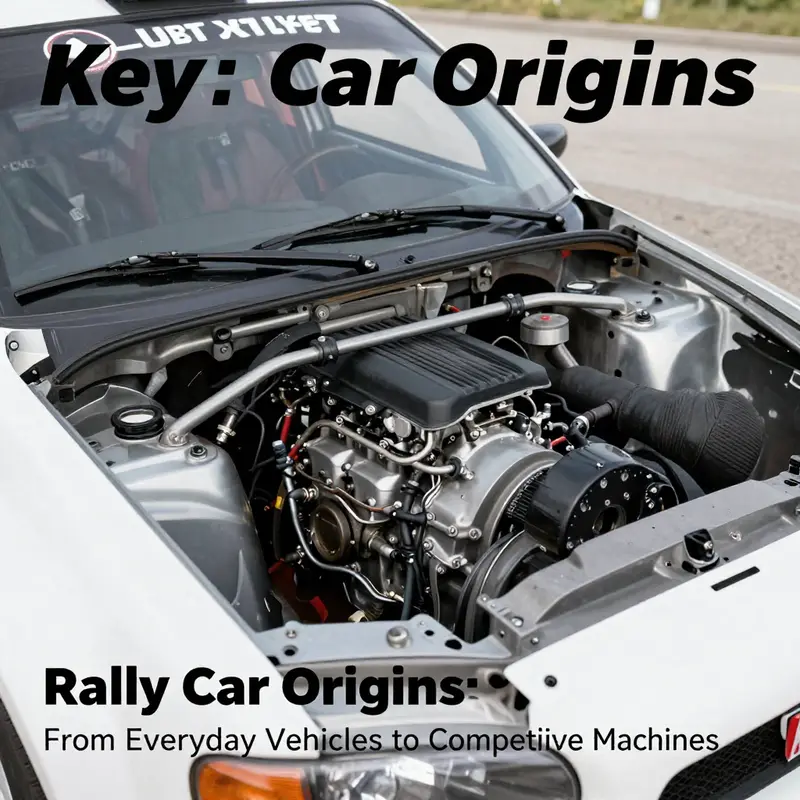
A rally car’s first life begins not in a sprint toward a podium, but on a showroom lot and on city streets, where it must prove reliability, practicality, and everyday usability. The transition from ordinary road car to high-performance rally machine starts with a base model chosen for traits that will endure the toughest tests later on. The rally car’s origin is less about speed out of the gate and more about a robust, repeatable platform that can be tuned, upgraded, and reinforced without losing the fundamental qualities that everyday drivers rely on. When teams peer into a potential chassis, they seek a balance: a vehicle that can carry ambition yet still serve as dependable transport in ordinary life. The base platform must be approachable, affordable in large volumes, and responsive to the kinds of engineering that rally demands: efficient packaging for serviceability in remote stages, components that are readily replaceable, and a design that tolerates frequent, high-stress use without catastrophic failure.
From the outset, the core characteristics of a production car form the backbone of what a rally car becomes in the days before serious modification. A robust chassis, forged through mass production, is selected not for its flamboyance but for its capacity to endure. Rally stages are unforgiving: corrugated gravel, sudden jumps, mud walls, and tight forest lanes punish metal and welds in equal measure. The original chassis must resist fatigue, possess predictable torsional stiffness, and provide a safe threshold for crash structure that can be extended with cage work later on. This is not about a chassis that merely holds the body; it is about one that can stand up to the strains of a long, demanding event schedule, where a single failure can end a team’s chance for the rally weekend.
A second enduring trait is weight distribution. In production form, many compact cars aim for balanced handling because it keeps everyday driving predictable and forgiving. Rally engineers see this attribute as a starting point for what they will later refine. A balanced weight distribution helps a driver translate intention into precise movements on uneven surfaces, from dusty dirt to slick tarmac. It also makes the vehicle more forgiving during abrupt steering inputs and reduces the likelihood of snap understeer or oversteer when a wheel loses traction. The baseline car’s weight distribution matters because it informs how engineers tune suspension geometry, choose tire sizes, and plan how to deploy ballast later in the preparation phase. A well-balanced front-rear weight distribution can translate into better mid-corner stability, easier throttle modulation on loose surfaces, and a chassis that responds to steering inputs with a measured, predictable cadence that a driver can trust during a high-pressure stage.
Another feature that travels with the car from showroom floor to rally service park is the drivetrain layout. All-wheel drive has become a nearly universal feature in modern rally cars, and its appeal lies in traction that can be trusted across varied surfaces. A factory AWD system, even if adapted later, provides a baseline grip profile that teams can refine with specialized differentials and suspension setups. In broad terms, AWD equips the vehicle with the ability to distribute torque to the wheels that need it most, helping the car cling to gravel, ice, mud, or damp tarmac. It also supports the pilot in managing weight transfer when the road surface abruptly changes beneath the tires. The base model’s drivetrain, with its inherent redundancy and the possibility of quick-access service, offers a dependable platform for the heavy-handed wear of rally mileage.
Power and weight form another axis of the pre-modification profile. Rally teams value a strong power-to-weight ratio because it translates into more usable performance across varied terrains. In the factory form, this ratio is a product of engine displacement, turbocharging or naturally aspirated design, and the overall mass of the car. The base model’s engine architecture, therefore, becomes a critical starting point. As the FIA and other governing bodies prescribe, rally engines are designed to be robust, easily serviceable, and capable of accepting future enhancements. In the modern era, regulations emphasize a combination of efficiency, power, and integration with hybrid systems, but the pre-modification car still embodies the core idea: a vehicle that can deliver decisive speed without sacrificing reliability. The exact displacement and forced-induction setup are technical details teams monitor, but the overarching principle remains the same: the base engine should be strong enough to tolerate upgrades and capable of long-period endurance without frequent, debilitating failures.
The pre-modification engine, in particular, sits at the intersection of capability and durability. It is designed to withstand high-load bursts, repeated heat cycles, and the rigors of rapid changes in gearing and RPM during a rally stage. As regulations evolve, the base design often incorporates features that facilitate future tuning—sealed cooling circuits, robust intake and exhaust pathways, and a layout that keeps temperatures within safe envelopes under abusive driving. Even before any performance tuning, these engines are expected to tolerate rigorous service in remote service parks, where the ability to replace a component quickly and move on to the next stage can determine a team’s fate for the weekend. The faint echo of this philosophy is visible in the way a factory car balances power delivery with response, ensuring that a driver can place precise demands on the throttle without fighting against an engine that is too harsh, too laggy, or too fragile.
A production car’s suspension and braking system also set the baseline for what rally engineers expect to improve. In the street‑legal form, suspension aims for a comfortable ride, predictable handling, and reasonable tire wear. On rally stages, however, suspension must swallow bumps, recover quickly, and maintain tire contact across racing‑grade surfaces that instantly convert a smoother road into a roller coaster. The factory‑owned baseline emphasizes components that are strong, replaceable, and serviceable in a short window between stages. Brakes must provide reliable stopping power across mixed conditions, resist fade during long stages, and sustain performance after repeated heating cycles. These are not glamorous features in a showroom narrative, but they are the quiet anchors of a car that can be rebuilt quickly, often with off-the-shelf parts, when the going gets rough.
Inside the cabin, the pre-modification rally car retains a sense of ordinary practicality. The interior remains human-centered for daily use, with controls that a driver can reach without deliberate gymnastics. In the final performance build, many interior elements are stripped away, but the baseline is still recognizable. The presence of a proper seating position, legible instrumentation, and a driver-focused arrangement help the team verify that the car remains a coherent tool rather than a fragmented project. The process of transformation—from passenger comfort to competition-readiness—begins with a baseline of interior architecture that can be stripped, reinforced, and re-weighted without compromising essential safety and ergonomic principles.
Even more crucial is the baseline’s serviceability. Rally events travel through remote regions where on-site repairs are the difference between continuing and retiring. A production model chosen for modification must be easy to sustain, with readily available spare parts, a simple supply chain, and a service-friendly layout that makes routine maintenance feasible under the watchful eyes of a pit crew. This serviceability criterion shapes the decision to begin with a particular base model. It pushes teams toward platforms with widely supported parts catalogs, tolerant tolerances, and proven reliability across a broad user base. In the end, the original production vehicle is valued not for its showroom sparkle but for its practicality, its resilience, and its capacity to be transformed while staying recognizable to technicians who must maintain it under pressure.
A final thread in this narrative ties the base model to the regulatory framework surrounding modern rally competition. While the shape of the modifications to come is governed by rules and homologations, the base car’s identity still matters. The regulations define limits on weight, power, and technological integration, ensuring a degree of parity and fairness. A car that already embodies a strong chassis, balanced weight, AWD, and a robust engine platform has a natural advantage when it comes to adapting within those rules. It is not about chasing raw speed from the outset; it is about laying down a solid, scalable foundation that can absorb the blueprint of a bespoke, competition-ready system without sacrificing the integrity of a street-legal vehicle. The interplay between production realism and competitive ambition is what renders the pre-modification rally car a fascinating study in engineering philosophy. It is a machine designed to perform in a world where the line between road car and race car is not a sharp boundary but a gradient that begins with the everyday relevance of a dependable vehicle and ends, after a careful sequence of modifications, in a machine capable of conquering the planet’s most punishing rally routes.
For readers curious about how this bridge from street to stage is navigated in practice, several accessible guides discuss the philosophy of modifying production cars for performance and safety. One resource frames the process as a careful balance between preserving core characteristics and enabling high-end upgrades, guiding readers through how teams think about base models and the kinds of features that survive the transition. For a concise overview that pairs well with this discussion, consider the car modifications guide, which offers practical context on how the baseline informs later choices in suspension, gearing, and weight management. You can explore that guide here: https://modifiyeliarabalar.net/blog/car-modifications-guide/.
In sum, the original rally car before modification is a road-going specimen that contains the seeds of its future transformation. It is chosen for reliability, adaptability, and its capacity to be tuned without losing the essence of what makes a production car a practical, everyday vehicle. The chassis’s toughness, the balancing act of weight, the drivetrain’s traction potential, the engine’s robust design, and the serviceability baked into the baseline all converge to create a platform that can be reimagined under the pressure of competition. Modifications then take the baton, but they do so on a stage set by the ordinary, road-going machine that first carried the promise of endurance, speed, and driver confidence into a world that would test them to their limits. The journey from showroom to special stage is not a leap but a carefully choreographed sequence, where every line on the spec sheet echoes a decision about durability, accessibility, and the shared dream of pushing a street car toward the edge of its possible performance. The original blueprint matters because it determines what can be kept, what must be reinforced, and what can be responsibly entrusted to the harsh demands of rally racecraft.
External reference and regulatory context can illuminate how these design choices align with the governance of modern rallying. For a regulatory backbone that explains how these platforms evolve under formal rules, see the FIA Rally1 Technical Regulations. https://www.fia.com/regulations/fia-rally1-technical-regulations
Final thoughts
Understanding rally cars before their extensive modifications provides insight into how everyday vehicles can be tailored for extreme conditions. Rooted in practicality, these production models possess unique characteristics that make them prime candidates for transformation is critical knowledge for any enthusiast or professional tuner. By grasping the foundation, we appreciate the engineering prowess and passion behind each rally-ready vehicle. Celebrate the journey of these ordinary cars into extraordinary racing machines, as their story continues to evolve in the world of motorsports.