

The journey into the world of car modification is both thrilling and challenging, combining technical expertise with a deeper understanding of the regulatory landscape. For those passionate about personalizing vehicles, ensuring that modifications adhere to legal standards is essential for a sustainable business. This comprehensive guide delves into the intricacies of starting a car modification business, focusing on the legal framework, registration processes, necessary permits, and assembling a skilled team. By navigating these critical components, aspiring entrepreneurs can transform their passion into a thriving enterprise without compromising on quality or legality.
The Legal Roadmap for Launching a Car Modification Shop in the United States
A successful car modification business starts long before the first engine tune or the first custom paint job. It begins with a clear understanding of the legal framework that governs what you can modify, how you can operate, and what problems you may invite if you ignore the rules. In the United States, that framework is layered and disciplined, balancing the desire to innovate with the obligation to protect public safety, air quality, and consumer trust. A shop that prospers does more than deliver eye-catching aesthetics or measurable performance gains; it builds a reputation for reliability, transparency, and compliance. The path to that reputation is paved by understanding federal standards, navigating state and local requirements, and instituting robust risk management practices that cover every facet of the business from licensing to insurance, documentation, and training. Although the specific requirements can feel daunting, they are not a barrier to opportunity. They are, in fact, the framework that keeps the market fair, guarantees a baseline of safety, and creates a trusted environment in which enthusiasts, collectors, and everyday drivers can pursue customization with confidence.
At the federal level, the touchstone is safety. The National Highway Traffic Safety Administration, or NHTSA, sets and enforces federal motor vehicle safety standards. These standards, collectively known as FMVSS, define how a vehicle must perform in crash, occupant protection, lighting, and other critical functions. When a modification alters a vehicle’s safety performance—such as changes to suspension geometry, braking systems, structural components, or certain emissions controls—the modification is no longer merely cosmetic or cosmetic-plus-performance; it becomes a risk to public safety if it does not meet the same baseline standards as the factory configuration. The practical implication for a shop is simple: if you plan to perform a modification that could affect safety performance or crashworthiness, you must ensure that the change remains compliant with FMVSS or obtain validation through appropriate testing and third-party certification where necessary. This is not purely a regulatory formality. It is a accountability mechanism that protects customers, your business, and other road users.
Beyond safety, emissions and environmental considerations frame a large portion of what is permissible, especially for modifications that touch exhaust, intake systems, or emissions-related controls. The federal Environmental Protection Agency, or EPA, has a parallel mandate to reduce pollution and minimize harmful emissions. Modifications that bypass or degrade emissions controls can violate federal clean air standards, even if the vehicle remains roadworthy in other respects. The EPA maintains a list of certified aftermarket parts and requires that components and configurations sold or installed on vehicles meet certain environmental criteria. For a shop, this means diligence in selecting parts, ensuring compatibility with the vehicle’s existing systems, and maintaining records that demonstrate compliance for each job. In practical terms, this translates to careful vendor vetting, documentation of part numbers and serials, and a clear audit trail that proves that every modification aligns with recognized environmental standards.
The federal layer is only the starting point. States and localities craft a mosaic of requirements that can vary widely from one jurisdiction to the next. California’s regulatory environment is frequently cited for its rigor, particularly through the California Air Resources Board (CARB). CARB’s emissions rules are often more restrictive than federal standards, and in practice some modifications may require CARB-approved parts or even inspections to verify ongoing compliance with state emissions mandates. For example, certain exhaust or engine-related changes must be matched with documentation that demonstrates emissions performance remains within permitted limits. In some cases, modifications that alter the vehicle’s fundamental identity or its emissions profile may trigger re-registration or additional approvals at the DMV. The takeaway for a new shop is to anticipate a careful choreography: you may design and install a dramatic aesthetic or performance enhancement, but you must verify that the chosen components and the resulting configuration are permissible under CARB rules if you plan to operate in California or sell to customers in a CARB-regulated market.
Other states illustrate the spectrum of regulatory approaches. Texas, for instance, tends to allow broader latitude for cosmetic and certain performance upgrades, yet it still guards against changes that could undermine safety or erase a vehicle’s identity. Modifications that affect fundamental aspects such as VIN integrity, frame structure, or lighting configurations can draw heightened scrutiny and require compliance checks or even re-registration in some cases. New York presents a stricter posture on inspections and ongoing verification, particularly for heavily modified vehicles and those with substantial changes to suspension, body components, or engine performance. In practice, a shop must prepare for a multi-layered compliance journey: regional rules inform the scope of work, while local inspection regimes determine whether a modified vehicle can legally operate on public roads after work is completed. The ability to navigate this terrain confidently often depends on building relationships with local authorities, staying current with periodical regulatory updates, and maintaining a proactive compliance mindset rather than a reactive one.
A crucial companion to safety and emissions is the legal notion of documentation and consumer protection. Federal and state laws require clear disclosures about what has been changed, the rationale behind each modification, and the safety implications of those changes. Contracts and warranties should specify the scope of work, expected outcomes, and a transparent pricing structure. When customers understand exactly what they are paying for and what is guaranteed, the risk of disputes diminishes and trust grows. The law also expects a repair or modification business to maintain appropriate professional liability protections. General liability insurance is the baseline, but for a shop that performs performance enhancements, ECU remaps, or other technically intricate work, product liability and perhaps errors and omissions insurance can be prudent. Insurance not only cushions the business against unforeseen events, it also signals to customers that the shop is serious about accountability and professional standards.
From a practical standpoint, turning this legal framework into a viable business plan calls for deliberate alignment between the shop’s capabilities and the regulatory boundaries within which it operates. Start with a defensible service catalog that clearly separates what is allowed under federal safety standards, what requires state-level approvals, and what remains off-limits for on-road vehicles. This approach reduces the chances of inadvertently crossing a regulatory line and minimizes the risk of a costly recall, a vehicle impoundment, or a regulatory investigation. It also positions the business as a trustworthy partner for customers who want striking personalization without compromising safety or legal compliance. In many cases, it will make sense to channel certain high-risk modifications through collaboration with certified third parties, testing centers, or OEM-certified programs. While this may broaden the cost and time horizon of a project, it strengthens the final product’s credibility and, ultimately, the business’s reputation.
The practical steps to begin align with this disciplined approach. First, secure a solid business foundation by obtaining the necessary licenses and permits. This includes a valid business license, tax registrations, and, where relevant, a mechanic or dealer license if the work extends into parts sales. Then, build a relationships network of compliant suppliers, testing facilities, and certification bodies that can help validate the safety and environmental performance of your most ambitious projects. It is also wise to establish internal protocols for project approvals, documentation standards, and quality control that ensure every modification is traceable from parts sourcing to installation to final test drive. These practices do not merely satisfy regulatory demands; they are the bedrock of a consistent customer experience and a scalable operation. When a client asks about a project’s feasibility, you can point to your documented compliance path as part of the value proposition, reinforcing the message that customization and safety can coexist without compromise.
As you design your business plan, consider how to communicate these complexities to potential customers. A customer-centric narrative that emphasizes safety, compliance, and transparency will resonate with buyers who want a vehicle that looks unique and performs reliably on the road. Emphasize that your shop values a rigorous vetting process for every component, a clear warranty framework, and an audit trail that can be shared with customers, insurers, and, if necessary, regulatory bodies. An important practical asset is a digital portfolio that shows not only the aesthetic transformation but also the safety and emissions considerations behind each decision. The portfolio can become a powerful tool in educating clients about the responsibilities that come with customization and the steps you take to uphold those responsibilities.
For readers seeking a concise blueprint on how to think through the legal side before writing a single line of code or ordering a tool, consider exploring practical industry resources that map out the path to a compliant operation. For a practical blueprint, see Starting car modification business. This resource helps frame the business model within regulatory realities while still leaving room for creative expression and market differentiation. It is not a substitute for tailored legal counsel, but it provides a helpful orientation toward the kinds of questions you should ask early in the planning process. In parallel, consult the federal guidance from the National Highway Traffic Safety Administration and state and local agencies to ensure you understand how local jurisdictions interpret and enforce the rules that matter most to day-to-day operations.
As a closing thought, the U S regulatory landscape for car modification is intentionally robust because it seeks to harmonize innovation with accountability. The same framework that enforces safety standards and protects consumers also creates a stable environment in which legitimate businesses can thrive. A shop that treats compliance as a competitive differentiator—investing in proper parts, traceable installation processes, clear disclosures, and a commitment to continuous staff training—will not only survive regulatory scrutiny but also win lasting loyalty from customers who value peace of mind as much as style and performance. The path to success is not merely about what the vehicle can become but about what the business can demonstrate it will safeguard: safety on the road, environmental responsibility, and transparent, credible partnerships with customers, suppliers, and regulators. In that sense, the legal roadmap is not a hurdle to overcome but a compass that guides every decision from shop layout to the last bolt tightened on a customer’s dream ride.
For authoritative guidance on federal standards and safety expectations, you can visit the official NHTSA website at https://www.nhtsa.gov.
Registering a Car Modification Shop: Building a Legal, Safe, and Market-Ready Foundation
Dreams of customizing cars often collide with the reality of law, licensing, and safety standards. The thrill of selecting body kits, exhaust notes, and performance tweaks can quickly collide with the need to operate within a clear, enforceable framework. This chapter follows the arc from passion to a proven legal footing, and it does so in a way that keeps the craft intact while protecting customers, technicians, and the business. The heart of the journey is not only understanding the steps to register but weaving compliance into every facet of the operation so that each project stands up to scrutiny and stands out in the market. The road map here is designed to be read as a single, continuous narrative rather than a checklist of isolated tasks. It starts with the hard truth: in many jurisdictions, “car modification” is not a standalone business category. Regulators tend to require a modification shop to register as an automotive repair and maintenance service. This distinction matters because it reframes the business from a boutique workshop labeled by passion to a regulated service provider with responsibilities for safety, emissions, and consumer protection. The initial step is to accept that the business will be built on a platform of compliance rather than novelty alone. This perspective guides every decision that follows and shapes the culture of the shop from day one. As you move from concept to storefront, you should be ready to translate your vision into a formal business plan that aligns with the rules and expectations of the local transportation authority and the tax office. A practical route is to anchor the enterprise in a recognized category such as Automotive Repair and Maintenance. In this frame, modifications are treated as specialized repair or enhancement work rather than as a separate, loosely defined service. The consequence is not a limitation but a responsibility: a clear scope, well-defined capabilities, and documented processes that prove compliance. The first act is to map out the legal terrain and to prepare for a dialogue with the authorities that will underpin every subsequent project. The dialogue begins with the recognition that different kinds of modifications require different approvals. Some changes are routine and can be handled within the repair license, while others demand additional authorization from the Vehicle Management Bureau or its equivalents. The line between what is permissible and what requires prior approval is not always obvious at first glance, which is why a disciplined, research-led approach is essential. An important early move is to engage with the local AMR—Administration for Market Regulation—and the vehicle administration office to confirm exactly which modifications can be offered, which require re-registration, and how this must be reflected in the shop’s registration details. In practice, this means documenting the scope of services in a way that aligns with the statutory language. It also means preparing to demonstrate that the workshop meets space, equipment, and personnel standards that are typically prescribed for automotive repair operations. If you imagine the shop as a stage, the script must specify not only the lines of service but the backstage elements that ensure the performance is safe and legitimate. The scope statement should explicitly include automotive modification as a function within the broader repair and maintenance activity. A precise scope reduces ambiguity and builds credibility with clients and regulators alike. Once the business scope is defined, the practicalities of licensing begin to unfold. The process usually requires a multi-layered submission: a business name approval to avoid conflicts, registration as an individual entrepreneur or a limited liability company, and a series of certificates that collectively authorize operation. The expected documents typically include a Business License, a Tax Registration Certificate, and an Organization Code or its modern unified equivalent. The Motor Vehicle Repair Operation Permit is a critical hinge in this system. Getting this permit is not a mere formality. It is earned by proving there is a qualified workshop, the right equipment, and a team of certified technicians capable of performing safe, compliant modifications. The workshop itself becomes a non-negotiable part of the permit: a space that meets minimum size requirements, has proper ventilation, fire safety measures, and designated work zones for painting, wiring, and mechanical work. The equipment list often includes hydraulic lifts, wheel alignment gear, diagnostic tools, and a spray facility if cosmetic work is part of the service. In a practical sense, the permits function as a passport for the shop to operate in the legitimate economy. Without them, even well-intentioned projects can become grounds for fines, license suspension, or more severe penalties. The learning here is straightforward: compliance is not a one-off hurdle but a continuous discipline. It requires that the business keep up with changes in regulations, maintain up-to-date certifications for technicians, and maintain records that can be audited at any time. For those who want a concrete, practical entry point into the topic, a hands-on overview exists that outlines the lifecycle from registration to operation. If you’d like a step-by-step path that complements this chapter, you can consult a practical guide such as Starting a car modification business. Starting a car modification business
The licensing landscape then evolves into more specialized permit considerations. Even once the base registration is secured, certain kinds of work carry additional requirements. For example, changes to the vehicle’s appearance, especially shifts in body color that affect a major portion of the exterior, often demand re-registration at the Vehicle Management Office. Engine replacements are another example: such work is typically illegal to perform outside a framework that involves a certified manufacturer and formal engine-number re-registration. Suspension work also has safety thresholds, such as rules about how low the vehicle can sit relative to the axle line, which are designed to preserve stability and predictable behavior on the road. Performance upgrades, including turbocharging and advanced tuning, are generally subject to oversight and must typically be conducted by authorized OEMs or certified aftermarket vendors with proper documentation. These rules may seem onerous, yet they are the price of operating in a sector that directly touches road safety and environmental compliance. The aim is not to dampen creativity but to ensure these innovations can be introduced without compromising the safety of the driver, passengers, and other road users. A robust compliance program begins with hiring and training. You need technicians who can perform complex mechanical, electrical, and diagnostic work, but you also need people who can interpret regulations, document modifications, and communicate with authorities and customers with integrity. Certifications in automotive repair and modification serve as both proof of competence and a shield against liability. This is where a formal training plan becomes a strategic asset. The plan should cover core competencies such as vehicle dynamics, electrical systems, emissions control, safety standards, and digital diagnostics. It should also include a calendar for ongoing education so the team keeps pace with evolving requirements and new diagnostic tools. Collaboration with reputable training programs or recognized certification bodies can be a practical route to ensuring the staff’s credentials are current and credible. The value of skilled technicians cannot be overstated. Their expertise translates into safer builds, fewer warranty disputes, and stronger customer confidence. When customers see a well-qualified team, the perception of quality becomes part of the brand itself. The equipment and facilities that support the team’s work must reflect this seriousness. A modest first setup can be viable, but it should be capable of meeting safety and quality expectations. A typical baseline includes a two-post hydraulic lift, a wheel alignment system, a paint booth or spray area with proper ventilation, a tire changer and balancer, and essential diagnostic hardware. The initial capital outlay will vary by scale, but the structure should be able to deliver reliable service while remaining auditable and compliant. The numbers here translate into a practical planning framework: a shop of around 150 square meters can be a strong starting point, while larger studios demand substantially more space and investment. The key is to align facility choices with legal requirements and anticipated service scope. A prudent approach is to start small and scale. This is not only sensible from a capital perspective but also strategically advantageous from a compliance and quality perspective. A small, well-run operation can establish a clean, documented workflow and a track record of safe, compliant work. It becomes easier to demonstrate to regulators and customers that modifications were performed under controlled conditions and with proper oversight. The customer experience plan then becomes central to differentiating the business in a crowded market. A legally compliant shop must also be a customer-centric shop. Transparent pricing and clear service contracts build trust from the first inquiry. Warranty is essential for modified parts and labor, typically spanning several months, which signals confidence in the quality of the work and helps protect both sides in the event of issues. A digital portfolio becomes more than a marketing tool; it is a living record of the shop’s capabilities and a reference for regulators when auditing projects. A well-managed customer relationship management (CRM) system helps the team capture client histories, track modifications, schedule follow-ups, and coordinate maintenance plans. The customer journey should emphasize education: what modifications are being done, why they are needed, what the expected outcomes are, and what obligations exist in terms of safety and warranty. This is particularly important in a field where customers may embark on projects with sweeping ambitions but limited technical knowledge. A user-centric approach also extends to after-sales service. In practice, this means a robust support system that can handle routine maintenance, warranty claims, and post-modification issues. It also means policies that ensure ongoing compliance, including documentation of any subsequent changes and follow-up checks to verify that a modification continues to meet safety and emissions standards over time. The business culture should reflect this commitment to safety and accountability. An effective operation flows from a clear internal policy that defines how modifications are proposed, approved, documented, and audited. It should include checklists that technicians use to verify that a change aligns with vehicle safety, structural integrity, and regulatory requirements before any modification is initiated. The documentation trail must be airtight: approved proposals, technician qualifications, parts used, engine or control-system changes, re-registration actions if applicable, and post-modulation tests. The more rigorous the documentation, the smoother the path to compliance and the easier it is to resolve any disputes with customers or regulators. For the entrepreneur, the path to a legal, successful operation is thus a continuous integration of three threads: regulatory compliance, technical excellence, and customer trust. The regulatory thread keeps the business aligned with safety, emissions, and registration requirements. The technical thread ensures every project is executed to the highest standards, supported by skilled technicians and up-to-date tools. The customer-trust thread translates compliance and quality into a positive, reliable brand experience. The intersection of these threads is the core value proposition of a legitimate car modification business. It is where passion for cars meets professional responsibility. The final art of building this business lies not in chasing the most dramatic body kit or the loudest exhaust note, but in delivering a service that customers feel confident entrusting with their vehicles. It is about turning creativity into compliance, and compliance into lasting trust. The practical takeaway is a disciplined, staged approach: register under a compliant category, secure the necessary permits with verifiable facilities and skilled staff, implement ongoing training and robust documentation, and build a client-centered operating model that emphasizes warranties, transparency, and post-modification support. In this way, the dream of a car-modification shop becomes not just a place to push limits, but a legitimate business that can grow responsibly and endure through the inevitable shifts in regulation and market demand. To keep you moving forward, remember that the literature and practitioner guides offer tested pathways that align with real-world processes. For example, the official guidance and current procedures are best confirmed by contacting the relevant district-level AMR office and vehicle administration bureau, with careful attention to how changes affect registration and licensing. If you want to explore the practical, step-by-step path in more detail, you can consult a practical guide such as Starting a car modification business. Starting a car modification business. As you finalize your plan, keep in view the broader regulatory ecosystem. Compliance is not static; it evolves with technology, safety insights, and environmental expectations. Make a habit of periodic reviews of the rules, and commit to updating your processes and training programs accordingly. The payoff is a business that not only satisfies a growing market for personalized, performance-driven vehicles but also earns the trust and ongoing business of customers who know they are in capable hands. For authoritative references and the most current regulatory framework, you should consult the national regulator and the local authorities that administer vehicle registration and road-safety standards. External resources can provide the latest official updates and policy interpretations to support your planning and operations. External resource: https://www.samr.gov.cn
Paper Trails, Permits, and Precision: Legally Launching a Car Modification Workshop
Starting a car modification business is as much about engineering and aesthetics as it is about paperwork and policy. The dream of a shop where customers watch their visions take shape is compelling, but the door to that dream is a corridor of permits, inspections, and rigorous standards. In many jurisdictions, car modification isn’t a standalone business category. It is treated as automotive repair or maintenance with strict boundaries to protect safety, emissions, and roadworthiness. This reality shapes every decision you’ll make, from the size of your workshop to the documents you collect, and from the services you offer to the licenses you pursue. A clear, legally compliant path isn’t a hindrance; it’s the chassis that supports a durable and trusted business. The following narrative threads together the practical steps, the common regulatory landmarks, and the operational discipline that turn a great concept into a compliant, sustainable enterprise. It’s a road map for builders who want to balance creative customization with the obligations that keep roads safe and communities confident in their local automotive ecosystem.
The most important first question is practical and explicit: what legal form will your operation take, and how will you classify it in the eyes of the local authorities? In many places the safest, most reliable route is to register as an automotive repair and maintenance facility rather than a bespoke “car modification” shop. This classification aligns with the actual work performed—diagnostics, component replacement, electrical rewiring, body work, paint, and performance tuning within regulatory boundaries. The distinction matters because it defines the scope of permits, the type of facility you must maintain, the qualifications your staff must hold, and the reporting requirements you’ll follow. A clear classification helps you meet safety and environmental standards while preserving the flexibility to evolve your service offering over time.
From early on, you should engage with the relevant licensing authorities to confirm the permitted scope of modifications and the exact licensing framework. The goal is not to chase loopholes but to align your business model with the lawful pathways that jurisdictions recognize. In practice, this often means working through a sequence of registrations and permits that build a formal, auditable trail of compliance. The core packages typically include a business license, tax registration, and a unified registration code, along with an essential sector-specific permit—commonly the Motor Vehicle Repair Operation Permit. The latter is the hinge on which the entire enterprise swings; without it, even the best shop plan cannot operate legally. The Motor Vehicle Repair Operation Permit comes with criteria that test the fundamentals of what you’ll do, how you’ll do it, and where you’ll do it. The workshop space size, the equipment inventory, and the qualifications of your technicians become the tangible manifestations of regulatory compliance, rather than abstract paperwork on a shelf.
Beyond the formal registrations, the daily reality of compliance hinges on a workshop that demonstrates readiness to handle vehicles safely. In most systems, you’ll need a workshop space large enough to facilitate safe and organized work. Depending on scale and local rules, this can range from roughly 100 to 200 square meters. The equipment stack must reflect the full spectrum of work you intend to perform: hydraulic lifts, tire changers and balancers, wheel alignment systems, spray booths or paint facilities for cosmetic work, and tools for electrical diagnostics and ECU work. It isn’t just about having tools; it’s about having the right tools, calibrated and maintained to precise standards. Technicians aren’t simply hands on the shop floor—they are the certified guardians of safety and quality. You’ll need personnel with valid qualifications and ongoing training, who can prove competency in areas such as vehicle dynamics, electrical systems, emissions controls, and modern diagnostic methods.
A critical practical step is to assemble the necessary documentation that proves your readiness to operate. The combination of a valid business license, tax registration, and the unified social credit code or corporate equivalent is the backbone of the enterprise. In the same bundle, the Motor Vehicle Repair Operation Permit verifies your capacity to perform regulated work. The permit is not a one-time badge; it is supported by evidence that your workshop meets structural and safety standards, your equipment is certified for the tasks it will perform, and your staff holds the requisite qualifications. In addition, inspectors will expect to see documented safety procedures, ventilation plans for any spray operations, waste disposal practices, and fire safety measures. The idea is not to trap you in red tape, but to ensure that the shop can operate without compromising safety or environmental health.
The Guangzhou example, widely cited in guidance materials, illustrates the typical lifecycle of permits and the everyday rhythm of regulatory compliance. You begin with an initial vehicle inspection at a verification station, which establishes a baseline record of the vehicle’s identity and the modifications proposed. Once the vehicle is recorded, you or the customer proceed to the service hall for queueing, then to a processing window for documentation submission, and finally to a license plate and certificate window to collect the official papers. This sequence—inspection, processing, collection—reminds practitioners that modification is a regulated process, not a casual alteration. It also shows the importance of keeping every step traceable: the vehicle’s identity, the modifications recorded, and the documents updated as changes occur. In a successful operation, these steps are predictable, and the staff understands exactly where to direct a customer through each stage of the workflow.
Within this regulatory framework, certain categories of modification demand special approvals that go beyond routine repairs. Paint changes, for example, are tightly controlled. If the work would alter more than a threshold portion of the vehicle’s exterior surface, the operator must re-register the vehicle at the Vehicle Management Office. Engine replacements require prior approval and must be conducted through a certified manufacturer or authorized channel, followed by re-registration that notes the new engine identification. Suspension work is scrutinized for safety and stability; a common proxy is the relationship between the lowest point of the body kit and the axle level, with a typical minimum clearance of about 5 centimeters below the axle line to preserve handling and structural integrity. Performance upgrades—such as turbocharging, intake and exhaust tweaks, or transmission changes—are generally restricted to work performed by OEMs or certified aftermarket vendors, with thorough documentation to demonstrate that the modifications do not impair safety or emissions controls. The underlying principle is straightforward: if the change alters the fundamental characteristics of the vehicle, it needs formal authorization and a post-modification re-registration, ensuring the official vehicle record matches the physical vehicle on the road.
The legal structure also implies a broader set of facility standards. Facilities must demonstrate compliance with environmental, safety, and quality expectations that reflect broader road-safety policy goals. The typical package includes an environmental impact assessment, a fire safety inspection, and sometimes ISO 9001 quality management certification to prove that the shop follows disciplined, repeatable processes. Some jurisdictions even specify a minimum registered capital requirement—often several million yuan—to ensure that the business has substantial resources to maintain safe operations and to absorb insurance or liability costs. In the Guangzhou-and-beyond landscape, these criteria aren’t decorative; they are the minimum conditions that separate reputable, future-facing shops from those that operate in gray areas. A workshop that meets these standards communicates a commitment to safety, reliability, and long-term service quality, which, in turn, strengthens customer trust and insurance compatibility.
If you’re considering a commercial venture rather than a personal-project shop, more paperwork may be required. For commercial operations, authorities may request the company’s authorization letter, representative identification, and additional documentation tied to road transport operations. These extra steps reflect the higher stakes of commercial service, where vehicles may be carrying passengers or goods and where the business model depends on consistent service quality and liability coverage. The broader implication for a new entrepreneur is clear: your setup must be designed from the ground up to satisfy a comprehensive regulatory framework, not merely to deliver appealing customization options. The investment in time and capital becomes a strategic choice—the decision to build a compliant, auditable business that can scale with fewer regulatory frictions later.
Once the permits are secured and the workshop is equipped, the actual tangle of daily work begins to resemble a well-managed musical score rather than a cluttered repair bench. A core practice is documentation: every modification, every test, every inspection, and every re-registration must be captured in a formal record. This isn’t a bureaucratic habit; it’s a practical system for quality control, warranty management, and risk mitigation. In the event of an audit or a claim from an insurer, precise documentation provides a trail that explains what was done, why it was done, who authorized it, and how safety and emissions standards were preserved. Documentation supports warranty timelines for modifications and is an invaluable resource when communicating with customers who want assurance about the durability and legality of the work.
The human element—your team—also expands with regulatory depth. You’ll look for mechanics who hold validated qualifications in automotive engineering or performance tuning, and you’ll invest in ongoing training across several domains: vehicle dynamics, electrical systems and wiring, safety compliance standards, and modern diagnostic capabilities like OBD-II interfaces and ECU remapping strategies. A strong training program signals to customers that your shop is serious about technical mastery and disciplined practice. It also helps you maintain the consistency of work that a permitting regime expects, which in turn reduces the risk of potential non-compliance or miscommunication with clients. Partnerships with reputable brands and training providers can offer a structured path for staff development and access to official product support, which strengthens your service portfolio while reinforcing compliance with standards and testing requirements.
The operational plan, then, merges the legal framework with practical capability. It begins with a well-scoped service offering aligned to what the permits allow, accompanied by a detailed process map for customer intake, vehicle assessment, modification planning, and post-work certification. Your pricing strategy should reflect the cost of compliance—equipment depreciation, safety protocols, insurance, and the added value of documented, guaranteed work. A transparent pricing model that includes service contracts and warranties not only builds trust but also reduces disputes that can arise from ambiguous workmanship or unexpected regulatory complications.
The customer experience, in this legal and technical ecosystem, should be seamless and informative. A prospective customer visits a compliant shop and sees a workspace that is clean, well lit, and organized. They observe the record-keeping habit: a clear file for each vehicle that captures the work order, modifications requested, approvals obtained, and the post-work verification tests. The shop displays safety signage, clearly communicates the scope of work, and offers transparent warranty terms on all modifications—perhaps six to twelve months, depending on the modification type and the governing regulations. A robust digital portfolio, curated on the shop’s website or social channels, can showcase past projects while reinforcing the legal and safety narrative: that customization is paired with accountability and quality.
For individuals looking to navigate this landscape, one practical path is to learn from those who have built this model before. A resource that maps the core steps—how to organize the business side while respecting regulatory demands—offers a concrete blueprint. For a step-by-step blueprint to set up the shop, you can read How to Open a Car Modification Shop. This resource, while not a substitute for local regulations, provides a helpful framework for aligning your business plan with the permit reality described above. Integrating such guidance with formal local procedures creates a more predictable, auditable trajectory from concept to compliant operation.
As you advance, the concept of permits and compliance should stop feeling like impediments and start feeling like design constraints you can master. In the same way a car chassis requires precise alignment to perform, a modification business requires precise alignment of legal right, operational capability, and customer value. The result is not merely a shop that can perform cosmetic changes or performance tweaks; it becomes a trusted partner for customers who want to realize bold visions without compromising on safety, legality, or insurance integrity. The journey from permit acquisition to daily practice is iterative: you may adjust space configuration, refine your technician training, or expand your service catalog as you gain experience and confidence in regulatory adherence. Each step deepens your understanding of the local automotive ecosystem and strengthens your ability to serve a growing market that seeks personalized, high-quality, and compliant vehicle enhancement.
The path forward also invites you to think about the broader regulatory landscape and how it can evolve with the business. Regulations can vary significantly between regions, and even within a single country, there may be different requirements for urban centers, provincial areas, and rural districts. That variability is not a trap; it’s a reminder to maintain an agile compliance program. Regular check-ins with the local vehicle administration office, the road transport authority, and environmental regulators help ensure you remain aligned with current standards and prepared for any updates in inspection criteria, emission benchmarks, or safety codes. A proactive compliance posture reduces the risk of costly retrofits or penalties and leaves you with more bandwidth to focus on what you love—creating customized, high-quality vehicles that reflect your clients’ identities while standing up to the test of legal and technical scrutiny.
The final practical insight is that a well-constructed permits-and-operations framework is a foundation for growth. As your shop proves its reliability and safety record, you may gain opportunities for larger projects, collaborations with authorized vendors for certified performance work, and the ability to serve commercial fleets with documented compliance. Your business plan should anticipate this trajectory, including potential capital needs for larger space, more specialized equipment, and enhanced staff competencies. The permit system is not a gate to be guarded but a discipline to be embraced—one that ensures every project you deliver advances the reputation of the industry as a whole and creates lasting value for your customers. In that sense, obtaining necessary permits for car modifications becomes not a hurdle to be overcome, but the first mile in a long, credible, and rewarding driving experience for your enterprise.
External resource for official guidelines and regional variation: https://www.mot.gov.cn/xxgk/gzdt/tzgg/202601/t20260125_48732.html
The Core Crew: Building a Qualified Team to Launch Your Car Modification Business
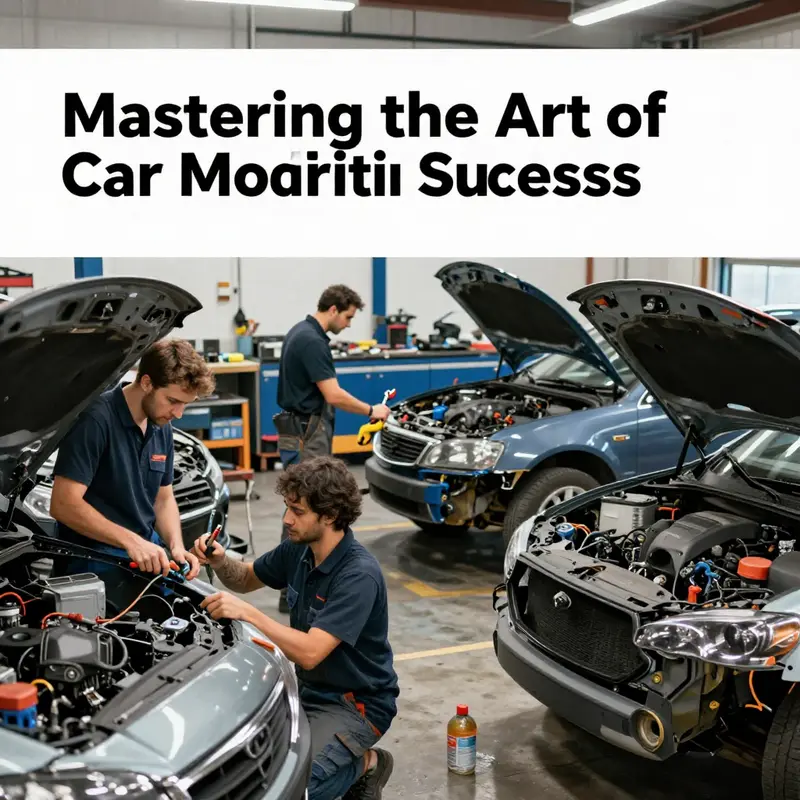
A car modification business does not survive on talent alone; it thrives when talent is organized into a cohesive, compliant, and constantly learning team. The foundation of any successful shop rests on people who can turn concept into safe, reliable, and visually striking vehicles while navigating the legal and procedural demands that govern automotive work. This means assembling more than a group of skilled technicians. It requires a deliberate blend of expertise, professional discipline, and a culture that values safety as highly as aesthetics. In practice, the path to a stellar team starts with clarity about roles, a commitment to ongoing development, and a leadership approach that keeps everyone aligned with a shared mission. As you thread these elements together, you will find that excellence in modification work grows from the quality of your people as much as from your tools and processes.
A core technical lineup should reflect the breadth of work you intend to offer and the constraints of your local regulatory environment. At the heart of the shop, you need mechanical technicians who can handle chassis, suspension, and braking system modifications with precision. These are the builders who translate a concept into robust, roadworthy performance. Equally essential are electrical and electronics engineers or technicians who can install and tune complex audio systems, lighting, and the increasingly sophisticated electronic networks that modern vehicles rely on. The rise of integrated diagnostics, battery management, and digital interfaces means these specialists must be fluent in wiring diagrams, CAN networks, and ECU interactions. When the work touches the body and interior, you’ll want skilled bodywork and upholstery professionals who can execute custom paint, wraps, and ergonomic interior reconfigurations with consistent quality. Think beyond aesthetics: safe ingress and egress, durable fastenings, and materials that perform under heat, vibration, and time.
Beyond the shop floor, design and project management capabilities are indispensable. A designer or technical manager who can use CAD software to draft layouts, simulate space utilization, and check safety compliance brings a forward-looking discipline to every project. This role should also supervise ergonomic considerations, ensuring that the driver’s reach to controls, seating comfort, and overall visibility meet or exceed expected standards. A manager with a background in automotive modification or R&D—ideally holding a bachelor’s degree and several years of hands-on experience—provides the strategic lens that keeps projects on schedule and within regulatory bounds. Their proficiency in software tools and data analysis enables better decision-making across procurement, fabrication, and testing phases.
However, assembling talent is only the first milestone. The credibility of your team hinges on formal qualifications and recognized certifications. Every technician involved in modifications must meet industry-standard training requirements. Mechanics should carry automotive repair certifications, while specialists working with audio systems, lighting, or advanced electronics should pursue certifications in their respective domains. The business, too, signals its commitment to quality by pursuing recognized credentials such as ISO 9001 for quality management and a motor vehicle repair operation permit where applicable. These credentials are more than badges; they are evidence that your processes have been audited and that your team follows consistent, documented procedures. In many jurisdictions, this formalization is what separates a hobbyist garage from a legitimate, scalable enterprise capable of delivering consistent results and managing risk.
A critical, often overlooked factor is the cultivation of a collaborative and respectful culture. Team success depends on clear communication, shared goals, and a working environment that invites curiosity while enforcing accountability. Front-line technicians should feel their input is valued because they are closest to the vehicle and its challenges. Regular briefings that review safety protocols, quality checks, and project milestones help sustain alignment. A culture of continuous learning is not optional; it is a competitive advantage. Encourage attendance at training sessions, participate in webinars, and support cross-disciplinary learning so a chassis specialist understands how an electrical retrofit may affect weight distribution or braking performance. Innovation grows when team members feel safe to propose changes, test hypotheses, and learn from failures without fear of blame.
Leadership plays a pivotal role in shaping this culture. Leaders must blend technical credibility with organizational acumen. They should be able to read project timelines, allocate resources efficiently, and uphold safety and compliance as non-negotiables. A strong team leader coordinates cross-functional work streams, ensures documentation is complete, and maintains a transparent audit trail for every modification. This traceability is not merely bureaucratic; it is central to customer trust and regulatory compliance. Each vehicle’s modification history, the inspection records, and the rationale for design choices should be accessible to the team and, when necessary, to auditors or insurers. A disciplined approach to documentation prevents scope creep, clarifies responsibilities, and makes it possible to reproduce successful builds or diagnose issues without recreating the wheel for every new project.
To build such a team, a structured recruitment and onboarding process is essential. Start with a clear specification for each role, detailing the technical competencies, required certifications, and the soft skills that enable teamwork. For technical roles, establish minimum qualifications and create a pathway for professional development within the shop. Consider partnerships with local technical schools, vocational programs, and universities that can supply apprentices or recent graduates hungry to prove themselves. An effective recruitment strategy also includes a rigorous background check and a practical assessment. A candidate bag of tricks should include a hands-on test, a safety scenario evaluation, and a problem-solving exercise that reveals how they approach the unexpected—a frequent companion to bespoke builds.
Onboarding should do more than introduce safety rules. It should immerse new hires in your shop’s workflow, quality standards, and customer-centric philosophy. Pair newcomers with a mentor for the first three to six months, gradually expanding responsibilities as confidence and competence grow. Early exposure to your standard operating procedures—risk assessment, material selection, measurement practices, and testing protocols—builds consistency from day one. The first projects should emphasize learn-by-doing under close supervision, allowing new team members to internalize your expectations for finish quality, fitment precision, and long-term reliability. As proficiency grows, you can expand autonomy while preserving a robust review process that guards against drift from established standards.
A mature team also benefits from formalized training programs. Ongoing education should address core areas: vehicle dynamics and safety, electrical systems and diagnostics, and the specific software tools used for design, measurement, and calibration. Training must incorporate regulatory awareness, ensuring every modification complies with local, regional, and national requirements. This includes understanding how changes might affect emissions, safety, and insurance coverage. In the absence of a universal, one-size-fits-all approach, the emphasis should be on building a competence ladder that aligns with your service menu. When a technician reaches the level of handling complex modifications, you can grant responsibility for lead roles on projects, supervision of junior staff, and contribution to design reviews.
A crucial decision many shop owners face is the degree of in-house capability versus outsourcing specialized tasks. A tightly integrated team brings speed and consistency; a network of trusted external partners provides access to deeper expertise or cutting-edge capabilities without overburdening the core staff. In practice, you might keep chassis work, electrical integration, and finish painting in-house while engaging certified OEM or industry-recognized specialists for high-risk or highly regulated modifications. The key is to document every collaboration and ensure that external work is integrated into your project timeline, with clear interfaces and accountability. Even when a task is outsourced, your team remains responsible for ensuring the final product meets your quality and safety standards, and for maintaining a complete modification history that documentation can verify.
Compliance and safety are not only about avoiding penalties. They are a competitive differentiator that builds customer confidence. A legally compliant shop signals to customers that their vehicles will meet safety and environmental standards, that warranties will be honored, and that insurance coverage remains valid. This requires a living set of standard operating procedures that reflect changes in regulations and technology. It also means conducting internal audits, performance reviews, and regular safety drills. In practice, this might involve routine checks on torque specs, fastener quality, electrical shielding, and protective measures for thermal and vibration loads. It also means validating that all modifications with potential safety implications—such as suspension changes or powertrain upgrades—undergo appropriate documentation and sign-offs before the vehicle leaves the shop. The better your documentation, the more resilient your business becomes against disputes, recalls, or insurance adjustments.
Team development cannot be disconnected from the customer experience. The best projects are born out of teams that understand not only how to modify a car but how to communicate with clients about the what, why, and how of every decision. Design briefings should translate complex technical choices into clear, transparent explanations for customers. A well-informed client can participate in the process, approve design choices, and understand the trade-offs between performance, comfort, and cost. A strong customer-facing culture also helps manage expectations when projects take longer than anticipated or when regulatory constraints require adjustments to the original plan. The team’s ability to explain, justify, and adapt is as important as the modifications themselves.
In this context, the organization’s branding extends beyond the street appeal of a finished car. The shop’s reputation rests on the reliability and consistency of its people—their qualifications, their adherence to procedures, and their capacity to deliver on promises. When your team operates with a shared language of safety, quality, and integrity, customers feel the difference even before the first test drive. That trust compounds over time as repeat clients return with new ideas and new aspirations, attracted by a proven track record rather than marketing alone. The team’s culture becomes a magnet for talent itself, drawing in apprentices who see the shop as a place to grow and contribute, and attracting more discerning customers who seek carefully engineered, responsibly executed work.
If you want a practical starting point for your own journey, view your early stage as a deliberate investment in people, processes, and partnerships. Begin with a lean, capable core and a plan to scale thoughtfully as demand grows and regulatory clarity improves. Document every decision, keep safety at the center, and cultivate ongoing learning as a core value. The outcome is a shop that can not only deliver outstanding modifications but also adapt to changing end-user needs, technological advances, and evolving standards. For readers pursuing the broader path of launching such a business, the process becomes a matter of building a credible team, then expanding with intention and accountability. You can read more on starting and growing a car modification business here: Starting a car modification business.
Finally, as you expand your team, remember that legitimacy is built step by step. The legal and regulatory framework will vary by country and region, but the underlying principle remains constant: qualified people following clear processes produce predictable, high-quality outcomes. This is not merely about technical prowess; it is about the invisible, day-to-day discipline that turns capability into trust. When customers see and feel that discipline—from the first inquiry to the moment they pick up their finished vehicle—the chance of long-term success rises dramatically. The people you hire become the living embodiment of your brand, and the story you tell others will be written by the quality of their work, their professionalism, and their unwavering commitment to safety and compliance.
As you plan the next steps for your business, keep in mind that the strongest teams are not built overnight. They emerge from deliberate hiring, rigorous onboarding, continuous training, and a culture that treats safety and quality as non-negotiables. You may start with a small, skilled core and a clear, compliant scope of work. As you demonstrate reliability and client satisfaction, you can broaden service offerings, expand the workshop footprint, and deepen your partnerships with OEMs and certified vendors. In this journey, your team is both compass and engine—guiding you toward a sustainable, reputable, and innovative car modification business. For regulatory guidance and licensing considerations, refer to official resources and regulatory bodies in your country, as appropriate, while keeping the global best practices in view. For broader governance context, see the National Development and Reform Commission (NDRC) at https://www.ndrc.gov.cn.
Final thoughts
Establishing a car modification business requires a strategic approach encompassing legal compliance, effective registration, necessary permits, and a competent team. By understanding the legal frameworks and diligently following the processes laid out in this guide, you will create a foundation that not only supports your passion for car customization but also promises sustainable growth and success in an increasingly competitive market. Embrace your entrepreneurial spirit and build a business that makes your automotive dreams a reality.