

Car modifications encompass a world of creativity and technical prowess, allowing automotive enthusiasts and professionals alike to transform vehicles to meet specific needs and preferences. From body modifications that enhance aesthetics to performance upgrades that boost power, understanding what qualifies as a car modification is essential for maximizing your vehicle’s potential. In this guide, we delve into five pivotal chapters: exploring body modifications that redefine style, performance enhancements for exhilarating driving experiences, safety considerations to ensure compliance and reliability, legal implications that guard against potential pitfalls, and the cultural tapestry that binds global car modification communities. Each section is designed to enrich your understanding and inspire your next project, regardless of your expertise level.
The Look You Drive: Decoding Aesthetic Body Modifications in the Car Modification Landscape

A car modification is often described as a toolkit for performance, but much of the conversation centers on look, line, and personal statement. Aesthetics driven body work turns a machine into a moving extension of taste, identity, and mood. They shape not only how a car is seen but how it feels to be seen driving it. The visual language of a car speaks before the engine roars. This chapter focuses on body changes that affect aesthetics and style. They are modifications in the truest sense, even if they do not deliver horsepower or lap time gains. They alter the original factory presentation and are done with intention and care. This is not a guide to turning a daily driver into a race car; it is a closer look at how owners tailor vehicles to reflect personality, values, and social worlds they inhabit. In the broader conversation about what qualifies as a modification, aesthetic body work sits alongside performance tweaks but has its own logic, rules of impact, and considerations about safety and legality.
The most visible changes are to the exterior—parts of the car that meet the eye first. Body kits reframe a vehicle silhouette. Front lips, side skirts, rear diffusers, and spoilers can push a profile toward aggression, sportiness, or sleek elegance. They can affect aerodynamics and stance as well as the look, creating a visual rhythm that feels like a new grammar built from design and taste.
If body kits shape the chassis, color and finish redefine the surface. Paints and wraps offer flexible ways to refresh a car without permanently altering its original paint. Finishes range from solid colors to matte textures, metallic sheens, and color shifting effects. Wraps extend this freedom, enabling dramatic color changes, graphics, or textures while protecting the original skin. The choice between repaint and wrap is as much about timing, risk, and preserving provenance as about durability.
Color and finish variations invite a broader conversation about style. Two tone schemes, contrasting roofs, or restrained accent colors can alter perceived size and shape. Matte finishes can emphasize lines and geometry in ways glossy coatings may not. Lighting as a styling element—accent lighting under the car, halo rings around headlights, or interior illumination—turns the vehicle into a sculpture you experience from multiple angles. The trend toward digital previews helps owners visualize outcomes before committing, reducing the risk of a look that later feels dated.
Beyond color and silhouette, texture and lighting interact with the environment. A car’s glow can reflect mood, weather, and time of day. Lighting enhancements have cultural resonance as well as technical, enabling a storytelling function that resonates with enthusiast communities who share photos, curate feeds, and debate design choices. Personalization acts as a language signaling alignment with a shared aesthetic and technical vocabulary.
The same safety and roadworthiness laws govern aesthetic decisions. Bright underglows must comply with color, placement, brightness, and visibility rules. A spoiler or side skirt must still respect bumper integrity and pedestrian safety. Beauty alone does not earn road legitimacy; it must coexist with responsibility. The craft of aesthetic modification is a balance between creative impulse and engineering obligation to maintain safe operation on public roads.
Practically, aesthetic body work affects resale value and insurance. A well executed factory aligned kit or a high quality wrap can enhance perceived value by signaling meticulous maintenance and modern styling, but extreme changes can complicate resale if they diverge from buyer expectations or require costly changes to return to stock. Insurance considerations often rise when modifications affect risk profiles or coverage options. The guiding principle remains to plan, document, and disclose modifications where required, so expectations stay aligned among owners, insurers, and buyers.
For readers curious about real world examples, the literature and enthusiast press point to a spectrum from subtle upgrades that emphasize clean lines and premium materials to flamboyant schemes designed to captivate at night. Professional shops offering precise, factory aligned body kits and digital paint simulations reflect a mature market that balances artistry and practicality. These services help owners visualize outcomes, refine choices, and reduce the risk of final results that look mismatched.
In closing, aesthetic body modifications occupy a distinct but integrated position within car culture. They foreground the vehicle as self expression, a social instrument, and a curated experience that interacts with the street as a stage. They invite careful consideration of form and function, personal narrative and public safety, and legal boundaries and creative ambition. The latest trends show growing sophistication: designers and owners collaborate through simulations, and shops emphasize alignment with factory aesthetics while pushing boundaries of taste. The line between art and engineering remains porous, and the most compelling aesthetic work respects that boundary while inviting others to see the car as a narrative rather than just a machine.
Power, Precision, and Purpose: Defining Performance Modifications and What Counts as a Car Upgrade

A car modification is not merely a cosmetic spark that scratches an aesthetic itch. It is a purposeful alteration that changes how a vehicle behaves on the road or track. When we talk about performance modifications, the focus is on changes that sharpen power, refine throttle response, improve handling, or alter dynamics in a way that can be felt in corners, straights, and braking zones. This chapter weaves a cohesive understanding of what qualifies as a performance modification, how these upgrades interact with a car’s existing systems, and why the distinction matters for safety, legality, and daily usability. In this sense, performance modifications are not random tinkering. They are deliberate design choices aimed at tailoring a vehicle to meet specific driving demands while balancing reliability and roadworthiness. The distinction between performance and purely cosmetic changes hinges on intention and consequence: performance upgrades affect the engine, drivetrain, suspension, or electronics in ways that alter acceleration, braking, steering feel, or heat management. They demand careful planning and often a coordinated set of supporting upgrades to function safely and predictably over time.
To understand the scope of performance modifications, it helps to start with the core components that drivers typically pursue. Engine upgrades form the heartbeat of performance work. Turbos and superchargers are the most visible and popular routes to add horsepower by increasing the air delivered to the combustion chamber. A turbocharger uses exhaust energy to spin a turbine that compresses intake air, letting the engine burn more fuel efficiently and produce more power. A supercharger, by contrast, is driven directly by the engine and delivers immediate boost, often delivering a more linear and responsive feel across the rev range. These choices are not cosmetic either; they demand compatible fuel systems, cooling capacity, and robust exhaust pathways to avoid heat soak or pressure losses that can undermount the gains. Alongside forced induction, performance camshafts can optimize valve timing to improve airflow at chosen RPM ranges. The goal is to extract more usable power without compromising the engine’s durability or causing detonation, which can damage pistons and bearings over time.
Equally central to performance are intake and exhaust system improvements. Cold air intakes are designed to deliver cooler air to the engine, reducing air density’s negative impact on combustion and potentially squeezing out a few extra ponies. Yet the value of a cold air intake depends on the total air pathway’s quality and the engine’s tuning. A well-designed intake works in concert with an exhaust system that reduces back pressure, enabling the engine to exhale more freely. A louder, more aggressive exhaust note often accompanies these gains, but sound alone is not the measure of a true performance upgrade. The exhaust and intake must be matched to the engine’s fueling strategy to preserve reliability and emission compliance.
The role of engine management cannot be overstated. ECU tuning, sometimes called chip tuning, involves recalibrating the vehicle’s electronic control unit to optimize fuel delivery, ignition timing, boost pressure, and air-fuel ratios. The outcomes can include higher power, better throttle response, and improved efficiency, but only if the tune is developed with the specific hardware and vehicle in mind. A mismatched or poorly executed tune can lead to overheating, accelerated wear, or poor drivability. This is why many enthusiasts pair ECU tuning with supporting upgrades to cooling systems, fuel delivery, and sensors, ensuring the engine can sustain higher performance levels without compromising safety margins.
Another pillar of performance work lies in the transmission and driveline. Short-shift kits reduce the literal travel time of gear changes, delivering a crisper, more engaging shift feel that is especially welcome on track days or spirited back-road runs. High-performance clutches are designed to handle the added torque from power-adding components; without a stronger clutch, the drivetrain may slip under load, reducing power transfer and risking heat buildup. These changes are not merely about acceleration; they influence how quickly the driver can respond to changing driving conditions and how reliably the car transmits power to the wheels under stress. The broader point is that performance upgrades rarely exist in isolation. A turbo upgrade, for instance, commonly requires a reinforced cooling system and a revised fuel strategy to maintain engine integrity and safe operation under higher boost.
Because performance modifications touch the core driving experience, they also invite a set of practical considerations that must be weighed before the first bolt is turned. The car’s daily usability is a central question: will the upgrade tolerate stop-and-go traffic, long road trips, or hot summer days without creating a heat soak problem? How will the car feel at low speeds and in urban traffic, where a turbocharged setup can feel damp or unpredictable if not tuned for light throttle operation? The answers depend on thoughtful engineering, not bravado. It is common for enthusiasts to test new combinations on a dynamometer, breathe through a well-choreographed intake-exhaust-tune loop, and then monitor fuel trims, knock resistance, and turbo or compressor temperatures. This measured approach helps ensure that the extra power does not come at the expense of reliability or daily comfort.
Beyond the mechanical and electronic layers, there is a safety and legality dimension that guides responsible modification. The road is a shared environment with others who rely on predictable vehicle behavior. A higher-performing setup can alter steering feel, weight transfer, and braking dynamics in ways that are unfamiliar to a street driver. Correcting or compensating for these shifts—through upgraded suspension components, brake upgrades, or improved tires—can preserve balance and stop distance. It is equally important to acknowledge the regulatory framework that governs modified vehicles. Emissions rules, noise limits, and inspection standards vary by jurisdiction, and a modification that boosts power or changes exhaust characteristics can trigger compliance issues if not aligned with local laws. The aim is to keep the vehicle both lively and law-abiding, preserving safety for the driver and others on the road.
This broader perspective on performance modifications underscores a guiding principle: modifications should be chosen not solely for peak numbers but for coherent integration. A well-planned upgrade path considers the whole vehicle—engine, cooling, fuel system, electronics, transmission, suspension, and brakes—so that each piece supports the others. A goal to increase horsepower must be matched by better air management, more effective heat dissipation, stronger driveline components, and tires capable of harnessing the extra grip. In this sense, performance modifications are a coordinated program rather than a one-off alteration. They require a clear vision of how the car will be used—daily commuting, weekend canyon carving, or track sessions—and a plan that preserves reliability, maintenance practicality, and safety margins.
For readers curious about the practical costs and broader implications of modifying a financed or leased vehicle, it pays to consider the total ownership equation. The upfront price of hardware is only part of the story. Installation labor, tuning services, dyno sessions, and potential warranty implications all factor into the long-term value and risk profile of any performance program. In many cases, serious performance work benefits from a staged approach. Start with a targeted upgrade that aligns with your primary objective—response, power, or handling—then assess how the car behaves in everyday use before expanding the plan. The incremental approach helps keep the project manageable, preserves residual value, and minimizes the chance of running afoul of lease or financing agreements.
Ultimately, what constitutes a performance modification hinges on intent and consequence. If a change alters how the car accelerates, steers, brakes, or cools itself, and if those changes are implemented with attention to safety and compliance, it fits within the realm of performance modifications. If the modification is strictly aesthetic, it belongs to a different category that emphasizes appearance rather than dynamics. The most successful projects tend to be those that respect both the engineering limits of the vehicle and the realities of road use. They balance excitement with dependability, and they promote a driving experience that is engaging yet predictable. In their best form, performance modifications enhance the car’s natural character rather than redefine it, offering a more confident, controlled, and enjoyable connection between driver and machine.
For readers seeking a practical overview of costs and planning considerations, a deeper dive into the economics of modification can be informative. Consider exploring resources that estimate typical investment ranges and discuss how installation and ongoing maintenance factor into long-term value. This helps ensure that the desire for more performance does not outpace the realities of ownership. As with any meaningful project, the best results come from thoughtful preparation, professional guidance where needed, and a clear understanding of how every piece fits into the overall driving equation. For a deeper technical perspective on the mechanics and rationale behind modern performance mods, see the external reference below. And when you’re weighing the decision, approach it as a crafted balance between performance, safety, legality, and personal satisfaction—an approach that honors the broader question at the heart of this article: what is considered a car modification, and how should a serious enthusiast approach it when speed, control, and reliability all matter?
Internal link for practical costing: how much does car modification cost
External resource for deeper technical insights: https://www.caranddriver.com/features/a59862370/performance-mods-explained/
Safe Guardrails: How Vehicle Safety Standards Shape What Counts as a Car Modification
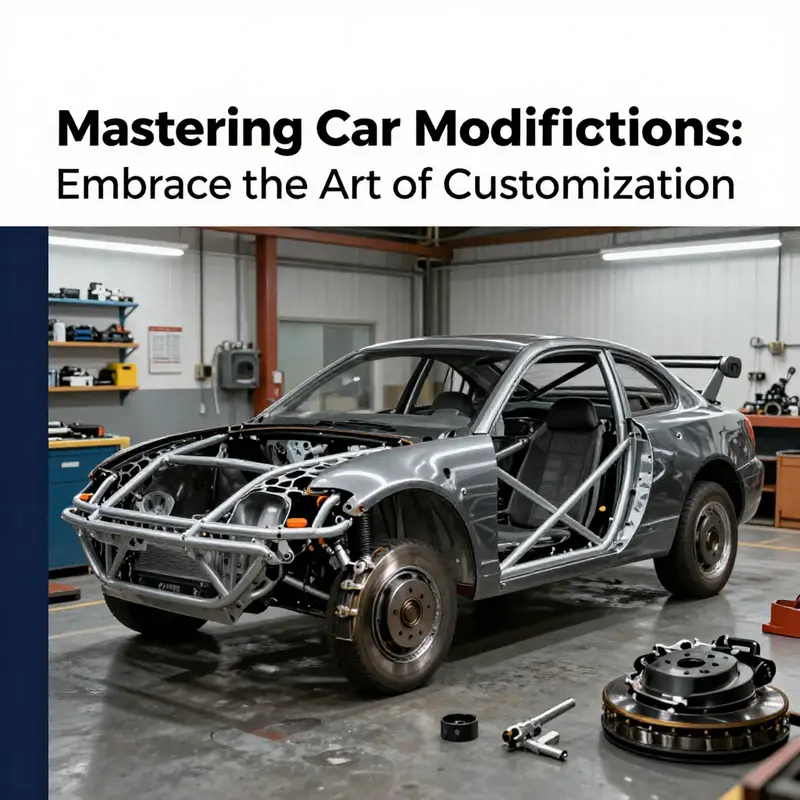
A car modification is more than a stylistic choice or a performance tweak; it is any change to the vehicle’s original design that could influence how safely it drives, crashes, and protects its occupants. In practice, this means that modifications are not simply about making a car look different or faster. They are about reconfiguring systems that govern stability, control, and protection in ways that may alter crash outcomes or performance under variable road and weather conditions. The safest path is to approach modifications with an engineering mindset: changes should preserve or improve safety margins, not erode them. When you consider altering a vehicle, you are weighing the same fundamentals that influenced the car’s factory design, including load paths, energy absorption, and predictable handling across a wide range of conditions. Even small deviations from the factory setup can cascade into changes in how the car performs in a crisis, and those changes matter when regulatory scrutiny or road safety testing enters the equation.
The most direct way to understand what counts as a safety-relevant modification is to map changes to the vehicle’s core safety-critical systems. Structural components that affect the integrity of the passenger cell, braking systems that determine stopping distance, steering mechanisms that translate driver input into precise wheel movement, suspension systems that manage weight transfer and tire contact, and even lighting and visibility features all play roles in how a car behaves in a difficult situation. The exhaust system and engine or drivetrain alterations that influence emissions or thermal management can indirectly affect safety too. For instance, a modification that alters a vehicle’s center of gravity, wheel load distribution, or brake balance can change how quickly the car can be slowed or steered away from a hazard. In this way, a modification is not judged solely on its intended outcome—horsepower, aerodynamics, or aesthetics—but on whether it preserves the predictable, controlled performance that keeps occupants safe in everyday driving and in unexpected events.
The line between a safety-critical modification and a non-critical one is not always obvious. Consider a tire with a different size or load rating: it might improve grip on certain road surfaces, yet it can also alter speedometer accuracy, suspension geometry, and ultimately braking performance. A suspension lift or drop changes ride height and suspension geometry, which can influence steering feel, tire contact with the road, and the car’s behavior during emergency maneuvers. Roof racks modify aerodynamics and load-handling characteristics, and their effect on rollover risk and wind disturbance at speed can be nontrivial. Even changes that seem cosmetic—trim finishes, seat fabrics, or interior lighting—can obscure occupant egress times, visibility, or distraction levels in a way that could affect safety in a crash or during evacuation. The ripple effects of these changes underscore a central theme: safety-sensitive modifications demand careful assessment beyond spectral appeal or horsepower gains.
In many regions, safety compliance is anchored in formal standards that regulate what modifications are permissible and how certified parts must be tested and installed. In the United States, the National Highway Traffic Safety Administration (NHTSA) sets and enforces rules designed to ensure that vehicles meet minimum safety performance throughout their life. In the European Union, organizations such as Euro NCAP provide independent assessment frameworks that emphasize how a vehicle performs in crash tests and how well it protects occupants. Modifications that depart from these recognized standards can render a vehicle non-compliant, trigger penalties, or cause a vehicle to fail mandatory inspections. A concrete example presented by safety authorities concerns airbags: replacing a factory airbag with an aftermarket unit not certified for the specific model may undermine occupant protection in a crash. Such actions demonstrate how a modification intended to improve one aspect of performance can undermine another facet of safety if it bypasses established testing and compatibility requirements.
For drivers who want to navigate modifications responsibly, the practical takeaway is straightforward: consult official guidelines before making changes, verify that components carry appropriate certifications, and ensure professional installation. Parts that carry the approvals of recognized testing organizations—whether in the United States or abroad—provide essential assurance that the modification meets defined safety criteria. Professional installation matters as well; even a certified component can lose its safety benefits if not properly mounted or calibrated. Alignment, torque specifications, wiring integrity, and compatibility with the car’s sensors and safety systems must be checked by technicians who understand the vehicle’s design intent and the role of each subsystem in overall safety performance. This approach aligns with a growing consensus across automotive resources that modification is not merely aesthetic; it is an engineering decision that can alter the vehicle’s risk profile. A practical roadmap for responsible modification can be found in a concise guide dedicated to car modifications, which emphasizes safety-first thinking and regulatory awareness. Car Modifications Guide offers a useful starting point for drivers seeking a balanced view of how to pursue upgrades without compromising safety. Beyond that, a broader understanding comes from reviewing official standards and testing data, and from engaging with qualified professionals who can interpret those standards in the context of a specific vehicle and its intended use.
The risk spectrum widens when considering the long-term implications of modifications on safety compliance. Vehicles that are altered without regard to safety can encounter problems during roadside inspections, insurance audits, or when required to pass annual or periodic safety testing. Insurance considerations, warranty terms, and resale value all intersect with safety and legality. For example, insurers may scrutinize modifications that affect braking or airbag systems, and some warranties may specifically exclude coverage for unapproved changes. In addition, vehicles with noncompliant modifications may fail to meet emissions or crash-test standards, which could lead to penalties or the need to revert to stock configurations to restore compliance. The practical consequence is that a well-planned modification strategy protects not only occupants but also the owner from legal and financial risk, preserving the vehicle’s value and reliability over time.
To ground these considerations in real-world practice, imagine someone who wants to upgrade braking performance. Upgrades like larger rotors, multi-piston calipers, or high-performance brake pads can enhance stopping power, but they must be selected with care to avoid destabilizing brake bias or interfering with ABS and traction control systems. A misfit part or an improper installation can cause inconsistent braking, reduced pedal feel, or unexpected brake fade at critical moments. A tire choice is another common but safety-sensitive area. Switching to tires with different sizes or load capabilities may alter traction, acceleration stability, and braking distances, and can impact the car’s electronic stability programs. In light of these risks, the emphasis is on a disciplined process: identify the safety-critical systems involved, verify compatibility, obtain certified parts, and rely on technicians who understand the interplay between mechanical upgrades and electronic safety systems.
When discussing these topics, it is important to recognize that the goal of modification should often be to enhance safety and reliability rather than merely increasing power or altering appearance. For some drivers, safer handling, improved braking response, or better visibility can be the most meaningful improvements. For others, maintaining compliant lighting, ensuring proper sensor operation, and preserving the integrity of the occupant protection system may take precedence over performance gains. In all cases, a safety-first mindset helps ensure that the vehicle continues to perform predictably in a wide range of conditions, from rain-slicked highways to gravelly backroads. The process requires diligence, patience, and a willingness to engage with professional guidance rather than pursuing changes in a vacuum. This approach also dovetails with the practical knowledge that the safety profile of a modified vehicle is not determined by any single change but by how well all components work together under real-world stresses.
As you weigh modifications, keep in mind that safety is both a legal and an ethical commitment—to the occupants, to other road users, and to the community that depends on reliable traffic enforcement and standardization. A thoughtful plan begins with identifying which systems influence safety most—structural integrity, braking, steering, suspension, lighting, and the integrity of the engine and exhaust system—then assessing how a proposed change might alter those systems. The goal is to preserve the predictable, well-understood behavior that underpins safe driving. If there is any doubt about a modification’s safety implications, the cautious path is to consult the relevant authorities, seek out certified parts, and engage qualified installers who can evaluate the modification in the context of the entire vehicle. For readers seeking more detailed guidance on the regulatory landscape and practical checklists, the road map is clear: prioritize safety compliance, verify certification, and rely on professional expertise.
For those who want to connect safety considerations with broader practical implications, consider exploring resources that translate regulatory language into actionable steps for owners and technicians. A focused overview can help you understand how to balance performance ambitions with legal and safety requirements, ensuring that the car remains not only capable but also dependable on public roads. On the safety front, the official standard and certification framework remains the guiding star. They are the benchmarks against which any modification should be measured, and they are the safeguard that helps keep driving both enjoyable and secure. In their own words, modifications should be evaluated for their impact on safety performance, vehicle stability, and occupant protection. When in doubt, err on the side of conservatism and verification rather than experimentation that could undermine safety. For a direct reference to the regulatory backbone that governs these decisions, consult authoritative sources such as the National Highway Traffic Safety Administration (NHTSA), which maintains comprehensive information on vehicle safety compliance and certification requirements. The path to safe modification is as much about understanding the standards as it is about applying them in real-world scenarios, and it is a path that every responsible vehicle owner should pursue with diligence.
External resource: For official safety standards and compliance guidelines, see the NHTSA resource at the following link: NHTSA – Vehicle Safety Compliance.
Law in the Fine Print: How Vehicle Regulations Define and Constrain Car Modifications

Modifications are not merely a matter of taste or performance; they sit at a crossroads where personal preference meets public safety, environmental responsibility, and administrative oversight. A modification, in the eyes of the law, is any change that shifts a vehicle away from its original factory configuration in a way that could affect structure, performance, safety, or emissions. This broad framing exists because alterations can ripple through the driving experience, influencing how a car handles at speed, how it protects its occupants, and how cleanly it vents spent fuel and exhaust into the environment. When people set out to modify a car, they may be chasing enhanced acceleration, sharper handling, or a more distinctive look. But in jurisdictions around the world, those intentions must align with standards designed to keep roads safe and emissions within permitted bounds. The tension between customization and compliance creates a practical discipline for anyone contemplating changes to a vehicle. In short, the question isnt just what you want to change; it is how the change interacts with the rules that govern the road.
A practical way to approach the topic is to picture the modification spectrum as a continuum that runs from purely cosmetic adjustments to fundamental mechanical changes. On the cosmetic end, one might consider new interior trims or paint schemes. These are often the easiest to register, but even they can fall under regulation if they affect visibility, lighting, or visibility from outside. Moving toward the middle ground, modifications that alter weight distribution, steering feel, or brake response begin to tread more directly on safety and performance standards. It is here that regulators start to scrutinize whether the altered components meet recognized safety criteria and whether the vehicle remains roadworthy after the change. Finally, at the far end of the spectrum lie alterations to core systems that govern how a car moves, such as the engine, intake and exhaust configurations, or suspension geometry. These are the categories most likely to attract formal regulatory attention, because they can influence emissions, crashworthiness, and overall stability.
Safety is the thread that binds most regulatory considerations. Brake systems, steering mechanisms, suspension and alignment, airbags and seatbelts, as well as exterior and interior lighting, are all safety-critical aspects that regulators expect to be maintained within to a defined standard. When a vehicle owner installs aftermarket brake pads, a stiffer coilover kit, or upgraded lighting, the change is not automatically illegal. It is legal only if the components are certified to meet applicable standards and the installation preserves the vehicle’s approved behavior under typical driving conditions. Some jurisdictions require proof of conformity, component certifications, or inspections before the vehicle can be ridden on public roads. In practice, this means that a clever upgrade must be paired with careful verification to avoid ending up with a car that fails a roadside or annual inspection. The emphasis is less on exclusivity of performance than on predictable performance and verifiable safety in real-world conditions.
Emissions and environmental compliance form another major axis of regulation. Modifications that alter how an engine breathes, how exhaust is routed, or how the engine management system is tuned can push a vehicle outside permitted emission limits. The popular notion of a remapped ECU or a modified exhaust might deliver more power or a throatier note, but it carries the risk of failing to meet ambient air quality standards. In many places, institutions responsible for environmental protection and vehicle safety monitor such changes and can impose penalties, require reinstatement to factory condition, or deny vehicle registration if the modification cannot be shown to remain within legal emission boundaries. The regulatory landscape is diverse, with different jurisdictions adopting distinct testing procedures and thresholds for what counts as compliant modifications. When in doubt, owners should check the local rules and seek guidance from the relevant environmental or transportation authority before committing to a change that affects emissions.
Structural and frame alterations occupy a stern position in the regulation of car modifications. Any change that affects the vehicle’s frame, chassis, or fundamental body integrity is treated with heightened scrutiny. Cutting, welding, extending, or significantly altering the structure can compromise crashworthiness and load paths, which regulators view as a potential safety hazard. In many regions, such changes trigger mandatory inspections, require engineering certifications, or demand formal certification from an authorized agency. The bar is intentionally high because a compromised frame can turn a routine accident into a far more dangerous outcome. Even if the cosmetic appearance is appealing, structural modifications must be approached with professional engineering oversight and a clear path to compliance.
Tires and wheels might seem like a minor detail, yet they carry real safety and regulatory weight. Altering tire size, wheel offset, or rim width beyond factory specifications can influence handling, braking, and the accuracy of speed and distance measurements. Jurisdictions frequently impose limits on how far these parameters can be changed before a new inspection or re-registration is needed. The interplay between tire and wheel choices and the vehicle’s suspension geometry means that a seemingly simple upgrade can cascade into changes in steering effort, contact patch behavior, and even ride height. It is not just about fitment; it is about ensuring the overall dynamic envelope of the car remains within tested and approved boundaries.
Cosmetic and performance boundaries are not mutually exclusive, but many regions differentiate between purely aesthetic changes and modifications with potential safety or regulatory consequences. Aesthetics, such as paintwork or body styling, are often permissible provided they do not obstruct visibility, lighting, or the vehicle’s general roadworthiness. However, certain areas place limits on loud exhausts, window tinting, or visibility standards, balancing personal expression with other road users’ safety. The key lesson is that the road-legal status of a modification often hinges on whether the change, even if cosmetic, could affect a driver’s ability to perceive, react, or be seen by others.
Performance tuning and engine modifications occupy a nuanced middle ground. Upgrades like forced induction, engine remapping, or changes to fuel delivery can deliver notable gains in horsepower and torque, but they frequently require additional paperwork or permits. In many places, significant power enhancements may void warranties or affect insurance coverage, even if the modification complies with safety standards. Regions that regulate performance enhancements may require the vehicle to pass specific emissions tests, meet noise limits, or undergo professional inspection after the tune. The regulatory reality is that more ambitious performance work demands a parallel commitment to documentation, testing, and, in some cases, regulatory authorization.
The language of regulation often centers on homologation and type approval. Homologation is the process through which a modification or a type of component is formally approved by a regulatory authority for use on public roads. Type approval, a related concept, is a broader standard that governs a family of vehicles or components under a uniform set of requirements. When a modification is not recognized as homologated or approved under type-approval, its legality becomes uncertain. In the United States, the EPA and NHTSA regulate certain classes of modifications, while in the European Union, the type-approval framework under ECE regulations governs the compliance landscape. The practical effect for owners is clear: if a modification is not clearly approved or exempted, there is a non-trivial risk of non-compliance, enforcement action, or difficulty in insuring and registering the vehicle.
For individuals navigating this terrain, the prudent path is to treat legal compliance as a design constraint from the outset. Before purchasing parts or planning a major change, research the local laws, confirm whether the modification requires inspections or certifications, and verify that the components themselves carry recognized approvals. A useful first step is to document every aspect of the modification, including supplier certifications, installation procedures, and test results if available. Keeping robust records can support registration and insurance considerations, and it provides a clear trail should questions arise about compliance. In many cases, a consultation with a licensed technician or an authorized inspection service can help translate regulatory language into practical steps for installation and verification.
To orient readers toward practical resources, consider consulting the legal car modifications overview for a concise summary of what regulators typically consider when assessing a modification. This overview helps separate what is legally permissible from what is merely decorative or experimental. For a focused discussion on how laws shape decisions about car modifications, see the resource on legal car modifications. It offers a framework for thinking about which changes are likely to draw regulatory scrutiny and which ones tend to slip through with minimal friction. legal car modifications acts as a baseline to anchor your planning and to help align ambition with accountability.
Finally, the broader lesson is that modification culture must coexist with responsibility. The goal is not to prevent people from personalizing their vehicles but to ensure that those personalizations do not undermine safety, emission goals, or roadworthiness. As you weigh potential upgrades, remember that the road carries a shared obligation to protect all users. If a modification alters the vehicle in a way that could affect braking distance, steering response, or the likelihood of a successful crash mitigation, it is prudent to pursue compliant options, obtain any required permits, and secure appropriate approvals before putting the car back on public streets. This mindset keeps the dream of customization in harmony with the practical realities of road use.
For authoritative, jurisdiction-specific guidance, consult the official transportation or environmental authority in your area. In the United States, the National Highway Traffic Safety Administration provides a starting point for understanding what kinds of modifications trigger regulatory action and how to approach compliance. Their guidance and enforcement actions illustrate how the law translates general principles into concrete requirements on the ground. You can explore official resources at https://www.nhtsa.gov, which offers detailed information about safety standards, compliance, and enforcement considerations that are directly relevant to car modifications.
Identity in Motion: How Global Car Cultures Redefine What Counts as a Modification
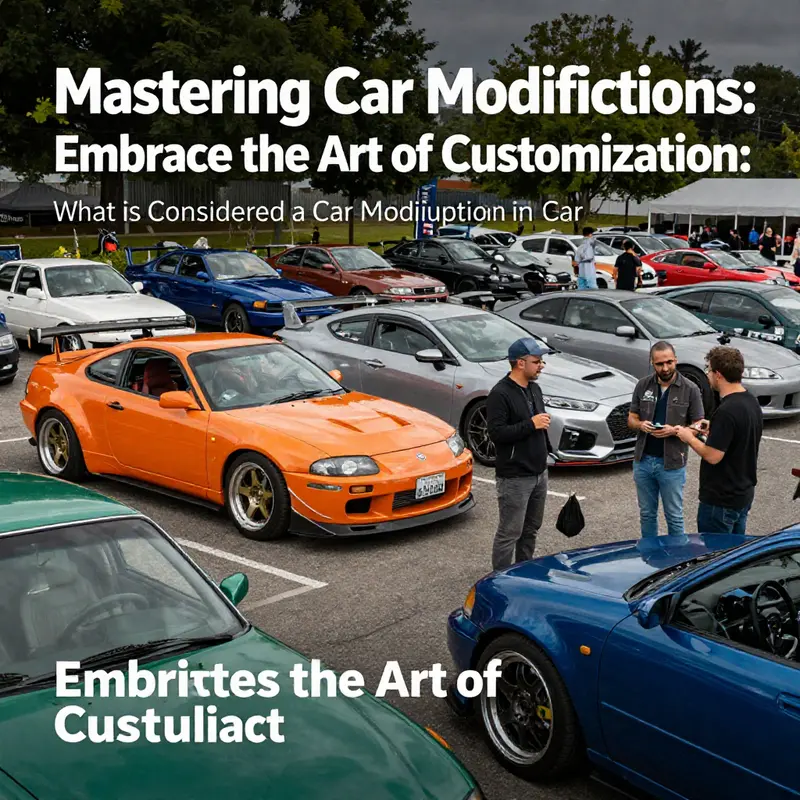
Modifications are not a fixed catalog of parts or a checklist of alterations. They function as living expressions that shift with culture, community, and the everyday demands of driving. In car enthusiast circles, the debate over what constitutes a modification becomes a window into how people relate to machines, technology, and their own sense of self. Across borders, the same car can be read in vastly different ways: as a platform for precision and refinement in one culture, as a stage for power and personality in another, and as a synthesis of both in places where engineering discipline and performance swagger meet. The chapter that follows looks beyond measurements, sounds, and spoilers to explore how culture remaps the boundaries of modification. In doing so, it ties back to the article’s central question: what is considered a car modification, and why does that definition vary so widely from one locale to the next?
In Japan, modification tends to unfold as a careful balancing act between performance and restraint. The emphasis is often on precision engineering and subtle visual enhancements that highlight a vehicle’s form without shouting its intent. Enthusiasts there rarely chase the loudest exhaust note or the most in-your-face body kit; instead, they pursue a harmony between engine refinement, well-tuned handling, and an exterior that communicates craft rather than bravado. Clear lines, smooth aero, and a sense of proportion guide choices—upgrades to intake and exhaust systems, ECU remapping, and selective suspension adjustments are common, but they are integrated into a coherent aesthetic. The result is a car that performs at a high level and presents a quiet confidence to onlookers. This approach mirrors a cultural appreciation for craftsmanship, technological refinement, and the discipline to tune a machine so that every system supports the next rather than competing with it. The Japanese scene frequently elevates the idea that a modification should enhance the driving experience in a measured way, not merely change the exterior, and the community often taxes itself to perfect a build that feels like it belongs to the original design language rather than breaking it. A renowned automotive event in that culture serves as a showcase for how performance upgrades and car styling can coexist in a way that reads as an extension of the factory intent, rather than a rebellious departure from it. In this view, a modification is not a gash on a car’s personality but a careful brushstroke in a larger portrait of engineering elegance.
Across the Atlantic, American car culture leans into spectacle, power, and personal storytelling. Here, modification often asserts itself with bold choices that shout rather than whisper. The focus is frequently on horsepower, raw speed, and a cinematic presence that makes a statement on the street and at show venues. The modifications tended to emphasize larger displacements, aggressive aerodynamics, and exhaust systems designed for maximum sound as much as for performance gains. Visual impact is a core currency; chrome accents, flamboyant grills, oversized spoilers, and dramatic wheel-and-tire packages become tools for identity, signaling a point of view about the owner’s relationship to risk, freedom, and rebellion against factory norms. Yet even within that outward bravado, there exists a deep, complex conversation about how these changes affect daily driving, reliability, and longevity. Enthusiasts often balance the desire for drama with the practicalities of maintenance, fuel economy, and road legality. In a culture that thrives on public expression, a modification becomes a narrative device—an ongoing tale about who the owner is, what they value, and how they want their car to speak in a crowded, loud, and fast world. It is no accident that major gatherings in this milieu are designed as stages for ideas, engineering prowess, and the drama of transformation, where a vehicle’s new capabilities are judged as much by their presence as by their performance data.
In Europe, the conversation about modifications threads engineering ethos with a respect for the original design language. German and Italian sensibilities tend to privilege sophistication, efficiency, and seamless integration. Modifications there are often measured at the meeting point of performance and elegance: refined suspension tuning, aerodynamic improvements that slip into the bodywork rather than fight it, and ECU work that unlocks capability without mutating the car’s character. The aim is not to clamp a new personality onto a vehicle but to enhance its existing strengths in a way that preserves its essence. A European approach favors modifications that feel purposeful, not ornamental; the car remains a coherent vehicle of high engineering quality where every upgrade reads as a natural extension of the factory’s intent. In this culture, the conversation about performance becomes a dialogue with the car’s architecture. You improve dynamics by respecting constraints—the chassis dynamics, the weight distribution, the tires’ grip—and you seek to elevate the entire system in harmony, rather than to overwhelm one element for show. The result is a refined, confident stance that can blur into a sense of understated power. The cultural frame here is not to reject the factory but to refine it, to refine what was already there so that it functions more gracefully on the road and, in some cases, on the track.
Despite the divergent aesthetics and priorities, a common thread joins these communities: modifications are not merely physical changes. They are acts of identity, craft, and conversation, through which owners reveal what matters to them and how they see their place within a broader automotive culture. The act of modifying a car becomes a form of storytelling—each choice a sentence, each upgrade a paragraph that recasts the vehicle’s biography. This perspective reframes the definition of modification itself. It is less about a rigid list of components and more about shaping a car’s purpose, behavior, and meaning in a way that reflects the owner’s values and the limits or freedoms of the environment in which the vehicle operates. In that sense, what counts as a modification is inseparable from where one lives and which rules govern the road. If legality, safety, and environmental considerations shape what is possible, culture shapes what is desirable, and the two forces together determine what modifications are even worth pursuing.
The social dimensions of modification extend beyond the garage and into the way communities share knowledge, celebrate craft, and challenge norms. Across cultures, enthusiasts learn from one another through informal mentorships, online forums, and public exhibitions that showcase both the science and the artistry of tuning. The sharing of tacit knowledge—how to balance a tune with a suspension, how to select the right tire for a given track condition, how to shape an exterior without compromising aerodynamics—creates a kind of apprenticeship model that transcends language and borders. In this ecosystem, a modification earns credibility from technical competence as much as from personal expression. It’s common to hear a build discussed not only in terms of horsepower or cornering grip but in the language of reliability, maintainability, and integration with other car systems. The social credit system that emerges from such exchanges rewards thoughtful, well-executed work and discourages reckless experimentation that threatens safety or legality. This communal dimension helps explain why the category of modification remains dynamic and evolving: as technologies evolve and as laws shift, communities negotiate new boundaries between what is technically feasible and what is publicly permissible.
In the end, a universal truth persists: to modify a car is to participate in a broader dialogue about how people connect with machines, with their own risk tolerance, and with the norms of their communities. The cultural lens—whether it emphasizes restraint and refinement, flamboyant power and personality, or a synthesis of engineering precision and design language—shapes not only what gets changed but how those changes are perceived, judged, and valued. For someone contemplating modifications, this perspective invites humility as well as ambition: humility in recognizing the reach of local rules and responsibilities, and ambition in pursuing improvements that honor the car’s core identity while expanding its capabilities. It is a reminder that the road to modification is as much a journey of cultural exchange as it is a journey of mechanical upgrade.
To connect these ideas to practical concerns, consider how knowledge about the legal and safety implications of modifications can guide decisions across cultures. A user contemplating a new intake, exhaust, or suspension upgrade should weigh not only potential performance gains but also how the changes will be perceived within their driving community, how they will affect ride quality, and how insurers or authorities might respond. A practical, culture-informed approach to modification aligns with responsible driving: it values reliability, ensures safety, and respects the boundaries set by the road. For readers seeking a broader understanding of how modifications intersect with rules and risk, a concise guide on legal car modifications offers a clear framework and a path to responsible customization. legal-car-modifications
External reference: For additional context on conceptualizing modification as a discipline within the automotive world, see the overview of car modification in industry coverage. https://www.motortrend.com/cars/what-is-car-modification/
Final thoughts
In the realm of automotive enhancement, understanding what constitutes a car modification is crucial. Each category discussed—from body and performance modifications to safety, legal implications, and cultural perspectives—highlights the multifaceted nature of car customization. As you embark on your journey to modify your vehicle, remember the importance of safety, legality, and personal expression, ensuring every modification aligns with your vision while adhering to the necessary regulations. The world of car modifications awaits your creativity and passion, urging you to pick up your tools and start crafting your unique automotive legacy.