
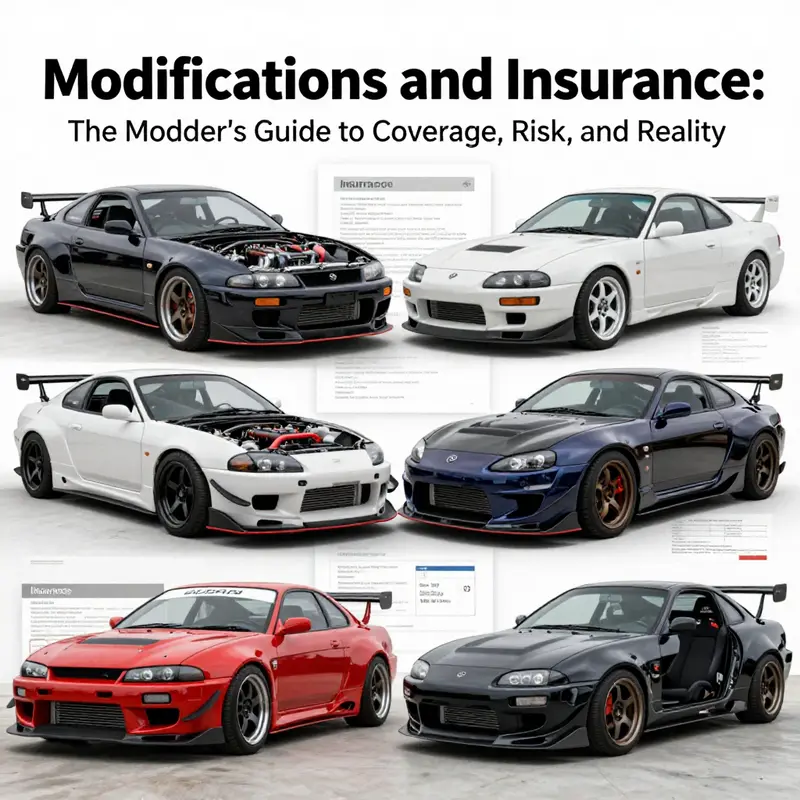
Modifying a car is an act of passion and engineering, but it is also a conversation with your insurance policy. For hobbyists and professionals alike, every bolt‑on, reprogram, or trim of carbon fiber shifts the risk equation in the eyes of underwriters. The challenge is to balance performance dreams with the reality of coverage possibilities. This guide dives into the four core modification domains that most influence insurance decisions: Performance & Power, Suspension & Handling, Exterior & Aesthetic, and Interior & Safety‑Critical changes. We’ll explain why each change matters, what insurers typically do in response, and practical steps to stay protected without killing your build’s vibe. First, performance and power upgrades sit at the top of the risk ladder. Engine tuning, turbo or supercharger installations, and ECU remaps multiply horsepower and speed, and they raise safety and liability concerns. If declared and certified, some markets will still allow coverage with endorsements; if not reported, coverage can be denied entirely or premium costs can skyrocket. Second, suspension and handling mods alter how the car behaves on the road. Lowered ride heights, stiffer springs, or adaptive dampers can degrade braking or stability, especially in worst‑case scenarios. Insurers scrutinize these changes and may require engineering endorsements or even restrictions on usage. Third, exterior and aesthetic mods—wheels, body kits, paint, decals—vary in risk. They can affect dynamic performance or visibility and may impact coverage if they aren’t manufacturer‑approved or compliant with local rules. Finally, interior and safety‑critical changes strike at occupant protection. Racing seats, harnesses, or altered airbags can compromise restraint systems and trigger claim denials after a crash. Across all categories, illegality or unapproved modifications almost always void coverage. Across these chapters, the theme remains: proactive disclosure, proper certification, and strategic coverage choices help modders keep the dream alive while protecting the policy you rely on. Whether you’re a weekend hobbyist, a pro shop, a classic restoration buff, or a global parts supplier, the goal is to align your build with clear insurance semantics and practical risk management.
Power, Policy, and Probability: How High-Impact Performance Modifications Reshape Car Insurance
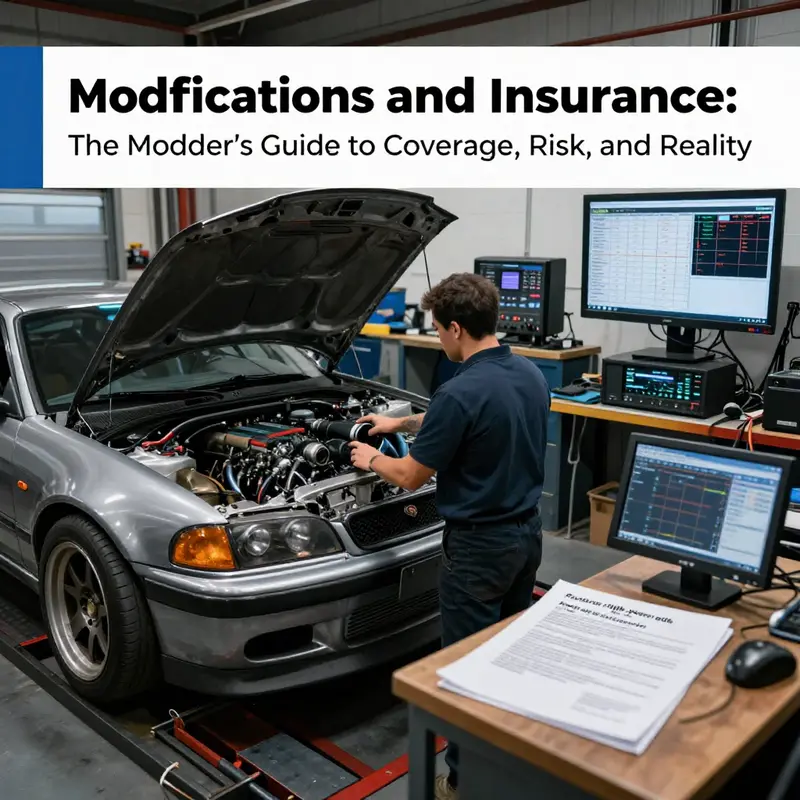
Every driver who contemplates lifting a car’s potential into higher speeds should be aware of the way that decision ripples through insurance. Performance and power modifications do more than change how a car feels to drive; they change the vehicle’s risk profile in ways that many insurers treat as significant, sometimes even intolerable. The basic logic is straightforward: faster acceleration, sharper handling, and more aggressive dynamics translate to higher odds of loss, and when a loss occurs, a crash tends to be more expensive. When you alter a factory car into a more powerful or more capable machine, you are altering the envelope of safety and predictability that underpins most auto policies. That shift is not inherently bad, but it does require careful navigation of disclosure, coverage options, and price. Without clear communication and appropriate endorsements, an enthusiastic upgrade can quietly hollow out the protections you expect and, in worst cases, leave you with denial of a claim after an collision that falls outside the policy’s original assumptions. In this sense, performance and power upgrades sit at the top of the list for insurance impact because they touch the core dimensions insurers rely on: speed, control, and the ability to absorb the financial consequences of a mishap.
From an insurer’s viewpoint, the biggest changes come from upgrades that either push the car well beyond its factory performance or alter how the car behaves in critical situations. Turbochargers and superchargers, remapped ECUs, and intercoolers are not mere accessories; they are systems that increase power output, alter torque delivery, and shift the vehicle’s acceleration curve. When power increases, so does the likelihood of high-speed incidents, particularly in real-world driving where limits and conditions vary. Engine tuning and fuel system upgrades can push a car into ranges where manufacturers didn’t design safety systems to operate with the same margins. The same logic applies to upgrades that affect how the car responds under stress: suspension components, handling upgrades, and even upgraded wheels or brakes can alter braking distances, cornering behavior, and stability control engagement. If a car becomes more capable of fast cornering, the risk that a driver will push it beyond what is prudent also rises. The bottom line is simple: more power and altered handling generally equate to higher risk, and that risk is a core determinant of insurance pricing and coverage.
Yet the story is not only about speed. The way power and handling are delivered can expose new failure modes. A high-performance turbo system or a remapped engine might produce unexpected heat, fuel delivery quirks, or electrical strain that a standard policy does not anticipate. Installations that change the weight distribution of the vehicle—from upgraded brakes and larger wheels to track-oriented aero components—can influence the dynamics of stability in ways that insurers worry about during both normal driving and emergency maneuvers. Because many of these changes occur in the realm of safety-critical systems, insurers frequently require specific documentation showing that the modifications were performed by qualified technicians, with parts certified for road use and installed in a way that preserves or improves reliability. Even when the upgrades are technically legal, the absence of professional installation or proper certification can cascade into coverage complications later on.
The range of high-impact performance upgrades is broad, and the consequences for insurance are not uniform across all of them. Engine and powertrain enhancements—turbochargers, superchargers, engine tunes, and remaps—sit at the most consequential end of the spectrum. They directly alter the core thrust and acceleration of the vehicle, and in many markets they trigger a reclassification of the car’s risk tier. Induction and exhaust improvements, including performance exhausts and cold-air intakes, can also influence the car’s operating efficiency and sound, which some insurers interpret as a proxy for altered driving behavior. When speed limits and traffic dynamics collision with enhanced capability, a small misjudgment can become a costly event. Handling and suspension upgrades, such as stiffer springs and lowered ride height, add another layer of risk. While these changes can improve track-day performance or daily drivability, they may compromise stability or braking in emergency scenarios if not correctly matched to tires, brake components, and alignment.
The broader category of high-impact mods also includes upgrades to wheels and brakes. Larger or differently engineered wheels can alter unsprung mass, brake cooling, and steering responses, sometimes triggering warranty or liability concerns if a system is pushed beyond what the OEM intended. In some cases, insurers will scrutinize wheel and tire upgrades for compatibility with stability control and anti-skid systems. Add-on aero features or lightweight materials that change the car’s aerodynamics can shift handling characteristics at the very speeds where most accidents occur. Even modifications that seem cosmetic or subtle can influence a policy when they affect manufacturer-approved safety systems or contact patch dynamics. The important point is that insurers look past the looks and into the behavior of the vehicle under real-world loads and conditions.
All of this translates into practical consequences for your policy. Cars with performance upgrades are frequently categorized as higher risk, and premiums can rise accordingly. In many cases, the price difference is not a minor adjustment but a meaningful step up that reflects the new cost to repair or replace the vehicle, plus the likelihood that the vehicle will be involved in more severe incidents at higher speeds. Some policies may require a separate endorsement, rider, or even a dedicated modified-vehicle policy with terms that cap or restrict certain uses, such as track driving or competitive events. Coverage gaps are another real concern. A standard auto policy might not automatically cover parts, labor, or the valuation of the modified components themselves, leaving the owner exposed if a component fails or is damaged in a claim. That can be especially problematic if a modification is damaged in a crash or if a part is damaged during a collision where the upgrade contributed to the accident.
Disclosure is a critical thread in this narrative. Insurers typically require you to disclose any modification within a defined window—often within 10 days or on the policy’s next renewal. The logic is simple: a disclosed modification allows the underwriter to reassess risk, adjust the premium, and ensure the coverage aligns with the car’s altered risk profile. Failing to disclose can void coverage, lead to denial of a claim, or even result in policy cancellation in some jurisdictions. Given the complexity of performance enhancements, most markets also demand certification or proof that parts meet safety and emissions standards and that installation was performed by a qualified professional. In the United Kingdom this might mean certification from a recognized body and adherence to local modification regulations; in other regions, equivalent standards apply. The overarching principle remains: openness about what has been changed is the surest path to preserving coverage and avoiding surprises after an claim.
For drivers who want to pursue this kind of modification while maintaining sensible insurance, there are practical truths to guide decision-making. First, engage in proactive disclosure. When you purchase or install a performance upgrade, compile a detailed dossier: the exact make and model of the component, part numbers, installation date, and who performed the work. Documentation matters: keep invoices, receipts, and any professional appraisal of the vehicle’s value with modifications. This record not only clarifies what needs to be covered but also helps when you negotiate terms with the insurer or when a claim includes labor and parts for the upgrade. Second, seek appropriate endorsements or a specialized policy that explicitly covers modified vehicles. Some insurers offer riders that enumerate every modification and specify what is covered, including aftermarket parts, labor, and potential depreciation. Third, shop around and compare. Insurance costs for modified cars can vary widely by insurer, region, and the precise nature of the modifications. Don’t settle for the first quote; seek quotes that spell out coverage limits, exclusions, and the treatment of the modified components. Fourth, consider risk-management practices. Ensure that high-risk upgrades are installed by reputable technicians, that you use quality parts, and that maintenance keeps the car within the safety envelope envisioned by the manufacturer and the installer. If a device is known to alter braking performance or steering feel, verify that tires, alignment, and brake systems are calibrated to accommodate the new dynamics.
There is a broader logic behind all these steps. Modifications are not inherently a problem; they simply require a different kind of risk calculus. A car that is more powerful or more capable can be a joy to drive and a capable daily performer, but it also demands a more rigorous approach to insurance. The key is to treat the process as a collaborative exercise with the insurer rather than a risk to be hidden. Be prepared to discuss driving patterns, usage, and storage conditions, such as whether the vehicle is used primarily for commuting, weekend driving, or occasional track days. Insurers will want to know if the car is kept in a locked garage, the typical miles traveled per year, and whether the vehicle is allowed on public roads for only certain events. Being honest about usage helps ensure there are no mismatches between actual risk and policy coverage.
In addition to the practical steps above, many drivers find it valuable to consider the broader policy implications. Some providers offer flexible coverage models for modified cars, including agreed-value policies that fix a valuation for the car including its upgrades. Others require explicit limits on certain uses or mileage caps to manage risk while offering more favorable terms than a standard policy might provide. The important takeaway is that there is a spectrum of options, and the right choice depends on how aggressively you’ve upgraded, how you drive, and how much risk you’re willing to carry in exchange for the pleasure of the modifications. When framed this way, the decision to modify becomes not just a mechanical choice but a strategic one that blends passion with prudent risk management.
If you’re exploring the path of modification and want to understand how it intersects with insurance more concretely, there is practical guidance available through dedicated resources that address modified car coverage. For a concise overview focused on the insurance implications of modifications and a comparison of potential coverage options, see the article on insurance for modified cars. insurance for modified cars.
As this chapter closes, the connective thread to the next topic becomes clear. Performance upgrades foreground risk assessment and financial planning in a way that few other modifications do. Yet other categories—ranging from suspension tuning to cosmetic alterations, and from interior changes to legal and regulatory considerations—carry their own distinct implications. Taken together, they illustrate that modifications are not a single risk but a landscape of scenarios that insurers evaluate with a mix of engineering judgment and actuarial probability. The best path through this landscape is to approach modification as a project with a plan: document meticulously, insure appropriately, and drive with a clear understanding of how your choices affect both safety and coverage. External perspective from safety authorities and insurance specialists underscores the shared goal: enabling enthusiasts to enjoy their vehicles while maintaining reliable protection when the unexpected happens.
External resource: https://www.nhtsa.gov/vehicle-safety
Suspension and Handling Modifications: How Ride Tuning Rewrites Insurance Risk and Claim Realities
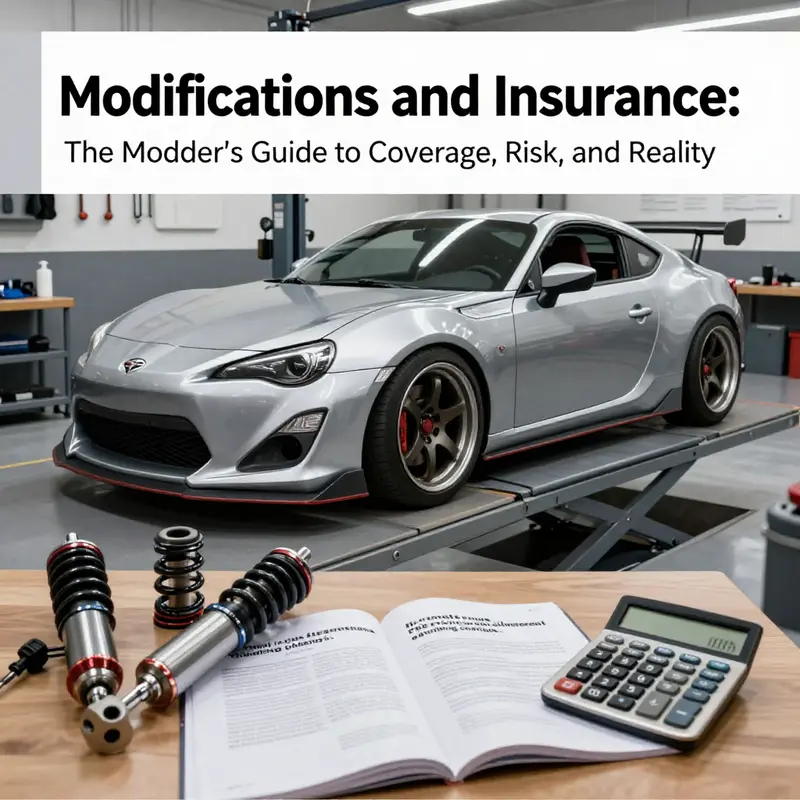
Suspension and handling modifications sit at the crossroads of driving pleasure and risk assessment. They are not merely about making a car look or feel more aggressive; they change how a vehicle responds to road surfaces, weather, and driver input. In practical terms, lowering a chassis, fitting stiffer springs, or upgrading shocks alters weight transfer, tire loading, and the balance between grip and compliance. Those changes, while appealing to enthusiasts and arguably improving certain performance metrics, introduce new variables into the insurer’s model of risk. The result is an underwriting conversation that can shift premiums, endorsements, or even coverage availability, depending on how the changes align with safety, legality, and the vehicle’s overall design intent.
From the insurer’s point of view, suspension and handling upgrades are flags that the car might perform differently in scenarios that courts and crash data judge as risky. When a car enters a corner, the dynamics of grip, inertia, and control are influenced by ride height, spring rate, and damping. Lower ride height may improve aerodynamics and cornering stiffness in some contexts, but it can also reduce suspension travel and increase the likelihood that a sharp impact with a pothole or speed bump translates into a loss of control or a misalignment issue. Stiffer springs and performance shocks can sharpen turn-in and reduce squat under braking, yet they tend to transmit more road irregularities to the occupants and can destabilize the car on uneven pavement or in the presence of water, ice, or gravel. Insurers view such characteristics as potential precursors to higher-speed handling errors, late braking, or an unpredictable trajectory in a panic maneuver. Even if a driver adapts their behavior, the vehicle’s base dynamics have shifted, and that shift is part of what underwriters quantify when they set a price or decide whether to provide coverage at all.
A central reason insurers focus on suspension and handling tweaks is the clear link between these modifications and accident severity. In many cases, improvements in cornering speed or steering response come with the tradeoff of harsher ride quality and reduced crash-avoidance margins on compromised surfaces. When a car is more capable in dry, controlled conditions, it can also tempt drivers into faster decisions or late cornering in wet or slippery conditions. The same modifications that deliver a sportier feel can magnify the consequences of a misjudged braking point, an abrupt steering input, or a tire that’s been degraded by altered load paths. The net effect is a shift in risk profile rather than a straightforward one-to-one improvement in safety, and underwriting teams must account for that nuance as part of the policy price and terms.
Beyond the dynamics on the road, insurers also weigh how suspension changes influence other risk dimensions. Vehicles with modified suspension sometimes attract more attention from thieves, especially when the changes involve visible components or wheels that are less common on the street. While a theft spike might not translate into a higher likelihood of collision, it does affect the overall risk the carrier assumes when underwriting a policy. Manufacturers certify the safety and structural integrity of a stock system; when suspension components are altered, the certainty diminishes. In some cases, the modification can interfere with the car’s electronic control systems, such as stability control, anti-lock braking, or adaptive damping algorithms. If nonstandard parts interfere with safety systems in a way that the insurer deems to increase crash risk or hinder post-accident safety, the coverage outcome can change—ranging from a higher premium to an endorsement requirement or even a denial in extreme cases.
The decision framework used by insurers is rarely black and white. Many providers operate with a menu of options that can be layered atop the base policy. The most common route is to require disclosure of any suspension work and to price the risk accordingly. In some cases, an endorsement or rider is necessary to insure the modified parts or to acknowledge that the vehicle’s handling has changed in a way that could affect premium calculation. For example, a policy might incorporate an added equipment endorsement that explicitly covers aftermarket suspension components and allows for claims related to those parts. In other situations, the underwriter may simply adjust the base premium to reflect the elevated risk profile, reflecting the increased likelihood of higher claim severity or frequency based on the altered dynamics.
Disclosures matter profoundly. The absence of timely and accurate notification can create serious downstream problems. A policy is a contract, and many auto insurance terms require you to inform the insurer of any material modification within a specified window—often within 10 days of installation. Failure to disclose can void coverage, leaving a claim denial as a possible outcome even if the accident is unrelated to the modification. This rule ensures that the insurer’s risk assessment reflects reality and discourages silent alterations that could distort pricing and risk pooling. It also underscores a broader principle: modifications that affect safety or legality are the ones most likely to trigger policy adjustments.
Legal compliance and safety certification play a significant role too. In some jurisdictions, certain suspension modifications may require inspection, certification, or alignment with manufacturer tolerances and road-legal standards. Insurers may look for evidence that the work has been performed by qualified technicians and that the results meet relevant safety and regulatory requirements. When a modification carries a higher likelihood of wear, component failure, or improper operation, the risk assessment escalates. In these cases, the insurer might request documentation showing proper installation, alignment, and ongoing maintenance schedules. If such documentation is lacking or if the modification fails to meet recognized safety criteria, the policy could be more expensive or, in rare circumstances, unavailable.
The literature on vehicle modifications supports these observations. A study highlighted by the Insurance Information Institute notes that vehicles with aftermarket performance upgrades—including suspension changes—are statistically more likely to be involved in accidents than stock models. That finding does not indict every suspension tweak, but it reinforces the reality that risk dynamics shift when performance parts alter a car’s behavior. This underpins the cautious approach many insurers take toward evaluating suspension work and the ways they price or condition coverage.
From a practical standpoint, drivers who are contemplating suspension enhancements should approach the process with a clear plan that minimizes the insurance friction. First, engage in open dialogue with your insurer before purchasing parts or scheduling installation. Ask which elements of the modification are allowed, whether an endorsement is required, and how the modification could affect your premium or deductibles. If possible, obtain a written confirmation of the insurer’s position before committing to the work. Second, use professional, properly documented installation. A certified technician or shop can provide parts lists, installation records, torque specifications, and alignment data. These documents become valuable when the time comes to verify that the modification was executed safely and in accordance with regulatory and safety standards.
Third, assemble comprehensive maintenance records after installation. Regular alignment checks, tire monitoring, and suspension component inspections help demonstrate that you are actively managing the risk associated with the modification. Keeping the stock components in good condition and readily available can also smooth things at claim time, should you ever need to revert to stock configuration or explain how the car behaved after installation. Fourth, consider the total cost picture. A suspension upgrade can alter not just premiums but the cost and ease of claims processing. If the modification complicates repair options after an accident, you may encounter longer repair times, possible disputes over which parts were damaged, and questions about whether the nonstock parts were appropriate for use in your vehicle. These factors can influence the total cost of ownership beyond the sticker price of the parts themselves.
For readers seeking practical steps and a policy-centric checklist, there is value in seeing how other drivers manage this terrain. In particular, the broader guidance on insuring modified cars emphasizes the importance of transparency, documentation, and the right endorsements. Insurance decisions hinge on a clear, well-documented narrative: what was changed, how it was installed, who certified it, and how it was maintained after installation. A disciplined approach helps avoid surprises when a claim is filed and keeps the focus on safe, responsible driving rather than on coverage disputes.
If you are weighing suspension work against your insurance objectives, consider the following synthesis. The sportier the modification, the more likely it is to affect premiums or coverage terms. The more visible and drastic the change, the greater the chance the insurer will seek clarity and may require an endorsement. A well-documented path—professional installation, certification where required, and ongoing maintenance—can reduce friction, protect your coverage, and help you balance the thrill of improved handling with the realities of risk management. In short, suspension and handling tweaks can deliver enjoyable performance gains, but they also invite a more rigorous dialogue with your insurer about how risk is assessed and priced.
For readers who want a practical, policy-oriented viewpoint on insuring modified cars, a focused resource on this topic offers actionable steps and considerations. Insurance for Modified Cars provides guidance on how to approach disclosures, endorsements, and documentation to minimize surprises in the event of a claim. You can explore these practical steps to align your modification plans with your coverage needs and financial priorities.
External reference for further reading: https://www.iib.org/insurance-information/automobile-insurance/how-vehicle-modifications-affect-insurance/
Internal resource to aid planning and risk awareness:
Chapter 3: The Look That Matters—How Exterior and Aesthetic Modifications Shape Car Insurance
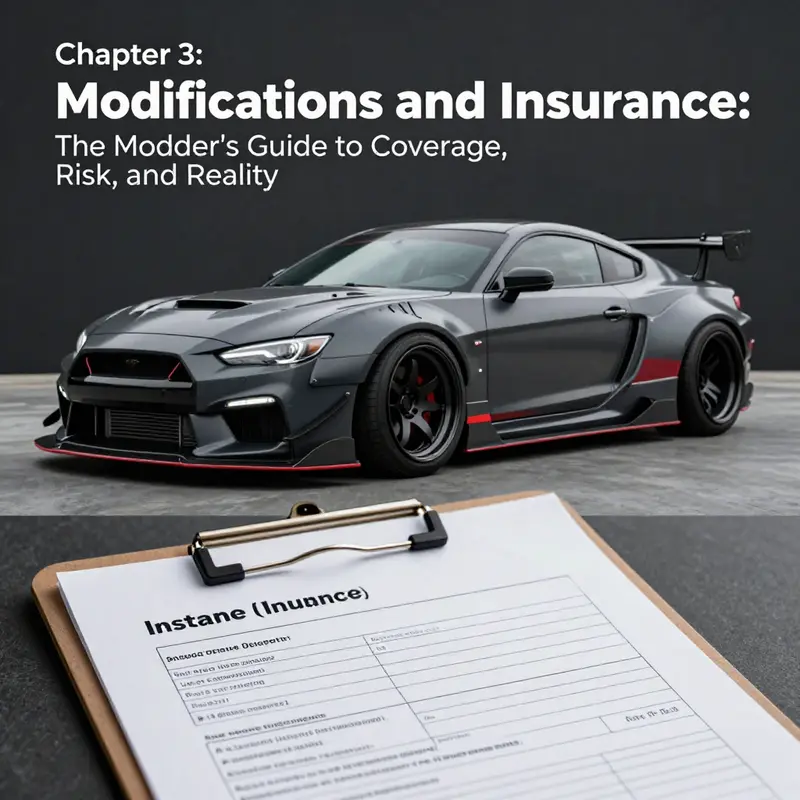
Exterior and aesthetic modifications often start as a hobby or a desire to stand out. They can be celebrated in car shows and on social feeds, but from an insurer’s view these changes can reshape risk. The outside of the car is a key focus for coverage terms, because it can influence theft appeal, repair costs, and how a vehicle behaves in a crash. While chrome and carbon fiber are often seen as personal style, insurers read them as risk signals that interact with the car’s age, history, and overall risk profile.
Insurers consider two broad effects: how the modification might affect performance or safety, and how it might affect exposure to loss. A high‑performance body kit, for example, can modify aerodynamics and weight distribution and—even if the change is cosmetic—alter how the car handles emergencies. If a modification changes risk, premiums can rise, and certain modifications may be excluded unless properly disclosed.
A practical path is disclosure and documentation. Many policies require you to tell the insurer about modifications before or soon after installation. Keeping installation receipts, photos, serial numbers, and safety certifications helps a claims handler understand the scope of changes. Some insurers offer endorsements or add‑on coverage for exterior upgrades, such as security devices or high‑value wheels, which can help protect against gaps in coverage.
Because insurers differ, shopping around is prudent. Some providers treat a given modification as minor, others see it as a major risk adjustment. Consider obtaining written confirmations about premium impact, coverage scope, and eligibility for discounts or endorsements. If a modification is not supported by the policy, you may be offered a separate modified‑car policy or the option to revert to stock configuration for the policy’s sake.
In all cases, the objective is predictable, meaningful coverage. With careful disclosure, documentation, and alignment with policy terms, exterior upgrades can be managed as part of a broader risk‑management strategy rather than as a surprise at claim time.
Interior and Safety-Critical Modifications: How They Reshape Your Car Insurance
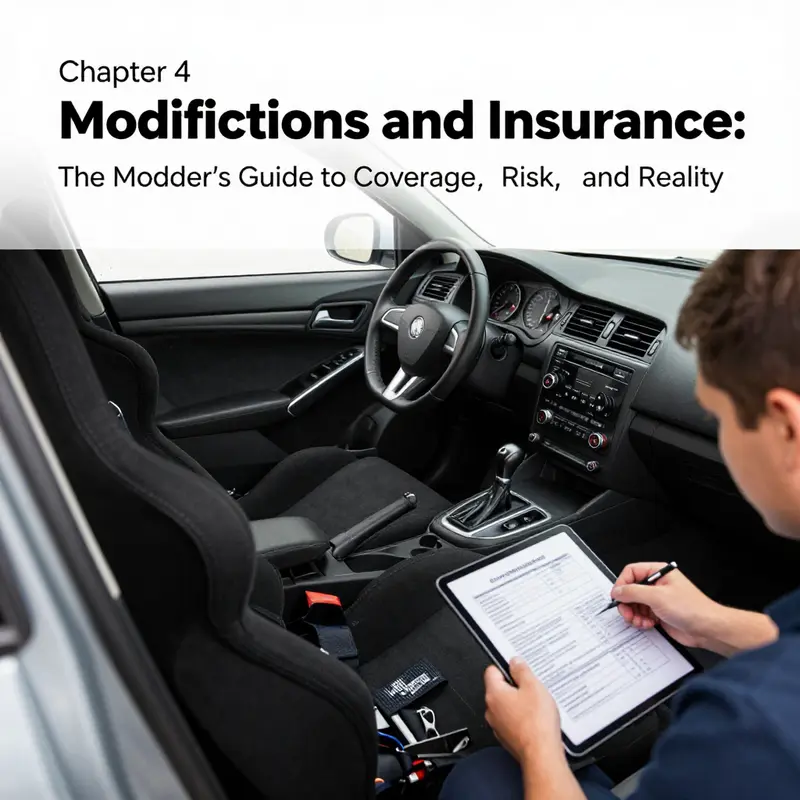
Interior and safety-critical components of a car are often the last things owners think about when personalizing a vehicle. Yet insurers treat them as a frontline indicator of risk because these elements determine how a car protects occupants during a crash and how reliably safety features function over time. The changes you make inside the cabin can ripple through how coverage is assessed, how much you pay, and whether a claim is honored after an incident. This chapter explores interior and safety-critical modifications in a way that connects to the risk calculus used by insurers, highlighting why disclosure, documentation, and professional installation matter as much as the modifications themselves.
The seat sits at the heart of occupant safety. Replacing factory seats with aftermarket racing buckets or altering the seat frame may seem like a cosmetic or ergonomic tweak, but it can shift the entire dynamics of a crash. The seat anchors, mounting points, and even the seat’s angle play a role in how the belt and airbag deploy in a collision. If the seat interferes with airbag timing or belt routing, the occupant’s restraint can be compromised. Insurers view this as a safety defect rather than a luxury upgrade, because a failure in the restraint system changes the risk profile of every crash in which the vehicle is involved. This is not just theoretical: in practice, many claims are scrutinized when seating modifications are found to alter the seating position, airbag geometry, or belt attachment points. To mitigate risk, insurers typically require that any interior seating modification be installed by a qualified professional and conform to current safety standards. Beyond safety, the interior still matters for valuation. High-end upholstery and premium seating can be treated as added value if properly documented, but unreported enhancements may be treated as gaps in coverage, with reimbursements limited to original equipment value rather than the upgraded cost.
Airbags and seatbelts are the non-negotiables in modern cars. Any change to these systems—whether a non-OEM seat base, a different belt type, or an altered sensor mounting—poses a direct threat to occupant protection. Aftermarket belts that do not meet OEM specifications, or sensor modifications that delay or misreport airbag deployment, elevate risk for both the driver and passengers. From the insurer’s viewpoint, a failure in these safety systems is not merely a maintenance issue; it is a potential cause of severe liability and increased injury severity in a crash. Because airbag timing, force, and deployment paths are engineered for particular vehicle geometries, altering these components can invalidate the safety calculus baked into a policy. Insurers often require documentation proving that all safety components remain compliant with applicable standards—whether FMVSS, ECE, or another regional standard—and that the modifications preserve the intended protection levels. Non-compliance can lead to denial of liability or personal injury claims and can trigger policy reevaluation or cancellation in extreme cases.
The dashboard and instrumentation suite bridge safety systems, driver information, and road-legal compliance. Replacing the dashboard or instrument cluster with non-OEM parts can create more than cosmetic concerns. Modern dashboards embed a network of sensors and modules that support a suite of safety features, from rearview cameras and collision avoidance to lane-keeping assistance and adaptive cruise control. A non-certified unit may disable or disrupt these systems, elevating risk in ways that insurers track closely. In addition, changes that affect speedometer accuracy or odometer reporting can be treated as tampering with the vehicle’s claimed history. Insurers may interpret this as a signal that data used in risk assessment and claim adjudication could be compromised. Even when the change is purely aesthetic, the potential impact on safety features makes insurers cautious. If a modification interferes with the reliability of safety-critical data, expect closer scrutiny, higher premiums, or a requirement for a staged endorsement to maintain coverage.
Safety enhancements installed inside the cabin can, if properly executed, work in a policyholder’s favor. For example, advanced driver-assistance systems added to an older vehicle can reduce crash risk, provided the installation is certified, integrated with the vehicle’s network, and properly documented. Fire suppression systems, child-safety mechanisms, and other protective devices can also qualify for discounts or favorable underwriting terms when evidence shows they improve occupant safety. The important caveat is certification and registration. Without formal proof of proper installation and functionality, safety upgrades may not qualify for discounts and could be viewed as unapproved alterations that raise risk in the insurer’s eyes. The overarching theme is that interior safety improvements are most effective when they are installed by qualified technicians, certified for safety compliance, and accompanied by clear documentation that demonstrates compatibility with the vehicle’s safety architecture.
Valuation, coverage, and the practical math of insurance converge on interior modifications in nuanced ways. Some interior upgrades carry added-value protection. When a car is financed or leased, lenders and insurers may require an appraisal for interior enhancements, and an insured value that reflects upgraded seats, dashboards, or interior finishes may be negotiated through a scheduled coverage endorsement. Insurers often offer “newly added equipment” or interior enhancement riders to safeguard these components, but eligibility depends on the jurisdiction and the insurer’s underwriting guidelines. The core lesson is simple: interior improvements, if disclosed and properly documented, deserve explicit coverage terms that align with their true value. Failing to declare upgrades or providing incomplete documentation can result in underinsurance. If you experience a loss that involves upgraded interior components, the discrepancy between real-world value and insured value can translate into out-of-pocket costs and unsatisfactory claim outcomes.
Documentation is the connective tissue between modification, risk assessment, and payout. Receipts, photos, and manufacturer certifications are not mere paperwork; they are the proof your insurer relies on to verify the safety and legality of interior changes. A well-documented modification portfolio helps support coverage and valuation while facilitating a smoother claims process after an crash or event. When you anticipate a modification, you should gather installation manuals, testing certificates, and any service records that demonstrate a compliant, professional installation. This not only aids in underwriting but also streamlines maintenance and future resale considerations.
The legal and regulatory dimension of interior changes cannot be ignored. Regions vary in how interior safety modifications are treated, but the common thread is clear: modifications that compromise safety standards or fail to pass regulatory approvals place the policyholder at elevated risk of claim denial or policy termination. Insurers will ask whether any modification affects the vehicle’s required inspections, emissions, or safety certifications. If a modification necessitates re-registration or new compliance documentation, it should be completed before a policy is renewed or issued. In practice, the most prudent path is to treat interior safety enhancements as part of a broader safety strategy rather than as a set of one-off, isolated updates. The more a modification respects safety standards, the easier it is to retain coverage and even gain favorable terms.
For readers seeking practical guidance on how insurers view interior upgrades, a helpful starting point is to explore resources that focus on the insurance implications of modifications. This article on insurance for modified cars provides a comprehensive overview of how disclosure, valuation, and coverage work in real-world scenarios, including interior changes. It offers a grounded approach to communicating with your insurer, preparing documentation, and understanding how different jurisdictions treat interior safety features. You can read more here: insurance for modified cars.
Beyond the specifics, the overarching message is consistent: interior and safety-critical modifications demand a collaborative, transparent process with your insurer. That means not only declaring changes but also seeking professional installation, securing appropriate certifications, and maintaining a thorough trail of documents. It also means recognizing that some upgrades can lower risk and potentially reduce premiums, while others may carry the opposite effect if they undermine safety or violate standards. The key is to align your modifications with current safety requirements, keep your insurer informed within the policy’s required timeframes, and ensure that the coverage you have truly reflects the enhanced or altered interior features.
As you plan interior improvements, you should also be mindful of how the broader policy terms interact with your changes. If a modification adds value, ensure that your policy mirrors that value. If the modification touches safety-critical systems, confirm there is an endorsement or rider that explicitly covers the new configuration. If you decide to pursue new safety equipment, choose reputable installers and demand documentation that demonstrates compliance with applicable safety standards. The goal is not to avoid risk but to manage it intelligently, turning a thoughtful interior upgrade into a net safety and coverage benefit. In the end, the most lasting advantage comes from a well-documented, standards-compliant approach that keeps the vehicle safer and the insurance landscape predictable.
External resource for broader context and jurisdictional perspectives: https://www.iii.org/article/automobile-modifications-and-insurance
Final thoughts
Modding a car is a journey that thrives on imagination and precision. But the only fuel that powers a long‑term, protected build is a clear, proactive approach to insurance. By understanding how performance upgrades, suspension choices, exterior aesthetics, and interior safety changes influence risk and coverage, you can plan smarter, disclose with confidence, and pursue calibrations that respect both your vision and your policy. The four chapters above map the practical realities—from highest impact performance mods to safety‑critical interior tweaks—so you can strike the right balance between adrenaline and assurance. The endgame is simple: build boldly, insure wisely, and keep the conversation with your insurer open, documented, and aligned with reality.