
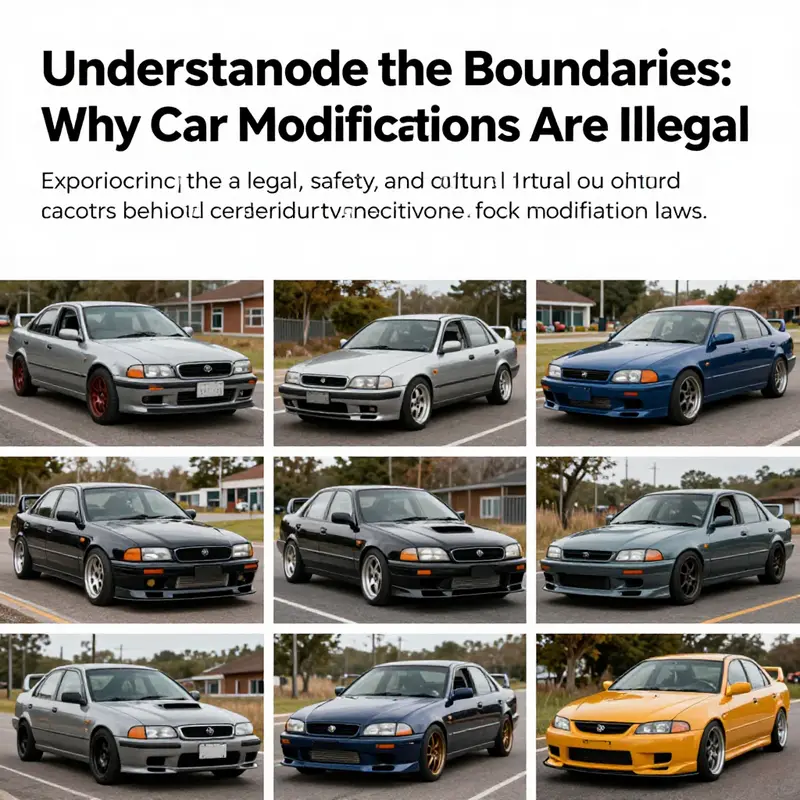
Car modifications are a popular form of personal expression and mechanical creativity, yet they often tread a precarious line between legality and safety. Various types of modifications can inadvertently lead to life-threatening risks, prompt legal complications, and even financial repercussions for car enthusiasts. These factors necessitate a clear understanding of why car modifications are illegal in certain contexts. This comprehensive exploration will delve into the legal aspects surrounding car modifications, evaluate the safety risks involved, dissect government regulations, discuss cultural perspectives, and conduct a comparative analysis between China’s restrictive laws and the more permissive frameworks of other nations. As we navigate through these chapters, readers from all automotive backgrounds will find valuable insights on how to ensure compliance while pursuing their passion for car tuning and customization.
Safety, Standards, and Street-Ready Customization: Understanding Why Car Modifications Are Illegal in Some Contexts
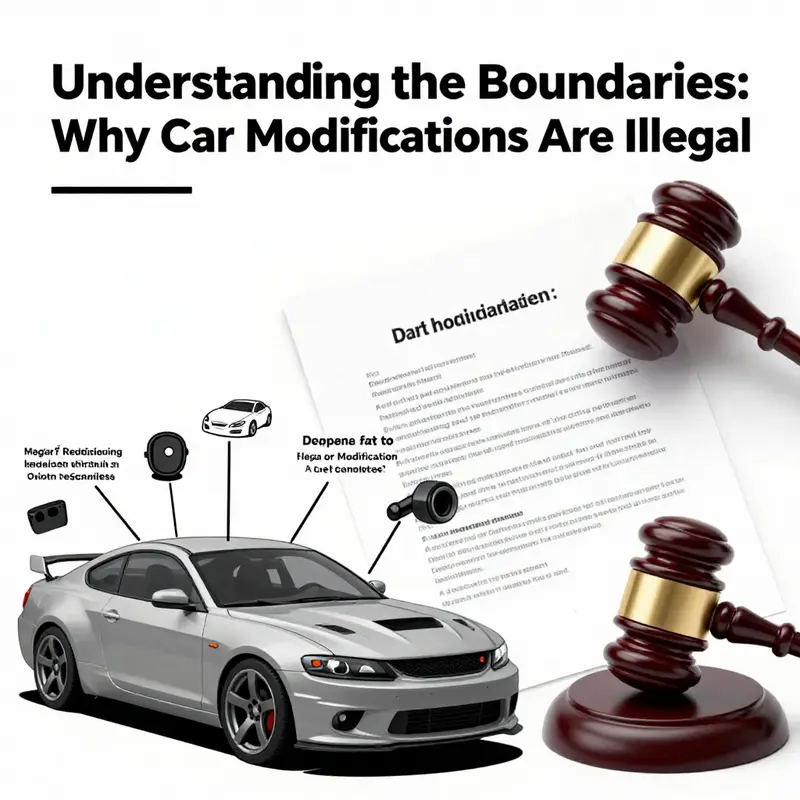
Modifying a car can feel like painting on a moving canvas; passion, performance, and personal expression converge with the physics of weight, speed, and traction. Yet the legal landscape around car modifications is not just a set of dry rules. It is a carefully drawn boundary that separates what a driver may do in private space from what a vehicle may do on public roads in a crowded system of hundreds of thousands of other travelers. This chapter embraces that reality and looks at why modifications are not inherently outlawed, but become illegal when they threaten safety, exhaust the limits of environmental rules, or undermine the orderly flow of traffic. The result is a nuanced portrait: legality emerges not from a single prescription but from a complex balance of risk, accountability, and public trust.
In many regions, modifications are not categorically banned. Instead, they are scrutinized along three interlocking axes: safety, emissions, and roadworthiness. If a change preserves or improves how a vehicle behaves in traffic, remains within the design envelope set by engineers and regulators, and does not betray environmental standards, it can be lawful. If any modification shifts the vehicle outside those envelopes in a way that could surprise or endanger other road users, it becomes suspect or outright illegal. This distinction is not merely theoretical. It is enacted through laws, regulations, and administrative procedures that require owners to seek approvals before making certain changes, and to re-validate their vehicles after modifications are completed. When the process is neglected, a modified car can be deemed unregistered or non-operational on public roads, even if the modification itself is technically feasible.
Turning to the specific context of a large, safety-conscious country, the legal framework emphasizes that legitimate modifications must remain compatible with the vehicle’s registered structure, construction, and characteristics. Critical dimensions—length, width, and height—are not casual adjustments. They influence how a vehicle interacts with lane widths, curb clearance, and overhead infrastructure. A change here can alter rollover risk, steering geometry, or tire contact patches in ways that are not readily predictable without rigorous testing. Color, though often treated as a stylistic element, also bears regulatory significance because it communicates intent, provides visibility, and can tie into identity or compliance schemes. Engine specifications, chassis and VIN integrity—all of these are part of a formal record that ensures traceability and accountability. Tampering with the VIN or engine number is not a cosmetic act; it undermines the integrity of vehicle history and can obscure safety recalls, theft recovery, or defect investigations.
A common misunderstanding is that every modification that affects appearance or performance is illegal. The reality is more refined. The legality hinges on whether the change is performed with official approval or within certified parameters. Modifications that significantly alter aerodynamics, suspension geometry, or weight distribution—such as non-original, poorly designed aftermarket spoilers or extreme low-suspension setups—can impair stability and control. The risks extend beyond the individual vehicle. If a car’s handling degrades suddenly at highway speeds or during emergency maneuvers, it jeopardizes nearby drivers and pedestrians. Similarly, altering wheel sizes or materials without proper consideration for load ratings, tire compatibility, and speedometer accuracy can produce cascading effects, from erratic steering feel to misreadings that affect acceleration and braking performance. These are not hypothetical hazards; they are the kinds of issues regulators monitor to keep roads safe and predictable for everyone.
Electrical modifications introduce another layer of risk. Wiring that is not gauge-matched, insulation that is substandard, or improper grounding can create fire hazards. The misrouting of power feeds, especially in vehicles with complex electrical demands, has led to accidents that are entirely avoidable with proper design, inspection, and certification. Changes to drivetrain components or braking systems enter the same risk domain. A high-performance exhaust or a redesigned brake system might improve lap times or pedal feel, but without certification and testing, such alterations can undermine reliability, fail to meet baseline safety standards, or invalidate insurance coverage in the event of a crash.
This is where the practical path of legality diverges from the realm of possibility. In many jurisdictions, including the one under discussion here, the principle is straightforward: if you intend to modify a vehicle in ways that affect its registered characteristics or its performance in safety-critical systems, you must seek prior approvals from the appropriate authorities. After approval, you need to complete the modifications and then re-register the vehicle so that its official documents reflect the updated specifications. If you skip this process, the modification does not merely become a private concern; it renders the vehicle non-compliant with traffic laws, potentially subjecting the operator to penalties and impeding lawful road use.
The broader regulatory environment reinforces these national imperatives with environmental and safety standards that apply across borders. For example, many modern economies impose emissions limits that apply to vehicle components, including exhaust systems and catalytic converters. Modifications that increase emissions beyond allowable levels, or that remove or bypass emission-control devices, are illegal because they defeat the purpose of environmental protection laws designed to curb air pollution and its health impacts. Safety standards also govern lighting, visibility, and crashworthiness. Changes to headlights, taillights, or window tinting must meet prescribed visibility criteria, while suspension and tire choices must maintain adequate contact with the road and preserve steering and braking capabilities. The underlying idea is simple: any modification that reduces the predictability of a vehicle’s behavior at the limits of performance can create hazards that ripple through traffic.
The framework also introduces a critical distinction between certified and non-certified modifications. In many places, aftermarket parts must demonstrate compliance with established standards. In the United States, for example, emissions-related parts often require EPA or CARB approval when they affect emissions. Without such certification, a modification may fail inspections or render a vehicle non-street-legal. This certification regime is not merely a gatekeeping exercise; it is a signal to consumers that the part has been tested for compatibility with the vehicle’s systems and for its environmental and safety impact. The same logic underpins roadworthiness checks, where authorities confirm that a vehicle’s lighting, braking, steering, and structural integrity remain sound after modifications.
The educational takeaway for enthusiasts is practical and concrete. If your goal is to modify a car while staying within the law, start with the proper channels. Local traffic police offices or the National Vehicle Administration’s website are the official sources for guidance and requirements. Gather the necessary documentation, understand the scope of the modification, and obtain explicit approval before making any changes that would alter the vehicle’s official records. After the work is completed, re-registration or updating the vehicle’s file is not optional; it is a legal obligation that preserves the vehicle’s legitimacy on public roads and secures continued access to insurance, recalls, and supported maintenance.
For readers who want a concise frame of reference on how a specific country handles modifications, there is a resource that outlines legal car modifications in China. It provides a clear account of the legal tests, approvals, and record-keeping that underpin lawful customization in that jurisdiction. You can explore it here: Legal car modifications in China.
The overarching message, then, is not that people should abandon their desire to customize. It is that the road to customized cars runs through safety, accountability, and transparent governance. Car culture that emphasizes control, documentation, and compliance can coexist with creative expression, but it requires a framework that rewards responsible experimentation rather than reckless improvisation. When a modification is properly vetted and recorded, it becomes part of a legitimate ecosystem where performance and safety are not enemies but complementary goals. When it is not, the risk is not merely a cosmetic flaw but a matter of public safety and the orderly use of shared space on the road.
Beyond national borders, the same logic applies, albeit with different implementations. In some regions, stricter emission controls, different thresholds for visibility or noise, and varying enforcement methods shape what is allowed. In others, the culture around customization is more permissive, yet still bound by fundamental safety and environmental considerations. The central idea is universal: the law does not aim to crush personal style; it aims to prevent accidents, protect the environment, and maintain predictable traffic behavior. The practical implication for any car enthusiast is to pursue modifications through certified pathways, document every change, and approach the road with the awareness that legality and safety are two sides of the same coin.
For readers seeking a broader, policy-oriented perspective on emissions and vehicle safety, external resources provide important context. The Environmental Protection Agency’s Vehicle Emissions page offers a comprehensive framework for how emissions standards shape what modifications are permissible in many jurisdictions, illustrating the common ground that underpins diverse national laws: protecting air quality while allowing reasonable, tested upgrades to vehicle performance. See https://www.epa.gov/vehicles for more detail.
Legal Guardrails on the Garage: Why Some Car Modifications Are Illicit and What It Means for Road Safety
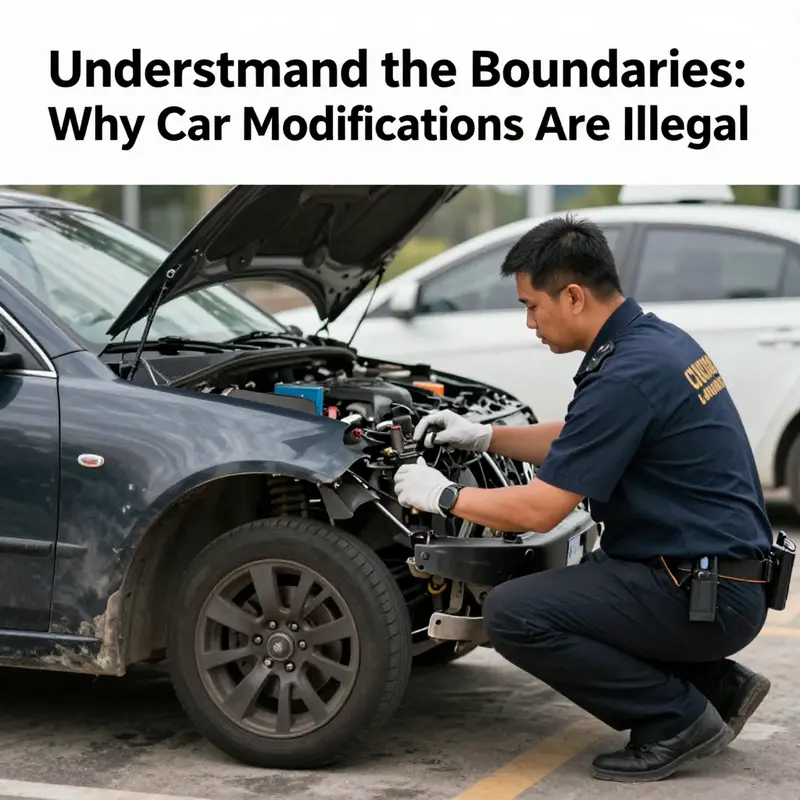
Modifying a car can feel like a dialogue with the machine, a way to personalize a ride and push the boundaries of performance or aesthetics. Yet when those modifications cross a line, they become not a hobby but a legal risk. The central reason is not a quaint club of prohibitions but a practical refusal to compromise safety, traffic order, and the predictable functioning of a shared road network. To understand why certain car modifications are illegal, it helps to start with the difference between allowed customization and unauthorized changes. Legal, approved modifications align with established safety standards and must be vetted by authorities before they can be registered and used on public roads. Unauthorized changes, especially those that alter a vehicle’s registered structure or critical characteristics, skip the checks that ensure a car will behave reliably in a wide range of conditions. This distinction is the hinge on which the legality of car customization turns, and it echoes through the way a state designs its traffic safety framework, inspections, insurance practices, and enforcement priorities.
In practice, the line is drawn around the vehicle’s fundamental design and its verified performance. Modifications that touch the vehicle’s dimensions—its length, width, or height—are prime examples of changes the law scrutinizes. Altering the body color, while seemingly cosmetic, can have implications for identification and accountability in traffic management systems. More consequential are changes to engine specifications or the chassis numbers, which tie a car to its official records and the safety certifications that accompany them. When a modification affects the structural integrity of the chassis or body, the risk is not just theoretical. The vehicle’s ability to withstand crash forces, to absorb impact, and to maintain occupant containment is calibrated around measured tolerances. Unapproved alterations can undermine those tolerances, increasing the potential for catastrophic outcomes in a crash or during sudden maneuvers.
The risk calculus is not limited to the car’s passive properties. It extends to dynamic factors that influence how a vehicle behaves in the real world. Consider suspensions and ride height: a configuration intended to improve looks or a certain sporty stance can dramatically change handling and braking characteristics, particularly on wet surfaces or uneven pavement. Lowered suspension may reduce body roll in dry conditions, but it can also diminish tire contact with the road, change weight transfer during braking, and expose components to damage from road irregularities. In the worst cases, such adjustments can elevate the likelihood of a rollover or a loss of control at highway speeds. Then there are exhaust systems whose increased noise might seem like a personality flourish but can mask important auditory signals, such as approaching emergency vehicles or sirens, and distract the driver or alert others in ways that memory and expectation cannot accommodate. Even seemingly mundane changes, like wheel size or tire specifications, carry a cascade of consequences: wrong fitment can warp speedometer readings, alter steering response, and in extreme cases compromise wheel integrity at high speeds. These are not merely technical nuisances; they are elements that can translate into higher crash risk and broader disruption on crowded roads.
Safety standards in this framework are not abstract ideals but concrete, enforceable criteria. In many jurisdictions, vehicles must meet crashworthiness, emissions, and structural integrity benchmarks before they receive a road-legal certification. When owners modify key components without proper certification, those safety assurances are effectively waived. This does more than invalidate a sticker or a badge; it destabilizes the entire safety envelope that authorities rely on to evaluate a vehicle’s risk profile. That risk is not confined to the individual driver. An unapproved modification can alter a car’s braking distance, stability margins, and aerodynamic behavior, with ripple effects across all road users. The consequences of a single faulty upgrade can therefore extend well beyond the driver’s personal fortunes, affecting passengers, pedestrians, cyclists, and nearby motorists in ways that are difficult to anticipate or quantify after the fact.
From a liability perspective, the implications are often clear and stern. If an accident occurs as a direct result of an illegal modification—say, a faulty, non-certified brake upgrade or a drivetrain alteration that bypasses safety interlocks—the owner typically bears the primary burden of damages. Insurance coverage may be denied, leaving medical bills, property damage, and legal costs to the vehicle owner or involved parties. The legal system tends to view unauthorized, unsafe modifications as a breach of the responsible-use standard that accompanies road travel. In some cases, severe negligence or fatal outcomes can result in criminal charges, underscoring that the consequences of illegal modifications are not merely financial but moral and legal in nature.
Governments also recognize that a landscape of wildly divergent vehicle configurations complicates traffic safety management and emergency response. When thousands of cars on the road present unpredictable handling characteristics due to nonstandard modifications, it becomes harder for authorities to model traffic flow, predict crash dynamics, and coordinate rapid incident response. This broader public risk is a core reason why the rules are strict: the aim is not to curb personal expression through customization but to maintain a stable, coherent safety ecosystem where risk is minimized and accountability is clear.
The practical path to safe, legal customization is straightforward, though it requires diligence and patience. Owners who intend to modify their vehicles should engage with official channels early in the process. This means consulting local vehicle administration offices or traffic management authorities to understand what modifications are permitted and what documentation is required. Often, approved routes involve submitting specifications for the intended changes, selecting certified aftermarket components, and undergoing a re-registration process to update the vehicle’s records. When modifications are performed with proper oversight, the car can retain its road legitimacy while still reflecting the owner’s preferences. The result is not a sanitized, all-encompassing ban on creativity but a careful balance that preserves safety without sterilizing individuality.
Enthusiasts who seek to maximize performance or aesthetic impact can and do succeed within this framework by prioritizing safety and compliance. Certified aftermarket parts that meet established standards provide a viable alternative to unverified, potentially dangerous components. Shops that specialize in compliant modifications can guide owners through the process, helping them select parts that maintain critical performance characteristics without compromising the car’s safety certifications. Documentation becomes as important as the parts themselves, because record-keeping verifies that every change has been reviewed, tested, and approved by the appropriate authorities. In this sense, the legal path preserves a culture of innovation while ensuring that road safety is not traded for personal preference.
For readers who want to explore the regulatory landscape in more depth, it helps to see how different jurisdictions approach this balance. In some regions, the approach is comparatively permissive, with a framework that emphasizes ongoing testing and certification rather than pre-approval for every modification. In others, the emphasis is on keeping a tight rein on anything that touches the vehicle’s fundamental design. China, for instance, prioritizes national safety standards and traffic order, necessitating prior approval for significant alterations before a car can be legally operated on public roads. The intent is not to suppress creativity but to prevent accidents caused by unsafe or unverified modifications. Those who want to pursue modifications should consult official channels, such as the local traffic police station or the National Vehicle Administration website, to ensure compliance and avoid the legal and financial fallout that follows noncompliance. For a concise overview of how this topic is approached in China, readers may refer to resources that discuss legal car modifications in China.
Ultimately, the discussion returns to a simple but powerful idea: road safety thrives when customization respects the shared space we all navigate together. The rules are designed to harmonize individual expression with collective responsibility. When a modification is legally pursued, it becomes part of a collaborative process—engineers, regulators, manufacturers, and enthusiasts working in concert to ensure that the vehicle remains a safe tool for personal mobility and public safety. This is not a paradox but a prudent design principle: freedom to customize exists only within boundaries that guarantee predictable performance, protect lives, and sustain trust in the road system. The result is a culture that prizes both ingenuity and accountability, where the best modifications are those that advance performance or aesthetics without compromising the very safeguards that keep every traveler secure on today’s busy streets.
For readers seeking practical guidance, consider this approach: begin with the premise that legality and safety are compatible goals, and pursue them through certified parts, formal approvals, and thorough documentation. If a modification cannot be certified or approved, it should be reconsidered or redesigned to fit within the established framework. This mindset does not dampen creativity; it channels it through a process that respects the public nature of driving. It also fosters a more transparent relationship between car owners and authorities, which can ease future inspections, insurance considerations, and resale value. The road ahead for the enthusiast is not a barren one but a guided journey toward responsible customization that honors safety as a shared standard. For those curious about the specific legal framework in China, a deeper look at the topic of legal car modifications in China can provide a targeted understanding of the procedures, thresholds, and documentation involved. legal car modifications in China.
External reference: For broader context on safety standards and vehicle regulations, see the National Highway Traffic Safety Administration’s resources at https://www.nhtsa.gov/vehicle-safety-and-regulations. This external resource offers extensive guidance on crashworthiness, emissions, and vehicle safety considerations that underpin why certain modifications are regulated and how safe customization can be approached in a way that protects drivers and the public alike.
Safety, Standards, and the Rulebook: How Government Regulation Shapes Car Modifications in China
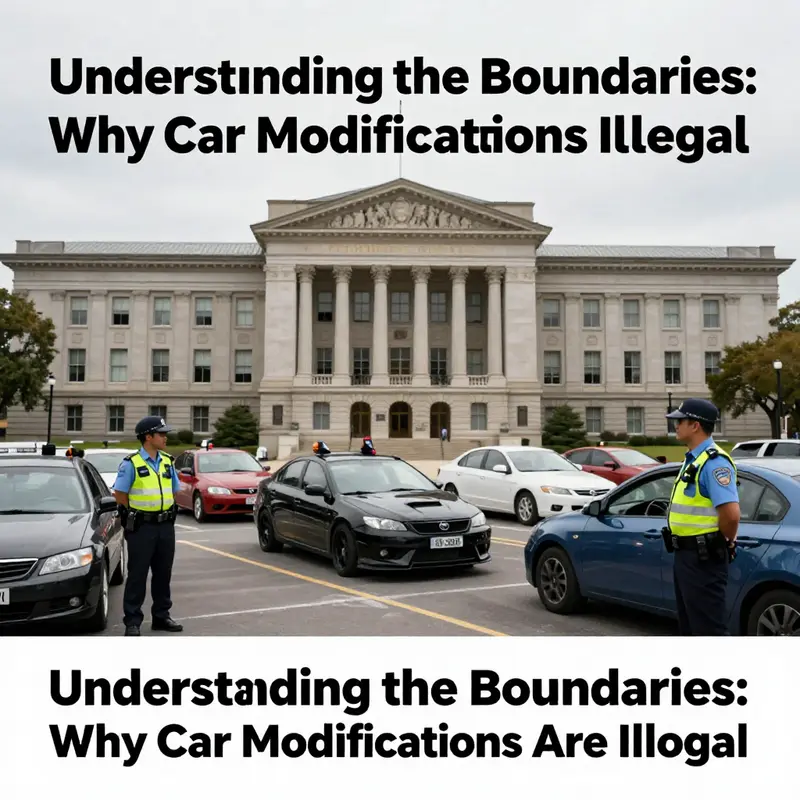
Car modification is not a blanket ban in China; it is a structured process governed by a framework that seeks to balance personal choice with road safety and public order. The core idea is simple: you may modify a vehicle, but only if the changes are legal, verified, and properly registered. Unauthorized or illegal modifications, by contrast, are a matter for the public security and traffic authorities, with consequences that can extend beyond fines to the loss of road legality and criminal liability for certain actions. In this light, the government’s approach to car modifications is less about policing individuality and more about preserving predictable vehicle performance, accident prevention, and transparent accountability across millions of vehicles, owners, and inspectors. The practical upshot for drivers is clear: before lifting a wrench, you must understand the legal pathway, because the rules are designed to prevent unsafe variations from cascading into traffic risks or enforcement headaches for authorities.
The legal scaffolding rests most prominently on the Road Traffic Safety Law of the People’s Republic of China, a statute that explicitly restricts any overhaul of a vehicle’s registered structure, construction, or characteristics without proper authorization. This is not a prohibition on customization per se; it is a gatekeeping regime that requires a formal process when a modification could alter how the vehicle behaves on the road, how it is registered, or how it is identified. The most consequential result of this regime is that a vehicle can become effectively illegal to operate on public roads if the owner bypasses the approval process or fails to re-register after changes. The clarity of this system helps police, inspectors, insurers, and owners coordinate around a common set of expectations: changes must be evaluated, certified, and recorded to remain legitimate.
Within this framework, several domains are singled out as critical for regulatory oversight. Vehicle dimensions—alterations to length, width, height, or wheelbase beyond the permissible limits—are not merely cosmetic choices. They influence stability, steering geometry, crash protection, and even curb weight perception. Engine and drivetrain modifications—adjustments to power output, displacement, or transmission configurations—touch the core performance envelope of the vehicle. Structural integrity is perhaps the most sensitive area; any alteration that weakens the chassis or body frame is deemed dangerous because it can compromise protective structures in a crash or engage fatigue failures under normal use. Identification numbers—the VIN, engine number, and license plate information—are legal anchors to trace ownership and ensure authenticity. Tampering here is treated as a more severe offense because it undermines accountability and can mask theft or fraud.
Beyond these touchpoints, the safety systems that keep a car predictable in diverse conditions are also protected. Modifications to braking, suspension, or steering must not undermine safety margins or diverge from the manufacturer’s specifications. In other words, a change can be technically possible but legally off-limits if it erodes how the vehicle stops, steers, or maintains stability during cornering, emergency maneuvers, or wet-road conditions. The standard is not a fixed list of forbidden parts; it is a performance-based expectation that any modification should not create a new safety hazard or degrade reliability.
This regulatory architecture rests on a triad of reasons that connect public safety with everyday practicalities. First, the risk calculus is about life and limb: unapproved modifications can substantially raise the probability of accidents, injuries, and even fatalities. The literature and official statements often tie unsafe changes to dramatic consequences, from reduced braking efficacy to compromised handling in adverse weather. While these risks are not unique to China, the scale and density of urban traffic underscore the need for cautious controls. The logic is straightforward: if a change can meaningfully alter how a vehicle behaves in normal operation, it should be vetted before it can be used on public roads.
Second, electrical and fire hazards form a substantial part of the safety concern. The incorporation of aftermarket electrical systems or high-power ancillary devices without proper wiring can overload circuits and create fire risks. In a country with vast road networks and varied maintenance practices, a single faulty installation can escalate into a roadside emergency, impede traffic flow, or trigger broader public safety issues. Statistics referenced in regulatory discussions have highlighted that improper electrical work can be a leading contributor to spontaneous vehicle fires, underscoring why electrical integrity is closely regulated.
Third, the enforcement and management dimension shapes how the system functions in practice. Illegal modifications can evade standard registration and inspection regimes, complicating the ability of authorities to track ownership, ensure ongoing compliance, or identify vehicles involved in incidents. The governance logic assumes that a well-run modification process, with formal approvals and updated records, makes it easier to monitor safety compliance, investigate crashes, and deter illicit activity. A transparent system supports market integrity as well, discouraging the spread of substandard or counterfeit parts that do not meet safety and performance standards.
Given this careful prevention-oriented stance, what counts as permissible under the law is not a rigid prohibition but a curated allowance. Color changes, for instance, are allowed if they fall within reasonable limits: paint color changes are permissible when the alteration does not exceed 30 percent of the total surface area. If the change is more extensive, owners must apply for a registration change at the local Vehicle Administration Office within ten days. This serves as a practical hinge: minor cosmetic changes are tolerated, but significant cosmetic or structural changes require formal reassessment and re-registration to ensure continued compliance.
Interior and non-structural changes provide additional flexibility. Non-safety-related interior updates, such as seat covers or decorative trim, can be made without broad restrictions, provided they do not interfere with driver visibility or safety. This distinction underscores the policy aim to respect personal preferences for comfort and aesthetics while preserving core safety guarantees. Replacing tires, rims, or bumpers is allowed if the new components stay within the vehicle’s dimensional envelope and do not compromise safety systems. In short, many practical changes can occur, but only when they remain compatible with the original vehicle’s safety profile and regulatory standards.
For those who intend to modify legally, the process is explicit and procedural. It begins with submitting a modification plan and a technical report to the local Vehicle Administration Office, seeking written approval before any work begins. After the work is completed, the vehicle must be brought back to the VAO to register the changes and update the vehicle’s records and registration certificate. This sequence creates a documented trail that agencies can follow in the event of inspections, crashes, or sales. The procedural emphasis is not punitive but safeguarding—ensuring that every practical modification is weighed against safety, accountability, and roadworthiness.
Culturally, the regulatory approach in China contrasts with more permissive automotive cultures in the United States, Japan, or parts of Europe, where customization is a common, often celebrated, aspect of driving life. In those contexts, modification is frequently regulated through different frameworks and enforcement practices, with varying emphases on emissions, noise, and insurance impacts. China’s approach reflects a cautious, population-scale safety orientation, aimed at preventing accidents in dense urban traffic and ensuring consistent safety outcomes across diverse vehicle categories and ownership patterns. The overarching message is not anti-expression but anti-risk: the goal is to prevent modifications that could endanger lives, disrupt traffic order, or undermine the integrity of the vehicle record.
For drivers navigating this landscape, practical guidance is essential. Always consult official channels, such as the local traffic police station or the National Vehicle Administration website, before considering any meaningful alteration. The steps—plan, obtain authorization, and re-register—are not merely bureaucratic hurdles; they are designed to produce a verifiable, auditable trail that protects the owner, the public, and other road users. Those who seek deeper understanding or reassurance can consult authoritative sources that spell out the precise requirements and procedures. A useful starting point is a dedicated resource that discusses the legal car modifications in China and the pathways for legitimate changes. This resource helps translate the law into actionable steps for owners and garages alike, ensuring that intent to customize does not collide with compliance.
Ultimately, the regulatory framework embodies a pragmatic balance. It acknowledges that car culture thrives on personalization while insisting that changes remain tethered to safety, accountability, and road order. The framework is not static; it evolves with advances in vehicle technology, evolving safety standards, and shifts in enforcement capabilities. The ongoing dialogue among policymakers, manufacturers, insurers, and drivers shapes how modifications are allowed, how safety is measured, and how records are kept. For anyone curious about the exact legal contours, official guidance remains the most reliable compass. See the discussion on legal car modifications in China for a concise synthesis of the authorized pathways, and remember that the formal requirements, while meticulous, are the practical bridge between personal expression and public safety. Legal car modifications in China.
For those seeking the formal regulatory text and updates, policy text from the Ministry of Public Security offers the most authoritative reference. It provides the framework for vehicle management, registration, and modification oversight, and it is the bedrock on which all local procedures are built. Readers should consult the official portal when planning significant changes or navigating the approval process, as this ensures alignment with current standards and procedures. Official guidance can be found here: https://www.mps.gov.cn/n2254417/n2254421/c6725967/content.html
Between Personal Expression and Public Safety: How Law and Culture Shape Car Modifications Across Borders
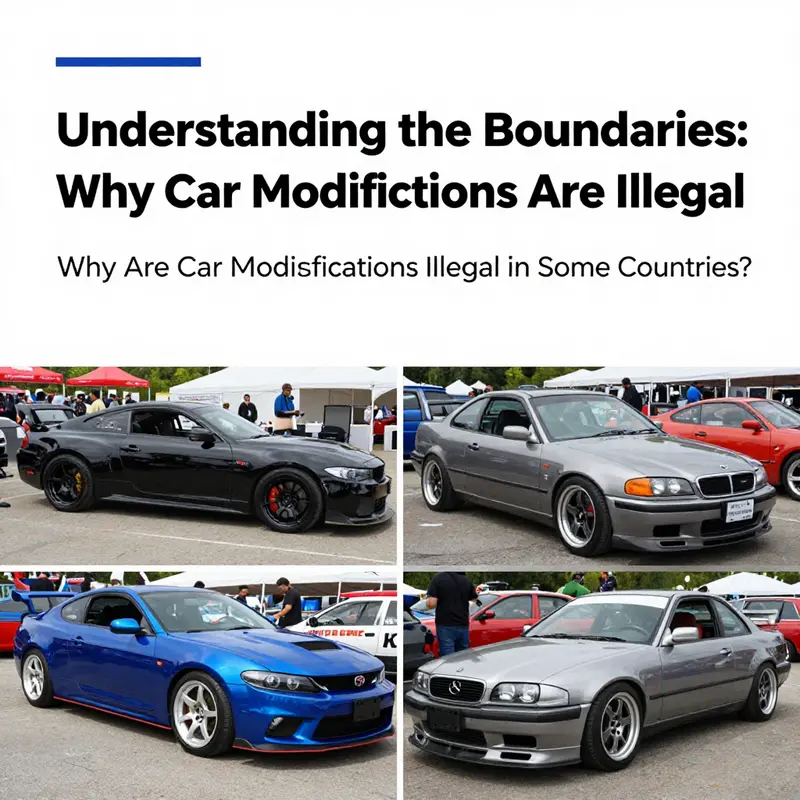
When people think about modifying a car, the image often centers on self expression, performance gains, and the joy of tinkering. Yet the legal reality proves that personal preferences do not operate in isolation from road safety, regulatory oversight, and the orderly management of traffic systems. Modifications are not inherently illegal in many places, but they become illegal when they cross lines that governments have drawn to preserve safety, standardization, and predictable behavior on shared roads. This tension between creativity and constraint rests on a complex blend of engineering standards, enforcement practices, and cultural expectations that differ from one country to another. Across borders, the outcome is a spectrum in which some changes are welcomed and tightly regulated, while others are forbidden or require bureaucratic steps to ensure legitimacy. The chapter that follows seeks to illuminate how culture and policy interact to define what can and cannot be done with a car, why certain modifications trigger formal disallowance, and how enthusiasts can navigate these rules without surrendering their sense of self expression or their commitment to safety.
In a practical sense, the law makes a crucial distinction between modifications that are legally permissible with proper approval and changed features that fall outside the authorized framework. In China, for example, the emphasis is on maintaining vehicle dimensions, structural integrity, and traceable identity markers. Alterations to a car that change its registered length, width, or height, or that modify the body color in ways that obscure or misrepresent the vehicle, are treated as illegal unless officially approved. The same holds for engine specifications, chassis numbers such as the VIN, and engine numbers that anchor a car to a given record. The underlying reason for these constraints is not merely red tape. Changing core attributes can alter the fundamental physics of how a vehicle behaves. A longer or wider stance can affect aerodynamics, load distribution, and steering response in ways that are difficult to predict under real world driving conditions. When a modification involves the chassis or structural elements, the risk is intensified because the vehicle exists as a system designed to meet specific safety margins. In the same vein, even modifications that seem cosmetic or superficial can cascade into safety concerns if they interact with other subsystems in unexpected ways.
The practical consequences of crossing these lines are severe. Illegal modifications lead to a vehicle that is effectively unregistered and thus cannot legally operate on public roads. Owners may face penalties, including fines, impoundment, or more serious charges if the modifications are deemed hazardous or if they compromise airbag systems, braking performance, or steering controls. The regulatory logic here is that safety cannot be downgraded to a hobbyist preference. A car is a complex machine in which thousands of tolerances are calibrated to work in harmony. When one piece is altered without verification, the ripple effects can undermine the entire safety envelope. Even seemingly minor changes to electrical wiring or after market electronic devices can create fire hazards or interference with critical safety systems. In many cases, the process requires official approval from local vehicle administration offices or traffic management authorities, followed by a re registration that updates the official records to reflect the new configuration. Without this, the owner loses access to legitimate operation on public roads, encounters difficulties with insurance, and faces legal exposure if a collision occurs.
Cultural context helps explain why these rules exist and how they are interpreted by different communities. In Western nations, a culture of personal customization has taken deep root in automotive subcultures. Enthusiasts often pursue performance gains, distinct aesthetics, and unique branding as forms of identity, and regulators respond by creating frameworks that allow experimentation within defined boundaries. This means that modifications like upgraded exhaust systems, suspension changes, or enhanced engines may be legal if they pass noise, emissions, and safety standards, and if they are properly documented and certified. In the United States, the United Kingdom, and much of the European Union, enforcement tends to hinge on measurable criteria such as decibel levels, exhaust emissions, and structural integrity. Failures in these domains can lead to penalties, even if the modification is popular within a car culture. The goal is not to suppress creativity but to ensure that each vehicle remains predictable and safe when it interacts with other vehicles on public roads.
In other parts of the world, including regions with centralized regulatory regimes, the approach can feel more restrictive. The emphasis often lies on standardization and formal control, with less tolerance for ad hoc experimentation. This difference reflects broader social priorities: a polity focused on uniform safety and traffic order may place a higher premium on consistent vehicle characteristics, even if it means curbing individual customization. Cultural norms also shape how people talk about cars and what modifications signify. In some studies, changing the role of cars in everyday life has coincided with shifts in how gender, class, and age relate to driving practices. The social meaning of modifications evolves as norms about safety, aesthetics, and status change, leading to a dynamic that is as much about culture as about engineering. It is this cultural dimension, coupled with technical standards, that helps explain why modifications are illegal in some countries while celebrated as a form of personal expression in others.
The legal framework, of course, is not static. It responds to technological progress, evolving traffic patterns, and new safety research. Enforcers interpret rules through the lens of risk assessment: does the change increase the probability of a crash, does it degrade the reliability of critical systems, or does it hinder regulators’ ability to identify a vehicle in the event of a recall or investigation? These questions are as relevant to a race inspired wing or a lowered suspension as to a high performance engine upgrade. When authorities require prior approval, they are not simply placing a barrier to entry for enthusiasts; they are creating an audit trail that helps ensure that the modification has been evaluated by engineers and meets established safety and environmental criteria. The re registration that follows confirms to the authorities and to insurers that the vehicle now exists in a known state, with traceable components and documented performance characteristics. Insurance implications are another layer of complexity. Insurers often review how modifications affect risk profiles, from braking performance to electrical reliability, and may adjust premiums accordingly or even deny coverage if the modifications are deemed unsafe or unverified.
For enthusiasts who wish to pursue legitimate modification paths, the message is clear. Do not assume that a given alteration will be tolerated without scrutiny. Start with official channels, consult the local traffic police or the vehicle administration website, and follow the documented process for approval. Only after receiving formal authorization should a vehicle be altered and re registered with updated records. In this sense, the road to compliance is not a barren bureaucratic corridor but a structured path that balances personal ambition with public safety. It preserves the integrity of the traffic system while still allowing for legitimate customization within the bounds of safety and accountability. When the process is followed, what results is not a sterile conformity but a carefully certified blend of individuality and reliability that keeps roads safe for everyone.
In conversation with readers and practitioners, this chapter also points to a practical reminder about the broader landscape of modification laws. The same principles that govern a car in a Chinese city play out in different forms elsewhere. Anyone who contemplates changes should educate themselves about regional rules and how those rules are enforced in daily life. A useful starting point is to explore country specific summaries and comparative analyses, such as the regulatory overviews that collate regional practices and enforcement patterns. For readers seeking a concrete example of how one country manages its own process, see the discussion on legal car modifications in China, which delves into the specifics of what counts as an approved modification and how re registration operates within that system. This reference helps situate the broader argument within a real world framework and demonstrates how cultural priorities translate into concrete regulatory steps that protect road safety while acknowledging the appeal of customization.
Across the spectrum, the central tension remains the same: how to reconcile personal agency with collective safety. Modifications become illegal not because they erase individuality but because they threaten a shared standard of safety, accountability, and predictability on the road. Culture shapes which modifications are deemed acceptable, which require certification, and which are forbidden outright. Law translates that cultural stance into measurable criteria and procedural steps that must be followed. For those who care about both their vehicle and public safety, the path is clear and constructive: engage with the regulatory process, document changes carefully, and appreciate that legality is not a limit on imagination but a framework that helps imagination flourish within a system designed to protect everyone on the road. As the global conversation about car customization continues to evolve, readers can benefit from broader regional comparisons and authoritative explanations that shed light on where lines are drawn and why.
External reference for a wider regional view on modification legality is available through a comprehensive explainer that surveys laws by region and clarifies common misunderstandings about what makes a modification legal or illegal. For a broader perspective, you can explore this resource: Is It Illegal to Modify Your Car? Laws by Region Explained. https://www.autocar.co.uk/article/road-legal-modifications. Additionally, readers interested in country specific legal considerations, including insights on the Chinese regulatory framework, may consult the related discussion on legal car modifications in China. The embedded anchor in this chapter offers a starting point for those who wish to understand how official procedures translate into real world practice and how cultural expectations shape the nature of road safety governance across different regions.
Between Control and Custom: Understanding Why Car Modifications Are Regulated in China Compared to Global Practices
Cars have long been more than a means of transport; they are a reflection of taste, engineering curiosity, and personal identity. Yet, when those impulses collide with public safety, the law steps in. In China, the balance between freedom to customize and the obligation to maintain safe roadways rests on a framework that treats modifications not as a blanket right but as a controlled activity requiring formal approval. The distinction is subtle but consequential: legal, approved modifications exist within a spectrum of standards, testing, and administrative processes, while illegal, unauthorized alterations lie outside that framework and carry penalties, including the potential loss of road legitimacy. This is the practical core of the difference many drivers encounter. On the surface, one can imagine a modification as simple as a different exhaust note or a cosmetic paint change. In China, however, even those changes are not automatically permissible. The Road Traffic Safety Law, together with regulations promulgated by the Ministry of Public Security and the Vehicle Management Office, draws a line between alterations that keep a vehicle within its registered structure and those that depart from it. The numbers, letters, and identifiers that identify a car—its dimensions, its body shape, its VIN and engine numbers—are not merely bureaucratic artifacts. They are anchors for safety testing, for road management, and for accountability. Any modification that alters the registered structure, construction, or characteristics of a vehicle without official approval is considered illegal. In practice this means that decisions about what is permissible are not left to individual whim. They are based on how changes will affect a car’s performance, its interaction with traffic and infrastructure, and the broader safety ecosystem. The explicit categories that trigger scrutiny include the vehicle’s dimensions—length, width, and height—because these measurements influence stability, rollover risk, and alignment with road lanes and bridges. Even a change to the body color can become a compliance issue if it crosses lines established to preserve traffic safety and identification standards. Engine specifications and the integrity of the chassis numbers are similarly critical. Altering the engine’s displacement or output, or changing the VIN or engine number, are treated as serious deviations because they complicate accountability in the event of a crash or recall. The structural integrity of the chassis and body is another focal point; any modification that weakens the core frame or alters load paths can compromise crash performance. The logic is not merely about what looks fast or stylish; it is about the predictability of a vehicle under a wide range of real-world conditions. In addition to these structural and identification concerns, there is a clear emphasis on the potential for modifications to endanger safety through mechanical and electrical means. Upgrading engines without corresponding upgrades to brakes, suspension, or tires creates a mismatch that can reduce stopping distance, alter steering response, and destabilize handling at highway speeds. Low-riding suspensions or poorly engineered aftermarket components can disrupt aerodynamics, alter weight distribution, and raise the risk of rollover in abrupt maneuvers or sudden evasive actions. The temptation to lower a car or install high-performance parts must be tempered by a rigorous audit of how these changes interact with existing safety systems. There is also a practical hazard associated with electrical work. Alterations to wiring, lighting, or control modules without proper certification can pose fire risks or cause electrical faults that may disable critical systems during operation. In a country with high population density, dense traffic, and a vast network of roadways, even small electrical vulnerabilities can translate into serious consequences. The regulatory posture reflects a philosophy that safety stems from verifiable processes rather than from individual confidence that a part is good enough for the road. The civil risk calculus extends beyond the vehicle itself. The authorities emphasize that a modification, if not properly vetted, can affect road management and public safety as a whole. This is why the process requires formal re-registration and updating of records after a modification. A vehicle that undergoes unapproved changes and is not re-registered becomes, in practical terms, an unregistered vehicle on public roads. The legal status is not simply about a private dispute over taste or a personal sense of speed; it is about maintaining a coherent, auditable system for traffic safety and for law enforcement. The consequence of noncompliance can be severe: fines, penalties, shot-like enforcement, or impoundment. The immediate road impact is more troubling when considering the broader ecosystem around modified cars. China’s regulatory environment does not yet feature a mature, standardized infrastructure for legal modification in the same way as some Western markets. There is an absence of a broad network of certified modification shops, a consistent testing protocol, and a comprehensive insurance framework tailored to modified vehicles. Insurance providers, in particular, often resist coverage for heavily modified cars because risk assessment becomes uncertain. Without formal recognition and insurance support, even a technically safe modification may prove impractical for most owners. In this sense, the difficulty is not merely about legislative text but about the practical plumbing that allows a modification to be completed, certified, registered, insured, and legally driven on public roads. The result is a practical environment where many enthusiasts feel constrained and where the culture of customization remains relatively restrained on public highways. The question then becomes what this system says about national priorities. In China, the emphasis is on safety, public order, and centralized vehicle management. The aim is not to quash personal expression; it is to prevent accidents caused by unsafe, unverified, or poorly integrated changes. The safety-centric mindset explains why the law requires pre-approval and why the process is designed to be conservative by default. When one steps back to compare China with other parts of the world, a different balance emerges. In the United States, Germany, Japan, and parts of Europe, modification culture has matured around an ecosystem of safety testing, certifications, and consumer protections. The United States, for example, allows many forms of modification as long as they pass safety and emissions standards set by national and state authorities. Certification bodies, emissions testing, and state-level inspections provide a framework within which enthusiasts can pursue performance and aesthetic goals while maintaining a road-legal status. In Germany, the TÜV ecosystem offers roadworthiness certifications after thorough testing, enabling a more permissive attitude toward modifications when they are properly certified. Japan’s automotive culture emphasizes expertise and community, with technical and legal channels that support certain kinds of performance and appearance changes, again anchored in regulatory oversight. The UK provides a useful contrast with a mature, safety-forward regulatory system that documents where modifications are permitted, what certifications are required, and what inspections must be passed to maintain road legality. These frameworks reflect a governance philosophy that values personal freedom within a safety net of standardized testing, professional engineering, and accountability. The difference between these systems and China’s approach is not simply a matter of taste or regulation. It reflects broader societal choices about risk, trust, and the role of the state in everyday life. In China, the centralized model prioritizes uniformity and predictability, aiming to minimize the likelihood of accidents and to keep traffic flow orderly. In many Western contexts, the emphasis shifts toward personal expression and market-driven innovation, with safety safeguarded by structured standards rather than by centralized control alone. This divergence helps explain why car shows, drifting events, and a thriving aftermarket can be seen in other regions, while heritage and enforcement in China keep the modification scene more muted on public roads. For readers who are exploring modifications themselves, the path is clear in practice: pursue legal, approved avenues. This means engaging with local authorities, requesting the necessary approvals before any substantial change, and understanding that after modification, re-registration and updated records are not optional but mandatory. It also means investing in parts and systems with credible quality, compatible with the vehicle’s existing architecture, and avoiding the temptation to cut corners with parts of dubious origin or unknown performance histories. The broader point is not that creativity cannot exist within road transport; rather, it is that safety, accountability, and public order form the scaffolding that makes road mobility sustainable at scale. Those who seek a structured framework will find value in understanding how different jurisdictions balance the desire to customize with the obligation to maintain safety. For a concise overview of how one jurisdiction handles modification requests and what counts as legal, see the linked resource on legal-car-modifications-china. This reference helps illuminate the practical steps a car owner must take to stay within the law while pursuing meaningful customization. For readers seeking a comparative regulatory frame of reference, the United Kingdom’s vehicle modifications and safety rules offer a clear, formalized approach that contrasts with China’s more restrictive but safety-focused regime. External resources can provide a lens through which to evaluate the risks, the processes, and the practical realities that surround modifying a vehicle. As policy evolves and as the automotive marketplace grows more complex, there may be gradual liberalization in certain categories, provided that safety, testing, and enforcement mechanisms keep pace with innovation. Until then, the Chinese model remains anchored in precaution, with the implicit belief that a controlled, well-audited pathway to modification better serves the public good than a looser, less predictable landscape. The road ahead may include more standardized testing or clearer certification pathways, but any movement will likely retain a priority on safety and road safety analytics. In exploring this topic, readers gain a broader appreciation for how legal frameworks shape everyday driving experiences and how national priorities influence even the most personal automotive decisions. External resource: https://www.gov.uk/government/publications/vehicle-modifications-and-safety-rules
Final thoughts
The landscape of car modifications is intricate, shaped by a myriad of factors ranging from legal requirements to safety protocols and cultural attitudes. This exploration emphasizes the importance of understanding the laws governing vehicle modifications in your country and complying with regulations to avoid legal repercussions. As car enthusiasts, tuning our vehicles is about more than just aesthetics or performance; it is also about safety and responsibility. By following legal procedures and advocating for modifications that enhance rather than compromise safety, car modifiers can enjoy their passion while contributing positively to the automotive culture. Knowledge is power, and by staying informed, you can ensure that your modifications reflect not just personal expression, but also respect for the law and the community.