

Understanding whether you can claim car modifications on your taxes is crucial for hobbyist modifiers, professional tuners, and classic car restorers alike. Vehicle modifications can range from performance enhancements to aesthetic upgrades, and the potential tax implications can vary widely based on specific conditions. This article delves deeply into three key aspects: how individuals with disabilities can claim tax concessions on vehicle modifications, the tax implications for businesses and professionals, and the essential tax regulations governing these claims. By exploring these chapters, you’ll be better equipped to navigate the often-overlooked landscape of tax deductions for your automotive passions.
Tax Relief for Disability-Related Vehicle Modifications: What You Can Expect and How to Qualify

Understanding the tax relief available for vehicle modifications when you have a disability is essential. Modifications that enable safe driving or access can reduce the financial burden, but the relief comes in specific forms and under strict conditions. This chapter walks through the practical reality of claiming concessions, clarifies the difference between deductions and tax exemptions, explains eligibility criteria, outlines typical qualifying modifications, and offers a pragmatic approach to documentation and claiming. The aim is to give you a clear, usable roadmap so you can make informed decisions without confusion.
People often assume any expense tied to adapting a car is tax-deductible. That assumption leads to disappointment when they learn the Australian Taxation Office (ATO) treats these costs differently. For individuals with disability, the principal benefits are not ordinary income tax deductions. Instead, the government provides targeted concessions—most notably Goods and Services Tax (GST) concessions and Luxury Car Tax (LCT) relief—when modifications are necessary for safe driving or transport because of a permanent disability. These concessions lower the purchase or modification cost at source, rather than appearing as a deduction on an annual tax return.
Eligibility hinges on the nature and permanence of the disability and the link between the impairment and the modification. The ATO requires that the person has a permanent disability that substantially affects mobility. This typically means the disability significantly limits walking or general movement, and the modification is essential for the person to drive or be transported. Evidence of disability and medical necessity is central. Without adequate proof from a qualified health professional, applications for GST or LCT concessions risk refusal.
Which vehicle changes commonly qualify? Adaptations such as hand controls, left-foot accelerators, swivel or reinforced seating, wheelchair ramps, securement systems, and specialist steering or braking assists often meet the criteria. The key feature is that the modification must be directly designed to overcome limitations imposed by the disability. Cosmetic changes, performance upgrades, or luxury features with no functional link to the disability usually do not qualify. Similarly, personal comfort options that are helpful but not essential will struggle to meet the test.
It is important to separate two common scenarios in everyday life: buying a vehicle that already has adaptations installed, and modifying an existing car. Both can attract concessions, but the paperwork and practical steps differ. When purchasing a new or used adapted vehicle, the seller and buyer need to recognize that GST or LCT concessions might be claimable on the adapted portion of the vehicle. The concession effectively removes GST from the eligible component or exempts the modification value from LCT calculations. If you are modifying a vehicle you already own, the supplier performing the work should be informed that the modification is for a person with a disability and that you intend to claim a concession. They must provide appropriate invoices and documentation showing the nature and cost of each adapted item.
Documentation is not optional. A successful claim requires: a medical certificate or report from an appropriate health professional confirming the nature and permanence of the disability; detailed invoices segregating the cost of the adaptation from the base cost of the vehicle; and evidence that the modification is primarily for enabling driving or transport because of the disability. The ATO may ask for additional proof, such as correspondence with modification specialists or assessments from occupational therapists. Keeping thorough records at every step—quotes, approvals, receipts, and professional recommendations—reduces delays and the likelihood of disputes.
Timing matters. Concessions linked to vehicle purchases or modifications are best arranged before the work begins or the sale completes. For LCT concessions, for instance, the exemption applies to the modification’s value when it is made for the purpose of adapting the vehicle for a disabled person. If you make modifications without advising the seller or supplier that you intend to claim a concession, you may lose the benefit or complicate later attempts to claim. Speak with the supplier up front and ensure invoices clearly describe each adapted item and its cost.
Even with eligibility and good documentation, the kind of relief available is limited. The GST concession reduces the amount of GST payable on the eligible portion of the vehicle or modification, which can be significant given the cost of specialist adaptations. The LCT concession works differently: modifications made solely to adapt a vehicle for use by a person with a disability typically attract an exemption from LCT on the modification value. Neither concession, however, functions as a direct personal tax deduction on your income tax return. Put simply, you save on tax at the point of sale or modification, not through annual deductions.
Work-related car modifications are a separate, narrower issue. If you require modifications because of a disability and you use the vehicle for work, you might also claim expenses related to work use under standard tax rules—but only where the modification is necessary for your work duties and your use of the car is predominantly for work. That is a high bar. For example, an employee who needs a wheelchair ramp to transport clients for a professional caregiving role might have a stronger case than someone who installs hand controls primarily for personal mobility and only occasionally drives for work. Claims for work-related use require careful apportioning of private versus work travel and typically demand a logbook or other reliable records showing the pattern of use.
Another practical consideration is how modifications affect other parts of ownership: insurance, resale value, and finance. Insurers should be informed about modifications; some policies require notification and may adjust premiums or conditions. Likewise, modifications can influence resale prospects. While some adaptations add value for buyers who need them, they may reduce appeal to the general market. If you are still financing the vehicle, check the contract and lender policies. Many finance agreements restrict modifications or require pre-approval. Seek consent before altering a financed vehicle to avoid breaching loan terms.
When you plan modifications, engage qualified providers experienced in disability adaptations. They can provide the kind of detailed quotes and technical descriptions the ATO and insurers prefer. Occupational therapists and certified assessors play an important role too. Their assessments support claims by outlining how the proposed changes address the person’s functional limitations. These professional endorsements add credibility and can smooth interactions with both the ATO and any concessional schemes.
How to approach an application in practice: first, verify eligibility by reviewing the ATO guidance and gathering medical evidence. Then consult with adaptation specialists and obtain itemized quotes. Before work begins or purchase completes, confirm with the supplier that invoices will separately list adaptation items and show GST calculations. If you intend to apply for an LCT exemption, ensure the documentation explicitly links the modification to the disability. After purchase or modification, retain all receipts, medical reports, supplier invoices, and any correspondence with the ATO or other agencies. If necessary, lodge the relevant forms or claim at the point of sale where possible, or contact the ATO to clarify next steps.
Be mindful of common pitfalls. Trying to claim ordinary income tax deductions for adaptation costs without meeting the strict tests is a frequent mistake. Another is failing to segregate costs on invoices, which makes it hard to prove the adapted portion and could void a concession. Additionally, some people assume that one concession automatically triggers others; it does not. GST and LCT concessions are specific and do not substitute for broader entitlement to disability support or other benefits.
There are edge cases that merit attention. For veterans or individuals receiving certain government compensation, different rules or additional supports might apply. State or territory concessions or mobility schemes can sometimes complement federal tax concessions. Local disability services or veterans’ affairs offices may offer grants or financial assistance for vehicle modifications. Investigating all possible sources of help is wise, as combining a federal concession with a state grant can materially lower out-of-pocket costs.
Finally, consider the long-term perspective. Adaptations are investments in independence. Choosing reversible or transferable modifications can preserve resale value and flexibility. For instance, modular solutions that can be removed or reinstalled may appeal to a broader market later. Work with suppliers who provide warranties for modifications and who can certify work to recognized safety and compliance standards. That reduces risk and strengthens any future claims you need to make, whether for insurance or regulatory compliance.
If you want a practical next step, consult the ATO guidance for disability and tax to confirm specific qualification details and application steps. For additional reading about broader vehicle modification topics, including the legal and insurance implications of changes, see this concise resource on vehicle modification practices and requirements: car-modifications-guide.
For authoritative information about the GST concession, LCT relief, and eligibility criteria for people with disabilities, refer to the Australian Taxation Office’s guidance on disability and tax: https://www.ato.gov.au/individuals/disability-and-tax/
By understanding the precise form of relief available, preparing the correct documentation, and coordinating carefully with suppliers and health professionals, you can maximize the financial benefit of necessary car modifications while avoiding common administrative traps.
Driving Deductions: How to Claim Car Modifications for Business Use and Tax Clarity
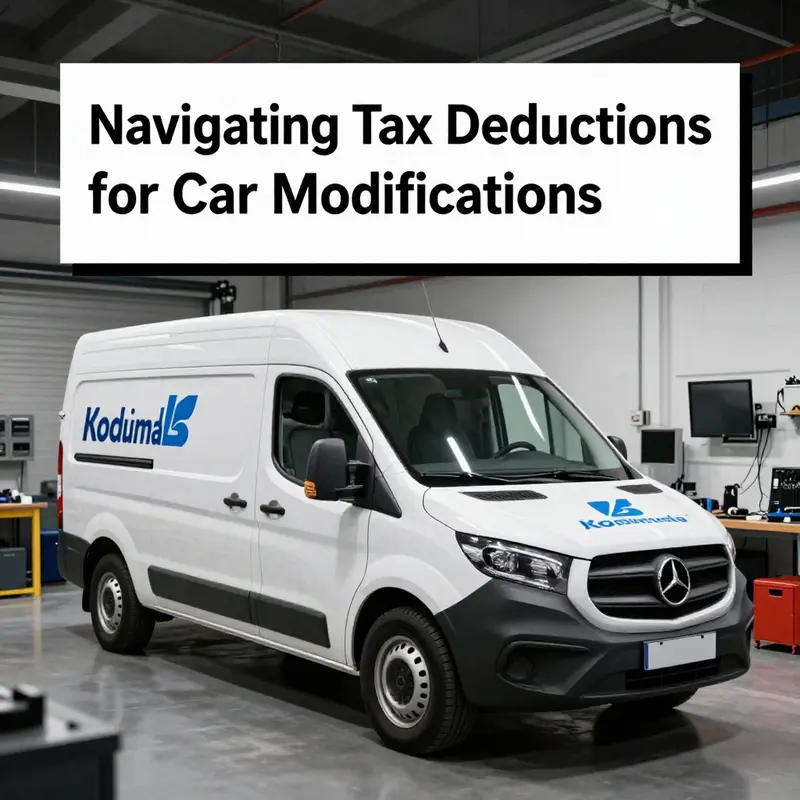
Claiming car modifications on tax can feel like threading a needle between practical business needs and the rules that govern deductions. The landscape is nuanced, especially in Australia, where the tax system distinguishes clearly between modifications that arise from a disability and those made to support business operations. The path to a legitimate deduction hinges on purpose, proportion, and documentation. When you slow down and trace the steps from intent to records, the process becomes less arbitrary and more predictable. The question, in its simplest form, is this: are the modifications necessary for your business, and is the use of the vehicle for work purposes properly evidenced? If the answer is yes, you have a stronger case for deductions that reflect the true cost of aligning the vehicle with business needs. If not, the chances of a tax benefit recede. The Australian Taxation Office (ATO) has set out criteria that distinguish two broad categories: modifications connected to disability and those tied to general business use. In the disability context, the relief comes through exemptions from luxury car tax (LCT) on modifications that adapt a vehicle to be driven by or to transport a person with a disability. This relief matters because it reduces a tax concession that would otherwise inflate the cost of the modification. In practice, this means that the modification itself is exempt from LCT, not that you claim a deduction for the modification in your personal income tax return. The financial impact is realized through savings on LCT, not through a deduction in the ordinary sense. Yet that distinction matters for budgeting and planning. For most people aiming to claim a modification as a business expense, the rules are different and more intricate. The core principle remains: a deduction is permissible only if the modification is directly related to and necessary for the business use of the vehicle. It is not enough that a modification happens to be useful; it must be practically indispensable to the way the business operates. This is where the line between business necessity and personal preference becomes critical. Think of the vehicle as a tool for work. If the modification turns the vehicle into a mobile workspace, a secure depot for tools, or a specialised transport solution that enables the business to operate, then the modification can sit under the umbrella of business expenses. A delivery driver adding a reinforced cargo shelf to transport fragile goods is a classic example. The modification is not cosmetic; it is a functional component of the business process. The documentation, however, is the hinge that connects intention to deduction. Receipts and invoices are essential, but they are not enough on their own. You must also demonstrate that the modification was necessary for the operation of the business and that it serves a business purpose more than a personal preference. Photos of the installation, work orders, contracts with clients, and records of how the vehicle is used for business activities help establish this link. In a practical sense, you should be prepared to answer questions about how a modification changes the way you run your business, what the alternative would be without the modification, and how the modification affects productivity, safety, or service delivery. The narrative for the tax office is that the vehicle is a business asset, and the modification is an integral part of making that asset functional for business use. Once this context is established, two pathways for claiming costs become relevant: the logbook method and the cents per kilometre method. The logbook method is the more comprehensive option for businesses that rely on vehicle use for work. Under this method, you calculate the business proportion of all car expenses based on a logbook that records business versus personal use over a representative period, typically at least 12 weeks. If, for example, your vehicle is used 80 percent for business during the logbook period, you apply that proportion to all allowable vehicle costs, which include depreciation or the capital cost of the vehicle, financing costs, fuel, insurance, registration, maintenance, and, crucially, modifications that are directly tied to business use. If the vehicle is used 100 percent for business, the entire cost of ownership and operation, including modifications, may be deductible to the extent permitted by other rules and caps. In numerical terms, this approach can be straightforward when the business use is clear and unambiguous. It becomes more complex when the use fluctuates or when the line between business and personal travel blurs. The other option is the cents per kilometre method, a simplified approach that assigns a fixed rate per kilometre for vehicle expenses. However, a critical limitation is that modifications are not deductible under this method. If you anticipate claiming modifications, you must fall back to the logbook method. This distinction is not a technical triviality; it shapes your entire tax planning. If you choose the logbook method, you must capture the business usage proportion accurately and maintain the supporting documentation that links the modification to business activity. The rules also contemplate the possibility of depreciation or capital allowances for significant modifications. The tax treatment of large, non-cosmetic improvements—such as a custom body kit, a conversion to electric propulsion, or the installation of permanent safety systems—depends on your jurisdiction and the scale of the expenditure. In Australia, there are thresholds and incentive programs that may allow an immediate deduction or accelerated depreciation for eligible equipment, particularly under small business incentives that encourage energy efficiency or other qualifying upgrades. The fundamental idea behind depreciation is that the vehicle and its modifications wear out or lose value over time. Because your business benefits from using the vehicle across multiple years, spreading the cost through depreciation recognizes the ongoing utility of the asset. In practice, this means you should not expect to deduct the total cost of a modification in a single tax year unless a specific immediate deduction is available under a threshold or incentive. In some cases, smaller, straightforward modifications might qualify for an immediate deduction if the cost falls under a prescribed threshold. The specifics of these thresholds can vary with changes in policy, so it is prudent to consult the latest guidance or a qualified tax professional who understands the current environment. Even when a modification is directly related to business use, there are limits to what can be claimed. Personal improvements, such as cosmetic upgrades or interior luxuries that do not improve business productivity, do not qualify. Modifications that increase the car’s value for personal use, or repairs and maintenance costs that are not directly linked to business use, are typically outside the scope of a business deduction. The clean separation of business and personal use is essential. If a vehicle is used for both purposes, you should apportion the costs between business and personal use in line with the demonstrated business usage. The record-keeping requirements reinforce the logic of the entire framework. You should retain original receipts and invoices for every modification, as well as photos or documentation showing the installation. A logbook is necessary if you are applying the logbook method. Proof of business purpose is crucial; this can be in the form of work orders, client contracts, delivery schedules, or other material that ties the vehicle’s use to business activities. It is worth noting that the tax treatment of vehicle modifications sits within a broader tax framework that includes vehicle expenses and incentives for small businesses. The rules require you to track not only the modification itself but also how it contributes to the functioning of your business. This integrated approach helps prevent over-claiming or misclassification. In practice, many business owners begin with a clear plan for how a modification will improve service delivery. They then design a documentation strategy that captures usage patterns, quantitative measures of improvement (such as faster delivery times or improved safety metrics), and the precise costs involved. As the business grows, these records become the backbone of the claim. If you need a concise map of the path from modification to deduction, think of it in three layers: purpose, proportion, and proof. Purpose asks: is the modification necessary for business operation? Proportion asks: what portion of the vehicle’s use is business-related? Proof asks: can you substantiate the business use and the modification with records? When all three layers align, a deduction for the modification under the logbook method becomes credible. The practical takeaway is to plan ahead. Before making a modification intended for business purposes, consider how and when you will document its business value. If the modification is truly essential to delivering your product or service, and you can support that claim with a robust logbook and contemporaneous records, you will be positioned to claim a deduction that reflects the real cost of operating the business vehicle. The process is not about maximizing a tax incentive through aggressive interpretation. It is about aligning the modification with the business’s operating needs and maintaining a transparent, verifiable trail that demonstrates the link between the modification and business performance. An important nuance is the interaction between disability-related tax concessions and business-use deductions. While disability-related modifications may benefit from LCT exemptions, these concessions do not automatically translate into business-use deductions in the personal income tax return. They address a different tax lever. If a vehicle is modified to accommodate a disability and that modification is used for business purposes, you would need to assess the respective concessions on their own terms. It is possible for both streams to apply, but they operate independently. The critical practice is to separate the records for LCT-related concessions and for business-use deductions, and to apply the relevant rules to each stream in parallel. This separation helps avoid mixing the evidence and ensures that each claim stands up to scrutiny. In this sense, the road to a successful tax outcome for car modifications is as much about disciplined record-keeping as it is about identifying legitimate business use. The most reliable path is to start with clear business purposes, collect consistent usage data through a logbook, secure comprehensive documentation of the modification, and then engage with the tax rules that fit your situation. If your business relies on a vehicle as a central asset, the discipline of demonstrating business use, combined with the formal recognition that certain upgrades are necessary, can translate into meaningful tax relief. As with many tax matters, getting it right depends on precision, documentation, and an honest appraisal of how the vehicle serves the business. For readers seeking a practical shorthand, a straightforward approach is to frame every modification in terms of business outcomes: does it enable you to deliver more reliably, safely, and efficiently? Does it align with the work you perform or the clients you serve? Do you have a clear proportion of business use that you can prove with records? If the answers lean toward yes, the case for a deduction strengthens. For those who want a more structured reference while navigating the rules, a curated guide can help. The linked car-modifications-guide offers a compact overview of the answers to frequently asked questions about business-related modifications and tax treatment, providing a practical framework for applying the rules to real-world scenarios. As you integrate modifications into your business strategy, keep in mind that tax law is not a fixed set of rigid steps but a living framework that adapts to changes in policy and in the way your business operates. Regular review of the latest guidance ensures you remain compliant while optimizing legitimate deductions. The end goal is not to game the system but to reflect the genuine economic cost of the vehicle as an operational tool. This requires a steady habit of record-keeping, a clear understanding of business use, and a willingness to seek professional advice when transactions reach a threshold where professional depreciation, incentive programs, or specialized rules come into play. For many businesses, that moment comes when a modification crosses from cosmetic or convenience into a core capability that enhances productivity, safety, or service capacity. At that point, the modification becomes more than a feature; it becomes part of the business’s asset base, warranting careful treatment under the tax rules. In summary, you can claim car modifications for business purposes, but the path is defined by necessity, proportion, and proof. The logbook method is the central vehicle for claiming these costs, while the cents per kilometre method offers a simpler but more limited alternative. Depreciation or accelerated deductions may be available for substantial modifications, but only through the appropriate channels and with proper qualification. The distinction between disability-related concessions and business-use deductions remains important but manageable with disciplined documentation and a clear understanding of how each claim fits within the broader tax framework. By approaching modifications as a business investment and not merely as a personal upgrade, you place yourself in a better position to translate work-related needs into legitimate, well-supported tax benefits. For further reading that equips you with practical steps and examples, see the car-modifications-guide linked in this chapter. And for authoritative, official guidance, the Australian Taxation Office provides a detailed overview of the business use of cars, including how to handle expenses, logbooks, and deductions in a compliant manner. External resources help anchor your strategy in the rules, while your records anchor your claims in reality. External reference: https://www.ato.gov.au/business/vehicle-expenses/business-use-of-car/.
Tax Rules in Motion: Car Modifications from Disability Adaptations to Business Deductions Across Borders

Tax matters that touch how we use a vehicle often feel like a labyrinth, especially when you layer in disability adaptations, personal preferences, and the occasional business requirement. The chapter that follows ties together the threads from the Australian and American contexts, showing how different tax regimes treat car modifications, what qualifies for relief, and how taxpayers can document their cases so they stay on the right side of the law. The overarching question remains the same across borders: can you claim car modifications on tax, and under what conditions does that claim actually make sense?
In Australia, any discussion about car modifications and tax starts with the luxury car tax framework. For people with a disability, the Australian Taxation Office offers a specific and meaningful relief: luxury car tax concessions on modifications made solely to adapt a vehicle for use by a person with a disability or to transport a person with a disability. This is not a blanket deduction of the modification cost. It is an exemption from LCT on the value of the modification itself, which lowers the overall purchase or installation price in the eyes of the tax system. The key nuance is crucial: the relief applies to the modification’s value in the context of LCT, not as a deduction on your personal income tax return. In practical terms, this means you do not pay LCT on the modification, which reduces the upfront cost, but you do not receive a deduction against income tax for the expense itself unless other tax provisions apply.
The practical effect for many families and individuals is clear: if you are adapting a vehicle to be driven by a person with a disability or to facilitate the transport of a person with a disability, you should check whether the modification qualifies for LCT relief. If it does, the tax benefit comes through the exemption, not a line in your income tax return. The ATO guide on the topic, Tax concessions – cars, last updated on 16 April 2024, provides the authoritative, up-to-date criteria and examples. While the guide lays out the precise eligibility tests and documentation requirements, a few core themes emerge from the guidance and related case history. First, the modification must be necessary to enable the vehicle to be driven by a person with a disability, or to facilitate transport for a person with a disability. Second, the modification must be designed for use by the disabled person and must be intended for ongoing use rather than a one-off convenience. Finally, the agency emphasizes keeping robust records that demonstrate both the necessity and the appropriate use of the modification.
This framework, generous in its intent, invites a careful approach to planning. It rewards families who pursue genuine adaptations with a tangible reduction in the vehicle’s price from a tax perspective, but it does not transform every modification into a deductible expense on a personal return. For readers who also manage business fleets or use modified vehicles for work, there remains a separate world of deductions and concessions—but those are governed by different rules and tests. In particular, general car modifications that are not disability-related typically do not qualify for a tax deduction on personal income tax unless the modification is directly linked to work and the vehicle is used primarily for business purposes. The line between personal use and business use matters a great deal. Even when a modification seems obviously beneficial for work, the tax office requires clear evidence that the change was necessary for the job and that the vehicle is used for work-related travel more than for personal trips. The ATO’s guidance stresses the need to demonstrate the business nexus and proportion of use, which can include things like company logo installations on company vehicles that are used primarily for business or specialized equipment that is essential for a delivery or service role.
A nuanced but important point is that the Australian approach focuses on the function of the vehicle in relation to disability or work. If the aim of a modification is comfort or style rather than functional necessity, it is unlikely to attract any LCT concession or income tax deduction. This isn’t a reflection on personal priorities; it’s a matter of policy design. The rules aim to ensure that relief is targeted to improving accessibility and mobility for people with disabilities, or to enabling work-related tasks, rather than subsidizing personal preferences. For readers who are navigating this terrain for the first time, a thoughtful sequence of steps is helpful: confirm that the modification is for disability-related purposes, verify that LCT concessions apply to the modification’s value, document the functional purpose with medical or occupational statements where appropriate, and retain invoices and installation records as part of your evidence package for tax reporting.
For those who want a concise, practical reference as they plan changes or query an advisor, a useful resource is the car modifications guide linked in the broader materials. The guide helps readers understand the interplay between different types of modifications, their practical implications, and how to present a case to the tax authority when seeking concessions. You can read more about this topic in the car modifications guide. car modifications guide.
Beyond Australia’s shores, the chapter becomes more complex but equally instructive. In the United States, the tax landscape for car modifications splits into federal guidelines and state-by-state nuances. At the federal level, there is no universal luxury tax on modifications per se. Instead, the Internal Revenue Service provides pathways for businesses to recover the cost of modifications used for business purposes through depreciation or, in some cases, immediate expensing under Section 179 of the Internal Revenue Code. The key test here remains the same as in any tax discussion: the modification must be necessary for the business function, not merely a matter of personal enjoyment or preference, and it must be connected to the business use of the vehicle. This means a modification that assists a delivery driver in performing essential duties, or specialized equipment that enhances the vehicle’s business capability, may be eligible for some form of deduction. The IRS guidance stresses that documentation matters: you need a clear demonstration that the modification is necessary for the business function, and you must show that the vehicle is used for business purposes in a substantial way. In practice, this often requires maintaining a log of business-related trips, evidence of the vehicle’s primary use for work, and records of costs that tie directly to the business needs.
State regulations add another layer of complexity. Some states impose taxes or fees on high-value vehicles or substantial alterations, which can affect the total cost of modifications and the taxes due. While the federal framework might allow depreciation or expensing, state tax treatment can differ, and some states may have additional requirements or limitations on deductions for vehicle improvements. For taxpayers with multi-jurisdictional concerns or those who manage fleets across state lines, the path to a legitimate deduction becomes a careful exercise in aligning business use, documentation, and the timing of expenditures with the applicable tax rules.
Auditors, as with many tax matters, scrutinize significant modification costs when they appear to push the vehicle’s value or use into a different category. In the United States, modifications costing five thousand dollars or more can trigger closer examination if the deduction or depreciation seems out of proportion with the business use. The prudent approach is to document everything: what the modification is, why it is needed, how it relates to the business, and how much of the vehicle’s use is business-related. The goal is to provide a compelling, well-supported business narrative that aligns the expenditure with the vehicle’s function in the enterprise, not with personal leisure.
Another universal theme is the importance of record-keeping. In both Australia and the United States, the tax authorities value thorough documentation: invoices, installation records, seller statements, usage logs, and any professional assessments or diagnosis that support the necessity of the modification for disability or for business operations. The more complete the documentation, the more easily it is to demonstrate that relief or deduction is appropriate under the rules, and the less likely a claim will be challenged on audit.
For readers who are navigating the cross-border landscape, it is essential to anchor expectations in the actual rules and official guidance rather than in anecdotal advice. The Australian ATO guide remains the definitive source for disability-related concessions in Australia, and it is wise to consult it when determining eligibility for LCT concessions on a modification’s value. In the United States, while the Section 179 deduction and other business-related depreciation provisions offer potential relief for modifications, the specific application hinges on how the vehicle is used in the business, the nature of the modification, and the robust documentation that links cost to business activity. The IRS provides the latest resources and examples, and it is often advisable to consult a tax professional who can tailor guidance to your particular situation and jurisdiction.
If you want to dig deeper into practical steps and policy nuances, consider looking at the detailed guidance and examples that appear in the federal and state materials, and remember that guidance evolves. The IRS page on Section 179 deductions offers a comprehensive overview of what qualifies, how deductions are calculated, and the limits that apply to small businesses and self-employed individuals. While the content here pulls from a broad survey of sources, it is the precise, up-to-date text from the official website that should govern any concrete decision.
In sum, you can claim car modifications on tax, but the path is contingent on context and purpose. In Australia, disability-related modifications may attract LCT relief, not a personal deduction, while general work-related modifications could qualify for business-related concessions under strict criteria. In the United States, there is no blanket federal tax on modifications; instead, deductions and depreciation hinge on business use and proper documentation, with state rules potentially adding another layer of obligation or relief. The core message across both systems is the same: understand the purpose of the modification, demonstrate its necessity, maintain meticulous records, and align your claim with the specific rules that govern the jurisdiction in which you file. By doing so, taxpayers can harness legitimate relief while staying compliant with the tax authorities.
External resource for further reading on U.S. tax treatment is available via the IRS’s Section 179 deduction guidance, which offers the most authoritative, current framework for how vehicle modifications used in business may be expensed or depreciated. https://www.irs.gov/businesses/small-businesses-self-employed/section-179-deduction-for-small-businesses
Final thoughts
Navigating the complexities of claiming tax deductions for car modifications requires a clear understanding of the regulations that apply to individuals with disabilities and businesses alike. While certain modifications can lead to tax benefits, it’s crucial to ensure compliance with ATO guidelines and establish a direct link between modifications and their purpose—be it facilitating accessibility or enhancing business operations. Armed with this knowledge, hobbyists, enthusiasts, and professionals can maximize their potential savings while staying compliant. Remember, every vehicle modification journey is unique, and understanding tax implications can give you an edge in both your passion and your finances.