
In a country where the automobile is not just a mode of transport but an extension of personal identity, car modifications take center stage. Whether you’re a hobbyist looking to fine-tune your ride, a professional tuner aiming for performance upgrades, or a classic car restoration enthusiast cherishing vintage vehicles, understanding the legal aspects of car modifications in India is crucial. This comprehensive guide delves into the legal framework governing car modifications, outlines the types of alterations permitted, highlights common restrictions, and navigates the procedural requirements for legal modifications. By ensuring compliance with the law, car enthusiasts can enjoy their passion without fear of legal repercussions.
Navigating India’s Patchwork: The Legal Boundaries of Car Modifications and What It Means for Owners and Builders
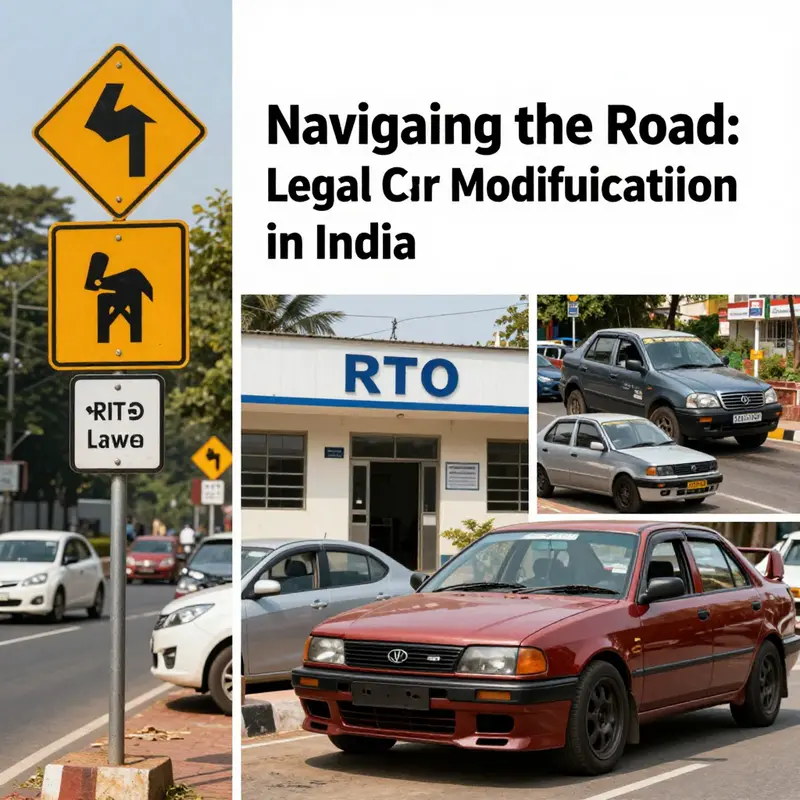
The landscape of car modifications in India is less a single, clean blueprint and more a spectrum of rules, interpretations, and practical realities that differ from city to city and state to state. This isn’t merely a matter of taste or performance; it is a dialogue between safety, exhaustively documented standards, and the evolving approach of enforcement agencies. At the core lies a framework built on the Motor Vehicles Act of 1988 and the subsequent Central Motor Vehicles Rules of 1989, but those instruments do not spell out a uniform, nationwide catalogue of permissible tweaks. Instead, they establish a scaffold that requires alignment with technical standards set by reputable bodies such as the Automotive Research Association of India (ARAI) and the Bureau of Indian Standards (BIS), while leaving space for local authorities to interpret and enforce rules in light of public safety and traffic management priorities. This dynamic creates a pragmatic challenge for owners who want to tailor a vehicle for performance, efficiency, or aesthetics, and for workshop professionals who translate ambitions into legally compliant builds.
In practice, the central statutes view modifications through a stringent lens: any alteration that changes a vehicle’s structure, performance envelope, or safety systems must be anchored to formal approval processes and technical compliance. Engine work, exhaust changes, suspension alterations, and even aesthetic shifts can cross a regulatory line if they affect emissions, crashworthiness, or roadworthiness. The prestige of ARAI and BIS in this conversation is not ceremonial. Vehicles are increasingly expected to meet specific standards for standards-setting bodies, and any deviation away from those standards invites scrutiny at fitness tests, inspections, and, potentially, penalties. The principle is straightforward but the execution is intricate: modifications must be documented, justified, and demonstrated to be compliant with CMVR and related rules, not merely attractive on a workshop floor.
A distinctive feature of India’s regulatory approach is the degree of federalism in enforcement. While the central acts provide the overarching framework, the Regional Transport Offices (RTOs) and state transport departments wield substantial discretion in how modifications are scrutinized and approved. This means a modification that sails through in one metropolis may encounter a more rigid reception in another. Notably, some metropolitan regions—think of large, congested cities—have begun to require formal permissions from local traffic authorities before certain changes can proceed, accompanied by proofs of technical compliance. The absence of a single, national standard means the road map from concept to legality often bifurcates as it travels from the shop floor to the street. The risk here is not only financial fines or penalties but also the potential loss of a vehicle’s fitness certificate if the modification is deemed non-compliant during annual checks. A lack of uniformity underscores a simple but fundamental truth: modifications are legal only when they are transparent, well-documented, and formally sanctioned.
To understand what this means in concrete terms, it helps to distinguish between categories of modification. Some alterations are clearly within the boundary of standard maintenance and aftermarket upgrades—things like upgraded brake pads, tires of a higher load rating, or non-structural cosmetic enhancements—provided they do not alter the vehicle’s fundamental safety systems or emissions profile. Other modifications tread into more sensitive territory. Engine tuning, turbocharging, engine swaps, or any change that expands or reduces the engine’s displacement beyond factory specifications typically require prior approval and, often, a re-certification process. Exhaust system changes are another hotspot. A free-breathing or louder exhaust may look appealing from a performance or acoustic standpoint, but it can also lead to non-compliance if it increases noise beyond permissible levels or interferes with the monitoring of emissions. In many cases, the change must be evaluated against noise and emission standards that the CMVR and BIS help articulate.
Color changes, while seemingly cosmetic, have their own regulatory dances. In India, altering the color of a vehicle without properly updating the registration documents can invite trouble at traffic stops or fitness tests. The registration certificate (RC) is the official record of the vehicle’s identity and its approved specifications. If the color is altered, a corresponding update to the RC is often required to keep the vehicle legally recognizable. Admittedly, this is not always a source of constant friction for every owner, but the rule is clear: if you change color, do so with proper documentation and a notified update to the registration details.
Body modifications present a different risk profile altogether. Large spoilers, wide-body kits, or other structural enhancements may be attractive to enthusiasts, but such alterations can affect vehicle dynamics, pedestrian impact outcomes, and overall road safety. The question is not merely whether a kit looks good; it is whether it preserves the integrity of the chassis, maintains proper crash compatibility, and remains within the tolerances tested and approved. In many cases, an accessory’s approval hinges on whether it has been homologated or tested to confirm it does not compromise safety or emissions. The more an accessory claims to modify the fundamental restraint systems or impact absorption capacities, the more stringent the scrutiny becomes. Roads require predictable behavior from vehicles, and the regulatory system rightly fears deviations that could transform a reliable machine into a safety risk.
Emissions control is another pillar of the legal framework that cannot be overlooked. Modifications that tamper with catalytic converters, diesel particulate filters, or other emissions-reduction devices are treated with particular severity. The intent behind these controls is to protect air quality and public health, and tampering is not merely a regulatory misstep but a potential public policy offense. Even seemingly minor changes that could influence burn efficiency or exhaust composition can trigger compliance reviews. This is why the process of obtaining permission for modifications often involves demonstrating that emissions will remain within the standards to be assessed by the relevant authorities, and in many cases, re-emission testing or documentation of compliance becomes part and parcel of the approval package.
What does this mean for the average owner or aspiring restorer, tuner, or builder? The route to legality is not simply a matter of expertise in design and torque curves. It is a discipline of paperwork, evidence, and alignment with established standards. The first step in any modification project should be a frank assessment of legality: have the proposals been checked against CMVR, ARAI guidelines, and BIS standards? Is there a clear path to obtaining RTO approval, including submission of technical specifications, drawings, and a robust justification for why the modification should be allowed? Will the modification depend on homologation documents or require a fresh certification by an authorized body? These questions are not rhetorical—they are the map to a compliant build.
In practice, this means engaging with credible technical professionals, arranging for verified testing and documentation, and maintaining a clear trail of approvals. The vehicle owner should be prepared to present a complete dossier: the technical rationale for the modification, the components involved, any changes to wiring or fuel systems, and an assessment of how the modification will affect safety features such as airbags, seatbelts, lighting, and reflectivity. It also means planning for the insurance and tax implications of modifying a vehicle. Some modifications can trigger changes in insurance premiums or coverage terms, and a policy that becomes invalid due to non-disclosure or misrepresentation can yield serious financial exposure. The literature on this topic consistently emphasizes that transparency with insurers is essential and that non-disclosure can void coverage in the event of a claim.
Importantly, the regulatory story is not static. It is contested and shaped by the evolving priorities of traffic safety, urban mobility, and environmental goals. Complaints about loud exhausts, aggressive body kits, or engine mods are often a signal that enforcement is tightening around a given corridor. In some urban corridors, authorities have started requiring explicit permission and proof of compliance before a modification can progress beyond the planning stage. This means builders and owners must stay attuned to local orders and the latest guidance from the RTOs and state transport departments. The absence of a nationwide, uniform standard is not a trivial historical footnote; it directly affects how quickly a project can move from concept to road-legal operation. It also means that diligence, rather than bravado, becomes the most effective strategy for maintaining a vehicle’s legality over time.
To navigate these complexities, many enthusiasts turn to expert sources and official guidelines. As the discussion unfolds, it becomes clear that the safest path is a conservative one: pursue modifications that clearly fall within approved categories, secure formal approvals, and keep documentation meticulously organized. It is prudent to consult official channels—RTO guidance, CMVR provisions, and the assessments of ARAI and BIS—rather than relying solely on anecdotes from workshops or online forums. The official route minimizes the risk of a vehicle being declared unroadworthy at a fitness test, minimizes the chance of penalties, and preserves the option to continue using the car legally once the modification has been completed.
For readers seeking a concise, practical snapshot of the landscape, there exists a useful synthesis that outlines the core considerations around legality, compliance, and practical adherence. For a concise overview, see car-modification-legal-india.
In sum, India’s legal framework for car modifications is deliberately cautious and interpretive. It aims to balance innovation and customization with the imperatives of road safety and environmental stewardship. The fragmented nature of enforcement means that what is permissible in one city may require additional steps elsewhere. This underscores a broader imperative for owners and builders: begin with the regulatory baseline, document every step, and proceed with the confidence that compliance is attainable through transparency and professional collaboration. In this unfolding regime, the province of what is technically possible is continually negotiated with what is legally permissible, and the rider who moves forward is the one who respects the process as a path to a safer, more predictable, and legally sound vehicle.
External resource: https://modifiyeliarabalar.net/blog/legal-car-modifications/
Type-Checked Tuning: Understanding What Modifications Are Legally Acceptable in India

In India, car modification is not a free-for-all; the regulatory framework binds changes to safety, emissions, and roadworthiness under the Motor Vehicles Act of 1988 and the Motor Vehicles Rules of 1989. The big idea is to enable personal expression and improved comfort without eroding the system that keeps roads safe and vehicles accountable for environmental performance. The Central Motor Vehicles Rules set the technical standards that are interpreted and enforced by the Regional Transport Offices, while the Ministry of Road Transport and Highways provides the overarching policy context. The Automotive Research Association of India contributes to the technical benchmarks that shape what is acceptable in practice. Given this landscape, modifications fall into a careful continuum where compliance hinges on documentation, conformity to standards, and how changes affect the vehicle’s fundamental behavior on the road. The practical upshot for most owners is that some alterations are straightforwardly permissible while others demand formal approval, testing, and a clear record in the vehicle’s registration and insurance documentation. When people think about modifications, the most common questions revolve around interior comforts, cosmetic changes, and wheel and tire choices rather than dramatic engine work. Interior upgrades such as new seat covers, upgraded audio systems, better insulation, or more ergonomic steering wheel interfaces typically do not touch the vehicle’s safety systems, so they are frequently allowed, provided installation does not interfere with airbag coverage, seat belt pretensioners, or critical instrument visibility. The climate in many Indian cities, with heat, dust, and humidity, makes material choice important; designers and installers often emphasize breathable fabrics and durable trims that endure long hours of use without compromising comfort or safety. Exterior cosmetic work, including nonstructural changes like wraps, decals, or nonintrusive color changes, can also be pursued within a permissive framework but only after the appropriate regulatory step. Registration authorities require that the modifications be documented and that the new appearance is not mistaken for a government vehicle or any special service unit; the changes must not obscure essential features such as license plates or lighting. This is not merely a formality; it is a direct path to keeping the vehicle street-legal while avoiding penalties that could arise from unregistered or misrepresented alters. Wheels and tires occupy a slightly more technical middle ground. Replacing rims with larger or more decorative designs is permissible when the new wheels’ diameter, width, offset, and mounting configuration remain compatible with the vehicle’s original suspension and steering geometry. The critical constraint is that any alteration must preserve safe handling and not create interference with brake lines or suspension components. Tires, likewise, must meet national certification standards such as BIS, and their load and speed ratings must align with the vehicle’s performance envelope. In short, a wheel and tire upgrade can be a meaningful aesthetic and performance choice so long as it preserves the car’s safe dynamic behavior and complies with official standards. Exhaust system changes occupy a similarly nuanced space. Owners may seek improvements in performance or sound, but the primary leash is emissions and noise. Any exhaust modification must ensure continued compliance with BS-VI emissions requirements and must keep noise within legally defined limits; a drone-like note that disturbs neighbors or violates local ordinances is not permissible. This is also about not hiding or circumventing pollutant control devices or defeating exhaust gas recirculation mechanisms; tampering with catalytic converters or other emission controls remains a clear no-go. Lighting upgrades—an area where many enthusiasts want brighter or more efficient illumination—are allowed when done within regulatory confines. Higher intensity LED bulbs or white warm LEDs can be installed if the beam pattern is correctly aimed and does not cause glare to oncoming drivers. The color temperature and distribution must align with the standards that regulate headlamps, fog lamps, and daytime running lights, so as not to impersonate other classes of vehicles or undermine safety. The throughline across these categories is the necessity for documentation and regulatory oversight. Any modification that touches a vehicle’s safety-critical systems, such as braking, suspension geometry in a substantial way, or the airbag system, generally requires prior authorization. Engine swaps, turbo upgrades, substantial powertrain tuning, or any alteration that shifts the vehicle out of its factory performance envelope are typically subject to more rigorous scrutiny, including possible testing and certification. In many cases, these changes must be accompanied by technical validation from a recognized authority or testing body and must be reflected in the RC, the registration certificate. The regulatory expectation is that changes do not undermine the vehicle’s crashworthiness or its emissions profile. Beyond the technical checks, there is a practical dimension to the process. States can differ in how strictly they enforce interpretations, and some RTOs may require additional verification when a vehicle is re-registered after modifications. Because of this state-to-state variability, a cautious owner consults the local RTO guidelines and seeks clarity before ordering parts or committing to a build. The broader ecosystem also matters. Proper documentation related to insurance cannot be assumed; many policies require disclosure of modifications and may adjust premiums or coverage if changes are substantial or not declared. Likewise, the vehicle’s fitness assessment in periodic inspections can hinge on whether the modifications have been properly recorded and approved, especially if the changes touch safety or emissions. The aim behind allowing variety within a controlled framework is not merely to permit personalization but to preserve safety margins and environmental performance while enabling thoughtful enhancements for comfort and aesthetics. This is why the CMVR and the Motor Vehicles Rules specify not only what can be changed but also how those changes should be documented, tested when necessary, and registered. Within this framework, many enthusiasts find a balanced path by focusing on modifications that improve comfort, aesthetics, or user experience without stepping into areas that trigger heavy regulatory scrutiny. For readers seeking a concise orientation on what is commonly allowed in everyday practice, a good starting point is the article on car modification legality in India car modification legality in India which distills the general possibilities while emphasizing the need to maintain documentation and alignment with CMVR and CMVR associated guidelines. Yet the heart of responsible modification remains the same: plan, verify, document, and register. If anything feels uncertain, consult the official MoRTH and RTO resources, and cross-check with technical standards from ARAI to ensure that the chosen modifications harmonize with the vehicle’s design, emissions profile, and intended use. This approach preserves safety and reliability while enabling a degree of personalization that respects the regulatory boundary. The emphasis on compliance is not a bureaucratic hurdle but a practical framework that helps vehicle owners avoid costly penalties, stalled registrations, or loss of insurance coverage when the time comes to renew or claim. In the end, modified vehicles that pass the necessary checks and maintain the essential safety and emission standards can reflect personal taste without compromising the road safety system that Indian highways depend on. External resources such as the national transport ministry and RTO portals provide authoritative guidance that helps owners navigate the gray areas with confidence, ensuring that the road ahead stays smooth and lawful for those who value both individuality and accountability. For official guidance, refer to the national portal of India’s transport ministry and RTO resources: https://www.rto.gov.in/
Legal Shapes on Four Wheels: Navigating Permissible Modifications in India
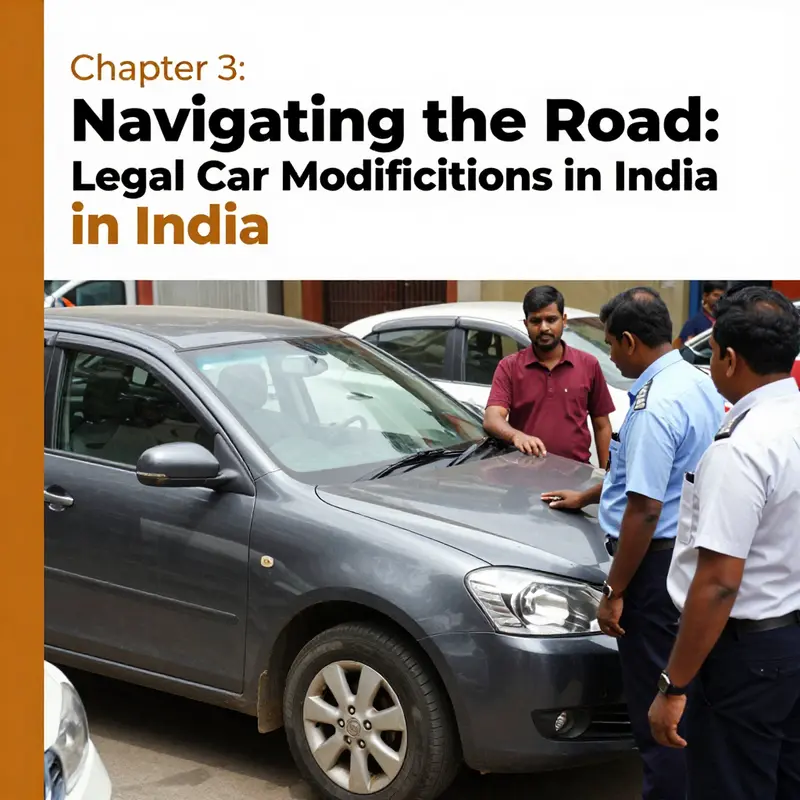
Modifying a car in India is more than a matter of taste or performance. It sits at the intersection of safety, environmental protection, and bureaucratic oversight that stretches from the local RTO office to national standards bodies. The backbone of this landscape is the Central Motor Vehicles Rules (CMVR), 1989, and the broader regulatory framework that gives shape to how changes are evaluated, approved, and enforced. The intent behind these rules is not to stifle customization but to ensure that any alteration does not undermine road safety, increases in emissions, or the vehicle’s structural integrity. In practice, this means that many modifications require prior approval from the Regional Transport Office (RTO) and must align with technical standards laid out by agencies such as the Automotive Research Association of India (ARAI) and BIS, the Bureau of Indian Standards. The path from a desire for modification to a road-legal, certified outcome is therefore a careful negotiation among design intent, technical feasibility, and regulatory compliance. For readers who want a concise entry point into how these issues are discussed publicly, see the overview at car modification legal India.
Exhaust systems sit at the first line of regulatory fire. In India, the exhaust is not just a matter of noise; it is a matter of emission control and air quality. The CPCB and relevant motor vehicle regulations constrain aftermarket exhausts that amplify noise beyond permissible limits or emit pollutants outside framed standards. A muffler that sounds excessively loud or a straight pipe can trigger penalties, including fines or temporary vehicle impoundment during roadside checks. The logic here is straightforward: louder sounds correlate with greater disturbance and could mask engine faults; more crucially, defective exhaust configurations can push emissions outside acceptable bounds. This is why many workshops urge buyers to choose exhaust options that are tested and approved for compatibility with Indian norms, and why any radical change in the exhaust system is approached with caution and formal approvals.
Lighting is another domain where legality and safety converge. The temptation to install high-intensity LEDs, colored headlights, or flash patterns is tempered by safety concerns and standardization. For most of these lighting changes, the key rule is conformity with the specifications set forth in Automotive Component Standards under BIS. Nonconforming lighting can create glare, mislead other drivers, and become a target for enforcement. The emphasis is not on banning innovation but on ensuring that visibility improvements do not compromise road safety. This is particularly important for headlights and auxiliary lighting, where the aim is clear illumination without dazzling oncoming traffic or violating road safety norms.
Window tinting illustrates a direct tension between privacy, comfort, and safety. The Supreme Court and MoRTH have laid down Visible Light Transmission (VLT) guidelines that determine how dark window films can be. Front windshields must allow at least 70% light to pass through, while side windows should permit no less than 50%. Exceeding these limits can result in warnings, fines, or mandatory removal of tint during inspection. The enforcement mechanism reflects a simple principle: visibility for the driver and other road users is non negotiable, and tint levels have to be consistent with this goal. Home-grown tint solutions that push the limits are not merely a cosmetic concern; they are a legal and safety risk that can undermine the vehicle’s overall roadworthiness.
Body kits and cosmetic alterations sit at a more nuanced boundary. Minor cosmetic changes are often permissible, but the moment modifications affect a vehicle’s dimensions—ground clearance, height, or overall footprint—the scrutiny increases. In many cases, changes that risk safety or alter the registration category require formal approval from the RTO. The logic is not to suppress individuality but to prevent modifications that could compromise vehicle stability, pedestrian safety, or nuisance to other road users. This applies to elements like extended spoilers or aggressive body kits that could alter aerodynamics or crash behavior. A careful, professional approach to such changes includes consulting the RTO, providing technical drawings, and ensuring any alteration remains within the weight and dimensions that the vehicle’s original category can legally accommodate.
Engine tuning and performance enhancements sit at the sharp end of regulatory concern. Indian law closely monitors modifications that alter engine capacity, horsepower, turbocharging, or fuel delivery beyond factory specifications. Chip tuning, ECU remapping, or the installation of performance hardware can threaten emission norms and warranties. In practice, such changes may void manufacturer guarantees and fail emission or safety tests during fitness inspections at the RTO. The regulatory position emphasizes that any performance upgrade must be compatible with CMVR guidelines and emission standards, verified through proper testing and documentation. The risk is not merely a fine; it can include the loss of registration or the inability to renew insurance until the vehicle again conforms to permissible specifications.
Emissions control is a throughline in all discussions about legal modifications. Tampering with catalytic converters, exhaust gas recirculation systems, or other emissions-control devices runs counter to national air quality objectives. The CPCB, in concert with CMVR and state implementation, reserves the right to inspect and penalize vehicles found to be tampering with the emissions framework. This is why the regulatory approach favors modifications that are either manufacturer-approved or tested against a robust set of norms, rather than spur-of-the-moment alterations that could lead to elevated pollutant levels.
Beyond individual components, the legal framework also covers changes that affect registration data. Altering a vehicle’s color, for instance, or making modifications that can influence the vehicle’s registration category or engine number requires updating the official records. When color or significant physical changes are made, the RTO must be notified, and re-registration processes may be necessary. This avoids situations where a vehicle’s appearance and its official identity diverge, which can complicate insurance, taxation, and traffic enforcement.
Bringing these threads together, the core principle is clear: any modification that alters the vehicle’s original specifications, safety features, or emission profile must be documented and approved by the appropriate authorities. The CMVR provides the framework, but local realities often hinge on the RTO’s interpretation and the technical validation provided by bodies such as ARAI. A practical route for owners is to engage early with the RTO, presenting plans, diagrams, and manufacturer-approved accessory lists. In some cases, the alternative is to pursue a more conservative path—sticking to factory-supported accessories and ensuring that any aesthetic changes remain cosmetic and within the permitted dimensional bounds.
The path to compliance is not a mere bureaucratic hurdle. It is a disciplined process that protects the vehicle owner from future disputes, insurance gaps, and unexpected penalties. Documentation matters: keep records of approvals, receipts for certified parts, and any testing that demonstrates conformity with norms. When in doubt, consult official sources. MoRTH’s guidance and the regional guidelines provide a reliable baseline, while ARAI can offer technical validation for wear parts and performance components. The goal is to harmonize the owner’s vision with the vehicle’s safe operation on Indian roads, ensuring that the final product remains a legitimate, road-legal machine rather than a liability.
This approach also has practical implications for resale value and long-term ownership. While some modifications may enhance appeal or performance, unapproved changes can complicate insurance claims, reduce resale value, or trigger complications during transfer of ownership. Insurance providers, too, often assess modifications against policy terms and the potential for increased risk. Owners who pursue modifications with appropriate approvals and documented compliance typically experience smoother transitions when renewing coverage or transferring vehicle ownership. The overarching message is simple: informed, compliant modification is not merely a legal obligation; it is a sustainable path to preserving value, safety, and freedom to customize within a framework that protects everyone on the road.
For readers seeking a concise reference to the legal landscape, a quick starting point is to review the commonly restricted domains—exhaust, lighting, tint, body modifications, and engine tuning—while keeping in mind that any change requiring a deviation from factory specifications must pass through the RTO’s scrutiny. In practice, the prudent approach is to treat modification as a project with regulatory checkpoints, not as a purely technical improvement. Preparation, documentation, and professional validation are the keys to turning a design idea into a road-legal reality. The journey from concept to compliant vehicle is navigable, but it demands respect for the rules that govern safety, environmental protection, and uniformity on India’s roads.
To reinforce the practical route forward, consider engaging with official guidelines issued by Indian transport authorities and corroborating technical standards through recognized bodies. If you want a public-facing overview that aligns with the topic, you can explore the article at car modification legal India. This resource discusses the balance between customization and compliance in a way that complements the regulatory perspective offered here. As you prepare to pursue any modification project, start from the assumption that approvals will be required for anything beyond cosmetic touches, and plan for a verification trail that can stand up to a fitness test, an insurance review, and, if necessary, a re-registration process.
External resource: For official guidelines and statutory references, consult the government portal at https://morth.gov.in.
Charting the Legal Course: How India Regulates Vehicle Modifications from Approval to Inspection
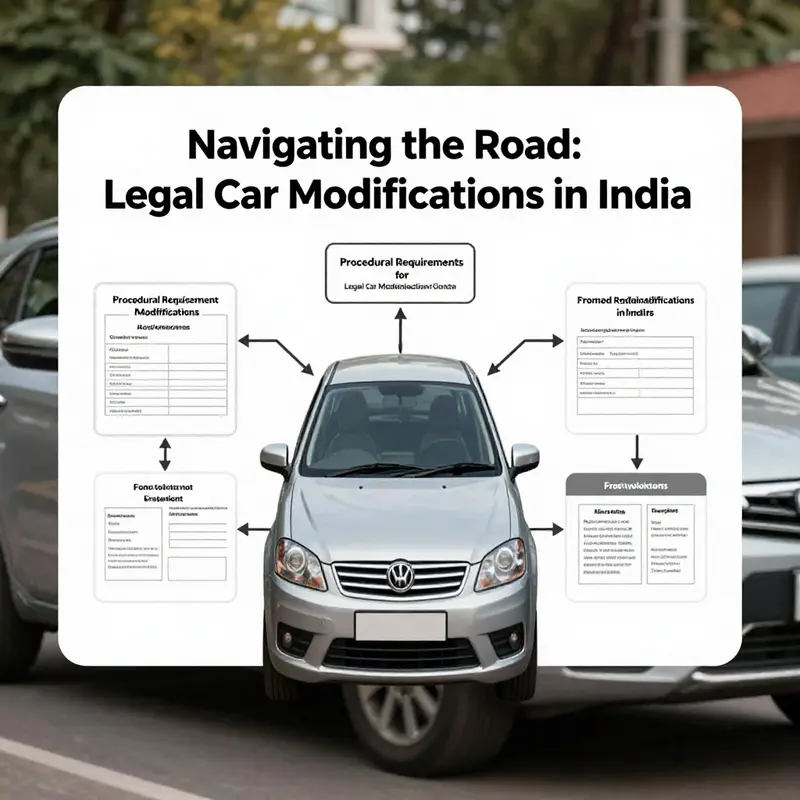
Enthusiasts chase the thrill of a personal silhouette of a car, a blend of performance, efficiency, and style. Yet in India, every adjustment that shifts a vehicle away from its factory specifications travels through a formal corridor of approvals and checks. The legal framework here is not merely a set of guidelines but a structured procedure designed to balance safety, environmental limits, and the practical realities of road transport. What begins as a wish to tune an engine or customize a body quickly becomes a jurisdictional journey through statutes that govern how, when, and under what conditions a modification is permissible. The backbone of this system is the Motor Vehicles Act of 1988 and the Central Motor Vehicles Rules (CMVR) of 1989, which together lay out the blueprint for what modifications can be pursued, and how they must be documented and validated before the modified vehicle can rejoin Indian roads. This is not a license to improvise. It is a call to engage engineers, testing facilities, and the local authority in a collaborative process that aims to preserve safety and curb pollution, while also recognizing the legitimate aspirations of vehicle owners to tailor their machines to their needs and tastes.
At the heart of the procedural landscape is the simple, practical principle that any change to a vehicle’s original design—be it engine capacity, suspension, exhaust, chassis, or body structure—must be vetted and approved by the Regional Transport Office (RTO) in the state where the vehicle is registered. The path from idea to road-ready modification begins with an application that is more than a forms-and-fees exercise. It requires a comprehensive dossier: precise technical drawings that map out the intended changes; engineering reports that justify the modification in terms of safety margins and structural integrity; and a certificate from an authorized testing laboratory confirming compliance with Indian Safety Standards (ISS) and the emission norms established by the Central Pollution Control Board (CPCB). In practice, this means engaging qualified automotive engineers and accredited testing centers, whose assessments carry the weight of regulatory enforcement. The emphasis on ISS and CPCB-compliant emissions ensures that the allure of performance or aesthetics does not come at the expense of road safety or environmental stewardship. To owners and modifiers, this is both a hurdle and a framework that channels creativity into verifiable, auditable standards.
The compliance checks embedded in this process are multi-faceted. A high-performance exhaust, for example, cannot simply be fitted and forgotten; it must be validated through emissions testing and noise profiling that demonstrate adherence to permissible limits. A change to the chassis, which implicates structural integrity, demands engineering verification that the vehicle will retain its crashworthiness and dynamic behavior under typical operating conditions. These checks are not merely bureaucratic rituals; they are safeguards intended to prevent unintended consequences on public roads. When the authorities review a modification package, they look for coherence among the drawings, the engineering analyses, and the testing data. Any discrepancy between the intended change and the measured performance or safety parameters can trigger a rejection or demand for amendments. The consequence of non-compliance is not merely a denial of the modification; it can extend to fines, impoundment of the vehicle, and, in some cases, denial of insurance claims after an accident. The legal risk is real, and the accountability is clear: the owner bears responsibility for demonstrating that the altered vehicle remains compliant with safety and environmental norms.
For modifications deemed significant—those that could alter the vehicle’s category or operating profile—the procedure becomes even more formal. Converting a standard passenger car into a commercial vehicle, or adding rooftop accessories intended for off-road use, triggers additional documentation requirements. Along with the standard technical and testing packages, applicants may need proof of ownership, a no-objection certificate (NOC) from the original equipment manufacturer (OEM) if applicable, and, in some cases, a re-registration of the vehicle under a new category. These steps are designed to prevent ambiguity about the vehicle’s classification, weight, and permissible use. They also help ensure that a vehicle moving between categories remains compatible with the regulatory environment that governs commercial transport, fleet operations, and public safety standards. In states that have embraced digital governance, like Maharashtra and Karnataka, the pre-approval process can be initiated online, shortening certain administrative cycles. Yet even with online portals, the ultimate sanction still lies with the local RTO officer, who may require a physical inspection at the RTO premises before final approval is granted.
The legal landscape is complemented by a clear warning about what happens if the procedures are not followed. Modifications undertaken without prior approval are treated as illegal. This is more than a minor offense: it triggers potential criminal charges under sections that govern vehicle documentation, registration, and roadworthiness. The consequences can ripple beyond fines into the denial of insurance coverage and dispute resolution challenges after an incident. In this sense, the procedural framework serves not only regulatory compliance but also a mechanism for risk management and consumer protection. A well-documented modification package reduces uncertainty and supports smoother interactions with insurers, repair professionals, and authorities should future questions arise about the vehicle’s condition or its performance history.
The ecosystem that supports legal modification in India involves several players beyond the RTO. Automotive engineers, BIS-accredited testing laboratories, and sometimes specialized consultancies collaborate to assemble the necessary evidence of compliance. These collaborations are not about circumventing rules; they are about translating design intent into testable, auditable data that aligns with ISS and CPCB standards. This cooperative approach also helps standardize practices across the diverse regulatory landscape of India’s states and union territories, where enforcement and interpretation can vary. In parallel, awareness initiatives under government campaigns such as Safe & Sustainable Mobility seek to educate vehicle owners about the importance of pursuing modifications within the formal framework. The aim is to cultivate a culture where legitimate modification is a disciplined activity, not an act of regulatory defiance. The messaging emphasizes that legal modifications are an investment in safety, reliability, and long-term value, rather than a shortcut to faster thrills or cheaper customization.
Still, the practical reality across the country is nuanced. Enforcement can be uneven, and the pace of change in state policies means that a modification that is technically permissible today might face a different regulatory posture tomorrow in another state. For this reason, owners who intend to modify should anchor their plan in the latest official guidelines issued by Indian transport authorities. The CMVR 1989 and the Motor Vehicles Act provide the formal spine, but the real-world application depends on the current interpretations and administrative practices of the RTO in the vehicle’s home state. The prudent path involves early engagement with a qualified automotive professional who understands both the technical and regulatory dimensions and who can help assemble the necessary documentation, anticipate potential concerns, and coordinate with the RTO during inspection windows. This preparatory work reduces the likelihood of post-approval complications, including requests for additional tests, revised drawings, or a return to the drawing board because an approval decision hinges on a specific parameter that officials deem critical.
For readers seeking a doorway into official guidance, the most authoritative source remains the central and state transport portals that publish the CMVR-related requirements and the procedural checklists. A concise takeaway is to treat modification as a regulated project rather than a quick upgrade. Begin with a clear statement of intent, followed by a rigorous plan that aligns design changes with ISS-compliant safety criteria and CPCB emission norms. Assemble a unified file that interlinks a detailed design package, engineering analyses, test laboratory certificates, and any OEM-related documentation. When this file is ready, submit it to the RTO and schedule the required inspections. The goal is not to suppress personal expression but to ensure the modified vehicle contributes to road safety, environmental health, and predictable maintenance profiles for years to come. To those who feel overwhelmed by the complexity, remember that the system rewards thoroughness and transparency with a smoother path to legal road-readiness.
Within this framework, one practical mindset helps: approach modification as a collaborative enterprise that includes the original manufacturer’s lifecycle considerations, the testing community’s validation rigor, and the regulatory authority’s safety and environmental priorities. This triad creates an environment where innovation can thrive within verifiable boundaries. It also helps dispel the myth that legality is a barrier to customization. In reality, it is a guidepost that ensures a modified vehicle remains compatible with road rules, insurance requirements, and the evolving standards that govern modern mobility. As a final reminder, always cross-check the latest official guidelines before committing to any change. The core message is straightforward: if you want to modify legally, you must navigate the procedural channels with diligence, documentation, and a willingness to align with standardized safety and emission norms. For readers who want a direct anchor to further reading on this topic, see the discussion on car modification legality in India.
For additional context and to explore how this topic is framed in popular discussions, you can consult resources that summarize legal perspectives on vehicle customization within India, such as the article linked here: Car modification legality in India.
External resource for further official guidance: https://www.mor.gov.in/
Chapter 5: Compliance as Compass—Understanding What Car Modifications Are Legal in India

On Indian roads, the urge to tailor a car to personal taste or performance often clashes with a well-defined set of rules designed to safeguard safety, environment, and shared spaces. This chapter treats compliance not as a burden but as a guiding compass. It traces how legality shapes what you can modify, how to pursue approvals, and why keeping to the process protects you from liability, insurance pitfalls, and roadway hazards. The aim is to provide a coherent, grounded sense of where customization begins and ends within Indian law, so readers can pursue practical enhancements without stepping outside the boundaries set by regulators and standards.
The backbone of legality rests on a layered framework that Indian authorities use to regulate modifications. At the core is the Central Motor Vehicles Rules (CMVR), 1989, which establishes the broad architecture for vehicle construction, reporting changes, and maintaining roadworthiness. This framework does not operate in isolation. It intersects with the Automotive Industry Standards (AIS) issued by the Bureau of Indian Standards (BIS), which codify mandatory design, construction, and performance requirements for components and systems. In practical terms, CMVR tells you that certain modifications require formal approval, while AIS provides the technical benchmarks that those changes must meet. In combination, CMVR and AIS delineate the line between permissible alteration and changes that must be rescinded or formally sanctioned. For any modification that alters the original specifications—engine capacity, chassis, body structure, or the emissions system—the owner must seek approval from the Regional Transport Office (RTO). The process requires presenting the vehicle’s current configuration, the intended change, and the technical justification. In many cases, changes to the engine, forced induction, or altering suspension geometry raise red flags and demand demonstrable safety testing, compliance with AIS and CMVR, and documentation of the parts used. The practical reality is that a modification proposal often triggers a chain of checks rather than a single green light. The RTO will look at how the modification interacts with the rest of the vehicle’s safety systems, how it affects braking, steering, lighting, and occupant protection, and whether the change maintains compatibility with the vehicle’s regulatory category. This is not a bureaucratic formality; it is a safety-focused inquiry that guards against unintended consequences on crowded highways and in varied climates across the country.
Within this regulatory ecosystem, certain modifications are commonly restricted because they threaten safety margins or environmental compliance. Engine tuning beyond factory specifications, unauthorized changes to exhaust systems that increase noise or emissions, altering vehicle color without updating registration, adding oversized spoilers or wide-body kits, and removing or tampering with emission control devices are among the frequently cited examples. Even seemingly cosmetic tweaks can become legal concerns if they undermine safety standards or environmental performance. The relationship between law and aftermarket parts is therefore not a simple preference chart; it is a technical assessment that weighs safety, stability, and ecological responsibility. When contemplating any aftermarket part, it is essential to verify whether the component has AIS alignment and whether the RTO will accept it as part of the approved configuration. This reminder—that not all aftermarket options are automatically permissible—helps demystify the ordering process and reduces the risk of finding a modification rejected after purchase.
Environmental considerations intersect in meaningful ways with modification law. India’s BS-VI emission norms have raised the bar for pollutants and the performance of exhaust aftertreatment. Tampering with catalytic converters, altering calibration to extract more power at the expense of emissions, or adopting performance maps that push NOx and particulate matter beyond permitted limits can yield penalties and render a vehicle noncompliant with road-use requirements. Regulatory bodies such as the Central Pollution Control Board (CPCB) actively monitor and enforce emission standards, signaling that the environmental dimension of compliance remains active long after a modification is completed. The emphasis on emissions underscores a broader truth: legality and environmental stewardship are entwined, not separate domains. Vehicles that remain compliant in the lab and on the road contribute to cleaner air and healthier cities, aligning personal preferences with collective welfare.
Beyond safety and emissions, the modern car ecosystem introduces cybersecurity and data protection concerns that influence what modifications are prudent. Contemporary vehicles incorporate connected systems, onboard diagnostics, telematics, and over‑the‑air (OTA) update capabilities. Software changes or hardware swaps that introduce security vulnerabilities can undermine passenger safety and vehicle integrity. As a result, modifications to software or to electronic control units (ECUs) should be vetted through certified channels, with attention to cybersecurity frameworks established by the relevant ministries and authorities. The emphasis on securing software updates complements physical safety standards, ensuring that a wholesome mechanical modification does not create new vectors for risk. This perspective is not theoretical; it reflects how regulators, manufacturers, and service providers are increasingly aligned on the necessity of secure, verifiable software workflows as part of any modification plan.
For readers seeking a clear, practical sense of where to start, the official path is straightforward: consult the Government and state resources that govern road transport. The Ministry of Road Transport and Highways (MoRTH) provides the central portal, while state Regional Transport Offices (RTOs) issue state-specific guidelines and approvals. The Automotive Research Association of India (ARAI) offers technical standards and testing guidance that help bridge the gap between design intentions and regulatory feasibility. When in doubt about a particular change, treat it as an integrated evaluation: assess safety impacts, verify AIS/compliance with CMVR, and obtain formal written clearance before implementing the modification. This approach reduces the risk of post‑hoc complications, such as reversion to stock parts, registration holds, or insurance disputes. For those who want a concise, reference-friendly overview of what is legally permissible, a dedicated resource summarizes the landscape and highlights common scenarios. car modifications legal in India offers a practical snapshot and cross-checks with regulatory expectations, helping readers align ambitions with compliance. While it is beneficial to consult such summaries, it remains essential to verify any claim against the latest official guidelines, which can evolve with new rules and amendments.
The path to compliant modification is not about stifling creativity; it is about channeling it through a framework that keeps roads safe and vehicles reliable. The legal route preserves the structural and functional integrity that engineers design into a car at the factory. It means staying within the approved performance envelope, maintaining the integrity of safety systems, and ensuring that environmental controls operate as intended. It also means recognizing that the law and the insurance ecosystem are interconnected: insurers expect documented compliance, and failure to establish it can complicate coverage or claims. The result is a more predictable ownership experience, where risks are understood, costs are anticipated, and durability is preserved alongside personalization.
Finally, the way modifications are approached often reveals character as a car enthusiast and a responsible owner. Enthusiasm is not opposed to regulation; it is complemented by a disciplined process that respects technical standards, safety margins, and public welfare. This is why many workshops and modifiers now emphasize pre-approval workflows, component-level verification, and traceable records. The better you document and align each choice with CMVR and AIS, the smoother the journey from concept to road-ready car. The result is a vehicle that reflects personal taste without compromising the expectations of other road users or the state’s regulatory objectives. In this spirit of informed refinement, knowledge becomes a practical tool that translates passion into a compliant, safe, and enjoyable driving experience.
For further nuance on how specific modifications fare legally, readers can consult official sources such as MoRTH and state RTO guidelines, and they may wish to review the AIS standards that apply to particular components. The broader takeaway is simple: compliance is a continuous practice, not a one-off checkbox. By prioritizing safety, environmental responsibility, and cybersecurity, owners and workshop professionals contribute to a more predictable, capable, and legitimate ecosystem for automotive customization. To explore authoritative guidelines and keep abreast of any regulatory updates, refer to BIS’s Automotive Industry Standards portal and related regulatory resources. External resource: https://www.bis.org.in
Final thoughts
Understanding the legal landscape of car modifications in India is pivotal for automotive enthusiasts. From the intricate regulations set forth by the Ministry of Road Transport and Highways to the practical implications for tuners and hobbyists, navigating this terrain demands both awareness and adherence to legal standards. By grasping the categories of permissible modifications and the importance of compliance, car enthusiasts can enjoy their passion responsibly. A harmonized blend of individuality and legality is not just essential for personal satisfaction but is a crucial component in promoting a safe and regulated automotive culture in India.