
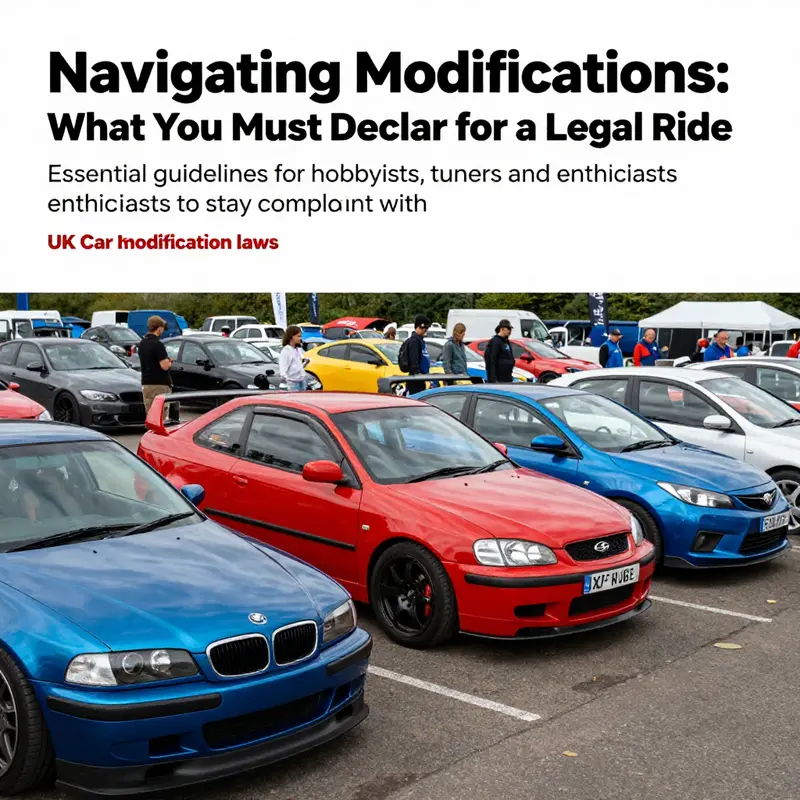
Car modifications ignite passion among enthusiasts, but understanding the legal landscape is crucial to avoid fines and ensure safety. From emissions to structural integrity, knowing what modifications require declaration is essential. This guide explores the key areas of compliance: emissions, safety and structural changes, and legal responsibilities for insurance. As we delve into each chapter, we’ll equip you with the knowledge needed to navigate the complexities of car modification, ensuring your vehicle remains road-legal and safe without compromising your creative flair.
Declaring Emissions-Influencing Modifications: How to Keep Your Car, Your Compliance, and Your Peace of Mind
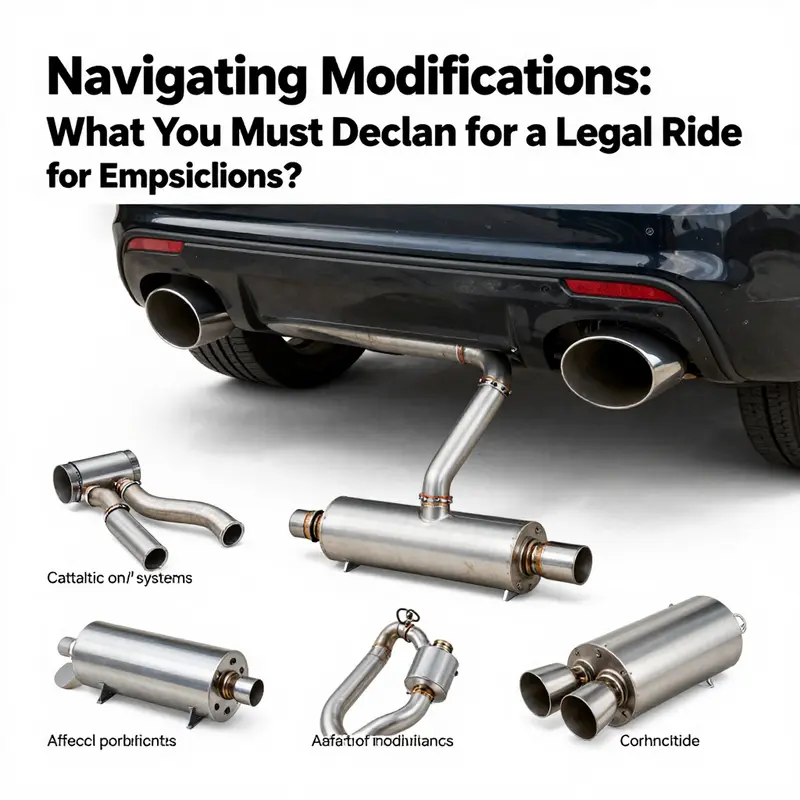
Modifying a car fires the imagination as soon as the key turns and the engine settles into its signature rumble. Upgrades promise sharper throttle response, better handling, or a more efficient burn. Yet when those changes touch the heart of how a vehicle breathes, burns fuel, or releases exhaust, legality and safety enter the equation with equal force. This chapter threads together the practical realities of declaring emissions-influencing modifications, showing how the rules work in everyday terms and why a conservative, well-documented approach protects you from costly complications later. It is not a sermon against customization; it is a guide to navigate the regulations that govern what you can alter, how you declare it, and why the declaration itself often matters more than the modification in the eyes of inspectors, insurers, and the law.
To begin, it helps to separate the landscape into the core areas where emissions control intersects with vehicle legality. In many jurisdictions—especially those with strict environmental rules—the parts of the car that directly affect emissions, engine performance, or the control systems tied to pollution reduction require scrutiny before they become part of your daily drive. The mechanics of the issue go beyond raw power or looks; they touch fuel-air mixtures, exhaust flow, catalytic efficiency, and the reliability of emission-control hardware under real-world driving conditions. When a modification alters any of these levers, declaring the change is typically not optional but a prerequisite to staying on the right side of road-legal status and insurance protection.
A practical way to think about it is to view emissions compliance as a safety net that keeps your car from drifting outside the limits designed to protect air quality and public health. The net is most tightly woven around modifications that change how the exhaust system, engine management, or related systems operate. In the UK and many other regions, alterations that could increase pollutant output demand formal approval or at least a documented demonstration that emissions remain within certified levels. This is not merely a bureaucratic box-ticking exercise. It is a guarantee that your car does not quietly exceed the strain of the environment under the added stress of a performance exhaust, a different intake, or a tuned engine map. The authorities want to see evidence that any change preserves or improves emissions control rather than sidestepping it.
A clear starting point is to understand which categories most often trigger reporting. Emissions systems sit at the top of the list. If you modify the exhaust, swap the catalytic converter for a non-certified unit, install a so-called downpipe that bypasses the catalysts, or alter the engine management in a way that could tilt emissions upward, you are moving into territory that often requires official validation. In practice, many of these changes are legal only when the parts are approved for use on the road or when a regulator has granted a specific exemption. Without that approval, the modification can render the vehicle non-compliant, invalidate the MOT, and complicate insurance coverage. The underlying principle is straightforward: any modification that has a plausible chance of changing the vehicle’s emission profile needs careful review before it enters use on public roads.
Beyond the exhaust and engine controls, structural and body alterations also interact with emissions in less direct but equally important ways. A dramatic lowering of suspension, changes to track width, or the fitment of body kits that alter aerodynamics can influence how a car breathes at speed, how it handles under wind load, and even how the braking system responds under heavy use. While these changes may primarily be about aesthetics or handling, they can interact with regulatory limits on vehicle dimensions, braking performance, and stability control. If the modification compromises safety or compliance with standard specifications, it should be declared, and in many cases it will require a formal assessment to determine whether the car can still be driven legally on public roads.
Lighting and reflectors, though often perceived as cosmetic upgrades, also travel under the same umbrella when they deviate from the factory specification in a way that could affect visibility or signal interpretation. Brightened or differently colored headlights, certain HID configurations, or additional lighting that has not been properly installed can exceed safety standards. It is easy to overlook the regulatory dimension of lighting, yet the consequences of non-compliant lighting can range from failed inspections to penalties if the extra lighting distracts or misleads other road users.
Tyres and wheels may appear purely cosmetic or performance-focused, but the size, type, and configuration of tyres and wheels have a direct impact on emissions-related performance indicators. Incorrect tyre size or type can affect gearing, acceleration, and, critically, the accuracy of the speedometer and odometer. If wheels alter the suspension geometry or bearing loads in a way that could influence emissions or stability control, those changes require scrutiny. In some systems, the calibration for engine management, anti-lock braking, and traction control assumes certain wheel dimensions. When those assumptions are altered, the vehicle’s behavior under real-life conditions and its compliance with safety standards can shift, making declaration essential.
Suspension and braking systems sit at the intersection of ride quality, safety, and regulatory compliance. Aftermarket brake kits, coilovers, or suspension geometry changes can influence stopping distances, weight distribution, and dynamic stability. These factors, though not purely emissions-based, interact with how the vehicle operates in the real world. If a modification changes essential characteristics of how the car brakes, steers, or maintains road grip, it is prudent to declare it and seek validation to ensure it remains within the safety envelopes defined by the DVSA or corresponding authorities.
Speed and performance enhancements sit closest to the thrill and ambition of most owners. It is human to want more power, quicker throttle response, or an engine map that liberates hidden capabilities. Yet any software tuning or hardware change that alters the vehicle’s top speed, acceleration profile, or the way the speedometer reads must be assessed for legal compliance. The regulatory lens here is twofold: first, the modification must not push the car beyond the legal speed envelope; second, the speed data presented to the driver and to regulators must reflect reality. Software changes that advance power without matching emissions controls can produce a mismatch between what the car reports and what it is capable of emitting under regulatory test cycles. In practical terms, many tune maps and performance chips require declaration and, in some cases, approval or certification before the vehicle remains eligible for MOT testing and insurance coverage.
The central message is simple but powerful: if a modification touches the emissions controls, the engine’s emissions profile, or how the car governs itself under real-world driving, it belongs in the declaration log. Skipping this step creates a cascade of possible consequences—from MOT failure to insurance complications and, in the worst cases, prosecution. The risk is not merely a paperwork nuisance; it is a potential legal exposure that can affect your ability to drive the car, sell it, or obtain coverage for it.
For drivers in jurisdictions with explicit procedures, the declaration typically involves a two-stage path. The first is pre-modification due diligence: checking whether a component or a change is approved for road use, whether it carries emission-related certifications, and whether it will require re-certification or additional testing. The second stage is post-modification documentation: obtaining the appropriate certificates, manufacturer declarations, or regulator-approved marks that confirm the modification’s legitimacy. The DVSA in the UK is a prime reference in this regard, but the concept translates across borders: before you install a modification, verify that it is legal to install and to drive on public roads, and keep copies of all documentation that demonstrate compliance.
To make this concrete, consider the following scenario. Suppose a driver contemplates replacing the factory exhaust with a tuned system that promises a more aggressive sound and marginal gains in power. If the replacement exhaust includes a non-certified catalyst or if the engine management software is tweaked to lean-rich mixtures that could raise NOx or particulate matter, that combination almost always triggers a declaration requirement. The vehicle would typically need assessment against emissions standards and, in many cases, a formal re-certification pathway or a regulator’s approval before it can be used on the road with a valid MOT. If such documentation cannot be produced or if the modification is explicitly disallowed, the car risks failing inspections, attracting fines, or having the MOT invalidated. The same logic applies to a wide range of similar changes, from air-intake alterations that can affect fueling and emissions to performance calibrations that shift the engine’s operating window beyond what the official certification anticipated.
The national or regional framework for these explanations and approvals is not always identical, but the underlying principle remains consistent: the emission-related integrity of the vehicle must be demonstrably preserved after any modification. This is where the guidance from official authorities becomes a practical tool. In the United States, for instance, modifications that affect the emissions control system must be weighed against EPA standards. An aftermarket exhaust, a different air intake, or a non-certified catalytic converter can trigger regulatory scrutiny if they alter the vehicle’s certified emissions level. In the European Union, the EC type-approval framework serves a similar function. Modifications that change engine performance, fuel delivery, or exhaust configuration may require re-certification. The modern automotive landscape is a patchwork of national and regional regulations, yet the goal is uniform: ensure that alterations do not undermine clean air goals or safety benchmarks.
A useful way to approach this is to think of compliance as a continuous conversation with the relevant regulatory body rather than a one-off event. Before any modification, consult the regulator’s guidance and the vehicle manufacturer’s official lists of approved parts. Many manufacturers publish catalogs of emissions-compliant aftermarket parts. When in doubt, however, the safest path is to operate through a certified garage or a DVSA-approved tester who can map your plan to a compliant trajectory. The point of professional input is not to dampen your creativity but to translate it into a path that preserves legality and guarantees that the car remains fit for inspection and road use over time. This approach reduces the friction between your project goals and the regulatory expectations that govern everyday motoring.
The consequences of failing to declare are not hypothetical. They range from fines and penalties to the potential invalidation of your MOT certificate and complications with insurance. If a modification leads to a vehicle that no longer complies with emissions or safety standards, you may find yourself facing a road-traffic offense with substantial financial and practical repercussions. Insurance companies can become wary if the modifications are not disclosed, or if the declared configuration differs significantly from the policy’s assumptions. In some cases, driving an unreported modification can be treated as non-disclosure, which could invalidate a claim in the event of a fault or accident. The legal terrain also varies by jurisdiction, with some regions imposing stricter penalties for non-declaration and others stressing the need for certification and proof of compliance for high-risk changes.
How, then, should a conscientious owner proceed? The process starts with a careful planning phase. Before purchasing a part or committing to a modification, seek information from official sources and gather documentation that can support compliance. A checklist helps: confirm whether the part is road-legal in your area, verify whether it is emissions-certified, determine any required testing or approvals, and plan for the necessary paperwork. When in doubt, allocate time and budget for a professional assessment. A certified garage or a DVSA-authorized workshop can perform an impact assessment, provide a formal declaration of conformity, and guide you through the steps needed to maintain full compliance. In many cases, the correct sequence is to obtain confirmation that the modification is acceptable, perform the installation, and then complete any required regulatory testing or certification before putting the vehicle back on the road.
The narrative above aligns with the practical reality that many people face: the allure of customizing a vehicle meets the rigidity of environmental and safety standards. The tension is not between safety and freedom but between creativity and accountability. A well-executed declaration gives you a shield against the complications that arise when a modification’s emissions impact is uncertain or unverified. It provides a transparent trail that regulators and insurers can follow, which helps to preserve the life of the vehicle’s MOT, maintain coverage, and minimize legal risk. The emphasis should be on proactive communication with the appropriate authorities, clear documentation, and adherence to the recognized pathways for approval or certification. In short, declaration is a form of responsible ownership that respects both the car’s potential and the community’s right to clean air and safe roads.
To further ground these considerations in accessible guidance, it is worth noting that the global landscape—while diverse in its specifics—shares a common thread: emissions compliance is not a barrier to innovation but a framework that ensures innovation does not outpace safety and environmental protections. In the United States, the EPA’s guidance on vehicle emissions testing outlines how modifications are evaluated against established standards. In the European Union, the EC type-approval regime can require re-certification when engine performance or exhaust configurations are altered. In both contexts, the core practice remains: verify, document, and obtain necessary approvals before you drive a modified vehicle on public roads. For readers seeking a concise reference on the broader topic of compliant modifications, official resources such as the EPA’s guidance on vehicle emissions testing provide detailed information on how emissions-related changes are treated within the regulatory framework. https://www.epa.gov/vehicle-emissions-testing
The moral of the discipline is straightforward. If your modification changes how your car emits pollutants, or how the engine and emission-control systems function, you probably need to declare it. If your change touches the car’s structural integrity, lighting, tyres, suspension, or performance in a way that could influence safety or regulatory compliance, you should also declare it, or at least seek guidance to determine whether declaration is required. The drivers who succeed in this space are not the ones whoMaximize every potential performance gain without considering legal constraints; they are the ones who plan, document, and follow the proper channels. The job of declaration is to protect you, to protect others on the road, and to protect the vehicle’s value over time. A clear, well-documented path through regulation reduces the risk of a surprise failure at the point of inspection, a denied claim after an incident, or a costly legal dispute about whether a modification was permitted.
In practice, you will often find that the easiest way to stay on the right side of the line is to start with the end state you want to achieve and work backward through the regulatory requirements. If your goal is a louder exhaust, a more responsive tune, or new aero features, identify the emissions implications first. Then determine whether the parts are approved for road use and whether they require a formal declaration, re-certification, or a test. Finally, secure the necessary paperwork before installing the modification. The more transparent you are about the changes, the smoother the process will be when you next renew the MOT or update your insurance policy. This approach also minimizes the risk that a mid-life modification will turn into a mid-life audit where you must replace or revert parts to regain compliance.
For readers who want a solid starting point on the legal dimensions of car modifications, a concise reference exists in the broader discussion of legal car modifications. This resource offers a practical overview of what modifications are permissible and how to navigate the declaration process without stifling your enthusiasm for customization. legal car modifications
Ultimately, the path to emissions-compliant modification is about balance and accountability. The vehicle is a machine designed to operate within a regulatory frame that protects air quality, safety, and the integrity of the road system. Your role as an owner is to respect that frame while pursuing the enhancements you value. When you see the signals clearly—modifications that touch emissions controls, engine tuning, exhaust configurations, and the like—treat them as signals to pause, consult, and document. The payoff is a car that not only meets your personal standards for performance or aesthetics but also meets the standards set by the communities through which you drive. If you commit to that process, you are less likely to encounter the kinds of compliance headaches that can derail a project, affect your insurance, or compromise the vehicle’s legitimacy on the road.
For those who want to explore how the declaration process follows through in practice, a set of resources and case studies can help illuminate the steps from planning to certification. These narratives show how owners have navigated the regulatory landscape, what documentation proved essential, and how regulators assessed particular modifications. The underlying lesson from those accounts is consistent: preparation, verification, and proper documentation matter far more than the temptation to move quickly through a modification project. The road to a compliant, enhanced vehicle is a journey that rewards patience and prudence as much as ambition and ingenuity.
External reference for further reading on emissions testing and compliance is available from official environmental and regulatory bodies, which provide detailed guidance on how modifications are evaluated against established standards. https://www.epa.gov/vehicle-emissions-testing
Declaring Modifications: Safeguarding Safety, Legality, and Roadworthiness in the UK
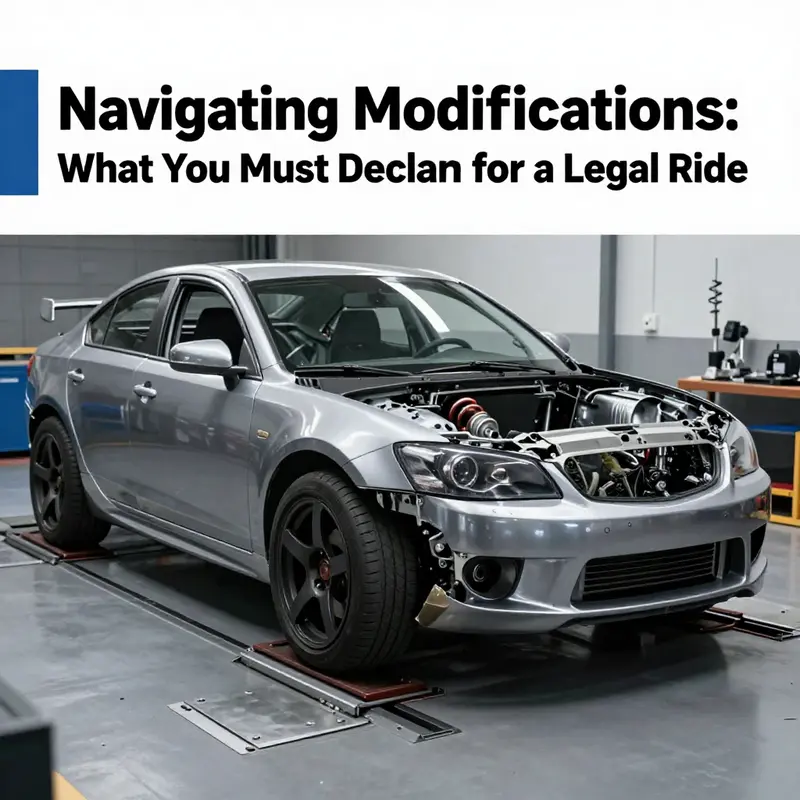
Modifying a car rarely stays contained to a single hobbyist corner of a driveway. In the United Kingdom, the road-legal status of a vehicle is not a static label but a dynamic balance between the original design intent and the modifications that keep it useful, powerful, or unique. The rules are written not to stifle customization but to ensure that every change preserves safety, environmental standards, and the shared responsibility we all bear when we share the road. The need to declare certain changes arises from a straightforward premise: when a modification alters how a vehicle behaves, how it stops, how it could affect others on the road, or how its emissions are produced, it becomes important not just to you but to other road users, insurers, and the agencies tasked with keeping traffic safe. The DVSA, the driver and vehicle standards authority, and other regulatory bodies provide a framework that helps motor enthusiasts, fleet operators, and everyday drivers navigate the line between permitted tinkering and prohibited alterations. The objective is not to discourage creativity but to prevent situations where a vehicle’s altered performance or design features evade safety checks, misrepresent vehicle capabilities at point of sale, or undermine the integrity of the MOT. When you consider what modifications you must declare, you are also considering the broader purpose of road safety, environmental compliance, and the practical realities of insurance and legality. The conversation, in many ways, centers on responsibility rather than restriction, and it begins with an honest assessment of how a modification might influence the vehicle’s fundamental systems, weight distribution, frame integrity, and interaction with safety features that are integral to the original design. In practice, the decision tree is not a bad news checklist but a live map of potential risk factors that, if understood and managed properly, preserves both the character of a car and the safety of everyone who shares the road with it.
At a practical level, the kinds of modifications that typically require declaration fall into broad categories that reflect how a car functions and how it presents itself to regulatory scrutiny. These categories are not arbitrary. They echo the way the vehicle is engineered to work within the constraints of UK law, and they align with the vehicle’s design limits and safety envelopes. Any modification that alters the chassis, suspension, braking system, steering geometry, or body structure is a signal that the vehicle’s overall performance envelope may have shifted. It is not only a matter of increasing speed or changing aesthetics; it is about whether the change affects handling, stability, occupant protection, or crash dynamics. In practice, drivers and modifiers must ask themselves whether the change would require a re-evaluation of the vehicle’s original design assumptions or require new tests to confirm continued compliance with safety standards. The principle is simple in theory: modifications that could compromise safety or compliance should be declared so that the appropriate checks can be performed and the vehicle can be re-certified if necessary.
Among the most straightforward examples are changes to emissions-related components. The exhaust system, catalytic converter, or engine management software can be altered in ways that reduce or increase emissions or noise. In the UK, any modification that increases emissions or alters the regulatory compliance of the exhaust system is illegal unless it receives official approval. A downpipe or a modified exhaust that bypasses a catalytic converter, or a performance chip that reprograms engine calibration without the necessary authorization, can lead to serious consequences. The MOT certificate, which serves as a periodic check of roadworthiness, can be invalidated if the modification undermines emission controls or noise limits. Beyond the letter of the law, there is a practical burden: insurance premiums often hinge on the modifications that are declared and documented. Insurance coverage can be voided or adjusted if modifications are discovered later to have been hidden or misrepresented, potentially leaving a driver exposed to large out-of-pocket costs after an incident.
Structural and bodywork changes sit at the opposite end of the spectrum from emissions. Altering the frame, unibody, or the dimensional footprint of a vehicle can change how it behaves in a crash, how crumple zones perform, or how passengers are protected in a collision. Lowering a car, widening the track, or fitting a body kit that alters overall dimensions may be purely aesthetic, but if those changes influence stability, weight distribution, or collision dynamics, they require scrutiny. The line here is not simply about how aggressive a modification looks; it is about whether it interferes with the vehicle’s original safety margins. A modification that modifies the vehicle’s center of gravity, affects suspension geometry, or alters load paths during a crash is exactly the kind of change that should be declared to the relevant authorities or a certified garage so that it can be assessed against safety guidelines and, when appropriate, certificated or inspected for compliance.
Lighting and reflectors are another area that sits at the intersection of visibility, safety, and regulation. Replacing standard headlights with brighter lamps or with different color temperatures, adding auxiliary lights, or altering reflector positions can affect how other road users perceive your vehicle’s presence and movement. The road is a shared space, and lighting is a primary communication tool between drivers. Inappropriate lighting, even if the vehicle remains mechanically sound, can violate road safety laws and must be declared to ensure that the installation adheres to approved standards and alignment requirements. The same applies to lighting that might interfere with other vehicles’ drivers, such as improperly aimed lamps or high-intensity discharge units that produce excessive glare. The repair and safety ecosystem expects that any such modification will be matched with correct installation practices and, if necessary, re-aiming or recalibration checks to maintain optimal visibility without compromising others’ safety.
Wheels and tyres are perhaps the area where the temptation to push limits is strongest for many enthusiasts. Tyre choice and wheel fitment influence grip, steering response, and the accuracy of speed and distance readings. Using tyres that are not the correct size or type for the vehicle, or mounting wheels that alter the vehicle’s handling characteristics or speedometer accuracy, creates a chain of safety implications. Changes in wheel offset, diameter, or bore can affect suspension geometry, steering geometry, and even brake clearance. The consequences are not purely theoretical: incorrect sizing can destabilize the car under braking, alter cornering behavior, and, in extreme cases, lead to mechanical interference with bodywork or suspension components. The safe path is to declare such changes and to supply documentation on the expected modifications, allowing a qualified assessor to verify that the changes remain within the vehicle’s design envelope and do not undermine safety or regulatory compliance.
Suspension and braking upgrades are among the most consequential categories because they directly influence stability, control, and stopping power. Aftermarket components such as upgraded coilovers, performance brake kits, or altered damping characteristics can improve driveability in some conditions but can also destabilize a vehicle in others if the installation or integration with factory systems is imperfect. These changes demand careful consideration of how braking force is distributed across axles, how weight shifts during braking or acceleration, and whether electronic stability or traction control systems retain their corrective capabilities. The declaration requirement exists to ensure those systems remain functional and well-matched to the new hardware. In some cases, modifications must be subject to inspection or certification to confirm that the braking system remains compatible with the vehicle’s wheel geometry, tire selection, and overall safety profile.
The realm of speed and performance enhancements touches both technical reality and regulatory boundaries. Minor tuning may be permissible in many jurisdictions, but any modification that increases the vehicle’s speed beyond legal limits or otherwise alters speedometer readings must be declared and, in some cases, approved. Software tuning that recalibrates engine output, torque curves, or throttle response can push a vehicle beyond what its original design can safely manage. In the UK, such changes may require formal authorization or at least formal documentation to align with safety and emissions expectations. The same logic extends to changes that compromise the integrity of speed measurement—alterations that distort the speedometer can create a mismatch between observed speed and actual speed, undermining road safety and potentially invalidating insurance coverage.
Yet safety concerns extend beyond the obvious mechanical and regulatory domains. There are modifications that touch the vehicle’s fundamental safety features, such as seat belts and airbags. Alterations that remove or modify seat belts undermine passenger safety in a crash and are generally not permitted. Weight distribution changes, such as adding heavy battery packs or fuel storage in ways that shift the vehicle’s center of gravity, can introduce new risk factors in a collision scenario. In cases like these, the modifications may require certification or inspection to ensure that the vehicle continues to meet safety standards and that occupant protection remains adequate. The moral of this principle is clear: any adjustment that has the potential to degrade a vehicle’s intrinsic safety features or its crash performance is a strong candidate for declaration and review.
The declaration landscape isn’t merely a list of forbidden alterations. It is a structured process designed to integrate new capabilities with ongoing safety checks. In the UK, the official guidance emphasizes that changes which could compromise the vehicle’s original design or safety features should be documented and, where necessary, inspected. The practical effect of this stance is to provide a pathway for enthusiasts to pursue meaningful improvements without surrendering safety or regulatory standing. The process typically involves notifying the relevant authorities, presenting documentation about the modification, and obtaining any needed approvals or inspections before the modified vehicle continues to be used on public roads. For many drivers this is not an obstacle to enjoying their car; it is a safeguard that ensures their changes do not create unintended risks for themselves or others while they are behind the wheel.
Understanding the declaration landscape also means recognizing the consequences of failing to declare. The penalties for non-declaration can be severe and include fines, invalidation of the MOT, complications with insurance, and, in worst-case scenarios, prosecution. The look and feel of a claims process can shift significantly if the insurer discovers undisclosed modifications, potentially leading to disputed claims or non-payment. These outcomes are not merely theoretical: they translate into real financial exposure for drivers and their families, which is why a cautious, transparent approach is always the preferred route. The important takeaway is that declaring modifications is not a formality; it is a protective measure that preserves the vehicle’s legal standing, preserves safety margins, and keeps the owner aligned with the broader framework of road-usage responsibility.
If you find yourself uncertain about a particular change, the safest path is to consult the official DVSA guidance or speak with a certified garage or vehicle technician who understands the regulatory landscape. The DVSA provides explicit guidance on vehicle modifications and safety requirements, and that guidance is designed to be practical for both individual motorists and fleets. Having access to the right information can prevent costly missteps, ensure your vehicle remains compliant through its MOT, and help you navigate insurance questions with greater confidence. While the specifics can feel technical, the overarching message is straightforward: any modification that could affect safety, emissions, or the vehicle’s original design should be disclosed and, when required, certified or inspected before the vehicle returns to the road. This approach protects you, other road users, and the broader system that governs vehicle safety and accountability.
In the spirit of supporting responsible customization, many drivers turn to educational resources and community-tested practices. Sharing experiences about what works, what triggers regulatory scrutiny, and how to document changes can reduce risk and demystify the declaration process. If you are considering a project, a good starting point is to review a concise, well-structured guide to the kinds of changes that commonly require notification. You can explore more about the declaration process and related considerations in the article that discusses declaring car modifications. There, the emphasis is on clear, practical steps, sound decision-making, and a framework for coordinating with insurers and assessors while keeping the vehicle safe and compliant. For readers who want to cross-check or deepen their understanding, the internal resource is a useful companion: you can read about declaring modifications in the dedicated guide here: Declare car modifications.
As a closing reflection, the declaration decision is ultimately about stewardship. Drivers are custodians of a shared space that demands predictability, reliability, and safety. The legal framework exists not to dampen passion for customization but to ensure that every change preserves the roadworthiness that protects everyone who shares the journey. When you weigh a modification, you weigh more than performance or appearance; you weigh how your vehicle responds in emergency scenarios, how it behaves at the limit, and how it communicates its presence to others. The safer, smarter path is to approach modifications with a mindset of transparency, verification, and alignment with official guidance. By embracing this approach, you can pursue meaningful improvements, stay in good standing with the law, and enjoy the confidence that comes with knowing your vehicle remains a responsible part of the UK’s road network. For official guidance on the legal framework, consult the government’s vehicle modifications and safety requirements document, which provides the formal context for what changes need declaration and how approvals are typically secured. External reference: https://www.gov.uk/government/publications/vehicle-modifications-and-safety-requirements.
Declaring Car Modifications: Navigating Legal Compliance and Insurance on UK Roads
Modifying a car can be a compelling blend of personal expression and practical performance. Yet in the United Kingdom, this instinct must be balanced with a clear understanding of legal boundaries and insurance responsibilities. A modification that seems exciting in a workshop or showroom can become a legal hazard if it crosses the line into changes that affect safety, emissions, or roadworthiness. This chapter invites you to think beyond the upgrade itself and toward the duty to declare, document, and align each modification with established standards. The thread running through the discussion is straightforward: legality and coverage are not afterthoughts but integral parts of any alteration.
Legal considerations start with the rule that certain alterations to a vehicle’s structure, emissions, lighting, or safety systems require approval and must be disclosed to the relevant authorities. In practice, this means engaging with the DVSA and consulting the regulatory framework that governs road vehicles. The relevant statutory backbone is the Road Vehicles (Construction and Use) Regulations, which define what changes may be made without triggering a compliance review, and which changes demand a formal sign-off. The aim of these rules is not to stifle customization but to ensure that vehicles remain safe to operate and compliant with environmental standards. The balance is delicate: the more a modification affects how the car behaves on the road, the more scrutiny it attracts.
To understand where to draw the line, it helps to consider the categories most commonly flagged by regulators. Emissions systems sit at the heart of the debate because they intersect with both environmental obligations and public health. Alterations to the exhaust system, catalytic converter, or engine management that could increase pollutants are generally illegal unless they have been approved through the proper channels. A classic example is the removal or alteration of a catalytic converter, or the installation of a downpipe that bypasses factory controls. Even software changes that tune engine performance can be problematic if they drive fuel burn and emissions beyond permitted levels. The consequences of non-compliance can be severe: penalties can be imposed, and an MOT certificate—an essential yearly checkpoint for roadworthiness—may be invalidated. The message is simple and underscored by experience across the fleet: changes made without permission carry a risk far beyond a momentary thrill of improved performance.
Structure and safety form the second major axis of regulation. Bodywork and structural changes sit at the core of this consideration. Modifications that alter the vehicle’s dimensions or its structural integrity, such as lowering suspension, widening the track, or fitting body kits that modify the exterior silhouette, may require declaration if they influence how the car behaves on the road or how it responds in a collision. The DVSA’s expectations are clear in this area: safety-related alterations must not compromise the car’s ability to stop, steer, or withstand impact within the tested standards. A lowered ride height or altered suspension setup can affect ground clearance, center of gravity, and handling characteristics. When such changes are likely to affect stability or compliance with UK regulations, the responsible course is to obtain approval before proceeding. The aim is to ensure that fashion and function do not come at the cost of safety or public welfare.
Lighting and reflectors are another focal point for declaration. Standard headlamps have precise beam patterns and color temperature to ensure the beam is directed where it should be and does not dazzle other road users. Replacing standard headlights with brighter or differently colored bulbs, particularly those in the blue or white blueish spectrum, or adding auxiliary lights without proper installation, can breach road safety laws. Unless a modification has been vetted for compatibility with the vehicle’s lighting system and approved for road use, it should be treated as a modification that must be declared. Improperly altered lighting not only risks exposure to fines but also endangers other drivers at night, fog, or poor weather, undermining the shared responsibility of all road users to maintain visibility and predictability on the road.
Tyres and wheels extend the discussion beyond aesthetics into the realm of mechanical performance and measurement accuracy. Tyre dimensions and types must align with the manufacturer’s specifications for a given vehicle. Using tyres outside the recommended size or type can affect suspension geometry, braking performance, wet weather grip, and, crucially, the accuracy of the speedometer. Even a seemingly modest change in wheel size or offset can influence steering response and handling. The law requires that any such change be disclosed if it affects these dynamic attributes or the vehicle’s compliance with safety standards. The core principle is straightforward: any alteration that could influence how the vehicle behaves when driven should be declared and, where necessary, tested or approved.
Suspension and braking systems occupy a particularly sensitive space where performance upgrades may outpace regulatory oversight. Upgrading to more aggressive coilovers, sport springs, larger brake kits, or different calipers can significantly alter how the car stops, how it corneres, and how it copes with weight transfer during braking and acceleration. If these changes affect stability, braking performance, or compliance with DVSA standards, declaration is essential. In some cases, modifications can be approved after assessment, but in others they demand a formal process that might include certification or professional inspection. The practical upshot is that any upgrade that alters fundamental safety characteristics should be treated as a modification that must be declared and validated before it is used on public roads.
Speed and performance enhancements sit at the boundary of legality and policy. It is common to see enthusiasts seeking to extract more power or quicker acceleration from their engines. Minor tuning might be permissible, but any modification that increases speed beyond legal limits or alters speedometer readings—and thereby misrepresents true speed—requires declaration and, in many cases, formal approval. Software tuning that moves engine output outside permitted thresholds is a typical example. The governing principle is that performance gains should not mask a hidden hazard: if the changes could push the vehicle into a category of higher risk, they must be scrutinized and approved. The process may include an assessment of the modified vehicle, a review of emissions data, and verification that the car still meets the roadworthiness criteria.
Across these categories, one guiding thread remains constant: the obligation to declare. A modification is not automatically illegal because it exists; it becomes a legal issue when it is used on the road without proper disclosure or without the necessary approvals. The practical implications extend beyond fines. Insurance is a critical axis of risk that interacts with modification declarations in meaningful ways. When a vehicle is altered, the risk profile changes. Insurers rely on accurate information to assess risk, calculate premiums, and determine coverage terms. When a policyholder omits modifications, claims can be complicated or denied, and in some circumstances, the policy may be voided entirely. The consequences are not limited to the moment of a claim; they can ripple through underwriting, renewal terms, and the ease with which a vehicle can be insured at all.
The central takeaway is not that modification invariably triggers catastrophe; it is that proper process matters. The DVSA provides guidelines to help motorists determine when a modification needs approval. The responsibility to understand, document, and declare rests with the vehicle owner. It is a practical, evidence-based stance: if a change could influence a vehicle’s emissions, safety, or measurement systems, treat it as something that requires review. Before making a significant alteration, the sensible course is to consult official guidance, talk to a qualified technician, and, critically, inform your insurer. This approach protects you legally, preserves your coverage, and ensures the modification contributes positively to the car’s operation rather than undermining it.
The policy landscape around modifications is not static. Regulations evolve with advances in technology, environmental targets, and road safety research. In the UK, the government maintains an up-to-date resource that outlines what modifications are permitted and how to achieve compliance. This guidance emphasizes that staying within the rulebook reduces risk and protects the ownership experience from costly disputes. It is wise to treat this information as a living reference rather than a one-time checklist. For those who drive imported or classic vehicles, or who want to explore non-standard aesthetics, the same rule applies: declare, document, and obtain the necessary approvals. The consequences of neglecting that discipline can be severe, but so can the benefits of doing it right—the security of a valid MOT, the certainty of insured coverage, and the confidence that your car’s performance is backed by regulatory alignment as you drive.
Policy and practice intersect most clearly at the moment of modification planning. You should begin with a frank assessment of whether the change is primarily cosmetic or functional, and whether it might influence safety or regulatory compliance. Cosmetic upgrades—like certain wheel designs or minor trim changes—may not require formal approval if they do not alter dimensions, weight distribution, or critical safety systems. Yet even cosmetic work can have tricky consequences if the final appearance interacts with lighting, reflectors, or visibility in ways that contravene regulations. For example, a visually striking body kit might alter lighting angles or the surface area of reflectors in ways that are not obvious at the point of sale. To avoid missteps, treat any modification that touches the vehicle’s external footprint, lighting, or identification marks as potentially eligible for scrutiny and declaration.
The role of due diligence cannot be overstated. When you intend to modify a car, you should gather documentation that can be provided to the DVSA, your insurer, and a garage or workshop performing the work. Documentation might include manufacturer specifications, part numbers, installation guides, and independent assessments of safety and emissions impact. In some cases, a professional inspection or test data may be required to verify that the vehicle remains within permitted limits after the modification. While such steps can add time and cost, they reduce the risk of penalties, ensure continued road legality, and help you negotiate with insurers when obtaining coverage tailored to a modified vehicle. In many instances, the process is smoother if you approach it proactively, with a clear plan, rather than making instinctive changes and reacting after the fact.
From an insurance perspective, the prudent path is transparency. Insurers rely on accurate representations of a vehicle’s characteristics to price risk and to determine what coverage is appropriate. When a vehicle has modifications that alter its performance, safety systems, or value, disclosure is not optional; it is essential. If you fail to declare modifications, the insurer may view the policy as misrepresented, which can invalidate a claim or void a policy. On the other hand, declaring modifications does not automatically lead to higher premiums or restricted coverage. In many cases, insurers welcome foresight and will discuss options for coverage that accommodates the altered risk profile. The conversation with the insurer should occur before the work begins, so you can understand how the modification will be reflected in your policy and whether you will need amendments or a specialized policy designed for modified vehicles. This proactive approach also helps with potential resale value, as future buyers will see a vehicle with clear, documented compliance and coverage alignment rather than a patchwork of undocumented changes.
When considering a significant modification, it is not enough to be certain of legality alone. You should also weigh practicalities, such as the availability of spare parts, the compatibility of new components with existing systems, and the ongoing maintenance requirements. Some upgrades may reduce reliability if the parts used are not designed to operate in harmony with original equipment. Others may demand more frequent servicing or specialized knowledge. The ownership experience matters as much as the legal one. A modification that yields substantial improvements in performance must still be manageable in daily use, at the fuel pump, and during routine maintenance. The best practice is to seek a balance: pursue improvements that are genuinely beneficial in your intended use, while ensuring the modifications can be serviced, tested, and validated in a way that preserves safety and compliance.
In practical terms, how should you proceed when you plan a modification? Begin with a clear project brief that isolates the objective—whether it is improved braking, enhanced lighting compliance, or a refined ride quality. Next, identify the regulatory constraints that could apply. Consult the DVSA guidance and speak with a qualified technician who can provide an objective assessment of whether the proposed change will trigger a declaration. If there is any doubt, err on the side of disclosure. Then, discuss with your insurer before the work starts. Ask whether the modification will require a policy adjustment, and whether you should arrange an updated valuation or documentation to support a claim in the future. Finally, arrange the work with a reputable workshop that can supply the necessary documentation, perform the changes to proper standards, and conduct post-installation testing to verify that the vehicle remains within legal and safety parameters. This approach is not merely bureaucratic caution; it is a structured process that protects you and others on the road while preserving the enjoyment of driving a vehicle you genuinely care about.
The practical implications extend to everyday life as well. For instance, if you drive a financed vehicle, the lender may have additional requirements or restrictions on modifications. Similarly, leased vehicles often come with clauses that restrict alterations or require professional authorization. In such cases, you must consider how a planned modification could affect your contractual responsibilities, including return conditions at the end of the lease or repayment terms on a financed purchase. Modifying a financed or leased vehicle without notifying the lender can lead to penalties or breach of contract. The prudent course is to examine the financing or leasing agreement, consult your lender, and ensure that any modification aligns with the terms of the contract before embarking on the work. This alignment protects you from unexpected charges or disputes when the vehicle’s ownership status changes or when the asset is returned.
Importantly, the consideration of regulations should thus be global in scope even when the destination is the UK. There are parallels in other jurisdictions, and a useful contrast emerges when you compare regulatory approaches. In the United States, for example, state-level rules can be highly varied, and some regions have stringent emissions controls that require pre-approval for certain aftermarket parts. The underlying principle remains consistent: modifications that affect emissions, safety, or vehicle dynamic performance should be carefully evaluated for compliance and insured accordingly. If you own a vehicle that has traveled across borders or if you participate in events or track days outside your home country, you must be extra vigilant to ensure that modifications remain legally permissible wherever the vehicle is operated. The broader lesson is practical: the legal and insurance implications of modifications depend not only on the modification itself but also on the environment in which the vehicle will be used.
To connect theory with practice, it helps to consider a concrete, verifiable pathway for anyone contemplating a significant change. The first step is to consult official guidance for vehicle modifications. The UK government maintains accessible information about what is permitted and how to ensure road legality. This resource emphasizes that changes should be approached with diligence, documentation, and a willingness to engage with competent professionals. The guidance also underscores that staying within the permitted boundaries helps ensure that the vehicle remains eligible for an MOT, a stable insurance arrangement, and a predictable ownership experience. The principle of proactive compliance reduces the risk of later disputes when a claim is filed, when motoring authorities inspect the vehicle, or when it is time to sell. For readers seeking precise regulatory language and current policy positions, the official documentation is the most reliable anchor, and it deserves careful reading before any major modification.
In closing, the question not only asks what you can modify, but how you should approach modification as a responsible owner. The legal framework exists to protect everyone on the road, and the insurance framework exists to ensure fair compensation and risk management. The most robust strategy is to declare modifications, document outcomes, and secure the necessary approvals before any change becomes part of your vehicle’s permanent configuration. This discipline preserves road safety, guarantees regulatory compliance, and helps you optimize the ownership and driving experience without inadvertently stepping into a grey area where penalties, disputes, or losses of coverage loom.
For readers seeking a concise starting point, the official UK guidance on vehicle modifications is a reliable first stop. It provides up-to-date, legally binding information on what modifications are permitted and how to ensure your vehicle remains road legal and insured. You can consult this resource to confirm the general categories that require disclosure and the processes involved in obtaining approval. If you want a practical overview that mirrors the sentiment of this chapter, you can explore introductory guidance that summarizes the declaration process and outlines common pitfalls. A useful way to anchor your understanding is to approach your modification project as a journey with three milestones: define the objective, verify regulatory alignment, and secure documentation and insurance coverage before proceeding. This frame ensures you move deliberately and avoid the all-too-common mistake of treating modifications as an afterthought rather than an integrated part of vehicle ownership.
As you consider your next project, remember that the path to a well-modified car is paved with transparency and preparation. Your modification should enhance your driving experience, not complicate your legal or insurance status. The road ahead is smoother when you know what must be declared, what approvals you need, and how to structure documentation to support your case. If you want to deep-dive into the practical steps involved, you can refer to the dedicated resource that consolidates the guidelines for vehicle modifications and provides practical checkpoints for owners. For additional insights and community perspectives, you may also explore related discussions that address common questions and experiences across different car communities. These resources can complement the regulatory framework and help you navigate the nuanced landscape of car modifications with greater confidence.
In sum, when you plan a modification, treat it as part of a comprehensive strategy for legal compliance and insurance integrity. The expectation is not perfection at the outset but continuous, responsible progress. Engage with qualified professionals, document the change thoroughly, declare it to your insurer, and seek the necessary approvals from the DVSA or other relevant authorities where required. By following this approach, you protect yourself, other road users, and the vehicle you care about. The result is not merely a legally compliant car; it is a trusted companion that reflects your craftsmanship and your commitment to safe, responsible motoring. The road can be a place of experimentation, but the rules of safe driving, accountability, and transparent ownership stay constant. For official guidance on vehicle modifications, consult the government’s guidance and use it as your anchor as you plan, approve, and document each modification. This careful, principled approach is the best way to turn a passion for customization into a durable, legitimate, and enjoyable part of your vehicle ownership journey. declare car modifications.
External resources for further reading provide authoritative context and up-to-date regulatory detail. For a formal, comprehensive authority on modifications and compliance, refer to the official government guidance on vehicle modifications: https://www.gov.uk/guidance/vehicle-modifications. This resource will give you the precise regulatory language, latest advisories, and the official stance that can inform every decision you make about altering your vehicle.
Final thoughts
Understanding the modifications that require declaration is paramount for every car enthusiast and professional tuner. By staying informed about emissions laws, safety regulations, and legal compliance for insurance purposes, you can enjoy the thrill of car customization without the risk of penalties. Your passion for car modifications should be met with responsibility, ensuring that your vehicle is safe, compliant, and road-worthy. Empower yourself with this knowledge, and continue to innovate in the exciting world of car modifications.