
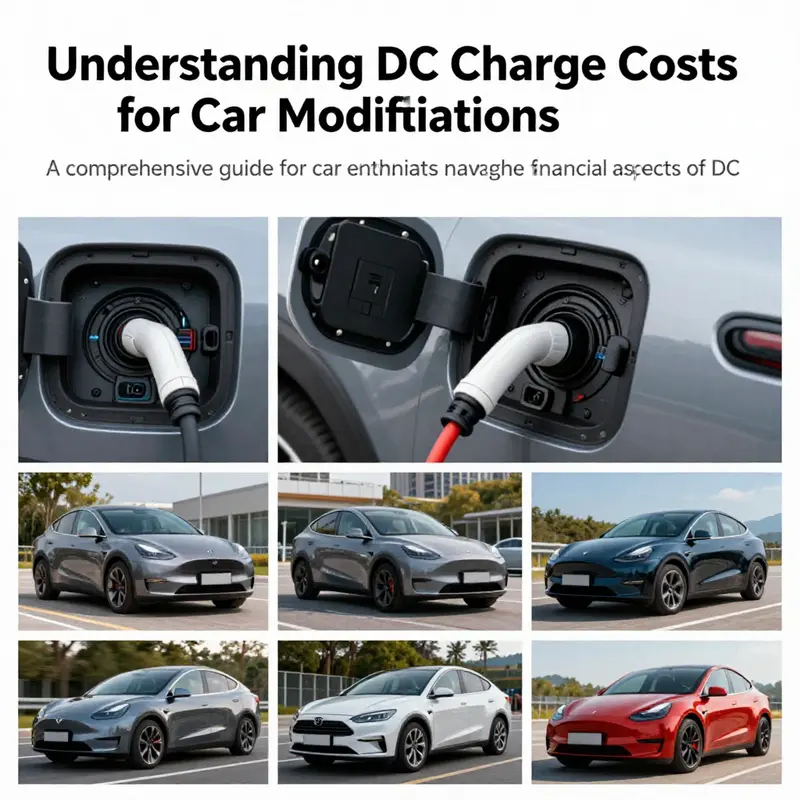
As the automotive landscape evolves with electric vehicles on the rise, car modification enthusiasts find themselves contemplating the integration of DC charging ports into their vehicles. This modification not only enhances charging convenience but opens up a vast range of possibilities for performance upgrades. However, the costs associated with DC charge upgrades can significantly vary. The key to making an informed decision lies in understanding the cost breakdown, identifying the influencing factors, and navigating the safety regulations that govern these modifications. This article delves into these elements, guiding hobbyists, professional tuners, and car restoration enthusiasts through the intricacies of DC charge modifications, ensuring they are equipped to make well-informed financial commitments.
Real Costs of Adding DC Fast-Charging to Your Car: What Actually Drives the Price
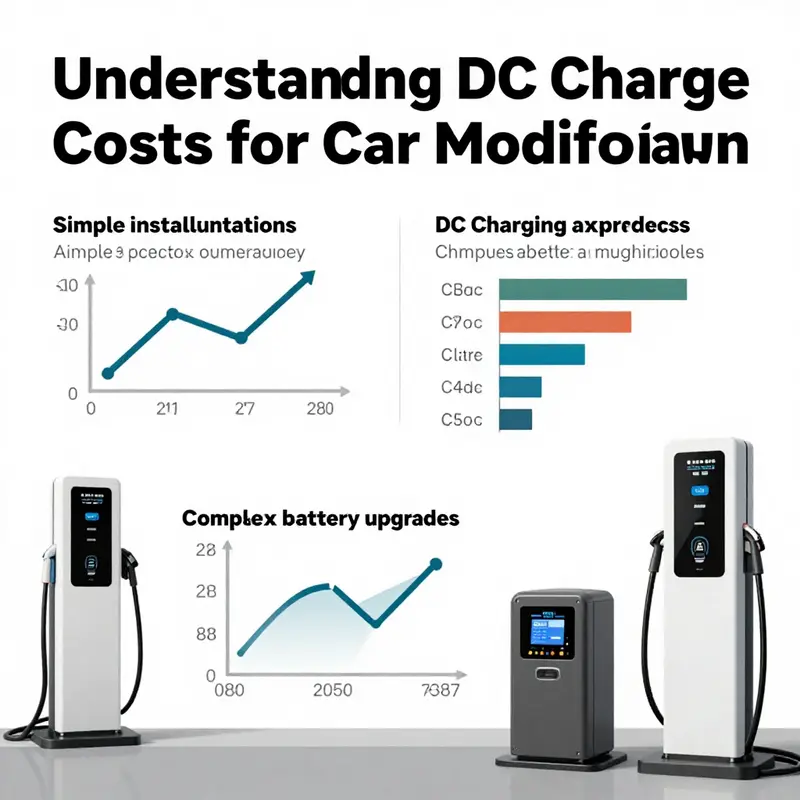
Real Costs of Adding DC Fast-Charging to Your Car: What Actually Drives the Price
Adding DC charging capability to a vehicle is rarely a single-line expense. Costs cluster around hardware, integration, safety, and long-term trade-offs. Some projects are minor and affordable. Others approach the price of a significant drivetrain upgrade. Understanding where money goes helps you budget, plan work, and avoid surprises that void warranties or fail safety checks. This chapter walks through the true cost drivers, typical price bands for different scopes of work, and practical ways to weigh short-term expense against long-term benefit.
Broadly, DC charging modifications fall into three tiers. First, small additions that let a vehicle accept an external DC supply or a portable charger. Second, mid-level upgrades such as adding smarter power management, higher-voltage DC-DC converters, or partial battery upgrades. Third, full-scale changes that alter battery packs, high-voltage architecture, or add onboard converters for high-voltage systems. Each tier carries different component and labor profiles, and each presents different regulatory and resale implications.
At the smallest scale, costs are straightforward. Installing a dedicated DC inlet or a vehicle-mounted DC charging port typically involves parts, wiring, and a few hours of labor. In countries where parts and labor are economical, expect a modest range for this kind of work. Material costs include the connector, wiring harness, fuse or breaker, and basic mounting hardware. Labor covers cutting or adapting the body, routing cables, and testing. Shops charge differently for labor, but the combined bill often sits in a low hundreds of local currency units for simple installs. This option suits owners who need occasional access to an external DC power source, or who use a portable fast-charger that plugs into a host vehicle or trailer.
Mid-level upgrades move into power-electronics territory. These projects often add or upgrade DC-DC converters, integrate intelligent charging management modules, or replace a single module in the vehicle’s power distribution network. Costs rise for two reasons: the components themselves, and the engineering effort to integrate them safely. Modern high-density power modules reduce size and weight, and they save money in the long run. A well-optimized 48V architecture with compact DC-DC modules can cut material and weight while improving charging efficiency. The initial purchase price of these modules is higher than basic components. Still, their efficiency reduces cooling needs and lowers the cost of supporting components.
At the highest scale, expect major expense. Replacing or upgrading a traction battery pack or adding high-voltage conversion hardware is complex. Vehicles designed for one voltage architecture may require an onboard boost converter to accept public DC fast chargers at different voltages. For instance, when a car with an 800V battery encounters a 400V DC station, a converter is required. Integrating such a converter means adding robust power electronics, protective relays, thermals, and safety interlocks. The hardware cost can be significant. It also demands careful electrical integration, software changes to battery management systems, and rigorous validation. Because of this complexity, full battery or high-voltage upgrades can reach multiple thousands of local currency units, and in some cases escalate to a high five-figure sum.
Two technical realities shape these costs more than any other: power-electronics sophistication and semiconductor choices. High-efficiency devices shrink enclosures, reduce cooling needs, and lower energy loss during charging. The most advanced semiconductor technologies offer better switching speed and thermal characteristics, letting designers push more power through less hardware. However, those semiconductors come at a premium. Using a higher-performance material increases initial cost but lowers the weight and complexity of the rest of the system. Over time, that trade can be favorable for range, charging speed, and maintenance. If you prioritize upfront cost, you may pick cheaper silicon-based parts. If you prioritize performance and long-term savings, higher-spec semiconductors make sense.
Integration effort is the second silent cost. An off-the-shelf charger or port can be cheap. But connecting it to a vehicle’s battery and control systems without compromising safety or safety standards is work. You will need proper fusing, a certified wiring harness, and an interlock system that prevents unsafe energizing. You will also need to harmonize the charger with the vehicle’s battery management system so charging follows safe voltage, current, and temperature profiles. That typically means custom software or recalibration, which adds engineering hours. For modern vehicles, changes to charging behavior may trigger diagnostic codes or limit warranty coverage. Expect shops that do this work to charge for both hardware and calibration time.
Regulatory compliance and safety checks add real cost, too. Any modification touching a high-voltage system requires adherence to local regulations and standards. Certified technicians are more expensive, but they can provide proof that work meets safety standards. That proof matters for insurance claims and resale. If an uncertified modification leads to a battery failure or fire, insurers may decline coverage. A properly documented modification, completed by a specialist, mitigates that risk but raises the bill.
Labor rates vary wildly between regions and service providers. A knowledgeable electric-vehicle technician costs more than a general mechanic. Expect precision work on high-voltage systems to carry a premium. Additionally, shops that offer a warranty on their modification add margin to cover potential rework. That warranty is worthwhile when dealing with battery systems, and it often represents good value for peace of mind.
Practical budgeting helps avoid sticker shock. For a basic DC inlet or accessory port, plan for a low- to mid-range cost estimate. For example, small installs often fall into the low hundreds. For conversions that require moderate power-electronics upgrades, budget several thousand. For full high-voltage compatibility, especially when changing battery architecture or adding an onboard boost converter, budget realistic five-figure sums in local currency. Actual numbers vary by country, vendor, and the car’s original design.
When weighing options, think in terms of total cost of ownership. Advanced power modules and premium semiconductors often raise the initial price. But they lower operating losses, reduce cooling system complexity, and trim vehicle weight. Those gains translate to better range and reduced charging time. If you keep the car for many years, the investment can pay back through lower energy losses, fewer component replacements, and higher resale appeal. Conversely, low-cost shortcuts may function immediately but create hidden costs later in maintenance, repair, or lost warranty coverage.
Resale value and insurance are keen considerations. Modifications to a vehicle’s electrical system can affect resale and insurance policies. Some buyers appreciate certified upgrades that increase capability and efficiency. Others prefer stock configurations. Insurers may require notification of electrical system changes, and failure to inform them can lead to declined claims. For more guidance on how modifications influence vehicle worth and coverage, see the practical breakdown on how much a modification can affect overall cost and value how much does car modification cost.
There are also practical choices that reduce expense without sacrificing safety. Modular upgrades allow staged investment. Start with an inlet and basic management, then add higher-performance modules as budget allows. Choosing a high-density power module early can ease later upgrades. It provides headroom for future charging increases. Another tactic is to prioritize efficiency over raw power. Higher peak charging power demands larger, more expensive components. Reducing peak power targets while improving continuous efficiency can meet daily needs at a lower cost.
Vendor selection matters. Specialist EV shops with documented experience in high-voltage work can provide realistic quotes. They typically factor in testing, validation, and documentation. General workshops may quote lower but lack the expertise to properly integrate power-electronics and battery-management changes. Ask for references and a clear list of deliverables. Confirm whether software or firmware changes are part of the package. If so, ask about data retention and warranty effects.
Finally, plan for contingencies. High-voltage projects frequently unearth hidden issues such as degraded wiring, incompatible connectors, or a battery-pack topology that resists easy adaptation. A contingency budget of 10–20% is reasonable. This covers unexpected parts, extended labor, or additional validation work. If a modification requires re-engineering of the battery-management system, costs can climb further. A clear scope and written agreement with the installer reduce the chance of runaway expenses.
In practical terms, here are example scenarios to make budgeting concrete. A simple port and wiring addition for occasional use will likely cost in the low hundreds of local currency. A mid-range upgrade that adds intelligent charging control and a compact DC-DC converter will often run into the low thousands. A full upgrade that changes battery configuration, adds an onboard voltage boost, or replaces major power modules can move into the high thousands or more. The range exists because each project balances parts, labor, and integration effort differently.
Choosing where to spend comes down to purpose. If you need occasional external DC access, choose a low-cost install with certified wiring and safety features. If you want faster, frequent charging with lower energy loss, invest in efficient power modules and better semiconductors. If you aim to change voltage architecture or significantly increase peak charging rates, prepare for a major investment and specialist engineering.
A final practical note: document everything. Keep receipts, test reports, and certificates. That documentation matters for resale and insurance. It also helps future technicians understand what has changed, reducing future labor costs.
For those seeking technical depth beyond this overview, a primary technical reference outlines how high-density power modules and advanced semiconductors change platform size and weight. Further technical details can be found here: https://www.onsemi.com
This chapter aimed to show the true structure of costs, not a single fixed number. Costs vary by scope, components, integration complexity, and local labor. Plan in tiers, prioritize safety and certification, and weigh upfront cost against lifetime savings. That approach produces the best value for anyone modifying a car to accept DC charging.
Beyond Batteries: Unraveling the Hidden Factors Behind DC Charging Costs in Car Modification
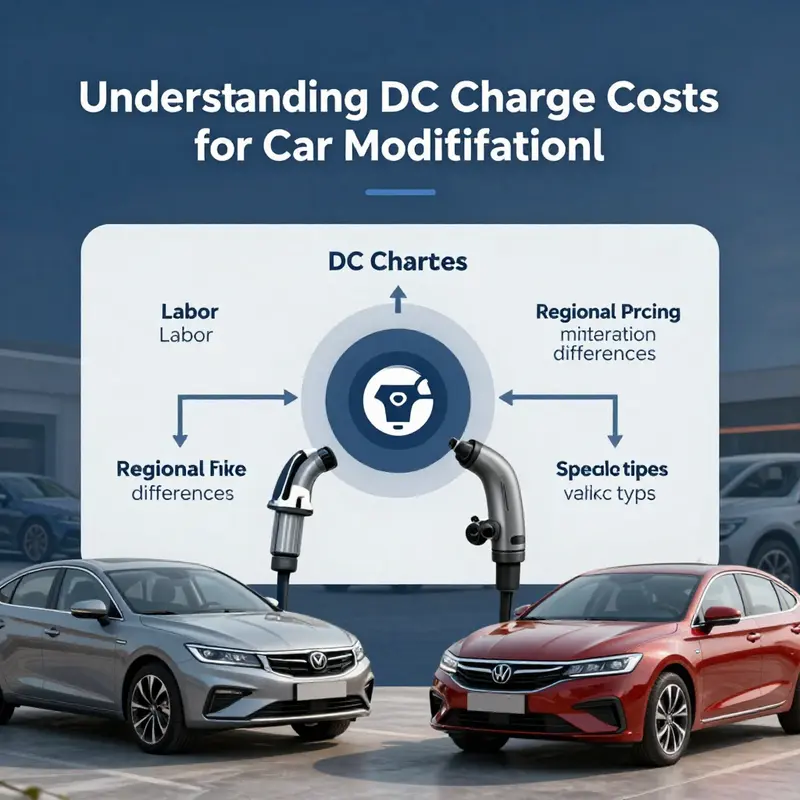
When people talk about modifying a car to embrace direct current charging, the conversation rarely stays on the surface. The sticker price you see on a receipt or a quote from a shop is only a fraction of the story. There is no single, universal standard, and the final cost for adding or upgrading DC charging capability sits at the intersection of design choices, local conditions, and the realities of working inside a living machine. The topic is not merely about a gadget or a charger; it is about integrating a power system with the vehicle’s architecture, thermal limits, safety laws, and, ultimately, the way a driver plans to use the car. In this sense, DC charging costs for car modification become a study in value as much as in price. The discussion that follows treats cost as a tapestry of interwoven considerations, where each thread matters, and the overall pattern is only as strong as its weakest link. It is a narrative about foresight, engineering judgment, and the practical compromises that mark any meaningful modification to a vehicle’s electrical soul.
The most visible factor in any DC charging upgrade is the power level of the charger. Higher-power DC chargers promise faster replenishment of energy, a promise that appeals to performance enthusiasts and commercial users alike. Yet speed comes with a price, not only in the upfront hardware cost but in the way electricity is consumed and managed within the vehicle. A high-power charger demands robust cooling, stronger wiring, advanced protection circuits, and careful thermal design to prevent overheating in demanding drive cycles. Each of these requirements adds a layer of expense that compounds with the power level. What begins as a unit price for a charger can balloon into a broader installation bill when engineers must account for higher current paths, larger heat sinks, and more elaborate monitoring systems. Owners should, therefore, evaluate whether the anticipated usage pattern justifies the added cost. If daily driving rarely stretches the limits of existing charging, a more modest power level with a focus on efficiency and reliability may deliver better long-term value.
Material quality and durability sit quietly at the heart of the price equation. The charging hardware that endures the relentless stress of rapid charging—conductors, connectors, enclosures, and heat management components—must be built from materials that resist wear, corrosion, and thermal fatigue. Premium metals, high-grade insulators, and heat-resistant polymers may not be glamorous, but they contribute materially to performance stability and longevity. In the context of modification, choosing materials that can withstand repeated high-current pulses without degradation reduces the risk of downtimes and costly repairs. The cost difference between standard-grade components and premium-grade parts is not purely about a single part; it reflects a package designed to stay reliable under peak loads and long hours of operation. Those who plan a project around high-amperage charging, especially in sheds or garages that experience seasonal temperature swings, should weigh the upfront premium against the potential savings in maintenance and downtime over the vehicle’s lifetime.
Safety features and thermal management are another axis along which costs are shaped. A DC charging upgrade hinges on robust protection against short circuits, overcurrents, and ground faults. Integrating smart safety features means adding sensors, fault isolation mechanisms, and fail-safe controls that can respond instantly to abnormal conditions. Thermal management—keeping electrodes, cables, and power electronics within safe temperature ranges—drives another portion of the budget. Without effective cooling and stopping mechanisms, the system can overheat, reducing efficiency, shortening component life, and creating safety risks. Investing in advanced thermal interfaces, active cooling loops, and reliable thermal sensors is expensive, but it is a non-negotiable aspect of a modification that must operate under strenuous conditions. The costs in this domain are not just line items on a bill; they are investments in safety, reliability, and user confidence, the kind of assurance a driver relies on when the car doubles as a mobile power station.
Compatibility across different vehicle platforms also threads through the final cost, sometimes invisibly. An upgrade that is designed to be model-agnostic may require additional engineering, more adaptable connectors, and flexible software interfaces. Versatility is valuable, but it comes with design overhead. Engineers may need to implement broader charging protocols, create more adaptable mounting schemes, and incorporate programmable controls that can accommodate a range of onboard charging architectures. When a modification aims to be compatible with multiple generations of a vehicle, or even different models within a brand, those compatibility layers can accumulate in both hardware and software costs. Owners should be aware that a one-size-fits-all solution, while attractive in theory, can lead to higher marginal costs than a lean, model-specific approach that minimizes cross-vehicle interoperability while focusing on dependable performance for one particular platform.
Retrofitting expenses are not merely the cost of a charger; they are the costs of integrating a new power personality into an existing vehicle. The onboard charger, the battery cooling system, and the broader electrical infrastructure may all require upgrades. This is where the practical realities of vehicle modification become evident. Replacing or upgrading the onboard charger can be essential to realize the full potential of a DC fast charger, and it is rarely a standalone purchase. It often necessitates upgrading ancillary components: busbars, high-current fuses, protective relays, and even reconfiguring the vehicle’s power distribution network. If the battery pack is involved, thermal management becomes even more critical. The cooling system may need enhancements to handle the more aggressive charging regimen, and that, in turn, can ripple into radiator capacity, coolant flow rates, and pump specifications. Each retrofit step carries a price tag, and the total can quickly outpace the cost of the charger itself. The key for prospective buyers is to map out the retrofit path early, identifying which upgrades are mandatory for safe operation and which are optional but beneficial for performance and longevity.
Regional electricity pricing adds another layer of complexity that can swing the overall cost significantly. If the modified vehicle is designed to draw from grid power at high rates during peak times, the cost of electricity will influence the total cost of ownership. Regions with high electricity tariffs, especially during peak hours, will amplify the operational cost of DC charging. The flip side is that regions with favorable tariffs or off-peak discounts can substantially lower ongoing energy expenses, improving the project’s overall economics. This reality urges a disciplined approach: forecast usage patterns, estimate kWh consumption under peak and off-peak scenarios, and compare the economics of different charging strategies. A modification that looks expensive on a sticker price may become economically viable when annual energy costs are factored in, and conversely, a cheaper upfront option may prove costly if it translates into higher energy penalties or more frequent service interruptions.
Public charging station fees, while external to the vehicle’s hardware, intersect with the modification in meaningful ways. For some users, the modified car becomes a platform to leverage public DC fast charging infrastructure for longer trips or commercial operations. In those cases, the friction of using public stations—per-kWh rates, session fees, idle charges, and membership structures—must be folded into the cost calculus. For others, the intent is to maximize self-contained charging within a private facility, minimizing reliance on public networks. Either path invites careful budgeting for access fees or memberships, and it also raises practical questions about compatibility with public standards and authentication requirements. The broader lesson is clear: the economics of DC charging in a modified vehicle live not just in the hardware bill but in the recurring costs that emerge with real-world use.
What holds many projects together is a careful planning mindset that weighs both upfront and ongoing costs against desired outcomes. A practical approach begins with a detailed bill of materials and a sequence of installation steps, followed by a scenario analysis that compares best-case and worst-case energy usage. It is equally important to assess whether the modification will affect vehicle warranty, insurance coverage, or road legality. Modifications that interrupt the standard fault-detection logic or that alter the power flow in unexpected ways can trigger warranty exclusions or insurance concerns. Engaging with reputable shops that understand the regulatory landscape and can document the installation process is essential. The goal is to secure a solution that meets safety standards, complies with local regulations, preserves as much original functionality as possible, and remains financially justifiable over the lifecycle of the vehicle.
To translate these concepts into actionable steps, think of the process as a careful design exercise rather than a single purchase decision. Start with the intended use case: is the vehicle a daily driver that occasionally benefits from faster DC charging, or a specialized workhorse that relies on rapid turnarounds and long-range trips? Then map out the technical prerequisites. If you are pursuing a high-power DC charger, the upgrade path likely includes a more capable onboard charger, enhanced battery cooling, and reinforced electrical infrastructure. If modest, steady performance suffices, you might emphasize efficient components and robust safety features while limiting high-cost retrofit steps. The economic sweet spot often lies in selecting a configuration that delivers reliable performance without pushing the total cost into a subjective “overkill” zone. Throughout, maintain a clear record of decisions, vendor specifications, and safety certifications. In the end, the aim is not merely a faster charger but a harmonized system that respects the car’s heritage, the owner’s budget, and the road ahead.
The value of understanding these factors extends beyond the monetary figure. A well-planned DC charging modification provides predictable behavior, reduces downtime, and preserves the vehicle’s reliability. It also helps owners avoid the common trap of chasing performance at the expense of safety or longevity. When evaluating options, a structured approach—balancing power, durability, safety, compatibility, retrofits, regional tariffs, and public charging costs—frames a decision that aligns with both current needs and future plans. Practical wisdom emerges from listening to OEM design constraints, consulting with experienced technicians, and critically evaluating the long-term implications of each choice. In this light, the cost becomes a language through which the benefits and tradeoffs of a modification are communicated clearly, enabling a broader audience to understand what they gain and what they give up in pursuit of DC charging capability.
For readers seeking a grounded starting point that translates installation guidance into practice, there is a practical guide available that discusses how to install modifications in cars. This resource offers actionable steps, risk considerations, and a framework for evaluating whether a modification aligns with one’s goals and constraints. For further reading on price determinants, especially the material and design aspects of DC EV chargers, an external resource provides a deeper technical dive that complements the narrative here. Understanding these dimensions helps ensure that decisions about DC charging upgrades are informed, responsible, and aligned with the broader aims of safe, efficient, and compliant vehicle modification.
As with any significant upgrade, the question should not be framed merely as “how much will this cost?” but rather, “what is the total value this modification brings?” This includes not only speed and convenience but reliability, support, and the peace of mind that comes with knowing the system has been designed with safety and longevity in mind. The car you modify becomes more than a machine that stores energy; it becomes a controlled power delivery platform with a defined capability envelope. When this envelope is drawn with care, the costs—not just the sticker price but the lifecycle economics—become a rational investment rather than an impulsive expense. The conversation thus shifts from a single dollar figure to a disciplined assessment of how much charging capability the vehicle truly needs, how it integrates with the rest of the electrical system, and how sustainable the ownership experience will be over time.
External references and deeper dives can provide additional context and nuance. For a more technical exploration of the price determinants in DC EV chargers, readers may consult established analyses such as the external resource linked here: https://www.sinoevcharger.com/what-factors-influence-the-price-of-dc-ev-chargers/
how-to-install-modifications-car
Charging Safely as the Core of Any Car Modification: Navigating DC Standards, Costs, and Practical Realities

When car modifiers talk about adding or upgrading a DC charging capability, they are not simply discussing a new socket or a brighter display. They are negotiating a space where high power, high currents, and complex electronics converge with the vehicle’s own architecture, safety systems, and regulatory requirements. The conversation shifts quickly from “how much power can we push through this port?” to “how can we do this without creating new hazards, liability, or road-legal problems?” The safety standards introduced and refined in recent years, particularly in China with the GB/T 20234.1-2023 and GB/T 20234.3-2023 revisions, sit at the center of that shift. They do more than specify connectors or currents; they codify the behavior of the entire charging interface under real-world conditions, from the moment a plug engages to the moment the battery is safely rested after a long, high-power fill. For anyone considering DC charging as part of a modification project, these standards are the compass that helps separate ambitious capability from reckless risk. They are the backbone that ensures the process remains safe, interoperable, and ultimately useful to the vehicle and its occupants rather than a potential ignition source or a warranty trap.
The updated GB/T 20234.1-2023 and GB/T 20234.3-2023 standards reflect a substantial leap forward in several converging areas: power delivery, thermal control, mechanical robustness, and comprehensive testing. One of the most visible changes is the scale of charging current the system is designed to handle. The maximum charging current has risen from 250 amps to as much as 800 amps, enabling charging power levels that can approach the 800 kW mark in ideal conditions. This is not a mere number; it signals a paradigm shift in how the charging interface must behave under peak demand. It requires that the electrical and thermal paths, the insulation, the connectors, and the control logic be designed with a far larger safety envelope. In practical terms, this means the connectors and cables must tolerate rapid heat buildup, thermal cycling, and the mechanical stresses of frequent high-current connections and disconnections without degrading performance or safety margins.
To manage these high currents safely, the standards now insist on active cooling and real-time temperature monitoring within both the connector and the cable assembly. Temperature data becomes a critical safety signal rather than a post-mortem diagnostic. The system must detect rising temperatures, take corrective action, and, if necessary, interrupt charging before an unsafe condition occurs. This is a crucial difference when you consider a modified vehicle where the charging system may be used in ways the original design did not anticipate. The requirement for active cooling and continuous temperature feedback reduces the risk of thermal runaway scenarios and mitigates the risk of insulation damage or conductor degradation under sustained high-power charging. It also demands that installers integrate temperature sensors, cooling pathways, and thermal management strategies that are compatible with the vehicle’s overall thermal system.
Beyond thermal and electrical stamina, the standards tighten mechanical and electrical safety across the board. They optimize test methods for mechanical strength—ensuring that locking mechanisms, housings, and connectors endure repeated use and harsh environmental conditions without loosening or misalignment. They also reframe electrical safety through more robust protection against arcing, insulation failures, and contact resistance that can worsen under thermal stress. Such enhancements matter profoundly for modified vehicles where nonstandard connectors, custom housings, or ad hoc cable runs might introduce new weak points. The goal is not to make it impossible to modify, but to ensure that any modification preserves, or even strengthens, the fundamental guarantees of safety, durability, and predictability under diverse operating scenarios.
In tandem with these design and hardware expectations, the standards embed a rigorous testing philosophy. Modifications must demonstrate reliable environmental tolerance—resilience to humidity, dust, temperature extremes, and vibration as the car travels through city streets and rural byways. Electromagnetic compatibility (EMC) testing ensures that the charging system does not generate stray emissions that impair the vehicle’s other electronics or external devices, and that it remains immune to interference from other devices and networks. Electrical safety testing, including insulation integrity, leakage currents, and fault protection, aligns the modified system with a safety topology that is consistent with other high-voltage components in modern EVs. This holistic testing approach is critical because battery packs, power electronics, and high-voltage harnesses are deeply integrated with a vehicle’s safety systems, the operations of which must function reliably in daily use.
The practical takeaway for someone considering a DC charging modification is clear: you cannot view the DC charging upgrade as a standalone add-on. It is an integrated system change that touches the battery, the high-voltage network, the vehicle’s control software, and the safety-critical interfaces the driver relies on. Any modification that bypasses, circumvents, or neglects GB/T 20234.1-2023 and GB/T 20234.3-2023 risks creating a path to hazards that a vehicle is not prepared to handle. This is not merely a compliance concern. It is a question of reliability, warranty status, insurance implications, and the broader question of whether the vehicle remains road-legal after the modification.
These standards also help frame the international context. In regions outside China, the dominant DC fast-charging standards differ in their technical details and regulatory focus. In the United States, for example, CCS1 and NACS define how high-power charging interfaces negotiate with vehicles and grid infrastructure, while also carrying their own safety requirements. A meaningful modification in one region must consider the local standard ecosystem; interoperability and safety often hinge on adopting compatible components and ensuring that the installation does not create dissonant points between the vehicle, the charging station, and the grid. The core message across borders is consistent: high-power charging modifications demand careful planning, component quality, rigorous testing, and professional execution that respects the full safety envelope of the system.
From the standpoint of cost, the safety standards indirectly influence the economics of modification projects. A simple DC port installation—an add-on that merely provides a path for a portable charger or a limited external supply—can be comparatively inexpensive, often within the range of a few hundred yuan, depending on labor rates and material costs. However, when the project escalates to upgrading the powertrain with a dedicated high-current DC charging path, the battery system, or the vehicle’s high-voltage architecture, the cost trajectory climbs steeply. It is not unusual to see costs in the several-thousand-yuan range, and in more ambitious builds, where a high-capacity battery system is replaced, or a smart charging management module is integrated, costs can climb well into five thousand to twenty thousand yuan or more. Those figures reflect, in part, the additional safety hardware, thermal management infrastructure, precision engineering, rigorous testing, and the professional oversight required to satisfy GB/T 20234.1-2023 and GB/T 20234.3-2023. In other words, the most consequential costs are not just better connectors or thicker cables; they are the systems that ensure the modification remains safe, dependable, and compliant under real-world conditions, including the extremes of rapid charging and repeated hot-cold cycling that high-power charging can entail.
A further practical thread to consider is the interaction with warranties and regulatory compliance. Modifications to the DC charging system can affect a vehicle’s factory warranty and may have implications for whether the car can be legally operated on public roads. Given the high stakes of electric power delivery and the potential for thermal or electrical faults to propagate beyond the charging system, it is essential that any modification be designed, installed, and tested by qualified technicians who are familiar with both the vehicle’s architecture and the applicable safety standards. The path to compliance typically begins with a thorough assessment of your vehicle’s existing electrical architecture, battery capacity, thermal management, and the BMS interface. The installation plan should then map each modification to the relevant GB/T 20234.1-2023 and GB/T 20234.3-2023 requirements, ensuring that connectors, cooling, materials, assembly processes, and testing protocols align with the standard’s expectations.
In this context, it is also wise to account for downstream considerations such as insurance and resale value. Insurance policies for modified vehicles often hinge on the extent of the changes and the degree to which manufacturers and regulators endorse or disallow those changes. A well-documented, standards-compliant modification is far more likely to receive favorable treatment because it demonstrates a reasoned approach to risk, engineering judgment, and safety. Conversely, modifications performed without proper adherence to recognized standards may expose the owner to coverage gaps or outright denial. This is where the broader ecosystem of information and guidance becomes valuable. For readers who want to understand the insurance implications of modifications, there is a dedicated discussion that examines how different changes influence risk profiles and premium calculations. To the extent that readers want to explore that dimension, see the discussion here: What modifications affect car insurance.
In sum, the safety framework surrounding DC charging in car modification is not a gate that blocks innovation; it is a structure that channels innovation into safe, reliable, and road-legal outcomes. The GB/T 20234.1-2023 and GB/T 20234.3-2023 standards are the current custodians of this framework in China, representing a comprehensive set of requirements that cover the most consequential aspects of high-power charging: currents, thermal control, mechanical integrity, and exhaustive testing. They remind us that when the power moves through a vehicle’s charging interface, it must do so within a controlled, predictable, and thoroughly tested environment. For anyone contemplating a modification project, the prudent path is clear: begin with a precise assessment of needs, insist on components and workmanship that are compliant with these standards, and engage with professionals who can translate the standard’s requirements into a safe, reliable, and legally compliant installation. Only then can the promise of faster charging be realized without compromising safety, warranty, or roadworthiness. And as the field evolves, the standards will continue to evolve in step, guiding high-power charging toward broader accessibility while keeping the fundamental safety promises intact.
External resource: https://afdc.energy.gov/electricvehicles/electricvehiclecharging.html
Final thoughts
Navigating the world of DC charge modifications can be daunting due to the variability in cost and the critical importance of adhering to safety regulations. By understanding the cost structure, factors impacting those costs, and the necessary safety standards, hobbyists and professionals alike can make informed decisions that enhance their vehicles without compromising safety or legal compliance. Car modification should be a passion-driven endeavor that also respects the nuances of technology and regulations. Hence, proper planning and consultation with qualified professionals remains the cornerstone of successful automotive enhancements.