

The world of car modifications is a vibrant blend of artistry, engineering, and economic potential. Car enthusiasts, professional tuners, restoration specialists, and suppliers are not only transforming vehicles but also tapping into a lucrative market. As the demand for unique, customized vehicles surges, understanding the revenue potential behind car modifications becomes crucial. Each chapter will delve into different aspects of this dynamic industry—highlighting the economic impact, market demand, profit margins, types of modifications, and successful case studies—giving readers a comprehensive understanding of how much car modifications can truly earn.
The Profit Equation of Car Modifications: Revenue Potential, Market Forces, and Investment Realities

Modifying a car is seldom just about chasing a dream of better speed or unique styling. For many shop owners and individual practitioners, it’s a business model that must balance artistry with financial discipline. The core question—how much do car modifications make—requires looking beyond sticker prices and into the full economics of an aftermarket ecosystem. Revenue in this space comes from multiple streams: skilled labor, highly sought-after parts, bespoke fabrication, and services that extend beyond a single project, such as ongoing tuning, maintenance plans, and resilience against market swings. When a vehicle leaves the workshop, it carries not only a set of changes but the imprint of a process that can influence a client’s future spending, resale value, and even insurance considerations. The economics are nuanced; a successful operation thrives not on a one-off hit but on a pipeline of projects, recurring services, and disciplined sourcing that protects margins through fluctuations in demand and currency movements for imported components.
The global market for car modifications sits in a sizable footprint, with a momentum that reflects broader shifts in consumer behavior and technology. The market was valued at roughly USD 60.27 billion in 2025 and was projected to grow to about USD 62.38 billion by 2026. Those figures are more than just headline numbers; they signal a robust appetite for personalization driven by a widely dispersed culture of enthusiasts, the rapid pace of automotive technology, and a willingness among buyers to invest in performance, aesthetics, and electronics upgrades. This expansion isn’t confined to a single region. It is global, fed by a rising interest in customizing vehicles for unique identities, performance gains, and enhanced capabilities that keep older models relevant in a fast-evolving market. In practical terms, this means more potential customers for shops that can deliver reliable results, project management, and clear value propositions across a spectrum of service models.
For entrepreneurs who are considering entering the car modification sector, the financial outlook can be substantial but demanding. The guidance available from market analyses and industry benchmarks underscores both opportunity and risk. A certified operation entering the market at scale may require substantial upfront capital. In a hypothetical but instructive scenario, Year 1 might involve an investment around USD 5.06 million, and Year 2 around USD 12.07 million, with a minimum cash reserve—often around USD 445,000—needed to reach breakeven by the end of Year 2. Those numbers frame a landscape where scale, capital access, and operational efficiency become as important as technical capability. They also highlight a critical truth: large, capital-intensive ventures can unlock significant revenue potential, but they demand careful planning, strong governance, and the ability to sustain a multi-year ramp-up before profits consolidate.
That said, these figures are not prescriptive for every operator. They illustrate the upper bound of what a highly capable, brand-driven shop can achieve in a market that rewards expertise, reliability, and a reputational halo. Smaller or independent shops operate under different dynamics. They can build profitable, sustainable practices through leaner setups, selective specializations, and partnerships that reduce capital intensity while preserving high-quality outcomes. The market’s resilience is partly rooted in diversification across segments. A shop that combines performance upgrades with aesthetic enhancements and modular electronics can weather a wider range of demand cycles. The ability to shift between custom fabrication, tuning, and retail of modified parts creates a more stable revenue stream, reducing exposure to any single macro trend.
As the sector matures, service models that emphasize recurring revenue become increasingly valuable. Clients who trust a shop for a series of upgrades over years—whether for a performance-oriented build, a luxury interior refresh, or a coordinated electronics package—tend to return for follow-up work, maintenance, or version upgrades. This ongoing relationship often translates into higher lifetime value per client, especially when the shop offers transparent pricing, clear project milestones, and options for long-term care plans. The business model can thus move from a one-off transaction to a durable, service-driven platform. Such a transition elevates profitability by smoothing cash flow and enabling more predictable workload planning, which in turn helps optimize staffing and procurement across cycles of demand.
Of course, margins are a pivotal consideration. Even within a high-skill, reputation-driven segment, margins hinge on labor rates, parts sourcing, and the branding advantage a shop can claim. Industry indicators suggest that skilled shops with strong reputations can realize margins in the broad range of 30% to 50% on labor and parts, though actual results depend on project complexity, supplier relations, and the ability to manage overhead. In an environment where premium, high-end work commands a premium price, there is real potential for meaningful profitability, but that is balanced by the need to maintain consistent quality, a reliable supply chain, and a capable team that can deliver repeatable results across a spectrum of projects.
From a strategic perspective, the opportunity is amplified by the market’s breadth. Performance-focused work sits alongside aesthetic upgrades, advanced electronics integration, and even conversions that expand a car’s capabilities in new directions. The diversification creates multiple entry points for customers with different motivations and budgets, enabling a shop to assemble a portfolio that can appeal to enthusiasts at multiple price points. In the longer run, data-driven project planning, standardized processes, and a disciplined approach to parts sourcing can push profitability upward by reducing waste, shortening cycle times, and improving the predictability of outcomes. In addition, a strong brand—built on demonstrable results, transparent communication, and consistent service standards—acts as a multiplier for both demand and client trust, allowing a shop to command premium pricing and to cultivate a loyal client base that sustains revenue even when broader market conditions tighten.
The narrative of profitability is not complete without acknowledging the external market’s trajectory. The expansion in global demand for personalized vehicles aligns with ongoing technological advancements in powertrains, safety systems, and digital interfaces. As vehicles increasingly become platforms for both performance and personalization, the appetite for refined modifications persists. Consumers are drawn to the ability to tailor a vehicle’s speed, handling, audio-visual experience, lighting, and interior ambiance to their individual preferences. This trend sustains a feedback loop: greater customization options fuel more demand for skilled labor and specialized components, which in turn encourages more shops to enter the market with new capabilities and service models. The net effect is a market that can absorb both incremental improvements and bold, landmark builds, provided operators balance ambition with a pragmatic assessment of capital, talent, and client expectations.
In planning for scale or steady growth, prospective entrants should also assess the broader risk landscape. Currency fluctuations can influence the cost of imported components, and demand can ebb with macroeconomic cycles or shifts in discretionary spending. The most resilient players are those who design resilience into their model—cultivating supplier relationships, maintaining lean inventory where practical, and offering flexible engagement terms that align with client financial realities. They also invest in knowledge and process. A well-documented workflow for design approvals, prototyping, fabrication, and final testing reduces rework, shortens delivery times, and helps protect margins. In a field where client satisfaction hinges on visible, tangible outcomes, the ability to consistently deliver precise, reproducible results is not only a technical credential but a fundamental business asset.
For readers who want a broader, data-driven picture of where this sector is headed, the market outlook points to continued growth through the next decade and into the early 2030s. The expansion is anchored in a global enthusiast community, ongoing innovation in performance and electronics, and a willingness among buyers to invest in personalized mobility. As with any capital-intensive venture, success hinges on aligning capital structure with market opportunity. A disciplined strategy—combining clear value propositions, diversified services, and a strong brand—can translate the excitement of customization into durable financial performance. For a deeper analysis of market trends, revenue forecasts, and future scope up to 2033, refer to the comprehensive report: Car Modification Market Export Outlook, Trends, Size & 2026-2033. External sources provide a macro lens that complements the shop-floor realities and the client-facing value that makes car modifications a meaningful business pursuit.
Within this landscape, one practical consideration for content creators, consultants, and shop owners is the relationship between modification activity and resale value. Understanding how modifications influence an asset’s value, and how to document and disclose such changes, can help clients and shops navigate insurance, financing, and downstream sales. To explore these dynamics, see car modifications and resale value. This link situates the economics of modification within a broader conversation about value preservation and risk management, reminding readers that profitability is often tied to perceived value alongside the mechanical or aesthetic enhancements.
In sum, the question of how much car modifications make cannot be answered with a single number. It is a composite calculation that depends on the scale of operation, the breadth of services, the efficiency of execution, the strength of supplier networks, and the credibility earned with clients. The market signals are robust: a growing appetite for personalization, an array of service models that can generate recurring revenue, and a spectrum of profitability opportunities that reward both craftsmanship and prudent business planning. The challenge for any entrant is to translate those signals into a sustainable, predictable revenue stream that aligns with capital availability and customer expectations. As the sector continues to evolve, the most successful players will be those who marry technical excellence with disciplined financial management, turning creative ambitions into lasting business value.
Demand, Dollars, and Driver Desire: How Market Forces Shape Car Modification Earnings

The global car modification market is no niche hobby anymore; it is a mature, expanding industry with clear money-making pathways. Valued at USD 60.27 billion in 2025 and projected to rise to USD 62.38 billion in 2026, the sector is forecast to grow at a 9.1% CAGR through 2033. Those numbers mean consistent demand and widening opportunities for businesses and independent modifiers that understand buyer motivations, price sensitivity, and service positioning.
At its core, demand is driven by three overlapping motivations: personalization, performance, and utility. Personalization covers aesthetic changes such as wraps, body kits, and custom interiors. Performance includes engine tuning, suspension upgrades, and brake systems. Utility covers practical adaptations like off-road upgrades, cargo solutions, and conversions for different energy types, including electric vehicle conversions. Each motivation maps to distinct customer segments and spending behavior. A young enthusiast chasing style or speed typically spends differently than a professional needing a specialized commercial conversion.
Consumer willingness to pay varies widely by segment. Entry-level bolt-ons such as cosmetic accessories and basic audio upgrades often cost from a few hundred to a few thousand dollars. Mid-range performance work and higher-quality interiors move into the several-thousand-dollar range. Full custom builds, complete engine overhauls, or major conversions can cost tens of thousands. At the high end, unique, hand-built projects or complete re-engineering commonly exceed that. These ranges matter because average transaction values determine revenue velocity and cash flow needs.
Profit margins in this industry are a blend of labor, parts markup, and brand premium. Well-regarded shops often achieve gross margins of 30% to 50% on combined labor and parts. Labor is especially profitable when billed at premium hourly rates, and when technicians deliver specialized skills quickly. Parts margins depend on sourcing and volume. Shops that import components or buy at scale can compress costs. Margin expansion stems from recurring service work, warranties, maintenance plans, and accessory sales.
Scale changes the financial picture dramatically. Small independent shops may operate with modest overhead, allowing steady profitability on lower volumes. In contrast, certified or large-scale operations require substantial upfront capital but can capture larger contracts and institutional clients. The industry overview showing a certified operation with first-year startup costs near $5 million and $12 million in year two illustrates this point. Those figures are for large, regulated ventures that must meet certification, tooling, and facility standards. Smaller workshops need far less capital but must focus on efficiency, niche specialization, and community trust to grow predictably.
Geography and local culture shape earnings more than many owners expect. North America and Europe remain top markets because of high vehicle ownership and disposable income. Urban areas with visible car cultures and motorsport communities produce higher per-customer spend. Conversely, regions with lower incomes or stricter modification laws favor affordable, bolt-on modifications and maintenance services. Legal and insurance frameworks also affect demand; some markets encourage customization, while others restrict visible changes or limit aftermarket engine work. Awareness of local regulations helps shops avoid wasted labor and costly rework.
Digital trends changed customer acquisition and buying patterns. Social media, online forums, and video content amplify modification culture. Prospective clients research parts and shops online, comparing builds and reputations before making decisions. E-commerce platforms offer parts with direct shipping, pressuring physical shops to add value through installation expertise, warranty services, and project management. Shops that combine a strong online presence with transparent pricing and gallery documentation convert leads faster and can command higher prices.
Different customer types show different life-stage triggers. Young buyers often modify cars as a form of identity expression. Older owners may upgrade for comfort or to modernize older vehicles. Commercial buyers invest in conversions for fleet optimization or branding. Enthusiasts often buy through personal networks and clubs, preferring shops with track records on specific makes or models. Targeting specific buyer types reduces marketing waste and raises lifetime customer value.
Product mix strategy influences average ticket sizes and profitability. Bolt-on accessories create volume and repeat business. Performance upgrades generate higher average tickets and can lead to long-term service relationships. Complete builds bring large one-time revenues but demand long lead times and complex project management. A balanced mix allows cash flow stability. For example, offering quick accessory installs alongside scheduled multi-week builds keeps bays busy and revenue steady.
Pricing transparency and packaged offerings sell well. Customers respond to clear tiered options: basic, performance, and bespoke packages. Bundled work reduces decision friction and makes up-sells easier. Warranty offerings and documented test results increase perceived reliability. Shops that communicate expected timelines and hidden costs avoid disputes and protect margins.
For shop owners, branding and reputation are essential. Technical competence alone will not produce the highest earnings. Reputation attracts larger projects and allows premium pricing. Community involvement, documented case studies, and relationship building with parts suppliers create competitive advantages. Partnerships with local tuners, racing clubs, or commercial fleets open access to repeat revenue and referral streams.
Finance options expand addressable demand. Many clients can afford premium mods if they spread payments. Offering financing partnerships or staged payment plans increases conversion rates on higher-ticket projects. Financing combined with transparent contracts and progress milestones reduces buyer hesitancy on expensive conversions or full builds.
Risk management affects profitability. Modifications can alter insurability and resale value. Shops must advise customers about potential insurance implications. Clear disclaimers and customer education on legal boundaries maintain trust and reduce liability. Because modifications can either increase or decrease resale value depending on buyer type, shops that present realistic resale projections build credibility and protect their brand. For readers seeking more on resale effects, see the article on how much are car modifications for practical examples and value dynamics.
Innovation areas that promise higher margins include advanced electronics, EV conversions, and integrated telematics. As electric vehicles spread, conversion work and EV-specific performance parts will grow. Early adopters in these niches build expertise and command significant premiums. Similarly, performance tuning for modern drivetrains and bespoke software calibrations are highly billable, given certified skills and appropriate diagnostic tools.
Operational efficiency directly lifts bottom-line earnings. Efficient bay scheduling, inventory management, and technician specialization reduce job times and increase throughput. Shops using job-tracking systems and clear SOPs minimize rework and invoice disputes. Training investments reduce errors and improve throughput, creating a multiplier effect on revenue. Staff retention also matters; experienced technicians handle complex projects faster and improve customer satisfaction.
Finally, the macro opportunity is real. A near-term market valued above $60 billion with double-digit CAGR potential signals abundant room for new entrants and scale-ups. But long-term earnings depend on strategic choices: niche selection, pricing strategy, operational rigor, and community positioning. Shops that combine technical excellence, strong branding, and intelligent customer financing stand to capture the most value as the market expands.
For deeper market modeling and regional breakdowns, consult the comprehensive analysis linked below.
https://www.linkedin.com/pulse/global-car-modification-market-analysis-2026-2033-4qzv5
From Bench to Bonnet: Understanding Profit in the Car Modification Marketplace
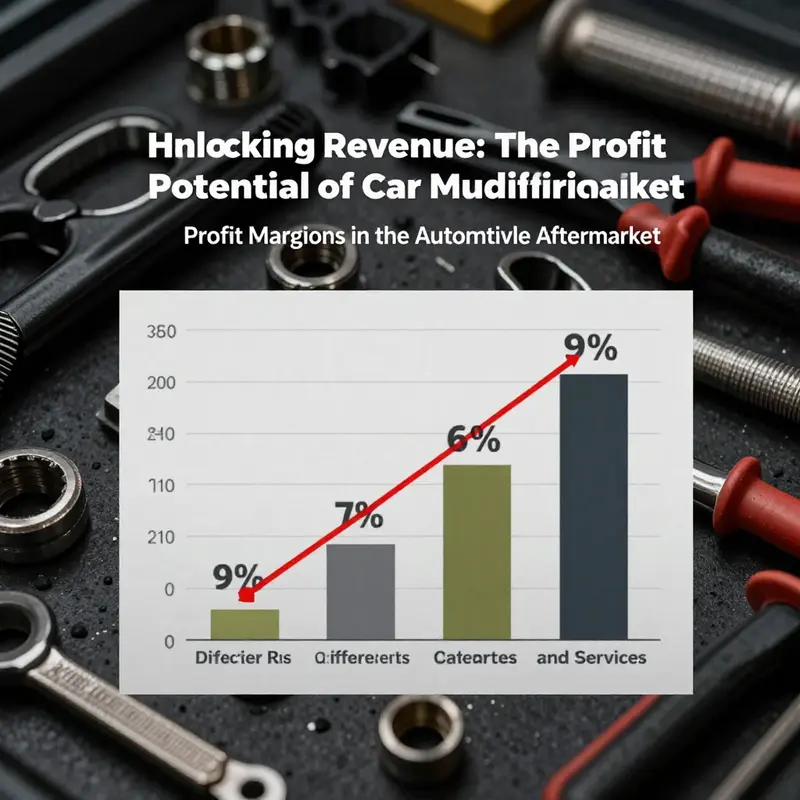
The question of how much car modifications make is rarely answered by a single number. It unfolds as a spectrum shaped by the type of modification, the shop’s positioning, the client base, and the business model behind the work. In the automotive aftermarket, the profit story is not just about higher prices. It is about the rhythm between labor, parts, branding, and the way a shop manages cash flow, risk, and growth over time. The math behind earnings becomes clearer when you see the landscape in three broad movements: specialized performance parts, commoditized or mass-market modifications, and service-based, labor-intensive work. Each wedge has its own economics, and together they outline why some shops stay lean and nimble while others scale into multi-million dollar operations.
At the high end of the spectrum, specialized performance parts and advanced tuning packages deliver the thickest margins. In this niche, the value proposition hinges on expertise, bespoke engineering, and the ability to deliver measurable performance gains for discerning clients. Profit margins for these premium components typically sit in a wide band—from about 30% up to 60%. Higher margins often come with lower production volumes, intricate engineering challenges, and a pricing story anchored in exclusivity and performance breakthroughs. The more the work requires specialized diagnostic tools, tailored calibration, and precise installation, the more value a skilled shop can capture in the pricing. This is not a volume game; it is a craft and a reputation game. Custom exhaust routes, suspension geometries, or engine-tuning packages can justify premium price tags because clients equate the performance outcome with risk, time, and the prestige of a trusted name.
Yet the allure of high margins here rests on the shop’s ability to maintain quality, manage liability, and ensure long-term reliability. When a system is tuned for speed or efficiency, the technician’s skill and the reliability of the installation become part of the product. The customer’s perception of value—driven by measurable performance gains, test results, and a credible warranty—becomes the selling point. In practice, this means careful sourcing, transparent engineering, and a service model that aligns expectations with outcomes. Because the parts are often bespoke or semi-custom, the inventory and the calibration work require disciplined project management. In markets where enthusiasts chase the latest gains, smaller teams with a strong reputation can command substantial margins by delivering consistent, repeatable results rather than mass throughput.
On the other end of the spectrum lies the world of commoditized or widely available modifications. These are the items that customers pick up from broad catalogs and roadside installers—body kits, wheels, lighting upgrades, basic audio improvements, and other accessories that change the look and some aspects of the feel of a vehicle. The economics here look different: margins typically range from about 15% to 30%. The challenge is fierce competition and rapid price erosion driven by low barriers to entry and frequent promotional discounts. The upside can come through high volumes, strong distribution networks, and efficient logistics, but it demands competitive pricing and tight inventory control. Shops operating in this space must balance turnover with the risk of discounting away profitability. The retailer ecosystem, with its scale and promotional cadence, often squeezes margins even as sales volume grows. In a practical sense, this portion of the market rewards operational efficiency, clear value propositions, and careful selection of parts that offer meaningful customer benefits without inflating the cost base.
Between these two ends sits the service-based modification business—labor-driven, often capital-intensive, and highly dependent on reputation. Here, margins can exceed 70% because the pricing centers on skilled labor and specialized capabilities rather than on the markup of parts alone. Custom fabrication shops, mobile tuning services, and bespoke installation teams typify this category. The higher margins reflect the premium for craftsmanship, on-site convenience, and the ability to tailor solutions to a client’s exact needs. Yet these opportunities come with their own set of challenges. Capital equipment, facility costs, and the need for consistent demand create a sensitivity to utilization. The best-performing service shops optimize for efficiency—minimizing downtime between projects, standardizing repeatable processes, and building a loyal clientele that returns for future work or referrals.
Taken together, the profit landscape in car modifications is a hierarchy rather than a single arithmetic. High-margin, specialized products sit at the top, followed by more price-competitive consumer components, with high-value services occupying a distinct and often very lucrative middle ground. The common thread is that profitability rests on more than just charging a higher labor rate. It depends on how well a business combines technical excellence, reliable supply chains, and a branding story that resonates with clients who will pay a premium for confidence, performance, and a trusted experience. In markets where enthusiasts treat a vehicle as a rolling statement, a shop’s ability to translate technical credibility into perceived value becomes the primary driver of pricing power.
A concrete scenario helps illuminate these dynamics. The early-stage economics of a certified car modification service launched in 2026 illustrate both the scale and the risk. The startup costs were substantial, totaling just over five million dollars in Year 1 and climbing to around twelve million in Year 2. The business model assumed heavy investment in facilities, equipment, and staff with the aim of offering high-end, certified modifications and bespoke engineering services. To reach breakeven by Year 2, the operation needed a minimum cash reserve of about 445 thousand dollars. These figures underscore a truth about the ecosystem: achieving meaningful profitability, even in a high-margin niche, often requires substantial upfront capital, a clear path to premium pricing, and the capacity to deliver consistent performance across a portfolio of projects.
This scale of operation is not representative of every shop, of course. Independent garages and smaller studios operate in a more modest financial orbit, but they can still secure respectable margins by focusing on specialization, repeat business, and service excellence. A studio that positions itself as a trusted partner for enthusiasts who want precise outcomes—whether it’s engine tuning, suspension tuning, or a tailored interior upgrade—can command premium rates for the right client base. Word-of-mouth, professional certifications, and a disciplined approach to project management become as valuable as the parts themselves. The bottom line is that profitability is a function of both capabilities and constraints: the cost of skilled labor, the price clients are willing to pay for certainty, and the ability to convert complex work into reliable, repeatable results.
A practical takeaway emerges when considering growth strategies. The most successful shops don’t rely on a single revenue line. Instead, they blend high-margin components with selective, premium services and careful inventory management for commoditized parts. This multi-pronged approach hedges risk: if demand for one category softens, revenue can still flow from another. Branding also matters. A shop that positions itself as a trusted performance partner—offering transparent processes, clear warranties, and consistent post-install support—creates strong client loyalty and a steady pipeline of repeat business. In turn, this loyalty tends to stabilize margins because existing customers are more likely to accept premium pricing for follow-up work, refinements, or upgrades as new technologies emerge.
Operational discipline matters as much as technical prowess. Skilled labor is a key asset, but it is also a cost center. The best shops protect margins by optimizing labor utilization, investing in training to reduce install errors, and building standard operating procedures that scale knowledge without sacrificing quality. They also manage the supply chain with discipline: sourcing reliable components, negotiating favorable terms with suppliers, and maintaining a lean, predictable inventory. When a shop can reliably deliver on time with a predictable bill of materials and labor hours, it can price with confidence and avoid the roller-coaster of project-by-project volatility.
The profitability of car modification work ultimately returns to a simple truth: clients are willing to pay for outcomes they value—calibrated performance, enhanced reliability, and a vehicle that reflects their expectations of quality. A shop’s ability to translate technical capability into tangible benefits—measured in horsepower gains, handling improvements, or upgraded comfort—drives premium pricing that justifies higher margins. In practice, this means a narrative that couples engineering rigor with a strong customer experience: transparent scopes, realistic timelines, visible progress, and reliable, post-sale support. It also means understanding that scaling profits is not only about multiplying the number of projects, but about increasing the value extracted from each project—whether through deeper customization, recurring maintenance, or a portfolio of high-profile builds that attract new clients through reputation.
For readers considering stepping into this field, the path is as important as the price tags. A practical entry involves careful market positioning—identify a niche where you can demonstrate credible outcomes and differentiate through service quality. A clear business plan for a lean operation can prove viable by combining hands-on expertise with efficient workflows, smart supplier relationships, and a brand promise that resonates with enthusiasts. If the aim is sustained growth, a staged approach works well: start with a focused set of high-value services, build a track record with a handful of pilot projects, and then expand into adjacent areas that complement the core skills while preserving the premium positioning.
Further, the decision to pursue such a venture should be informed by the realities of ownership. Cash flow, working capital, and the ability to weather slower periods are essential considerations. The example of a sizable, certified operation underscores that scale can deliver substantial profits, but it also highlights the importance of capital readiness and risk management. Even in a market that rewards premium outcomes, the economics hinge on disciplined cost control, a strong and credible value proposition, and the capacity to deliver consistent results under varying conditions. In this sense, profitability in car modification is less about chasing a single margin and more about maintaining a balanced, customer-centric operation that can command premium pricing while controlling costs across parts, labor, and overhead.
For readers seeking a broader view of industry benchmarks, the outlook across the aftermarket continues to show a wide margin spectrum, dependent on the exact mix of offerings and the business model. An external industry perspective reinforces the idea that margins are highly contextual and can shift with demand, technology, and the regulatory environment. As you plan a venture or assess a shop’s performance, consider how your strength in technical capability, your brand story, and your operational discipline combine to determine the true profitability of car modifications. The right combination can transform a passion for cars into a sustainable, multi-faceted business that thrives across cycles of demand and innovation.
If you want to explore practical steps for getting started in this field, there is guidance on how to initiate a car modification business that emphasizes planning, capability development, and client-focused service. Starting a car modification business can serve as a useful resource as you chart a path that suits your skill set, location, and market niche. Engaging with a clear plan, investing in competencies, and building a brand that clients trust are the cornerstones of turning technical prowess into durable profitability. External benchmarking, ongoing education, and careful financial management complete the picture, helping a shop move from a promising workshop to a reputable, profitable operation.
External reference: https://www.autonews.com/aftermarket/profit-margins-in-the-aftermarket-industry-456789
How Much Do Car Modifications Make: Translating Upgrades into Real Value for Buyers and Builders
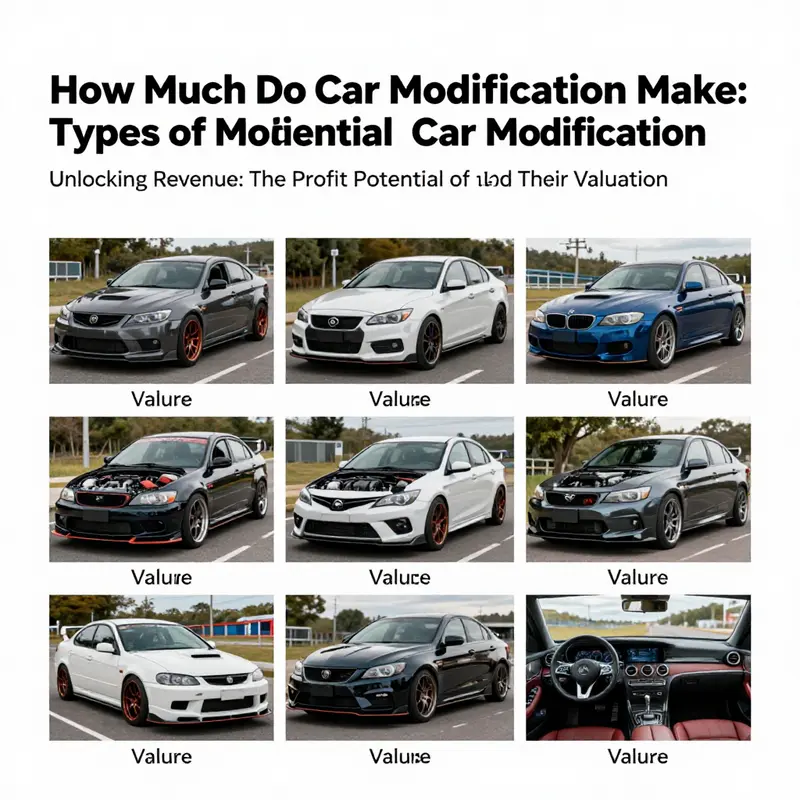
Car modifications can be as much about identity as they are about dollars, yet the financial return on any given upgrade hinges on a careful balance of type, demand, and the vehicle’s starting point. The allure of a modified car often lies in its ability to blend enhanced performance, striking aesthetics, and practical usability. But price is not a simple line item that mirrors the cost of parts and labor. Instead, it reflects the willingness of buyers to pay for a specific combination of characteristics, the credibility of the installer, and the vehicle’s original integrity. The same vehicle can lose more money with an irreversible design choice than it would gain with a reversible one. In short, modifications determine value only when they align with who might buy the car, when they want it, and what they are prepared to pay for the improved experience. This dynamic is the core of how much modifications make, not as a universal multiplier, but as a market-calibrated adjustment to a vehicle’s price and its resale liquidity. The numbers and logic behind it are best understood by unpacking the main categories of upgrades and the way buyers weigh them.
Performance modifications sit at the bold end of the spectrum. Engine tuning, turbocharging, and high-performance exhaust systems can push a car into a new realm of speed and responsiveness. For enthusiasts, these upgrades can be transformative, but the resale impact is often modest at best. A common finding across markets is that only about 30–40 percent of performance modifications yield a measurable lift in resale value. That delta matters because it means a sizable portion of the money spent may never be recovered in a future sale unless the car taps into a highly specific buyer segment that values that exact configuration. More importantly, performance changes tend to be less appealing to mainstream buyers who prize reliability and factory-backed performance. The risk is that a modification, especially if it is non-factory supported or difficult to reverse, becomes a liability in a broad market rather than a value-add. For builders and shops, that tension creates a clear takeaway: high-margin performance work makes sense when it’s paired with a brand story, a track-tested credibility, and a customer base that seeks those outcomes rather than mainstream adoption. When a shop can reliably translate a performance upgrade into a tested, documented improvement that harmonizes with the car’s chassis and safety systems, the margin can feel meaningful. Still, the ROI is often bounded by the size of the audience that shares the same appetite for speed and the same tolerance for risk.
Aesthetic modifications can shift perception and desirability in substantial ways, especially in the luxury and sports segments where visual impact can command attention and premium pricing. Custom paint jobs, widebody kits, and premium interior upgrades such as carbon fiber trims or tailored leather can elevate a vehicle’s market position. A high-quality paint job, for instance, can add somewhere in the neighborhood of $5,000 to $15,000 to a vehicle’s market price, depending on craftsmanship and the recognition of the painter or shop. Yet the resale premium here is highly contingent on taste and market appetite. Flamboyant or highly niche designs can narrow the pool of potential buyers and may impede liquidity if the style doesn’t resonate with a broad audience. Conversely, more understated, meticulously executed aesthetics that preserve the car’s overall balance and brand language often translate into a cleaner, more scalable resale story. In practice, aesthetic value is strongest when modifications reinforce the vehicle’s original character rather than transform it into a one-off statement that limits future buyers. For a business, this means targeting customers who value lasting, high-quality presentation and who describe the modification as an enhancement to the car’s timeless appeal, rather than a temporary fashion, and documenting the process with certifications and warranties to reassure buyers.
Functional upgrades occupy a middle ground that tends to broaden appeal without compromising the vehicle’s core identity. Upgrades to suspension systems, infotainment interfaces, and safety features typically improve the car’s usability and comfort, which broadens its attractiveness across a wider spectrum of buyers. The valuation logic here rests on two pillars: first, the practical enhancements should genuinely improve daily usability; second, they should be compatible with the car’s platform and not create a perception of fragility or complexity. In many cases, functional modifications deliver better returns than pure performance or purely cosmetic changes because they touch on things a broad set of buyers care about—comfort, safety, and reliability. As a result, these upgrades can lift resale value more reliably and maintain liquidity, provided they are executed with high standards and warranty coverage where possible.
From the perspective of business viability, entering the car modification market comes with clearly defined financial implications. The latest data from 2026 underscore how demanding the scale can be for certified operations. The initial investment to launch a certified modification service is substantial, around several million dollars, with Year 2 costs climbing even higher. The minimum cash reserve required to reach breakeven by Year 2 was cited as roughly $4.45 million in some industry analyses. These figures are not meant to deter, but they illuminate the reality that large, trusted shops operate on tight margins amplified by volume, efficiency, and branding. Margins on labor and parts can range from 30 to 50 percent, depending on labor rates, parts sourcing, and the strength of a shop’s relationships with suppliers and customers. The upside comes from scale, repeat business, and the ability to bundle services—engine work alongside aesthetic and functional upgrades, warranty-backed applications, and post-modification support that preserves vehicle value. For individual owners, the implication is clear: modest, reversible upgrades with a clear value proposition tend to be safer bets when it comes to resale and ongoing ownership costs, while high-end, integrated builds demand a sophisticated financing and risk management approach if pursued as an investment in a broader business strategy.
Owner’s focus is a crucial compass for decision-making. For individual car owners, the emphasis should be on modifications that align with current market trends and respect the vehicle’s integrity. Reversible upgrades—such as performance chips that adjust engine timing, quality tires, and OEM-compatible accessories—tend to preserve value and liquidity. These choices allow owners to recapture the car’s stock fundamentals if future buyers prefer stock reliability. The underlying principle is to preserve a balance between performance, aesthetics, and usability without locking the vehicle into a configuration that only a tiny niche will accept. For many buyers, the most compelling approach is to start with a solid baseline and overlay enhancements that are clearly reversible, well-documented, and supported by reliable warranties. Documentation matters as much as the modification itself; keeping a detailed log of parts, labor hours, and tuning parameters can make a meaningful difference at sale, as buyers weigh the documented effort against the vehicle’s remaining life and reliability. The broader takeaway for owners is to craft a modification narrative that emphasizes quality, reversibility, and the prospect of continued dependability on the road and at the pay window when it’s time to sell.
The market reality is that value rarely scales in a linear fashion with spend. While certain high-end jobs can fetch premium prices, the average buyer is looking for a coherent story—one that blends improvement with trust in the installer and a track record of reliability. This means successful modification projects often hinge less on sheer expense and more on strategic alignment: selecting the right upgrades for the right vehicle, delivering them with precision, and communicating the added value through credible performance data and a solid warranty framework. For researchers and practitioners, it also means keeping an eye on market signals and real-world resale behavior, which can shift with economic cycles, fuel prices, and consumer preferences. If a shop can demonstrate repeatable, value-forward outcomes—improved daily usability, safer handling under real-world conditions, and verifiable performance gains without compromising reliability—the perception of value tends to rise, and so does the willingness to pay.
For readers seeking a practical touchstone, consider how these principles translate into decision making about specific cars and projects. If you are contemplating modifications on a personal vehicle, prioritize upgrades that deliver tangible daily benefits and preserve the vehicle’s resale attractiveness. If you are contemplating building a business around modifications, the path to profitability requires more than technical skill; it requires a disciplined plan for capital, capacity, and customer trust. In the end, the math of car modifications is not just about the sticker price of a part but about the buyer’s calculus: am I getting a measurable improvement that I will still value when I next buy or sell? When the answer is yes, that is where modifications translate into real value. For a deeper dive into how modifications influence resale value, see car-modifications-and-resale-value. The conversation about value is ongoing, and it benefits from diverse experiences and transparent data that help separate permanent enhancements from temporary trends. External data from industry analyses reinforces the sense that durability, quality, and a clear value proposition—delivered with professional credibility—are the anchors of profitability in the aftermarket. External resource: https://www.autocar.co.uk/car-news/industry/cost-and-value-of-car-modifications-2026
Profit in the Garage: How High-End Car Modifications Transform Revenue and Reputation
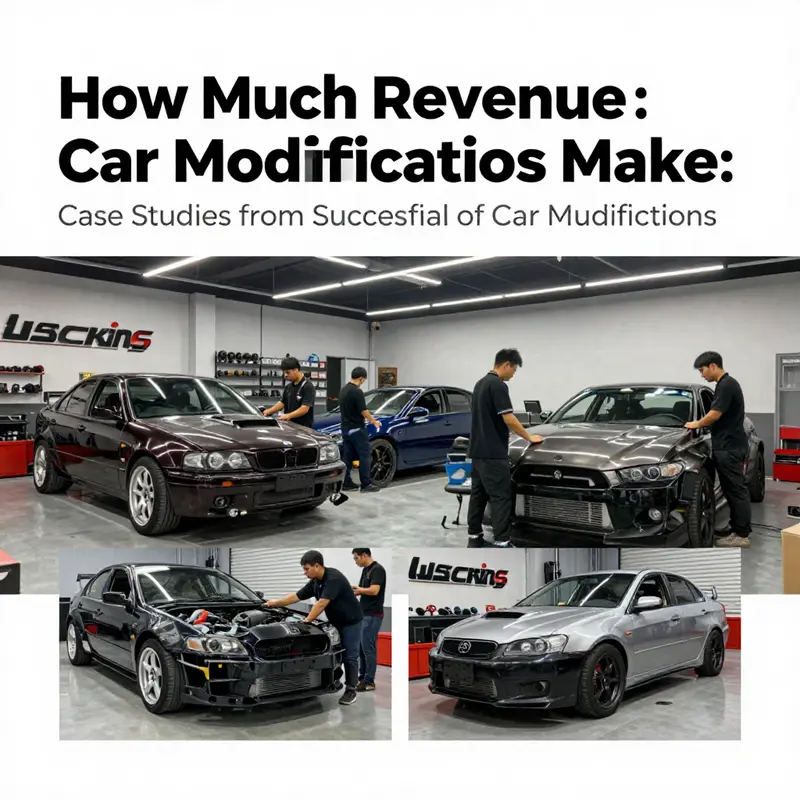
When observers ask how much car modifications make, they often imagine dramatic, all-or-nothing ventures: a flashy build that somehow prints money overnight. In reality, profitability emerges from a continuum of decisions—what you offer, who you serve, how you price, and how efficiently you operate. The numbers from the field converge on a simple truth: high-margin, custom work can generate substantial revenue, but only when a shop aligns its craft with a demanding market and a disciplined business model. In this sense, car modification is less a gamble on a single project and more a disciplined practice of reconciling expertise, branding, and cost control. The most successful shops treat modification as both an art and a system, where the value of a build is not only in the finished product but in the experience that surrounds it—the consultation, the reliability, and the post-build support that turns one-time clients into repeat customers.
Take the case of Rough Brothers in Los Angeles, a shop that has carved a niche in high-end, bespoke modifications for luxury and exotic vehicles. Their revenue surpasses five million dollars annually, and their profit margins on many bespoke projects routinely exceed sixty percent. This is not a matter of plucking a few units and hoping for the best; it is a function of exclusivity, technical mastery, and the willingness to take on projects that demand a high degree of engineering finesse. When a client commissions a one-of-a-kind engine swap, a full chassis rework, or advanced aerodynamic work, they are paying a premium that reflects more than parts and labor. They are paying for the guarantee that a rare combination of precision and performance will be delivered with flawless reliability. The key factors behind Rough Brothers’ success highlight a broader pattern: a strong reputation for meticulous craft, a track record of successful unusual builds, and the ability to command premium pricing because the work is demonstrably differentiated from standard bolt-on modifications. In effect, the margins reflect both the complexity of the tasks and the breadth of the client base willing to invest in unique outcomes.
A second profile, M3 Performance in the Midwest, underscores the power of market positioning and community building. This shop concentrates on BMW M3 and M4 models, employing a business model that blends a robust online presence with a reputation for performance and reliability. They offer a mix of bolt-on performance parts and deep tuning services, including ECU remapping and suspension upgrades. The average project value sits around eighteen thousand dollars, a figure that sits at a sweet spot where careful labor planning and selective parts sourcing yield solid profitability without venturing into projects so bespoke that they become prohibitive for most customers. Their annual revenue has grown at about twenty-two percent, a pace that signals both healthy demand and effective scaling. In 2023, net profits hovered around one point four million, a result driven by repeat business and enduring brand loyalty—customers who come back not only for the next upgrade but for the assurance that the shop understands their car’s personality and potential. The strength of M3 Performance lies in how they blend personalization with predictability: clients feel like they are getting a custom experience, while the shop maintains a workflow that preserves margins through streamlined project management, repeatable processes, and trusted supplier networks.
Taken together, these examples illustrate a broader truth in the aftermarket: profitability is highly contingent on the type of service and the market you serve. High-end, bespoke work can command premium prices, often allowing margins to stretch beyond typical benchmarks. Yet not every project or every shop will operate at this level. The general industry insight points to margins on labor and parts in the thirty to fifty percent range for many standard conversions and tuning services. For businesses that can innovate with exclusive designs, rare engineering challenges, or high-performance capabilities, margins can exceed sixty percent, but this liquidity usually comes with longer sales cycles, greater risk, and a demand for exceptional quality control.
To connect these cases to the broader business realities, it helps to ground the discussion in the economics of what a shop sells. Revenue is driven by the mix of service types: bolt-on performance upgrades, full engine or transmission work, aerodynamic and body modifications, interior luxury upgrades, and specialty conversions. Each category has its own value proposition and cost structure. Bolt-ons and software remapping might deliver a quicker turnaround and a lower upfront investment, but the margins can be thinner if labor is billed at lower rates or if competition drives price pressure. In contrast, a bespoke chassis or a full engine swap demands highly skilled labor, a carefully curated supply chain, and a client who is willing to pay for the uniqueness and engineering integrity of the build. The better a shop is at communicating the risk-reward profile of these projects, the more it can justify premium pricing and build a reputation that sustains demand.
These dynamics are not abstract. They connect directly to operating decisions that can determine whether a shop hits breakeven in its first year, reaches a steady cash flow in Year Two, or scales into a multi-million-dollar enterprise. A practical frame comes from a comparative lens: large, certified operations may begin with substantial startup costs—examples in the industry point to startup expenditures in the range of several million dollars, with the potential to reach breakeven by the end of the second year given the right demand and cash reserves. While that pathway describes a high-capital, high-capacity model, it serves as a useful contrast to the more modest ambitions of independent shops. The core principle remains intact across scales: profitability grows when a business can align its capabilities with the willingness of a distinct customer segment to pay for outcomes that cannot be achieved elsewhere.
Location matters, too. The pricing power of a shop in a market dense with affluent clientele and luxury brands, such as coastal hubs or metropolitan centers, supports premium engagement. The same services in more price-sensitive regions must navigate tighter margins or a larger client base to sustain growth. Geography interacts with brand and specialization: a shop that cultivates a reputation for precision and exclusivity can command higher hourly rates, but it must also invest in processes that preserve quality across complex projects. The human element—trusted master technicians, meticulous project management, and a culture of repeatable excellence—becomes a strategic asset just as critical as the hardware and software in the shop’s toolkit.
If a reader considers turning these insights into a business, the practical path hinges on a few recurring themes: clarity of service offering, a compelling value proposition, an efficient operating model, and a program of ongoing client nurture. The lasting lesson from the case studies is that profitability does not come from a single blockbuster build but from a sustained capability to deliver measurable performance, aesthetic refinement, or both, with consistency. The customer’s perception of value is shaped not only by the end result but by the process—the consultation quality, the transparency around timelines, the management of expectations, and the aftercare that supports the project long after the keys have changed hands. Each of these components contributes to a premium client experience that justifies premium pricing and, crucially, fosters repeat relationships that stabilize revenue streams.
For practitioners and aspiring shop owners, the path to profitability often runs through niche markets. A shop that cultivates expertise in a specific brand lineage, a particular tuning philosophy, or a distinctive design language can build a loyal following that sustains pricing power even when broader market conditions tighten. The data from industry observers and the narratives of successful shops converge on a similar point: differentiation, quality, and service excellence multiply revenue opportunities more reliably than attempts to chase volume alone. And as customer expectations rise, so too does the premium attached to a reputation built on demonstrable results and dependable delivery. This is where the business case for high-end modifications becomes not only about the thrill of the build but about the disciplined management of a process that can scale with demand.
For readers seeking further practical grounding, consider exploring resources on opening and scaling a car modification business to understand how others translate these principles into real-world systems and cash flow. How to Open a Car Modification Shop offers a structured perspective on the setup, staffing, and workflow considerations that accompany this journey. External benchmarks from the broader aftermarket space—such as industry analyses that highlight the profitability potential of well-executed, high-end operations—can provide additional context for evaluating your own plans and projections. External reading at: https://www.autonews.com/industry/high-end-auto-shops-achieve-six-figure-profits complements the discussion by illustrating the practical outcomes of shops that prioritize craft, branding, and client experience alongside technical capability. In the end, the chapter’s purpose is to illuminate a pathway: car modifications can be highly lucrative when they are anchored in distinct value, delivered with precision, and supported by a business model that rewards repeat, satisfied customers.
Final thoughts
Understanding the financial landscape of car modifications reveals a world filled with opportunities. From economic impacts and consumer-driven markets to diverse profit margins and successful case studies, it’s clear that the automotive aftermarket holds significant revenue potential. Whether you’re a hobbyist, a professional tuner, or a supplier, recognizing these aspects can enhance decision-making and drive growth in this exciting industry.