
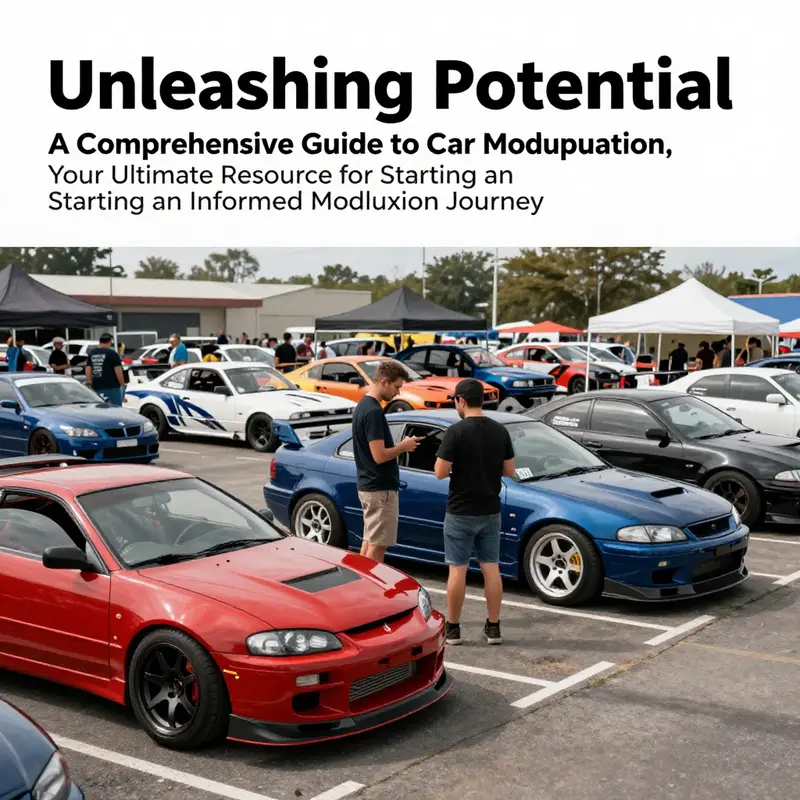
Car modification is more than just a passion—it’s a commitment to enhancing performance, style, and an individual’s unique taste. Whether you’re a hobbyist, professional tuner, or a classic car restoration enthusiast, understanding how to modify vehicles effectively and legally is crucial for a successful venture. Each chapter of this guide targets essential aspects of the modification journey, from defining clear goals to navigating legal requirements and suggesting beginner-friendly upgrades. By following this structured approach, both newcomers and seasoned modifiers will find valuable insights, ensuring they make informed decisions that align with their automotive dreams.
From Intent to Impact: Defining Your Car Modification Goals for a Safe, Legal Build

Defining your car modification goals is the quiet threshold between a vague fancy and a meaningful, measurable project. It starts with a simple question: what do you want from the car, and why does it matter to you on a daily drive or a weekend track session? Yet that question is not merely about taste. It anchors safety, legality, budget, and the long arc of your build. The best modifications grow out of a clear decision about what matters most—appearance, performance, or comfort—and from there, every choice you make should reinforce that core objective. If you begin with a vision that blends aesthetics and function, you will avoid the common trap of chasing trends that don’t align with your car’s design language or your driving needs. In the end, goals give you a north star that guides selection, sequencing, and the timid moments when you resist the urge to buy something flashy but wrong for your chassis. The road to a satisfying build is paved with deliberate intent rather than impulse purchases.\n\nMost enthusiasts find themselves drawn to one of three broad objectives, though many builds combine elements of all three. Appearance oriented projects emphasize visual impact—the stance, the silhouette, the color or wrapping, the way the car sits in motion. Performance oriented aspirations focus on handling, acceleration, and stopping power. Comfort oriented goals center on cabin feel, creature comforts, and usability. A concrete goal that merges these strands can feel like a practical blueprint: a car that looks purposeful, handles with confidence, and remains comfortable for daily use. When you frame your goals this way, you invite a disciplined approach to upgrades that keeps your vehicle safe, street legal, and enjoyable to own. It also helps you communicate with shops, if you choose to work with professionals, about what you want to achieve and what you are willing to invest.\n\nTo translate high level goals into concrete steps, you need to understand the constraints you will operate within. The legal and safety landscape is not a barrier to be defeated; it is a frame within which good modifications must live. Many jurisdictions regulate changes that affect brakes, suspension, engine performance, exhaust, or safety systems. Some places require inspections or certifications to keep a car road legal after certain changes. Even color changes can trigger administrative steps in some regions. Recognizing these realities at the outset helps you avoid costly detours or the risk of fines, failed inspections, or insurance issues down the line. A practical stance is to document what is changed, why, and when. Documentation may prove invaluable when you resell the car or renew insurance, as it demonstrates responsible ownership and transparent maintenance. The reality is that many upgrades are long term commitments: they alter how the car behaves, how it wears, and how it is perceived by authorities and insurers alike.\n\nAs you think through your goals, you will naturally gravitate toward beginner friendly paths that minimize risk while still delivering meaningful gains. If appearance is your primary aim, a measured first step is to address stance and wheels. Lowering the ride height with a performance suspension setup, such as coilovers, is a time honored way to create a cohesive look while also sharpening cornering stability. The visual impact is immediate, but the real payoff comes from the balance achieved between the lowered center of gravity and the chassis dynamics. Pairing the suspension with wheels that match your vehicle’s specifications is essential. You should pay attention to bolt pattern, center bore, offset, and width to ensure proper fit and safe tire contact with the road. This attention to fitment translates into both aesthetics and performance, as the car now communicates a unified message rather than a haphazard mix of parts. The next layer, high performance tires, cements grip and response, making the new stance not just an image but a functional upgrade. When you select tires, you are choosing the car’s contact with the road, and that choice will strongly influence steering feel and braking performance. Aesthetics without grip is a recipe for compromised safety, so the discipline of balance remains essential even in visual projects.\n\nIf performance and handling are your central aim, the practical path often begins with tires. Superior tires unlock the car’s potential by transforming grip, steering precision, and braking reliability. From there, a robust suspension system follows as the natural next upgrade, with stiffer springs and dampers that minimize body roll and sharpen cornering response. This sequence supports a driver’s confidence and preserves the car’s balance as power figures evolve. Upgrading braking capacity—larger rotors, high performance pads, and high quality calipers—ensures that stopping power keeps pace with the gains in grip and handling. The logic is intuitive: you should not push a car’s dynamics beyond what its chassis and tires can safely manage. The idea is a harmonious cadence between grip, chassis rigidity, and stopping capability. Engine or ECU tuning, while alluring, should be contemplated only after you have verified that the chassis and braking systems can absorb the extra power without undermining safety or wheel control. In practice this means a staged approach: secure your grip, then refine the dynamics, and only then pursue power that your car’s fundamentals can sustain.\n\nComfort oriented goals invite a different but equally disciplined path. The interior becomes a harness for enjoyment and practicality. Upgrading seats to better supports, whether for long drives or spirited canyon runs, can change the driving posture and reduce fatigue. Ambient lighting, mood-enhancing but subtle, can transform the cabin experience without compromising ergonomics. Replacing the steering wheel with a design that offers a more natural grip can heighten control and tactile feedback, while a higher quality audio system or acoustic insulation can convert a noisy commute into a refined experience. The core idea here is to harmonize the cabin with the car’s external character. Comfort improvements should feel like an enhancement of the ownership experience rather than a distraction from its core purpose. In the end, your interior choices should support sustained driving pleasure, reduce fatigue, and keep daily usability intact.\n\nNo matter which direction you lean toward, safety and legality remain non negotiable companions on the journey. This is not a checklist to be completed and shelved; it is a living framework that informs every decision. When you think about legality, you begin to appreciate the role of documentation. Keeping records of parts installed, dates of service, and any approvals or certifications you have obtained can smooth future inspections or resale. If you decide to engage a professional builder, that documentation becomes a bridge of trust between you and the shop, helping to align expectations and outcomes. The value of reliable records grows with the car’s age and with changes in ownership. This approach is not about fear, but about clarity and confidence. The more transparent your build, the more you protect the car’s integrity and your own peace of mind.\n\nIn practice, starting with a clear objective also clarifies budgeting. You will likely discover that small, thoughtful upgrades can yield higher overall satisfaction than grand, indiscriminate overhauls. A well-planned route may begin with a few high impact updates that support your chosen objective and leave room for future milestones. A staged plan reduces the risk of overspending and helps you measure progress against your original goals. When you set a target for what you want to achieve and by when, you create a feedback loop. Each modification can be evaluated against the goal: does it bring you closer to the intended aesthetic, performance target, or cabin comfort? If it does not, you reassess before moving forward. This mindset keeps the project sustainable and enjoyable rather than wasteful or conflicted. The discipline of staging upgrades keeps you focused on the long game rather than chasing a new shiny part every weekend.\n\nYour journey will also benefit from the right learning mindset. Start with fundamentals of engine systems, chassis dynamics, electrical circuits, and vehicle electronics. The landscape of knowledge is broad, and you can navigate it through a mix of online tutorials, forums, and books. Practicing on scrap parts or older vehicles allows you to experiment without risking your primary ride. A community approach enriches this process—local clubs and online forums connect you with mentors who have already walked the path. The human element matters as much as the technical one. Networking with experienced modifiers can shorten the trial and error you otherwise face alone. It is in these communities that you hear about the nuanced, real world consequences of certain choices, the common pitfalls, and the subtle trade offs that often decide a build’s success.\n\nResourceful, reliable guidance matters as well. Seek information from trusted sources and avoid counterfeit or low quality components, especially for safety critical systems like brakes and wheels. High quality parts matter because they are tested for safety, reliability, and performance within design tolerances. After you select a direction, begin with a realistic plan for sourcing parts, estimating the total cost, and scheduling installation. The plan should include time for alignment checks, verifying electrical connections, and ensuring compatibility with existing systems. If you are new to car modification, consider a conservative, well-structured approach rather than a bold, untested overhaul. There is no substitute for careful measurement, patient fitting, and methodical tuning. A thoughtful plan acknowledges that every upgrade introduces new variables, and the longer you take to plan, the more likely you are to enjoy the process and protect the vehicle’s future.\n\nTesting and calibration form the final arc of a well executed modification. After you install any alteration, a thorough test drive in safe conditions is essential. Listen for unfamiliar noises, vibrations, or changes in feel during acceleration and braking. If your modifications include suspension or wheel changes, a professional alignment is often necessary to realize the full benefit of the work and to prevent premature tire wear or handling quirks. Engine or ECU tuning requires careful calibration and system matching; this is exactly where professional expertise can be instrumental. The goal of testing is not merely to confirm that a change works, but to observe its behavior under a range of real world conditions—wet roads, uneven surfaces, highway cruising, and quick transitions. The car should feel predictable, controllable, and reassuring, not flighty or nervous. You should be able to trust your car in the everyday, as well as under spirited driving.\n\nThe path from initial idea to finished project is, at its core, a dialogue between your goals, your car’s design constraints, and the realities of the road. A coherent plan respects the car’s original design and acknowledges the engineering compromises that modifications introduce. The best builds are those that reflect the driver’s passion while maintaining safety, reliability, and lawful operation. Even when the objective is to achieve a dramatic stance or a track ready feel, the underlying principle remains steady: modify with intention, measure outcomes, and stay within the bounds of safety and legality.\n\nAs you consider how your goals translate into concrete choices, you may encounter a rich tapestry of resources that support your learning curve. Educational content, hands on tutorials, and community discussions become a reservoir you can draw from as you refine your plan. The journey is iterative: you define a goal, you test a change, you observe the results, you adjust the plan, and you continue. This cyclical process is the essence of responsible modification. It preserves the car’s value, ensures safety on public roads, and maintains a sense of ownership that feels earned rather than imposed by random purchases. With purpose, any modification becomes more than a visual flourish or a power bump. It becomes an authentic expression of your driving identity that respects the car’s heritage, the road ahead, and the responsibility that comes with altering a machine that moves under your control.\n\nFor readers seeking a practical reminder of how goals influence value and resale, the idea is to align upgrades with what buyers will value in the future as well as today. Thoughtful choices—reliable suspension components, high quality tires, careful alignment, and documented changes—tend to hold value better than a string of disjointed, poorly suited modifications. You can think of this as building a coherent narrative for your car’s evolution, rather than stitching together disparate improvements that only look good in a showroom photo. A well told story translates to more confidence in your ownership, easier resale negotiation, and a vehicle that continues to perform in the ways you intended from the start. The chapter of your car’s life you write with care can become a source of pride when you look back at it years later, not a reminder of hurried decisions that you wish you could reverse.\n\nHaving a clear, disciplined approach also invites you to weigh non technical considerations that matter in the long run. Insurance implications, for example, can be affected by the scale and nature of the modifications. Some enhancements may alter premiums or coverage, while others might be neutral. A well documented plan can help you discuss changes with your insurer in a straightforward way, reducing surprises if a claim ever occurs. Leasing, financing, and resale value are additional facets that respond to how you document and manage modifications. The more you understand these dynamics, the more you can make choices that preserve the car’s practical value while still delivering the experience you want. When a modification plan respects the realities of law, safety, and financial prudence, it becomes not just an obstacle to overcome, but a structured path toward a more personal, customized driving experience that you can maintain with pride.\n\nFor readers who want a quick anchor to reputable guidance beyond the chapter, consider exploring a detailed, trusted resource that compiles core principles of modification planning. This reference emphasizes the sequence you should follow: define goals, assess safety and legality, choose beginner friendly upgrades, learn fundamentals, rely on quality parts, and test comprehensively. It reinforces the idea that structure and prudence are not barriers to creativity but their enablers. A practical example of applying the framework can be seen in real world discussions about suspension and wheel fitment, where small, precise adjustments yield meaningful changes in both appearance and performance. The process is rarely dramatic at first glance, but it is cumulative, translating a broad aspiration into a well balanced, enjoyable, and safe driving experience. In this light, your goals act as a compass that guides every subsequent decision, ensuring that the path you take remains coherent, legal, and in tune with your passion.\n\nTo connect these reflections to concrete decisions, consider the broader ecosystem of options you will encounter. The landscape rewards patience, which is why many builders start with a simple, track oriented checklist: a tire upgrade, a reliable damper or coilover, and brakes capable of handling increased loads. This triad acknowledges that grip and control are prerequisites for any meaningful performance gain, and that the ability to stop consistently is essential. It also recognizes that appearance, comfort, and efficiency are not mutually exclusive. A well chosen set of wheels and a properly tuned suspension can deliver both a dynamic, aggressive look and a confident, composed ride. With your goals crystal clear, you can navigate the marketplace in a way that maximizes value, safety, and personal satisfaction, rather than chasing trends that may not align with your car’s engineering or your driving style.\n\nThe journey toward a well defined set of modification goals is not a solitary one. Engage with communities that share your interests and values. The conversations you have in forums or local clubs often reveal practical insights about specific chassis, compatibility issues, and common compatibility pitfalls. They also introduce you to a culture of shared learning where mistakes are discussed openly and improvements are celebrated for their ingenuity and safety. As you participate, you will begin to see patterns: certain wheels, tires, and suspension configurations emerge as reliable starting points for particular models, while others are better left as late stage ambitions after you have built a solid foundation. The more you immerse yourself in this environment, the more your decisions will feel informed, deliberate, and grounded in collective experience rather than personal whim. And when uncertainty arises, you will find that the community can help you stay focused on your goals while respecting safety and legality.\n\nIf you are curious about how goals relate to the broader topics of resale value and long term ownership, you can explore the nuanced discussion at the following resource that examines how modifications can influence resale value over time. car modifications and resale value. This piece offers a useful perspective on how the timing and nature of upgrades can affect a car’s marketability without diminishing its integrity. It is not a prescription, but one more lens through which to view the complexity of decision making when you live with a modified vehicle day in and day out.\n\nAs you progress, remember that the central aim of starting car modification is not to chase a single spectacular upgrade but to cultivate a coherent, safe, and legal journey that truly reflects your passion. Your chapter may begin with a single visual tweak, a small performance gain, or a simple interior enhancement. Yet the discipline to define goals, to plan, and to test thoughtfully is what sustains you through the inevitable twists and refinements of any project. By keeping your eyes on the prize—an improved driving experience that is safe, legal, and personally meaningful—you preserve the car’s integrity and your own confidence as an enthusiast. The story you write here will unfold across seasons of driving, maintenance, and learning, and when you look back, you may recognize that the best modification was the one that aligned with your values and your vehicle’s design, while still respecting the rules that keep you and others safe on the road.\n\nExternal Resource for Further Reading: https://www.autosage.com/car-modification-guide
Starting Car Modification Within the Lines: Navigating Legal and Safety Regulations

Every journey into car modification begins with a map, and in this map the first landmarks are legality and safety. This chapter invites you to move beyond the impulse to customize and toward a disciplined, informed approach. The goal is not merely to change how a car looks or feels, but to ensure that every change remains within the boundaries that protect road users, maintain vehicle reliability, and keep your ownership and insurance secure. When you start with a clear understanding of what you can do, under what conditions, and how to document it, you reduce the risk of costly rework, failed inspections, or unintended safety gaps. In that sense, legality is not a constraint but a framework that helps you plan smarter, choose better parts, and organize a modification project that stays durable over time. The process begins with an honest assessment of your objectives, followed by an honest inventory of the laws that govern your region. It moves from there into careful design choices that balance ambition with responsibility, and finally into method, testing, and documentation that keep your vehicle compliant and safe as you learn and grow as a modifier.
In many jurisdictions, including the context described for this chapter, modifications are not a free-for-all. They must meet standards that protect the vehicle’s function and the safety of other road users. The law often separates modifications into two broad categories: cosmetic or non-structural changes that primarily affect appearance or comfort, and performance or safety-related upgrades that influence handling, braking, or visibility. The distinction matters because cosmetic updates can still be restricted if they interfere with lighting, license plates, or visibility, and performance upgrades typically demand scrutiny for how they affect the chassis, brakes, suspension, and emissions. The practical implication is simple: when you plan a modification, begin with the least risky, low-impact changes and verify they are permitted before proceeding. A thoughtful approach helps you build confidence in your plan and in your ability to carry it through to completion, inspection, and ongoing care.
Turning to concrete regulations, one country’s framework shows a carefully worded set of allowances and restrictions that can guide beginners without overwhelming them with complexity. It highlights a philosophy that flexibility exists within defined bounds. Permitted modifications often revolve around adjustments that do not increase the car’s overall dimensions, do not obscure license plates, and do not compromise essential systems such as lighting and signaling. In that light, there is room to explore certain enhancements that improve appearance or basic function while preserving safety margins. For example, changes to the color of the body are typically allowed, as long as there is formal registration when required. The same holds for non-load-bearing changes or updates that do not alter the vehicle’s length, width, or the visibility of crucial markings. This creates a practical pathway for a new modifier: you can refresh the look or improve a few non-critical aspects of the car without triggering a cascade of compliance hurdles. The caveat remains clear: any modification that affects safety systems, or that alters the vehicle’s fundamental geometry or signaling, must be approached with caution and, in many cases, formal authorization.
To make this tangible, consider a set of specific, commonly encountered modifications that are often discussed in beginner forums and among clubs that promote responsible customization. Some jurisdictions explicitly permit certain cosmetic or light-performance changes that do not alter tire specifications or the overall footprint of the vehicle. Roof racks, for instance, can be allowed up to a certain height because they primarily affect wind resistance and sometimes the center of gravity, but when kept within set limits they do not intrude on braking geometry or lighting. Non-load-bearing foot pedals may be accepted if they extend only a small distance beyond the car’s side and do not pose a snag hazard for pedestrians. Replacing grilles or bumpers and changing wheel rims are other common changes that may be permitted provided tire specifications aren’t altered and the modifications do not affect the car’s length, width, or lighting. Repainting the body—often seen as a dramatic but non-permanently altering choice—can also be permitted, subject to the rules about color change registration where required.
This is where planning becomes practical intelligence. When you map your goals, you map the regulatory space you will navigate. Start with what is officially permitted and what the conditions are for those permissions. The conditions usually emphasize that modifications must not alter the vehicle’s length or width, must not obscure license plates, and must not interfere with lighting and signaling systems. These constraints are not there to stifle creativity but to preserve core safety and accountability on the road. If your plan involves changes that would run afoul of these conditions, you will need additional steps, approvals, or perhaps alternative approaches that achieve your aims without crossing legal boundaries. The principle is straightforward: legality is a design constraint, and treating it as such helps you innovate in safe, compliant ways.
In the context of this chapter, the regulatory discussion is anchored in a real framework—the kind of guidance that car owners are encouraged to consult before committing to a project. For those who want a practical touchstone, there is an explicit invitation to consult official channels and look up authoritative guidelines that spell out what is permissible and what requires registration or approval. A careful reader will also recognize the importance of keeping thorough records. Documentation matters for registration, for resale value, and for proving that modifications were conducted within the permitted framework. When you maintain a clear log of parts used, dates of installation, alignments, and service checks, you create a transparent trail that can simplify annual inspections and clarifications with insurers or authorities. In short, the best guardrails are a combination of official guidance, a written plan, and a documented execution path.
The practical pathway to compliance often begins with the most beginner-friendly upgrades that naturally align with the permitted list. For visual styling, this might include non-intrusive cosmetic changes such as repainting within the allowed color options or updating exterior trim that does not touch critical lighting or signaling. For handling and track-oriented aims, the emphasis remains on foundational safety: ensure that the chassis, tires, and brakes are capable and compliant before considering any performance tuning. In other words, the plan for a beginner’s stage should emphasize reliability and safety as prerequisites for any higher-power ambitions. Even if your curiosity leans toward performance, you will frequently find that the responsible route is to solidify the basics first. The underlying insight is that a car’s performance potential rests on its structural integrity and its ability to maintain control under typical driving conditions. Upgrades that outpace those fundamentals without proper attention to safety can create what is effectively a liability rather than a joy ride.
The questions you ask early on are crucial. What is the core purpose of my build? Which modifications are essential to meet that purpose without compromising safety? How do I verify the compatibility of new parts with the factory systems? How will I document the work for registration and future inspections? The answers guide you toward a plan that respects both legality and engineering sense. Because laws differ by region and can be updated, the best practice is to begin with official sources. For example, official guidelines issued by national authorities provide the baseline that translates into everyday decisions for the workshop bench and the driveway. These guidelines, while sometimes dense, become navigational tools when you apply them to your project timeline. They tell you not only what is permissible but also how to approach the more nuanced questions—like whether a color change triggers a specific registration window or what counts as a visible change that could require re-certification.
In the specific case discussed here, the core regulatory shapes are clear: you may perform certain modifications if they do not impact the vehicle’s geometry, lighting, or signaling, and you must register color changes within a defined timeframe. The logic behind these rules is straightforward. Geometry changes can alter handling characteristics and alignment with safety standards; lighting changes can affect visibility for others on the road; license plate visibility is a public accountability matter. If you respect these boundaries, you can proceed with a coherent sequence of modifications that remain within the legal envelope while you learn the craft and refine your taste. The path is not only about what you can do, but about how you can do it safely and responsibly. A good practice is to treat every modification as a small experiment: test the impact in a controlled environment, verify that visibility, signaling, and reflectivity are preserved, and confirm that the change remains reversible if regulations shift or if you decide to revert for resale or inspection.
Another practical layer is the social and community context. Learning from fellow enthusiasts can accelerate your understanding of what works in real-world conditions and what fails in daily use. Joining local car clubs or online forums creates networks of experience, much of which is practical and safety-oriented. The difference between a hypothetical modification and a real-world success often lies in the support system you build around it—mentors who know how to source properly rated parts, how to install them with the right tools, and how to document the process for regulatory compliance. This social dimension is not entertainment; it is a safety net. It reduces the risk of investing in components that do not fit the vehicle’s braking balance or suspension geometry, and it helps you align your ambitions with the vehicle’s actual capabilities.
As you sketch the plan that will carry you from concept to completion, a few tools and practices can keep you on track. First, consult trusted sources for technical guidance. Reliable information helps you avoid counterfeit or low-quality parts that can compromise safety. Second, keep your modification log. Each entry should include part numbers, installation dates, responsible professionals (if any), alignment or performance test results, and photographs of the before-and-after states. Third, approach any electronic or software-based upgrades with care. ECU tuning, for example, requires proper calibration and system matching. Without precise mapping of how the engine, ignition, fuel, and cooling interact, you risk detuning or damaging components, increasing wear, or triggering fault codes. Finally, anticipate the inspection and registration steps that will follow. In many jurisdictions, a compliant project is one that demonstrates a clear, documented progression from concept to completion with verifiable standards and a straightforward demonstration of safety and visibility.
The arc from concept to compliant build also involves a mental shift about color and aesthetic choices. A color change, while often appealing, is more than skin-deep. In the framework described here, color changes are governed by registration rules that, when followed, enable the vehicle to pass annual reviews and inspections. The ten-day registration window mentioned in the guidelines underscores the seriousness with which authorities treat color alterations. This is not a bureaucratic trap; it is a mechanism to maintain a consistent record of vehicle appearance and identity, which matters for safety, law enforcement, and resale transparency. If you anticipate a color change, plan for this process early. Gather the necessary documentation, contact the appropriate authorities, and schedule the registration within the mandated period. The upfront effort pays off when the vehicle remains legally compliant and eligible for inspection without delay.
For readers seeking a direct reference to formal rules, there is a concise collection of guidance that maps these boundaries in a country-specific context. The guidance emphasizes two recurring themes: approval for modifications that do not affect critical safety systems and clear processes for changes that require registration and inspection. It also highlights the expectation that vehicle owners keep comprehensive records, because future resale or regulatory reviews will rely on a transparent history of what was changed, when, and how. The practical upshot is that compliance is a continuous responsibility, not a one-time checkbox. Your job as a modifier is to build a workflow that integrates planning, installation, testing, registration, and documentation into a seamless lifecycle. When you adopt this lifecycle, you are not only reducing risk; you are cultivating a form of craftsmanship that honors the vehicle’s design and the road’s safety demands.
A useful next step in your learning journey is to compare the official guidelines with anecdotal experiences from the modification community. You’ll find that many successful builders emphasize the same core habits: start with solid fundamentals, verify compatibility, and document every step. They also focus on ethical considerations, such as avoiding modifications that could compromise someone else’s safety and ensuring that upgrades do not undermine the vehicle’s original safety architecture. This alignment between practical know-how and responsible conduct is what distinguishes a hobbyist from a thoughtful practitioner. The legal framework, far from being a restraining force, can serve as a steady compass that helps you avoid detours that lead to costly fixes, failed inspections, or worse—safety hazards on public roads.
In the spirit of concrete guidance, consider the following practical sequence for a beginner-friendly project that stays within permitted boundaries and builds a solid foundation for more ambitious work. Begin with cosmetic refreshes that do not alter dimensions or safety features, such as a careful repaint within allowed color options and the replacement of non-structural exterior components that do not affect illumination or signaling. Pair the aesthetic changes with a review of wheels and tires that keeps tire specifications consistent with the manufacturer’s design. If you decide to upgrade wheels, choose rims that maintain the same tire radius and profile so that the speedometer and ABS/traction systems remain unaltered. Such alignment minimizes the risk of calibration issues while still delivering a visual upgrade. If you want to pursue a functional improvement, focus on non-intrusive enhancements like better seat materials or audio systems that do not interfere with essential vehicle electronics. Each choice should be vetted against the official rules and documented for registration if required. If you later decide to explore performance improvements that affect handling or braking, ensure the chassis has been upgraded or reinforced as needed and that brakes are upgraded in tandem with tires to maintain a balanced, safe performance envelope. In short, the prudent path is to couple careful planning with a staged execution that respects the law, prioritizes safety, and builds your skills gradually.
The path described here is not a rigid prescription but a disciplined approach to starting car modification. It integrates regulatory awareness, safety considerations, and practical execution into a coherent narrative that you can apply regardless of where you live. It also highlights an important habit: always verify current regulations before you begin. Regulations can change with new safety standards, traffic rules, or enforcement priorities. Keeping up to date means checking official channels, reading the latest guidelines, and adjusting your plan if new requirements arise. In this way, legality becomes a moving partnership rather than a static hurdle. You stay accountable, and your project stays on track, aligning with both your ambitions and the expectations of the road.
As you absorb these principles, you can begin to see the bigger picture. Car modification is not a single moment of installation but a continued process of learning, testing, and adapting. The first successful, compliant modification gives you a platform to test more ambitious ideas with a safety-first mindset. It also gives you practical experience in mapping a project timeline, coordinating with specialists when needed, and maintaining a habit of meticulous record-keeping. The confidence that comes from this disciplined approach makes it possible to explore more complex modifications later, such as suspension tuning or drivetrain enhancements, all while keeping the vehicle within a lawful and safe operating envelope. The overarching message is simple: plan with the law in view, progress with safety as a constant companion, and document every step so your build remains trustworthy to authorities, insurers, and future buyers alike. This is how to start car modification not as a reckless experiment but as a deliberate, responsible craft.
To connect these ideas to a broader community of knowledge and practice, the reader is invited to consult a dedicated resource that contextualizes the Chinese regulatory landscape for car modifications. This external reference offers a clear overview of what is permitted and what requires registration, helping you translate the abstract rules into concrete decisions for your own project. See the article at Legal car modifications China for further details.
External resource guidance and further study can help you deepen your understanding as you proceed. For those who want to verify the formal standards directly, official government resources provide the authoritative baseline from which all practical decisions flow. The conversation about legality does not end with understanding the list of permitted changes; it continues with how you apply those rules over time, how you adapt to evolving standards, and how you maintain a transparent trail of your modifications for inspections and resale. In that sense, the chapter you have read is not a conclusion but a doorway into a sustainable, responsible, and increasingly confident approach to car modification. The road to a worthwhile build begins with respect for regulations, a careful plan, and a commitment to safety and clarity in every modification you undertake.
External resource: Ministry of Public Security Guidelines
Starting Simple: A Practical Guide to Beginner-Friendly Upgrades in Car Modification

Modifying a car can feel like stepping into a vast workshop where every lever and switch promises a new level of driving personality. For most newcomers, the wisest path is to begin with beginner-friendly upgrades that deliver noticeable impact without demanding advanced mechanical skills or a fortune. This approach keeps the journey enjoyable and scalable, letting you build competence, confidence, and a clearer sense of what you want from your vehicle. The road from stock to personalized is best traveled in stages that respect safety, legality, and the original design of the car. In this spirit, the most accessible starting points are interior touches that transform the everyday driving experience, paired with evaluating performance-focused basics that are meaningful yet modest in scope. A thoughtful, staged plan helps you avoid risky shortcuts and keeps your project aligned with the long view of car ownership: reliability, value, and genuine enjoyment on the road rather than merely the thrill of a single weekend upgrade.
A natural first step is to focus on interior refinements that alter the feel of the cabin rather than the external silhouette or the heart of the engine. One of the simplest and most rewarding options is dashboard trim upgrades. These precision-cut panels overlay existing surfaces and can be sourced in a range of premium materials such as carbon fiber, aluminum, or high-quality plastics. The benefit is immediate and tangible: a refreshed, modern cockpit that looks tailored rather than borrowed. Because the modification is largely cosmetic, it typically presents a lower risk to reliability and is easier to reverse if you decide the look doesn’t suit you forever. The installation process, while requiring care, is designed with accessibility in mind. Tidy alignment, subtle surface finish, and a seamless integration with existing contours are the keys to a convincing result. When done well, a dashboard trim upgrade communicates a clear message about your intent to personalize without altering the vehicle’s fundamental systems. It also creates a practical testing ground for measuring the care you bring to any future project, because the discipline of a clean install—measuring, cutting, then rechecking—transfers to every other upgrade you consider.
If interior styling alone feels like a stepping stone, a more noticeable leap toward a futuristic cockpit is the digital instrument panel upgrade. A digital cluster replaces conventional analog gauges with high-resolution displays that can present real-time diagnostics, navigation data, and customizable layouts. The allure here is not simply aesthetic; digital panels can improve readability in various lighting conditions, provide richer information at a glance, and introduce flexible interfaces that adapt to driving modes such as sport, eco, or comfort. However, this upgrade introduces new considerations. Compatibility becomes a guiding constraint: not every digital panel will plug into every car, and some vehicles require additional interface modules or harnesses to ensure the power, data, and sensor signals are correctly interpreted by the new display. Beyond compatibility, attention to electrical load, wiring quality, and system integration matters. A misstep can affect power distribution, trigger fault codes, or interfere with other onboard electronics. Yet with careful planning, the digital panel upgrade offers a tangible bridge to more sophisticated electronics work, expanding your understanding of how modern cars fuse data streams from the engine, suspension, braking, and body electronics into a single cockpit experience.
The two interior upgrades share a common thread: they illustrate a practical philosophy for starting car modification. Begin with a clearly scoped project that delivers visible payoff without compromising safety or legality. In practice, that means choosing components that are designed for straightforward installation and that respect the vehicle’s original design intent. It also means staying patient, verifying fitment before ordering parts, and recognizing that the right upgrade is one you can live with day to day. If you treat the project as an extended learning exercise rather than a sprint to a dramatic, one-off change, you gain a reliable baseline of skills, knowledge, and confidence that pays dividends as you progress.
As you consider these interior routes, it helps to keep a few practical guardrails in mind. First, legality and safety come first. Many regions restrict or require approval for modifications that touch safety-critical systems, including braking, suspension geometry, and exhaust emissions. While dashboard cosmetics and even certain interior electronics typically fall into lower regulatory risk, any upgrade that affects power delivery or electrical safety should be approached with documentation, adherence to local rules, and, where possible, professional guidance. Second, keep records of every modification. A simple log with part numbers, installation dates, and the rationale behind each change can simplify future resale, inspections, and insurance discussions. Third, invest in quality parts and reliable installation practices. Counterfeit or substandard components are especially risky when applied to critical systems or when they interact with the car’s sensors and controllers. The payoff for careful sourcing is a quieter, more confident modification process and a stronger foundation should you choose to expand or revise your setup later.
The learning curve in these early projects is gentle but real. You do not need a fully kitted workshop or a lifetime of experience to achieve solid results. What you do need is a clear goal, a cautious approach, and a willingness to learn by doing. A good way to anchor this approach is to think in terms of the car’s overall experience rather than isolated parts. How does a dashboard trim upgrade affect your daily usage and the sense of ownership you feel when you sit in the driver’s seat? Does a digital instrument panel enhance the clarity of information and reduce cognitive load during drives, or does it introduce too much complexity for your current skill set? These questions help you calibrate your ambition against the realities of your garage and budget.
To support the practical path described here, consider a straightforward starting point for ongoing learning: a hands-on framework that emphasizes gradual skill-building, safe testing, and disciplined documentation. Start by studying basic automotive fundamentals, such as how vehicle electronics are powered and how dashboards receive and display sensor data. Use online tutorials and written guides to learn general wiring concepts, circuit diagrams, and the importance of secure connections and proper grounding. Practice on scrap parts or a donor vehicle when possible, to build comfort with tools and safety procedures before tackling your own car. A local car community or club can be a valuable resource here, offering mentors, real-world tips, and a space to compare notes with others pursuing similar goals. This social dimension matters because car modification often unfolds as a shared activity—peer feedback can help you spot issues you might miss on your own workbench and can keep you motivated through the inevitable challenges that accompany any project.
As you move forward, you will find that the learning curve is not a straight line but a series of small revolutions: a better fit of trim panels, a more readable digital display, a clearer understanding of how your car’s systems intertwine, and a growing sense of what you want to pursue next. With a careful plan, a commitment to safety and legality, and a readiness to learn, you can build momentum without losing sight of the car’s basic integrity. The aim is a cohesive, personalized experience that respects the vehicle’s original engineering while letting your creativity and preferences shine through. This is the essence of responsible modification: you start with simple, high-value upgrades that you can maintain, audit, and adjust over time, and you lay a robust foundation for more ambitious projects as your competence grows.
For readers who want a practical, stepwise reference that aligns with the kinds of upgrades discussed here, a brief guide on dashboard upgrades offers structured, beginner-friendly insights. It presents a careful balance between aesthetic improvement and functional enhancement, illustrating both the cosmetic and the technical considerations of interior modifications. A concise, accessible resource like this can complement the broader exploration of interior styling and electronic upgrades without steering you into risky or overly complex tasks. If you follow the principle of starting small and building up, you will find that your car begins to reflect your own approach to reliability and enjoyment as much as to style. The journey is not about making one dramatic change but about cultivating the discipline to plan, execute, and evaluate each step, so your car modification remains enjoyable, safe, and sustainable over time.
To support ongoing exploration, consider this practical entry point for beginners: how to approach modifications with a mindset that emphasizes learning, safety, and gradual progression. For a broader framework on implementing and evaluating these modifications, see the practical guide linked here: How to Install Modifications on a Car. This resource is designed to help you structure a project, confirm compatibility, and walk through common installation considerations without diving into overly specialized techniques that belong to more advanced workshops. The emphasis is on prudent planning, careful measurement, and an awareness that even simple-looking upgrades require attention to detail and a respect for how the car’s systems interact with one another.
As you continue to learn, you will likely accumulate a growing set of questions: Which dash trim style best suits your cabin lighting and color preferences? How do you ensure a digital instrument panel aligns with your car’s data signals and avoids warning alerts? What are the cost ranges for these kinds of upgrades, and how do you budget for them without compromising other maintenance needs? The answers lie in a mix of careful research, hands-on practice, and the experience of fellow enthusiasts who have navigated similar paths. The aim is not perfection on day one but steady progress that strengthens your understanding of the vehicle and your confidence in your own abilities. By grounding each upgrade in clear goals, thoughtful sourcing, and safe installation practices, you keep the project aligned with the broader purpose of car modification: to enhance how the car feels, responds, and fits your life, while preserving reliability and legal compliance.
The concept of starting with approachable upgrades also provides a practical counterbalance to the often sensational portrayal of modification culture. It reinforces a responsible ethos where the best mod is the one that works safely, legally, and truly reflects your passion. The beginner-focused path fosters a habit of planning, testing, and documenting that will pay dividends as you scale to more ambitious projects, such as suspension tuning, tire and brake upgrades, or engine management refinements. The experience you gain from dashboard and digital panel enhancements—and the discipline you develop in every subsequent step—will shape not only your own skills but also the car you own and how you relate to it in daily life. In time, your modest starting point can grow into a coherent, personal modification program that enhances aesthetics, usability, and performance in harmony with the vehicle’s original architecture.
External resource:
A broader primer on dash upgrades and related beginner techniques can provide additional perspectives and examples. See the external guide for a deeper dive into techniques, best practices, and common pitfalls: https://www.caranddriver.com/features/a49536721/dash-upgrades-beginners-guide/
Final thoughts
The world of car modification empowers individuals to express their personalities through their vehicles, blending creativity with technical skill. By understanding how to set clear goals, adhering to legal regulations, and starting with manageable upgrades, both novices and experts can navigate this fulfilling journey. As you venture into car customization, embrace the learning process, connect with fellow enthusiasts, and remember: each modification is a unique story waiting to unfold. Gear up, dive in, and let your automotive dreams take the wheel.